



Hoje, os fabricantes têm acesso a uma ampla variedade de machos de rosca, cada um projetado para materiais específicos, tipos de furo, ambientes de produção, e padrões de rosca. Desde machos manuais usados em trabalhos de reparo até machos mecânicos de metal duro de alto desempenho para usinagem CNC, cada torneira oferece vantagens exclusivas para diferentes aplicações.
Neste guia abrangente, você aprenderá:
O que são torneiras de linha e como funcionam
Os diferentes tipos de machos de rosca e suas aplicações
Como ler as marcações de rosca
Como escolher o macho certo com base no material e tipo de furo
Problemas comuns de rosqueamento e soluções profissionais
Melhores práticas para obter threads internos de alta qualidade
Quer você seja um engenheiro de produção, MACHINISTA CNC, gerente de compras, ou designer de produto, este guia irá ajudá-lo a selecionar a solução de rosqueamento mais adequada para o seu próximo projeto.
O que é um toque de linha?
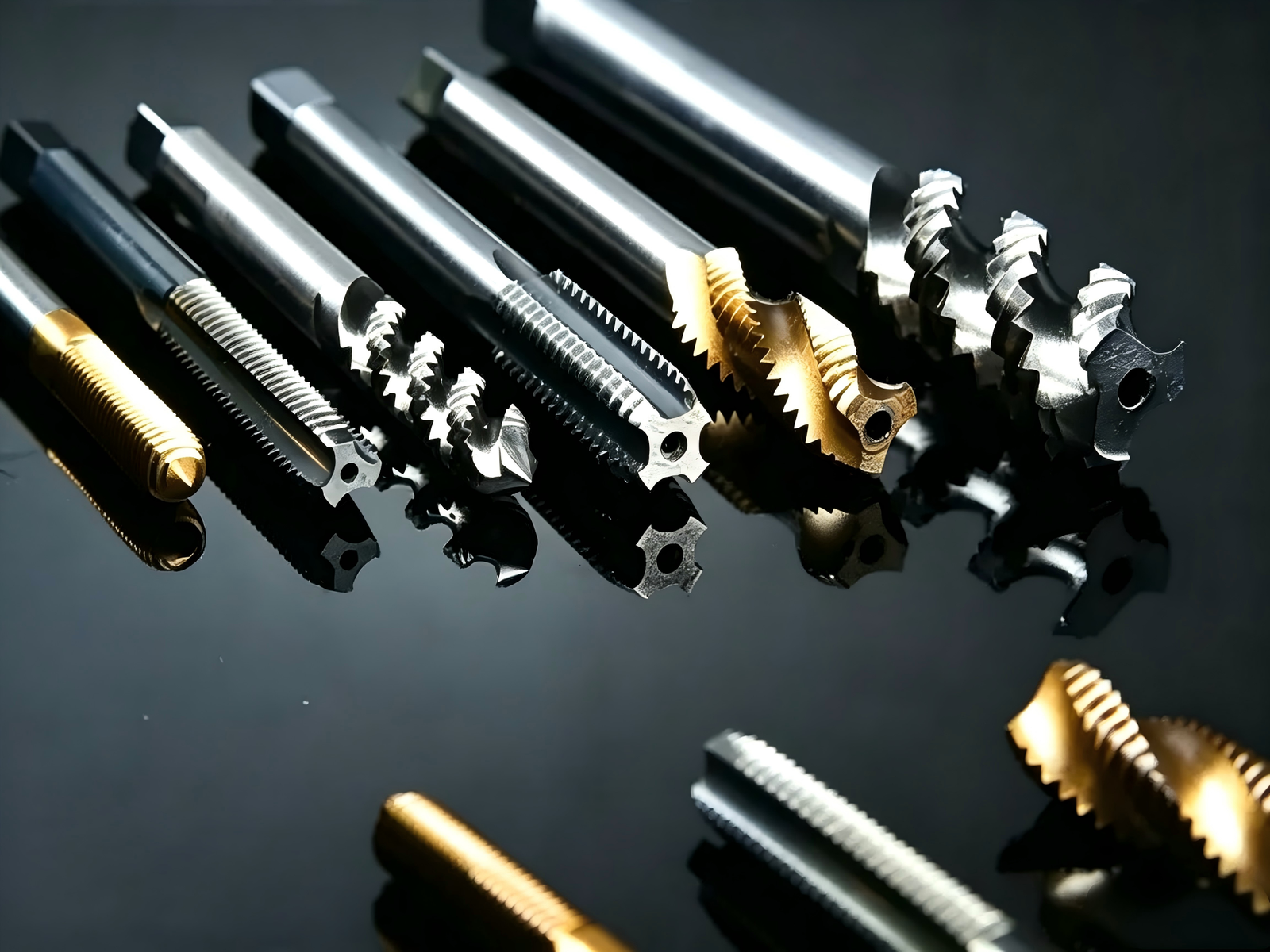
A toque de linha é uma ferramenta de corte ou conformação de precisão usada para criar roscas internas dentro de um furo perfurado. As roscas acabadas permitem que fixadores correspondentes, como porcas e parafusos, sejam instalados com segurança, garantindo a montagem mecânica adequada.
Ao contrário do threading externo, que é produzido usando matrizes ou operações de torneamento, a rosca interna requer machos especialmente projetados que criam progressivamente o perfil da rosca ao longo da parede interna do furo.
Os machos de rosca são amplamente utilizados em:
Operações de fresagem
Centros de perfuração
Usinagem manual
Fabricação automotiva
Produção aeroespacial
Fabricação de equipamentos médicos
Montagem eletrônica
Fabricação de equipamentos pesados
Porque os furos roscados são frequentemente recursos críticos de suporte de carga, O rosqueamento adequado influencia diretamente o desempenho do produto, precisão de montagem, e confiabilidade a longo prazo.
Como Thread Taps criam threads internos
Os machos roscados funcionam entrando em um furo pré-perfurado enquanto giram sob condições controladas de velocidade e avanço.
Dependendo do design da torneira, eles criam threads de duas maneiras:
Remoção de Materiais (Torneiras de corte)
Os machos de corte tradicionais removem o material usando arestas de corte afiadas localizadas ao longo dos canais.
Durante a rotação:
Bordas de corte cortam material
Flautas evacuam cavacos
O perfil da rosca é formado gradualmente
As roscas internas são acabadas no passo necessário
Machos de corte são o tipo mais comum usado para aços, aço inoxidável, ferro fundido, e muitos plásticos de engenharia.
Deformação de Materiais (Formando Torneiras)
Torneiras formadoras de rosca, também conhecido como torneiras de rolo, não corte o material.
Em vez de, eles deformam plasticamente o material sob alta pressão, produzindo threads sem gerar chips.
As vantagens incluem:
Fios mais fortes
Melhor acabamento superficial
Maior vida útil da ferramenta
Sem problemas de evacuação de cavacos
No entanto, machos formadores só funcionam com materiais dúcteis, como:
Alumínio
Cobre
Latão
Aço macio
Certos aços inoxidáveis
Principais componentes de um macho de rosca
Embora os machos de rosca existam em muitos estilos, a maioria compartilha os mesmos componentes fundamentais.
Chanfro
O chanfro é a seção de corte cônica na frente do macho.
Introduz gradualmente a ação de corte na peça enquanto reduz a força de corte.
Diferentes tipos de macho têm diferentes comprimentos de chanfro:
Chanfro longo – machos cônicos
Chanfro médio – machos de encaixe
Chanfro curto – machos de fundo
Cortando Dentes
Os dentes cortantes removem material ou o deformam para gerar o perfil da rosca.
Sua geometria afeta diretamente:
Precisão da linha
Vida útil da ferramenta
Acabamento superficial
Torque de corte
Flautas
As flautas são ranhuras que correm ao longo do corpo da torneira.
Eles servem múltiplas funções:
Fluido de corte guia
Remover fichas
Reduzir as forças de corte
Melhorar o resfriamento
O design da flauta é uma das maiores diferenças entre os tipos de torneira.
Haste
A haste conecta a parte de corte ao suporte da máquina ou à chave de rosca.
As torneiras industriais podem incluir:
Haste reta
Apartamento Weldon
Haste reforçada
Haste estendida
Unidade quadrada
As torneiras manuais incluem uma unidade quadrada na extremidade.
Isso permite que uma chave de torneira segure e gire a ferramenta manualmente.
Os machos de máquina normalmente omitem esse recurso porque são segurados por porta-ferramentas CNC.
Como funciona o processo de rosqueamento
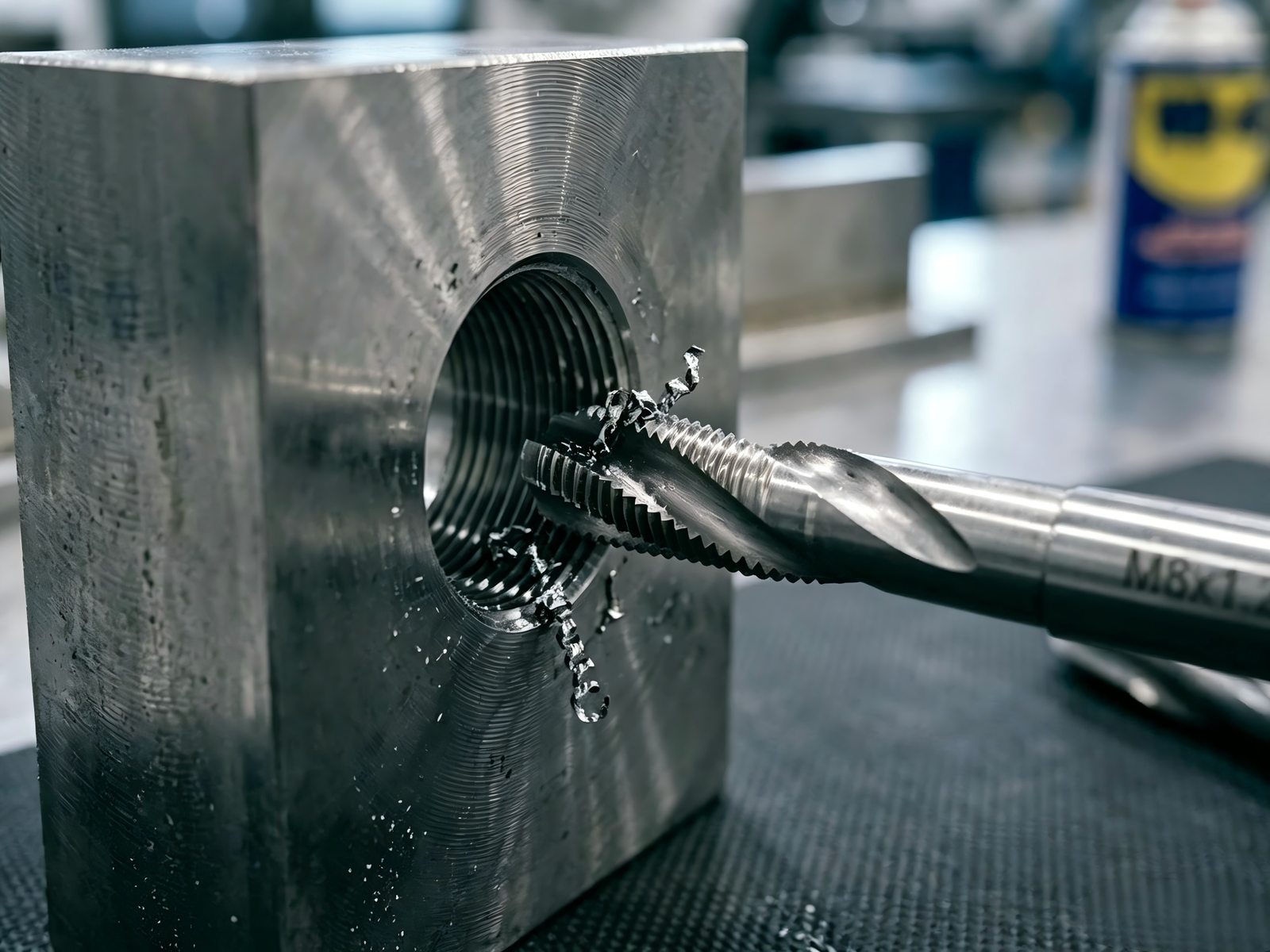
Embora o rosqueamento com macho seja frequentemente considerado um processo de usinagem secundário, alcançar fios de alta qualidade requer um planejamento cuidadoso.
O fluxo de trabalho geral inclui:
Etapa 1: Faça o buraco
Uma broca de tamanho correto cria o furo piloto.
O diâmetro da broca deve corresponder ao tamanho e passo da rosca desejados.
Um furo superdimensionado produz fios soltos.
Um furo subdimensionado aumenta drasticamente o torque de rosqueamento.
Etapa 2: Alinhe a torneira
O alinhamento adequado é fundamental.
Causas de desalinhamento:
Torneiras quebradas
Fios tortos
Má montagem
Desgaste excessivo da ferramenta
Máquinas CNC mantêm automaticamente o alinhamento, enquanto o rosqueamento manual geralmente requer guias ou acessórios.
Etapa 3: Corte ou forme o fio
A torneira gira para dentro do buraco.
Dependendo do seu design, também:
Remove material
Materiais de formulários
O escoamento de cavacos torna-se especialmente importante para furos cegos.
Etapa 4: Remova a torneira
Depois de atingir a profundidade necessária, a torneira inverte para fora do buraco.
Máquinas CNC modernas executam rosqueamento rígido sincronizado para máxima precisão.
Etapa 5: Inspecione os tópicos
A inspeção de qualidade geralmente inclui:
Medidores de passagem/não passagem
Medidores de plugue de rosca
Coordenar máquinas de medição (CMM)
Sistemas de inspeção óptica
A inspeção garante a precisão dimensional antes da montagem.
Compreendendo as marcações de rosca padrão
Cada macho de rosca de qualidade contém marcações a laser ou informações gravadas que ajudam os maquinistas a identificar suas especificações.
A compreensão dessas marcações garante que o macho correto seja selecionado para o trabalho.
Tamanho nominal
O tamanho nominal indica o diâmetro maior da rosca.
Exemplos incluem:
M3
M6
M10
M16
Por exemplo:
M8 × 1.25
significa:
Diâmetro maior: 8 milímetros
Passo da linha: 1.25 milímetros
Padrão de rosca
Diferentes indústrias seguem diferentes sistemas de threads.
Os padrões comuns incluem:
| Padrão | Aplicativo |
| Métrica (ISO) | Fabricação mundial |
| UNC | Fixadores de uso geral |
| UNF | Fios finos |
| UNEF | Aplicações de precisão |
| TNP | Vedação de tubos |
| BSP | Sistemas hidráulicos |
| ACME | Transmissão de energia |
Escolher o padrão de rosca errado torna a montagem impossível.
Toque em Material
Diferentes materiais fornecem diferentes níveis de resistência ao desgaste.
Aço de alta velocidade (HSS)
Vantagens:
Acessível
Difícil
Fácil de afiar
Bom para alumínio e aço macio
Melhor para:
Usinagem geral
Produção de baixo volume
Cobalto HSS (HSS-Co)
Contém cobalto adicional para:
Maior resistência ao calor
Melhor dureza
Melhor resistência ao desgaste
Adequado para:
Aço inoxidável
Liga de aço
Ligas de titânio
Carboneto Sólido
Os machos de metal duro fornecem:
Rigidez excepcional
Excelente resistência ao desgaste
Longa vida útil
Excelente estabilidade dimensional
Melhor para:
Aço endurecido
Ferro fundido
Produção CNC de alto volume
Pó metálico
Combinadores de torneiras para metalurgia do pó:
Resistência
Resistência ao desgaste
Melhor resistência à fratura
Comumente usado em linhas de produção automatizadas.
Torneiras revestidas com TiN
O revestimento de nitreto de titânio fornece:
Fricção reduzida
Lubricidade melhorada
Melhor resistência ao calor
Maior vida útil da ferramenta
Ideal para:
Aço carbono
Liga de aço
Usinagem de médio volume
Diâmetro do passo
O diâmetro do passo determina o quão firmemente a rosca interna se ajusta ao fixador correspondente.
O diâmetro de passo adequado afeta:
Qualidade de montagem
Força do fio
Engajamento do fixador
Resistência à vibração
Indústrias de precisão, como a aeroespacial e a fabricação médica, muitas vezes exigem tolerâncias de diâmetro de passo muito restritas.
Classes de tolerância de thread
Padrões internacionais definem variações dimensionais aceitáveis.
As classes comuns de tolerância à torneira incluem:
| Toque em Turma | Rosca Interna Típica |
| H1 | 4H–5H |
| H2 | 5G–6H |
| H3 | 6G-7H |
| H4 | 6H-7H |
A seleção da tolerância adequada garante o ajuste desejado entre roscas internas e externas, mantendo a intercambialidade.
Tipos de machos de rosca
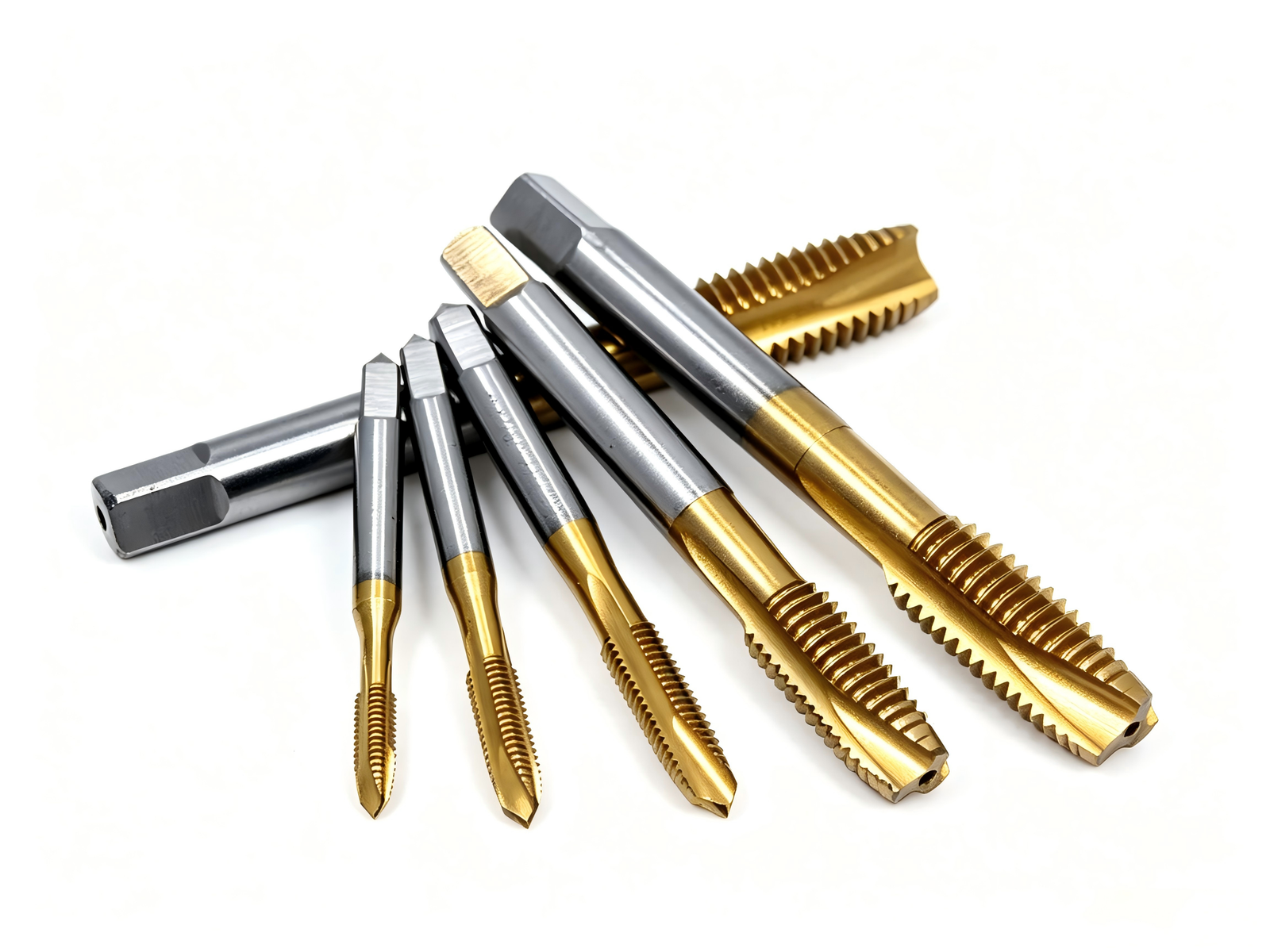
Selecionar o macho de rosca correto é essencial para produzir, durável, e roscas internas de alta qualidade. Cada macho é projetado com geometria de corte específica, desenho de flauta, comprimento do chanfro, e características de evacuação de cavacos para um desempenho eficiente sob certas condições de usinagem.
Fatores como material da peça, tipo de furo, volume de produção, capacidade da máquina, e padrão de rosca influenciam qual macho deve ser usado. Compreender essas diferenças permite que os fabricantes melhorem a eficiência da usinagem, reduzir o desgaste da ferramenta, minimizar o tempo de inatividade, e alcançar uma qualidade de rosca consistente.
Abaixo estão os tipos mais comuns de machos de rosca e suas aplicações ideais.
Toques manuais
Os machos manuais são as ferramentas tradicionais usadas para cortar manualmente roscas internas. São amplamente utilizados em manutenção, trabalho de reparação, prototipagem, e fabricação de baixo volume onde a usinagem CNC não é necessária.
Ao contrário das torneiras de máquina, Os machos manuais são geralmente fornecidos como um conjunto de três machos que trabalham juntos para produzir gradualmente a linha acabada.
Torneira Cônica
O macho cônico foi projetado para iniciar o processo de rosqueamento.
Possui um chanfro longo com aproximadamente 8–10 fios gradualmente cônicos, permitindo que a carga de corte seja distribuída uniformemente em múltiplas arestas de corte.
Vantagens
Fácil alinhamento de rosca
Força de corte reduzida
Menos chance de quebra da torneira
Ideal para iniciantes
Entrada suave da linha
Limitações
Não é possível cortar roscas até a parte inferior dos furos cegos
Requer toques adicionais para completar o rosqueamento
Melhores aplicativos
Iniciando threads manuais
Através de buracos
Manutenção geral
Trabalho de reparo
Plugue Torneira
A torneira plug é considerada a torneira manual mais versátil.
Contém aproximadamente 3–5 roscas chanfradas, permitindo que ele continue rosqueando após um toque cônico ou, em muitos casos, comece a encadear diretamente.
Devido à sua geometria equilibrada, a torneira plug é comumente usada em oficinas e oficinas mecânicas.
Vantagens
Versátil
Adequado para a maioria dos materiais
Mais rápido que machos cônicos
Excelente para furos passantes
Melhores aplicativos
Rosqueamento de uso geral
Reparo de produção
Operações de manutenção
Furos de média profundidade
Torneira de fundo
Os machos de fundo são projetados especificamente para furos cegos.
Ao contrário dos machos cônicos, eles contêm apenas 1–2 roscas chanfradas, permitindo que as arestas de corte continuem quase até a ponta da ferramenta.
Isso permite que o macho crie roscas quase até o fundo do furo.
Vantagens
Profundidade máxima da rosca
Ideal para furos cegos
Produz fios completos
Limitações
Não é possível iniciar threads sozinho
Requer um cone ou torneira primeiro
Melhores aplicativos
Buracos cegos
Montagens de precisão
Componentes aeroespaciais
Coletores hidráulicos
Torneiras de máquina
Os machos de máquina são projetados para operações de rosqueamento automático usando centros de usinagem CNC, prensas de broca, e máquinas de bater.
Ao contrário dos toques manuais, eles são projetados para completar a operação de rosqueamento em um único ciclo, mantendo alta precisão e produtividade.
Os machos para máquinas modernas são fabricados com materiais de ferramentas premium, como:
Aço de alta velocidade (HSS)
Pó metálico
HSS-Co (Cobalto)
Carboneto Sólido
Muitos são ainda melhorados com revestimentos avançados, como:
Lata
TiCN
Tialn
AlCrN
Esses revestimentos melhoram significativamente a resistência ao desgaste e a dissipação de calor.
Vantagens
Alta eficiência de produção
Excelente repetibilidade
Compatível com rosqueamento rígido
Adequado para automação
Maior vida útil da ferramenta
Melhores aplicativos
Usinagem CNC
Produção em massa
Fabricação automotiva
Usinagem aeroespacial
Produção de componentes médicos
Torneiras de Flauta Espiral
Os machos de canal espiral são um dos machos mais comumente usados para buracos cegos.
Seu design de canal helicoidal levanta os cavacos para cima e para fora do furo durante a usinagem.
Isso reduz muito o empacotamento de cavacos, que é uma das principais causas de torneiras quebradas.
Como eles funcionam
Enquanto a torneira gira:
As arestas de corte removem o material.
Canais helicoidais puxam os cavacos para cima.
O líquido refrigerante chega à zona de corte de forma eficiente.
A qualidade da linha melhora.
Seleção de ângulo espiral
O ângulo da hélice afeta o desempenho de corte.
| Ângulo de hélice | Melhor para |
| 15° | Materiais duros |
| 25° | Usinagem geral |
| 35° | Aço inoxidável |
| 45° | Alumínio e materiais macios |
Vantagens
Excelente evacuação de cavacos
Quebra reduzida da torneira
Acabamento superficial melhorado
Ideal para furos cegos profundos
Melhores aplicativos
Aço inoxidável
Alumínio
Titânio
Buracos cegos
Furos roscados profundos
Torneiras em espiral (Toques de arma)
Embora muitas vezes confundido com torneiras de flauta espiral, torneiras de ponto espiral operam de maneira diferente.
Em vez de puxar as fichas para cima, eles empurrar fichas para frente através do buraco.
Por esta razão, machos de ponto espiral são mais adequados para através de buracos.
Como eles funcionam
Durante o corte:
As fichas avançam na torneira.
A zona de corte permanece limpa.
Menor torque de corte é gerado.
Usinagem mais rápida torna-se possível.
Vantagens
Alta velocidade de produção
Excelente evacuação de cavacos
Maior vida útil da ferramenta
Resistência ao corte reduzida
Melhores aplicativos
Através de buracos
Usinagem CNC
Usinagem de produção
Aço carbono
Liga de aço
Torneiras para tubos
As torneiras para tubos produzem roscas internas para tubos usadas para vedar fluidos e gases.
Ao contrário das roscas de fixação padrão, as roscas dos tubos são projetadas para criar juntas estanques à pressão.
Os padrões mais comuns incluem:
TNP
NPTF
BSPT
BSPP
As torneiras para tubos são amplamente utilizadas em:
Sistemas hidráulicos
Sistemas pneumáticos
Equipamentos de petróleo e gás
Tubulações de água
Válvulas industriais
Vantagens
Conexões resistentes a vazamentos
Formulários de thread padronizados
Desempenho de vedação confiável
Torneiras formadoras de rosca (Torneiras de rolo)
Os machos formadores de rosca criam roscas sem remover material.
Em vez de cortar, eles deformam plasticamente o material da peça.
Porque nenhum chip é gerado, machos formadores de rosca eliminam totalmente os problemas de evacuação de cavacos.
Vantagens
Sem fichas
Fios mais fortes
Melhor resistência à fadiga
Acabamento superficial melhorado
Maior vida útil da ferramenta
Limitações
Eles exigem materiais dúcteis.
Os materiais adequados incluem:
Alumínio
Cobre
Latão
Aço macio
Aço de baixo carbono
Alguns aços inoxidáveis
Eles não devem ser usados em materiais frágeis, como ferro fundido.
Aplicações Típicas
Partes automotivas
Eletrônicos
Carcaças de alumínio
Produção em alto volume
Furadeira e macho combinados
Uma furadeira e macho combinados integram duas operações de usinagem em uma ferramenta.
A ponta de perfuração primeiro cria o furo.
Imediatamente depois, a seção de rosqueamento corta as roscas internas.
Isso elimina trocas de ferramentas e reduz o tempo de ciclo.
Vantagens
Produção mais rápida
Tempo de configuração reduzido
Custos de usinagem mais baixos
Precisão posicional aprimorada
Limitações
Mais adequado para:
Materiais finos
Alumínio
Latão
Plásticos
Produção média
Machos sólidos de metal duro
Machos inteiriços de metal duro são ferramentas premium projetadas para ambientes de usinagem exigentes.
Comparado com torneiras HSS, oferta de machos de metal duro:
Maior dureza
Resistência de desgaste superior
Maior estabilidade dimensional
Excelente desempenho em alta velocidade
Porque o metal duro é menos flexível, esses machos exigem máquinas rígidas e alinhamento preciso.
Melhores aplicativos
Aço endurecido
Ferro fundido
Ligas de alta temperatura
Ligas de titânio
Usinagem CNC de alto volume
Torneiras de extensão
Os machos de extensão apresentam uma haste estendida que permite a usinagem em locais onde os machos padrão não conseguem alcançar.
Essas torneiras são comumente usadas para:
Cavidades profundas
Furos cegos longos
Fabricação de moldes
Estruturas aeroespaciais
Grandes componentes fabricados
Vantagens
Longo alcance
Acessibilidade melhorada
Rosqueamento estável em áreas confinadas
Toques de linha interrompidos
Os machos com rosca interrompida possuem dentes de corte alternados removidos do perfil da rosca.
Esta geometria exclusiva cria espaços maiores para evacuação de cavacos.
Como resultado:
O torque de corte diminui.
A geração de calor é reduzida.
O entupimento de chips torna-se menos provável.
Esses machos funcionam particularmente bem em materiais gomosos e ligas de cavacos longos.
Melhores aplicativos
Aço inoxidável
Ligas de níquel
Usinagem de furo profundo
Produção pesada
Torneiras Stay Bolt
Os machos de tirante são ferramentas especializadas projetadas para usinar parafusos de tirante de grande diâmetro usados em caldeiras, vasos de pressão, e equipamentos de geração de energia.
Essas torneiras normalmente apresentam:
Grandes diâmetros
Flautas profundas
Construção pesada
Formulários
Fabricação de caldeiras
Sistemas de vapor
Usinas de energia
Equipamento industrial pesado
Torneiras de gás
As torneiras de gás são especialmente projetadas para conexões de gasodutos.
Eles produzem roscas internas precisas que garantem vedação sem vazamentos sob pressão.
Aplicações comuns incluem:
Sistemas de gás natural
Equipamento GLP
Linhas de gás industrial
Fabricação de válvulas
Torneiras Mestres
Ao contrário dos machos de produção padrão, machos mestres são usados principalmente para verificação e calibração de roscas.
Eles ajudam os fabricantes:
Inspecione a qualidade da linha
Verifique as dimensões da rosca
Restaure fios levemente danificados
Mantenha a precisão da usinagem
Os machos mestres são comumente encontrados em laboratórios de controle de qualidade e instalações de usinagem de precisão.
Comparação de diferentes tipos de machos de rosca
Escolher a torneira certa fica muito mais fácil ao comparar suas características lado a lado.
| Toque em Tipo | Melhor tipo de furo | Evacuação de chips | Melhores materiais | Volume de produção | Principal vantagem |
| Torneira Cônica | Através | Moderado | Metais gerais | Baixo | Início fácil do tópico |
| Plugue Torneira | Através | Moderado | Usinagem geral | Baixo-médio | Mais versátil |
| Torneira de fundo | Cego | Limitado | Metais gerais | Baixo | Profundidade máxima da rosca |
| Torneira de máquina | Ambos | Depende do projeto | A maioria dos metais | Alto | Produção automatizada |
| Torneira de Flauta Espiral | Cego | Para cima | Aço inoxidável, alumínio | Alto | Excelente remoção de cavacos |
| Torne de ponto em espiral | Através | Avançar | Aço, Liga de aço | Alto | Rosqueamento de alta velocidade |
| Torneira de tubo | Furos de tubo | Moderado | Aço, latão | Médio | Roscas de tubo à prova de vazamentos |
| Torneira formadora de rosca | Ambos | Sem fichas | Alumínio, cobre | Alto | Fios mais fortes |
| Broca Combinada & Tocar | Através | Moderado | Metais macios | Alto | Usinagem em uma etapa |
| Torneira de Metal Duro Sólido | Ambos | Excelente | Materiais endurecidos | Alto | Maior vida útil da ferramenta |
| Toque de extensão | Buracos profundos | Depende | Vários | Médio | Longo alcance |
| Toque de linha interrompida | Buracos profundos | Excelente | Aço inoxidável | Alto | Torque reduzido |
| Fique Bolt Tap | Buracos grandes | Excelente | Aço pesado | Baixo | Grandes linhas industriais |
| Toque Mestre | Inspeção | N / D | Vários | QC | Verificação de thread |
Por que compreender os tipos de toque é importante
Usar o toque de linha correto é mais do que simplesmente criar linhas. Impacta diretamente na eficiência da usinagem, vida da ferramenta, precisão dimensional, qualidade de montagem, e custos de produção. Combinando o design da torneira com o material, tipo de furo, e o processo de usinagem ajuda a reduzir o tempo de inatividade, melhorar a consistência, e alcançar resultados confiáveis tanto na fabricação de protótipos quanto na fabricação de alto volume.
Próxima parte: Tabela de tamanhos de rosca, Guia de tolerância de rosca, Como escolher a torneira de linha certa, e dicas de seleção de especialistas para diferentes materiais e aplicações.
Tabela de tamanhos de rosca
Selecionar o tamanho correto da broca macho é uma das etapas mais críticas em qualquer operação de rosqueamento. Mesmo o macho da mais alta qualidade não pode produzir roscas precisas se o furo piloto for muito grande ou muito pequeno.
Um furo subdimensionado aumenta o torque de corte, gera calor excessivo, e aumenta significativamente o risco de quebra da torneira. Por outro lado, um furo superdimensionado produz roscas rasas com resistência de fixação reduzida, potencialmente levando à falha de montagem.
O tamanho adequado da furadeira depende de vários fatores:
Tamanho da linha
Passo da linha
Padrão de rosca (Métrica, UNC, UNF, TNP, etc.)
Material da peça
Porcentagem de thread necessária
Tipo de torneira (cortar ou formar)
Para a maioria das aplicações de usinagem em geral, um envolvimento de thread de 65%–75% proporciona um excelente equilíbrio entre a resistência da rosca e o torque de rosqueamento.
Gráfico de perfuração de rosca métrica padrão
A tabela a seguir lista os tamanhos de rosca métrica comumente usados juntamente com os diâmetros de broca recomendados.
| Tamanho da rosca | Tom (milímetros) | Tamanho de broca recomendado |
| M2× 0.4 | 0.40 | 1.60 milímetros |
| M2,5× 0.45 | 0.45 | 2.05 milímetros |
| M3× 0.5 | 0.50 | 2.50 milímetros |
| M4× 0.7 | 0.70 | 3.30 milímetros |
| M5× 0.8 | 0.80 | 4.20 milímetros |
| M6 × 1.0 | 1.00 | 5.00 milímetros |
| M8 × 1.25 | 1.25 | 6.80 milímetros |
| M10 × 1.5 | 1.50 | 8.50 milímetros |
| M12 × 1.75 | 1.75 | 10.20 milímetros |
| M16× 2.0 | 2.00 | 14.00 milímetros |
| M20 × 2.5 | 2.50 | 17.50 milímetros |
| M24 × 3.0 | 3.00 | 21.00 milímetros |
Dica: Consulte sempre as recomendações do fabricante para furadeiras, especialmente ao usar machos formadores de rosca, pois normalmente exigem um furo piloto um pouco maior do que os machos de corte.
Compreendendo o envolvimento do thread
O engate da rosca refere-se à porcentagem do perfil da rosca que está totalmente formado dentro do furo.
Muitos engenheiros assumem erroneamente que um maior envolvimento do thread sempre resulta em threads mais fortes. Na realidade, aumentando o envolvimento do thread além de aproximadamente 75% aumenta drasticamente o torque de corte, oferecendo apenas melhorias marginais na resistência da rosca.
As recomendações gerais incluem:
| Engajamento do tópico | Aplicação Típica |
| 55–60% | Materiais macios, produção de alta velocidade |
| 65–70% | Usinagem geral |
| 70–75% | A maioria das aplicações industriais |
| 75–85% | Conexões de alta resistência (quando necessário) |
A maioria das operações de usinagem CNC tem como alvo 70% envolvimento do tópico porque proporciona um excelente equilíbrio entre força, vida da ferramenta, e produtividade.
Guia de tolerância ao toque de rosca
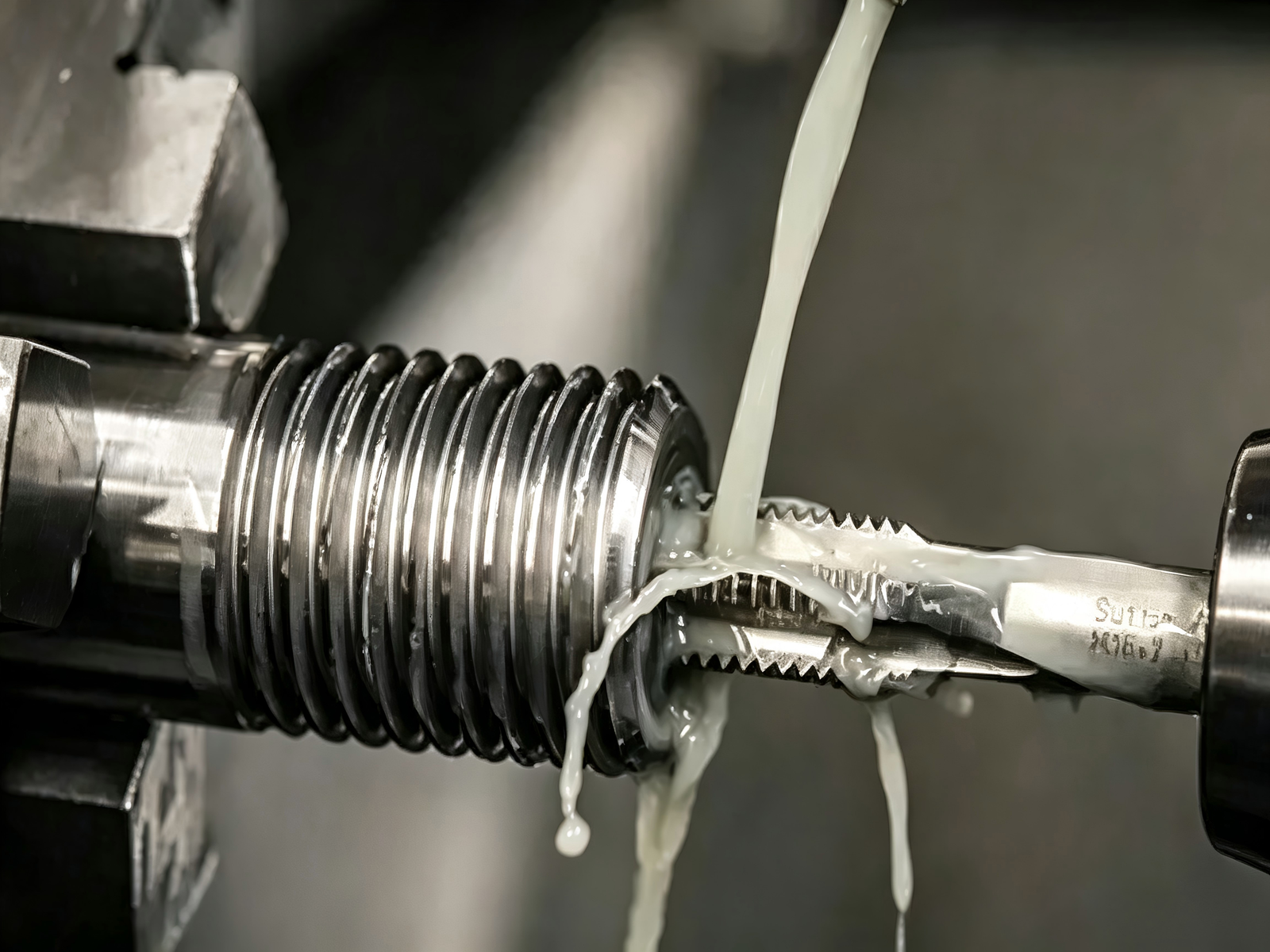
As tolerâncias de rosca determinam o quão firmemente uma rosca interna se ajusta à sua rosca externa correspondente. A seleção adequada da tolerância garante uma montagem suave, mantendo ao mesmo tempo força de fixação e intercambialidade suficientes.
As tolerâncias de rosca são padronizadas de acordo com especificações internacionais, como ISO, ANSI, e DE.
Por que as tolerâncias de rosca são importantes
Tolerâncias incorretas podem resultar em:
Conjuntos soltos
Vibração excessiva
Má distribuição de carga
Dificuldade durante a montagem
Desgaste prematuro do fixador
Falha de componente
A escolha da classe de tolerância correta é especialmente importante em indústrias como a aeroespacial, dispositivos médicos, automotivo, e instrumentação de precisão.
Classes comuns de tolerância a toques
| Tolerância de toque | Rosca Interna Típica |
| H1 | 4H, 5H |
| H2 | 5G, 6H |
| H3 | 6G, 7H |
| H4 | 6H, 7H |
Geralmente:
H1 produz fios mais apertados.
H2 é a classe de uso geral mais comum.
H3 permite ajustes um pouco mais soltos.
H4 é usado onde é necessária folga adicional.
Tipos de ajuste de rosca
Os engenheiros normalmente selecionam uma das três categorias de ajuste, dependendo dos requisitos funcionais da aplicação..
Ajuste próximo
Projetado para montagens de precisão que exigem folga mínima.
As aplicações típicas incluem:
Componentes aeroespaciais
Equipamento médico
Instrumentos de precisão
Ajuste Normal
O ajuste mais comumente usado na fabricação industrial.
Adequado para:
Máquinas gerais
Partes automotivas
Produtos de consumo
Equipamento industrial
Ajuste solto
Fornece autorização adicional para aplicações que envolvem:
Sujeira ou detritos
Montagem/desmontagem frequente
Expansão térmica
Fixadores revestidos
Dicas de especialistas para escolher a melhor rosca
Operadores experientes geralmente consideram fatores adicionais além das especificações básicas para otimizar o desempenho do rosqueamento com macho:
Usar torneiras de flauta espiral para furos cegos para melhorar o escoamento de cavacos.
Escolher torneiras de ponto espiral para furos passantes para maximizar a produtividade.
Selecione torneiras formadoras de rosca para materiais dúcteis quando mais fortes, roscas sem lascas são desejadas.
Combine o material do macho e o revestimento com o material da peça para otimizar a vida útil da ferramenta.
Certifique-se de que a máquina tenha rigidez suficiente, especialmente ao usar machos de metal duro.
Verifique o fornecimento de refrigerante para reduzir o acúmulo de calor e melhorar a remoção de cavacos.
Use a velocidade e o avanço corretos do rosqueamento com base no material e nas recomendações do fabricante do macho.
Inspecione regularmente os machos quanto a desgaste e substitua-os antes que a qualidade da rosca se deteriore.
Fazer seleções de machos informadas não apenas melhora a qualidade da rosca, mas também reduz os custos de usinagem, minimiza o tempo de inatividade, e aumenta a eficiência geral da fabricação. Contate-nos Para maiores informações.


