



The most important point to understand is that 925 stainless steel is generally not a standard stainless steel grade. The designation 925 traditionally refers to 925 sterling silver, an alloy containing 92.5% silver by mass. Stainless steel, by contrast, is a family of iron-based alloys identified by grades such as 304, 316, 316L, 410, and 17-4 PH.
This distinction matters when selecting material for a machined component, fabricated part, jewelry product, medical device, or industrial application. Choosing the wrong material based on an incorrect grade name can affect corrosion resistance, strength, machinability, surface finish, cost, and service life.
In this guide, we explain what “925 stainless steel” means, how 925 sterling silver differs from stainless steel, the properties and applications of both materials, and how to choose the right stainless steel grade for custom parts.
What Is 925 Stainless Steel?
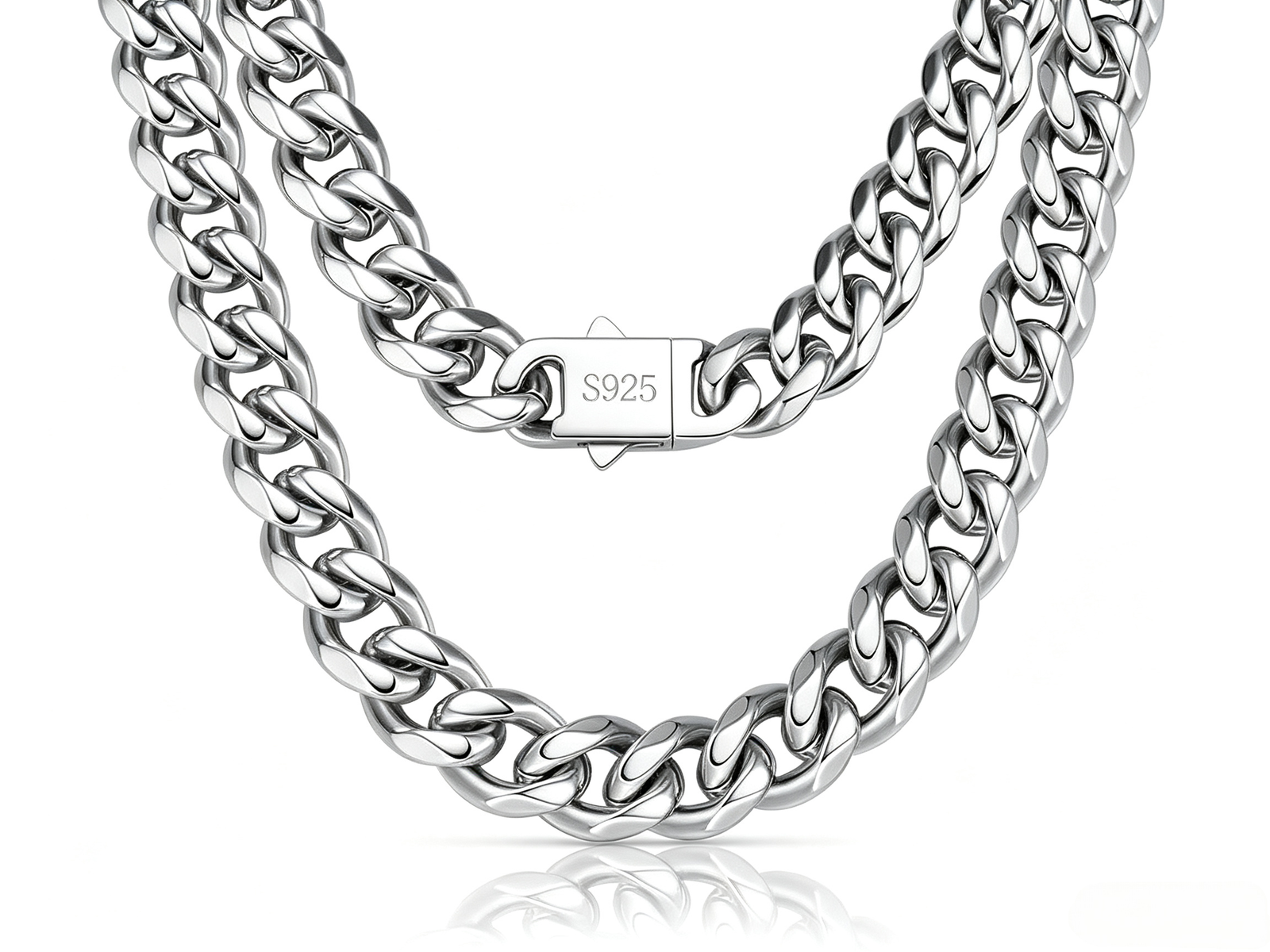
Is 925 Stainless Steel a Real Stainless Steel Grade?
Strictly speaking, “925 stainless steel” is not a commonly recognized standard stainless steel grade.
The number 925 is primarily associated with sterling silver. A 925 sterling silver alloy contains approximately:
- 5% silver
- 5% other alloying elements, commonly copper
The purpose of adding alloying elements is to improve the hardness and durability of pure silver, which is relatively soft.
Stainless steel is a completely different family of materials. Stainless steels are iron-based alloys containing at least approximately 10.5% chromium, which enables the formation of a thin, chromium-rich passive layer that provides corrosion resistance. Different stainless steel grades then add elements such as nickel, molybdenum, manganese, nitrogen, carbon, or other alloying elements to achieve specific properties.
Therefore, if a supplier, product listing, drawing, or online article refers to “925 stainless steel,” it is important to confirm what material is actually intended.
It may refer to:
- 925 sterling silver
- A stainless steel product incorrectly described as “925 stainless steel”
- A proprietary or commercial designation that is not a recognized stainless steel grade
- A product combining stainless steel with a 925 silver component or finish
For engineering and manufacturing applications, always specify the recognized material grade and applicable standard rather than relying only on the term “925 stainless steel.”
What Is 925 Sterling Silver?
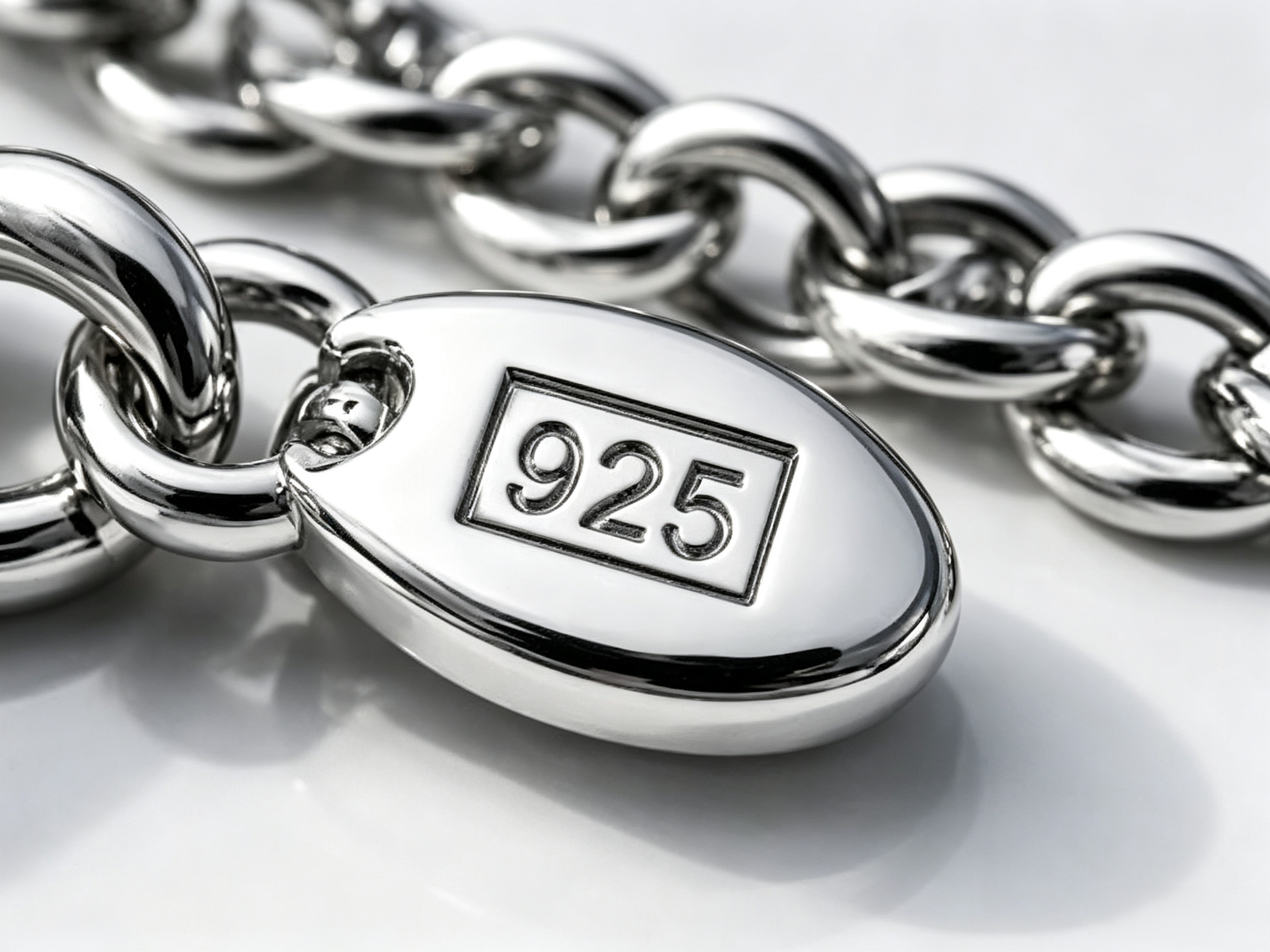
925 sterling silver is a precious-metal alloy containing 92.5% silver and approximately 7.5% other metals.
Pure silver has excellent electrical and thermal conductivity and an attractive appearance, but it is relatively soft. Alloying silver with other metals increases its hardness and makes it more practical for products that need to withstand everyday handling.
Typical Characteristics of 925 Sterling Silver
- High silver content
- Bright metallic appearance
- Good electrical conductivity
- Excellent thermal conductivity
- Relatively good ductility
- Easier to form than many stainless steels
- Can be polished to a high luster
- Can develop tarnish over time
Sterling silver is particularly common in:
- Rings
- Necklaces
- Bracelets
- Earrings
- Decorative objects
- Tableware
- Collectibles
- Specialty electrical components
925 Sterling Silver vs Stainless Steel
The biggest difference is their fundamental composition.
| Property | 925 Sterling Silver | Stainless Steel |
| Material family | Silver alloy | Iron-based alloy |
| Main element | 92.5% silver | Iron |
| Chromium | Normally not the defining element | At least ~10.5% in stainless steel |
| Typical grades/designations | 925 | 304, 316, 316L, 410, 17-4 PH, etc. |
| Corrosion behavior | Can tarnish | Generally excellent corrosion resistance |
| Strength | Relatively moderate | Varies widely by grade |
| Hardness | Relatively soft | Generally higher |
| Appearance | Bright silver | Silver/metallic |
| Maintenance | Regular cleaning may be needed | Generally low maintenance |
| Cost | Higher because of silver content | Generally more economical |
| Typical uses | Jewelry and decorative products | Industrial, medical, automotive, architectural and consumer products |
Stainless steel should not be treated as a single material. Different grades have substantially different mechanical and corrosion properties. For example, austenitic grades such as 304 have excellent formability and corrosion resistance, while 316 provides improved resistance in more demanding chloride-containing environments because of its molybdenum content.
Properties of 925 Sterling Silver
If your project actually requires 925 sterling silver, the following properties are relevant.
Physical Properties
925 sterling silver has a bright, attractive metallic appearance and can be polished to a high-gloss finish.
Its high silver content also gives it excellent electrical and thermal conductivity compared with most stainless steel grades.
This makes sterling silver particularly valuable when electrical or thermal conductivity is important in addition to appearance.
Mechanical Properties
Pure silver is relatively soft, so 925 sterling silver is alloyed to improve hardness and durability.
Compared with stainless steel, however, sterling silver is generally less suitable for components exposed to high mechanical loads, severe abrasion, or repeated impact.
For this reason, stainless steel is normally the better engineering choice when strength and long service life are the primary requirements.
Tarnishing and Corrosion
One common misconception is that sterling silver “rusts.”
Silver does not rust in the same way iron-based steel does. Instead, sterling silver can tarnish, resulting in a darker or discolored surface.
Tarnishing can be accelerated by exposure to:
- Sulfur-containing compounds
- Humidity
- Cosmetics
- Perspiration
- Household chemicals
- Polluted environments
Regular cleaning and appropriate storage can help maintain its appearance.
Properties of Stainless Steel
Stainless steel offers a different combination of properties and is widely used for engineered components.
1. Corrosion Resistance
Corrosion resistance is one of the defining characteristics of stainless steel.
Chromium reacts with oxygen to form an extremely thin, chromium-rich passive layer on the surface. This layer protects the underlying metal and can reform when damaged, provided suitable environmental conditions are present.
However, stainless steel is not completely corrosion-proof.
Corrosion performance depends on:
- Stainless steel grade
- Chloride concentration
- Temperature
- Chemical exposure
- Surface condition
- Crevices and joints
- Manufacturing contamination
- Cleaning procedures
For example, 316 stainless steel is generally more appropriate than 304 when chloride exposure is a significant concern.
2. Strength and Durability
Stainless steel grades offer a broad range of mechanical properties.
Depending on the grade and condition, stainless steel can provide:
- High tensile strength
- Good yield strength
- Good toughness
- Wear resistance
- Impact resistance
- Long service life
This makes stainless steel suitable for structural components as well as small precision-machined parts.
3. Heat Resistance
Some stainless steel grades maintain useful mechanical and corrosion properties at elevated temperatures.
However, temperature performance varies significantly between grades.
If your component will operate continuously at elevated temperatures, the material should be selected according to:
- Operating temperature
- Thermal cycling
- Mechanical loading
- Oxidation conditions
- Required service life
4. Fabrication and Machinability
Stainless steel can be processed using many manufacturing methods, including:
- CNC milling
- CNC turning
- Swiss CNC machining
- Laser cutting
- Sheet metal fabrication
- Stamping
- Bending
- Welding
- Grinding
- Polishing
- Passivation
- Electropolishing
However, not all stainless steel grades machine the same way.
For example, some austenitic stainless steels can work-harden during machining. This makes cutting parameters, tooling, coolant strategy, workholding, and chip control particularly important.
For precision CNC components, material selection should therefore be considered together with the manufacturing process.
Common Applications of 925 Sterling Silver
Jewelry
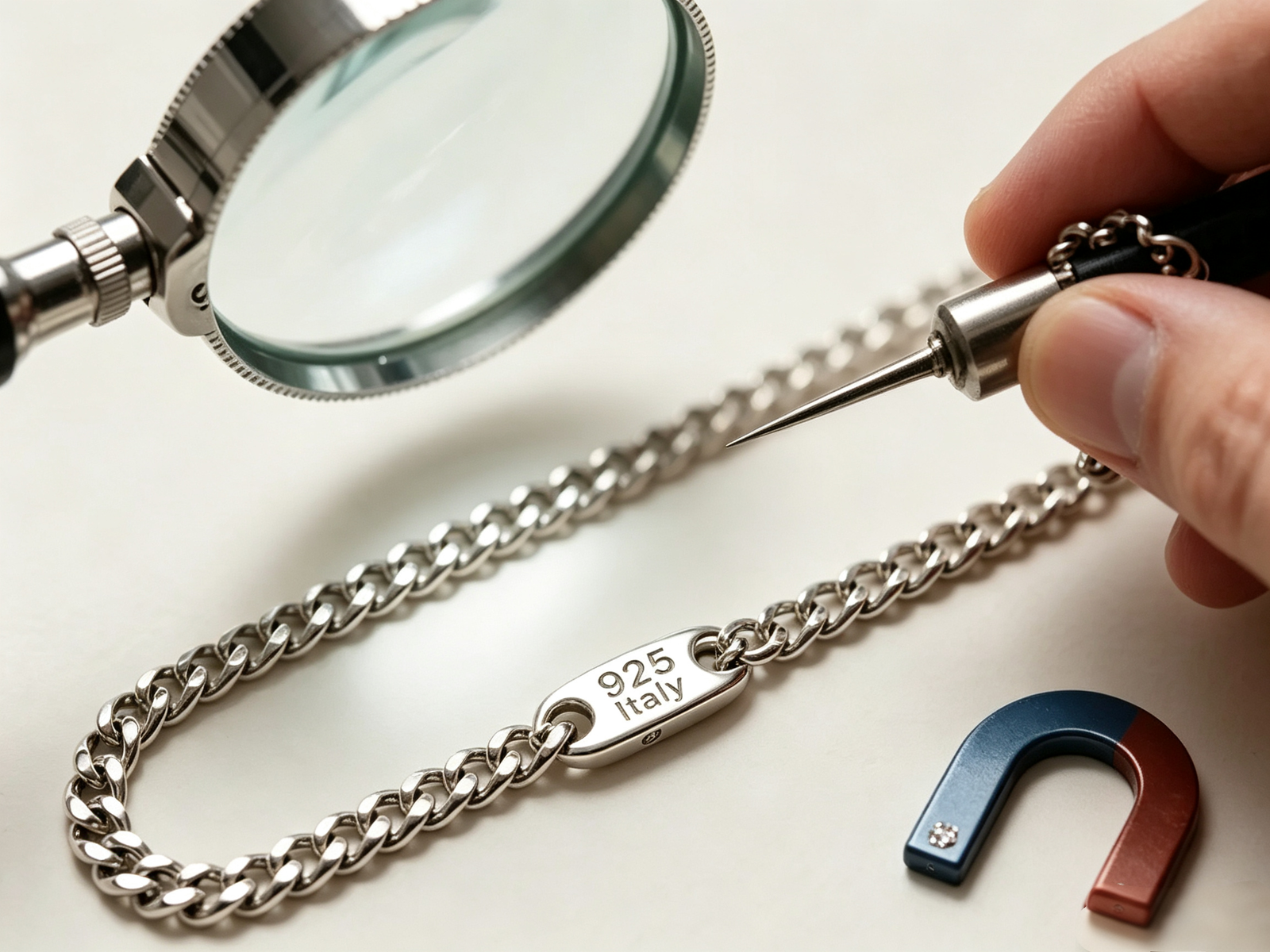
Jewelry is the most recognizable application of 925 sterling silver.
It is commonly used for:
- Rings
- Earrings
- Bracelets
- Necklaces
- Pendants
- Charms
- Decorative accessories
Its combination of appearance, workability, and precious-metal content makes it particularly suitable for jewelry manufacturing.
Decorative Products
925 sterling silver is also used for decorative items where appearance and material value are important.
Examples include:
- Ornaments
- Collectibles
- Decorative components
- Luxury accessories
Electrical Applications
Silver has very high electrical conductivity, so silver alloys can be used in specialized electrical and electronic applications.
However, material selection depends on the required conductivity, mechanical properties, contact behavior, operating environment, and cost.
Common Applications of Stainless Steel
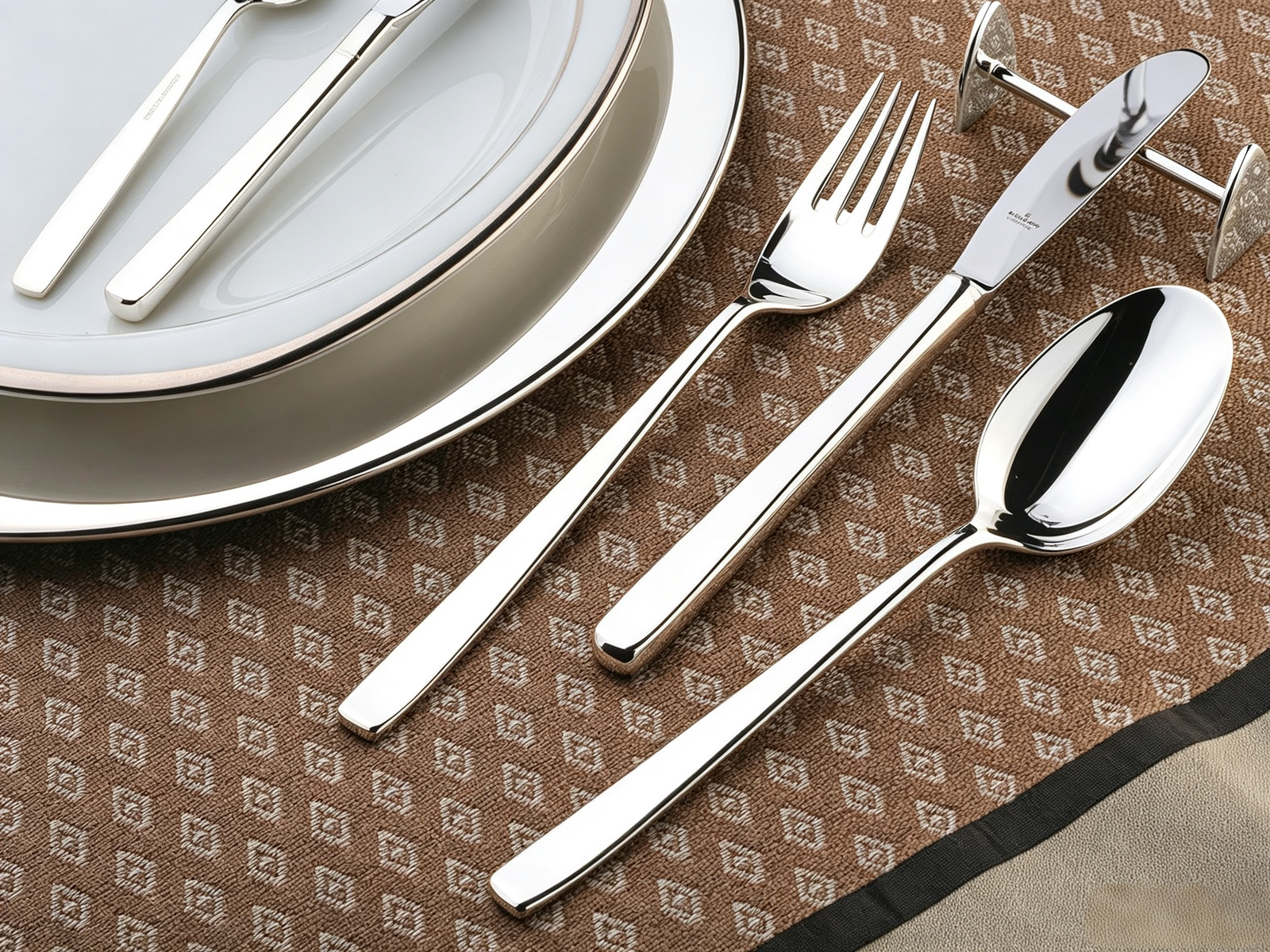
Stainless steel has a much broader engineering application range.
Kitchenware and Food Equipment
304 stainless steel is commonly used in many food-related and household applications because of its corrosion resistance, cleanability, and durability.
Typical products include:
- Kitchen equipment
- Food-processing components
- Sinks
- Containers
- Appliances
- Commercial catering equipment
Medical Equipment
Stainless steel is widely used in medical and healthcare equipment because appropriate grades can provide corrosion resistance, durability, cleanability, and compatibility with sterilization processes.
Applications include:
- Surgical instruments
- Medical equipment
- Dental instruments
- Surgical trays
- Medical fixtures
The exact grade and surface condition should be selected according to the device’s regulatory and functional requirements.
Automotive Components
Stainless steel can be used in:
- Exhaust components
- Brackets
- Fasteners
- Trim components
- Precision mechanical parts
- Heat-resistant components
The grade should be selected based on temperature, corrosion exposure, mechanical loads, and manufacturing requirements.
Construction and Architecture
Stainless steel is widely used in:
- Handrails
- Architectural panels
- Cladding
- Structural components
- Fasteners
- Decorative elements
Its corrosion resistance and surface appearance make it particularly attractive for architectural applications.
Industrial Equipment
Industrial applications include:
- Machine components
- Shafts
- Bushings
- Fixtures
- Fasteners
- Pump components
- Valves
- Chemical-processing equipment
- Custom CNC-machined parts
For demanding applications, the choice between 304, 316, 17-4 PH, duplex stainless steel, and other grades can significantly affect product performance.
925 Sterling Silver vs 304 Stainless Steel
304 stainless steel is one of the most widely used austenitic stainless steel grades.
It is commonly associated with approximately 18% chromium and 8% nickel, although actual composition depends on the applicable specification. It offers good corrosion resistance, ductility, formability, and weldability.
| Feature | 925 Sterling Silver | 304 Stainless Steel |
| Main material | Silver alloy | Iron-based alloy |
| Corrosion resistance | Good but can tarnish | Excellent for many environments |
| Strength | Moderate | Generally higher |
| Hardness | Relatively low | Higher |
| Appearance | Bright silver | Metallic, polished or brushed |
| Electrical conductivity | Very high | Much lower |
| Cost | Higher | Generally lower |
| Machining | Relatively workable | Requires appropriate tooling and parameters |
| Common applications | Jewelry, decorative products | Industrial and consumer products |
Choose 925 sterling silver when precious-metal content, appearance, and electrical conductivity are important.
Choose 304 stainless steel when strength, corrosion resistance, durability, and cost efficiency are more important.
316 Stainless Steel vs 925 Sterling Silver
316 stainless steel is another major engineering material.
Its molybdenum content improves corrosion resistance, particularly in environments where chlorides and aggressive chemicals are concerns.
| Feature | 925 Sterling Silver | 316 Stainless Steel |
| Material family | Silver alloy | Austenitic stainless steel |
| Primary purpose | Appearance and precious-metal applications | Engineering performance |
| Corrosion resistance | Good but can tarnish | Excellent, particularly compared with many standard grades |
| Strength | Moderate | High |
| Chloride resistance | Not its primary advantage | Better suited to chloride-rich conditions |
| Industrial applications | Limited | Extensive |
| Typical cost | Higher | Moderate |
| Common applications | Jewelry | Marine, medical, chemical, food and industrial equipment |
For industrial components exposed to moisture, chemicals, or chloride-containing environments, 316 stainless steel is generally a much more appropriate engineering material than 925 sterling silver.
316L Stainless Steel vs 925 Sterling Silver
316L is the low-carbon version of 316 stainless steel.
The lower carbon content helps reduce the risk of sensitization associated with welding and makes 316L particularly useful for fabricated components requiring welded joints.
Typical applications include:
- Medical equipment
- Pharmaceutical equipment
- Food-processing equipment
- Chemical-processing equipment
- Marine components
- Precision components
- Jewelry and watch components
The decision between 316L and 925 sterling silver should therefore be based on the application’s functional requirements rather than simply appearance.
How to Choose the Right Stainless Steel Grade
If you are developing a custom metal part, selecting a generic “stainless steel” material is usually not enough.
Consider the following factors.
1. Corrosion Environment
Ask:
- Will the component contact water?
- Is it exposed to salt water?
- Will it contact chemicals?
- Is it used outdoors?
- Is chloride exposure expected?
For more aggressive environments, 316 or other specialized grades may be more appropriate than 304.
2. Mechanical Requirements
Consider:
- Tensile strength
- Yield strength
- Hardness
- Impact resistance
- Wear resistance
- Fatigue requirements
A component carrying mechanical loads may require a higher-strength stainless steel rather than a general-purpose grade.
3. Manufacturing Process
Material selection should be compatible with the manufacturing method.
For example:
- CNC machining
- CNC turning
- Milling
- Stamping
- Deep drawing
- Welding
- Laser cutting
- Grinding
- Polishing
A material that performs well in service may not necessarily be the easiest material to manufacture.
4. Surface Finish
For visible components, determine whether you require:
- Brushed finish
- Mirror polish
- Satin finish
- Passivation
- Electropolishing
- Bead blasting
- Custom surface treatment
Surface requirements should be communicated before production because they can affect machining allowances, tolerances, and final inspection.
5. Dimensional Tolerance
For precision components, define:
- Critical dimensions
- General tolerances
- GD&T requirements
- Surface roughness
- Flatness
- Concentricity
- Thread requirements
Material selection and machining strategy should be evaluated together.
6. Production Volume
The most economical process may differ depending on production volume.
For example:
- Prototype → CNC machining
- Low volume → CNC machining or sheet metal fabrication
- Medium volume → CNC machining, stamping, or forming
- High volume → Stamping, forming, casting, or dedicated tooling
A manufacturing partner can help determine the most cost-effective production method.
Stainless Steel Manufacturing and Custom Parts
For companies purchasing custom stainless steel components, material selection is only one part of the manufacturing process.
A capable manufacturer should also be able to evaluate:
CNC Machining
Suitable for precision components with complex geometries and tight tolerances.
Common operations include:
- CNC milling
- CNC turning
- Multi-axis machining
- Drilling
- Threading
- Reaming
- Boring
- Surface finishing
Sheet Metal Fabrication
Suitable for:
- Enclosures
- Brackets
- Panels
- Covers
- Frames
- Structural components
Typical processes include laser cutting, bending, welding, grinding, and finishing.
Stamping
For high-volume production, stamping can provide:
- High production speed
- Consistent dimensions
- Repeatability
- Lower unit cost at sufficient volumes
Surface Treatment
Depending on the application, stainless steel parts may require:
- Polishing
- Brushing
- Passivation
- Electropolishing
- Pickling
- Bead blasting
Pickling and passivation can help remove contaminants and support the formation of a continuous chromium-rich passive film.
Pros and Cons of 925 Sterling Silver
Advantages
Attractive Appearance
925 sterling silver has a bright, premium appearance that is particularly suitable for jewelry and decorative products.
High Silver Content
Its 92.5% silver content provides the material with the characteristics expected from a precious-metal alloy.
Excellent Conductivity
Silver provides exceptionally high electrical and thermal conductivity.
Good Workability
Sterling silver can be formed, polished, and fabricated into detailed designs.
Disadvantages
Can Tarnish
Unlike stainless steel, sterling silver can develop surface tarnish over time.
Lower Strength
It is generally less suitable than engineering stainless steel for heavily loaded mechanical components.
Higher Material Cost
Because it contains a high percentage of silver, its material cost is typically much higher than common stainless steel grades.
Requires More Maintenance
Decorative sterling silver products may require regular cleaning and polishing to maintain their appearance.
Pros and Cons of Stainless Steel
Advantages
Excellent Corrosion Resistance
Chromium creates a protective passive layer that provides stainless steel with its characteristic corrosion resistance.
High Durability
Many stainless steel grades provide excellent strength, toughness, and wear resistance.
Wide Material Selection
There are many stainless steel grades designed for different requirements.
Low Maintenance
Properly selected stainless steel generally requires relatively little maintenance compared with many alternative materials.
Excellent Fabrication Options
Stainless steel can be machined, stamped, formed, welded, polished, and finished for a wide variety of applications.
Long Service Life
When the correct grade is selected for the service environment, stainless steel can provide a long operating life.
Disadvantages
Higher Cost Than Carbon Steel
Stainless steel is usually more expensive than ordinary carbon steel.
Machining Can Be Challenging
Some grades can work-harden or generate significant cutting heat, increasing machining difficulty.
Grade Selection Is Critical
304 may be excellent for one application but unsuitable for another. More demanding environments may require 316, duplex, precipitation-hardening, or other specialized grades.
Not Completely Corrosion-Proof
Stainless steel can still experience pitting, crevice corrosion, stress corrosion cracking, or other forms of corrosion under unfavorable conditions.
925 Stainless Steel: Which Material Should You Actually Choose?
If you are considering “925 stainless steel” for a product or engineering project, first determine what material you actually need.
Choose 925 Sterling Silver When:
- You are manufacturing jewelry
- Precious-metal content is important
- Appearance is a major priority
- High electrical conductivity is beneficial
- The application does not require high mechanical strength
Choose 304 Stainless Steel When:
- You need a general-purpose stainless steel
- Good corrosion resistance is required
- Strength and durability matter
- The product is for industrial or consumer use
- You need a cost-effective stainless steel solution
Choose 316 Stainless Steel When:
- Chloride exposure is expected
- The component is used near seawater
- Chemical resistance is important
- Higher corrosion resistance is required
Choose 316L When:
- Welding is involved
- Low-carbon stainless steel is preferred
- Medical, pharmaceutical, or hygienic applications are involved
- Corrosion resistance and fabrication performance are both important
Choose a Specialized Stainless Steel Grade When:
- High strength is required
- Wear resistance is critical
- High temperatures are involved
- The component operates in a highly corrosive environment
- Specific magnetic, mechanical, or chemical properties are required
Frequently Asked Questions About 925 Stainless Steel
Is 925 stainless steel a real stainless steel grade?
Generally, no. 925 is primarily a designation for sterling silver containing 92.5% silver. Stainless steel is normally identified by recognized grades such as 304, 316, 316L, 410, or 17-4 PH.
What does 925 mean on metal?
The 925 designation normally means that an alloy contains 92.5% silver by mass, with the remaining 7.5% consisting of other alloying elements.
Is 925 silver the same as stainless steel?
No. 925 sterling silver is a silver-based alloy, while stainless steel is an iron-based alloy containing at least approximately 10.5% chromium.
Does 925 sterling silver rust?
No, sterling silver does not rust in the same way iron-based steel does. However, it can tarnish and discolor due to chemical reactions with compounds in the environment.
Does stainless steel tarnish?
Stainless steel generally does not tarnish in the same manner as sterling silver. Its corrosion resistance comes from a chromium-rich passive layer. However, stainless steel can still stain or corrode in aggressive environments.
Is 316 stainless steel better than 925 silver?
Neither material is universally “better.” They are designed for different purposes.
For jewelry and decorative applications, 925 sterling silver may be preferable.
For industrial components requiring strength, durability, and corrosion resistance, 316 stainless steel is generally more appropriate.
Is 304 or 316 stainless steel better?
It depends on the application.
304 is an excellent general-purpose stainless steel.
316 is generally preferred when improved resistance to chloride-containing or more aggressive environments is required.
Can stainless steel be CNC machined?
Yes. Stainless steel is widely used for CNC-machined components. However, different grades have different machining characteristics, so cutting tools, feeds, speeds, coolant, workholding, and finishing processes should be selected according to the specific grade.
What stainless steel is best for custom machined parts?
There is no single “best” grade.
Common choices include:
- 304for general-purpose components
- 316/316Lfor improved corrosion resistance
- 17-4 PHfor high-strength applications
- 410/420where hardness and wear resistance are important
- Other specialized grades for high-temperature, marine, chemical, or highly demanding applications
The best grade depends on the actual operating environment and performance requirements.
Conclusion: 925 Stainless Steel vs. 925 Sterling Silver
The term “925 stainless steel” can be misleading.
If you see “925,” the first question should be whether the product is actually referring to 925 sterling silver. Sterling silver contains 92.5% silver, while stainless steel is an iron-based alloy family defined by chromium content and specific material grades.
For jewelry and decorative applications, 925 sterling silver offers an attractive appearance and high precious-metal content.
For engineering and industrial applications, 304, 316, 316L, 17-4 PH, and other stainless steel grades provide a much wider range of strength, corrosion resistance, machinability, and service-performance characteristics.
For custom parts, don’t select material based only on a product name such as “925 stainless steel.” Instead, specify the exact material grade, application environment, mechanical requirements, tolerances, surface finish, production volume, and manufacturing process.
If you have a 2D drawing, 3D CAD file, material requirement, or sample part, Tops Precision-a qualified precision manufacturer can evaluate the application and recommend the appropriate stainless steel grade and manufacturing process before production.
Key Takeaways
- 925 stainless steel is generally not a standard stainless steel grade.
- 925 normally refers to sterling silver containing 92.5% silver.
- Stainless steel grades include 304, 316, 316L, 410, 420, and 17-4 PH, among many others.
- Stainless steel corrosion resistance comes primarily from its chromium-rich passive layer.
- 304is a common general-purpose stainless steel.
- 316/316Lare better suited to many chloride-rich or more aggressive environments.
- Stainless steel can be processed through CNC machining, turning, milling, stamping, sheet metal fabrication, welding, polishing, and passivation.
- For custom stainless steel parts, material selection should be based on the application, environment, mechanical requirements, tolerances, surface finish, and production volume.


