



Unlike more decorative moulding profiles, cove moulding typically features a concave, inward-curving profile. Its relatively simple geometry makes it suitable for both standard and highly customized applications. Depending on the project, cove moulding can be manufactured from wood, MDF, PVC, polyurethane, aluminum, stainless steel, and other materials.
For manufacturers, OEMs, furniture companies, contractors, and product designers, choosing the right cove moulding involves more than selecting a visual profile. Material properties, dimensions, tolerances, manufacturing processes, surface finish, production volume, tooling requirements, and installation method can all affect the final result.
This guide explains what cove moulding is, the most common materials and types, how it is manufactured, what can be customized, and how to select a reliable cove moulding manufacturer.
What Is Cove Moulding?
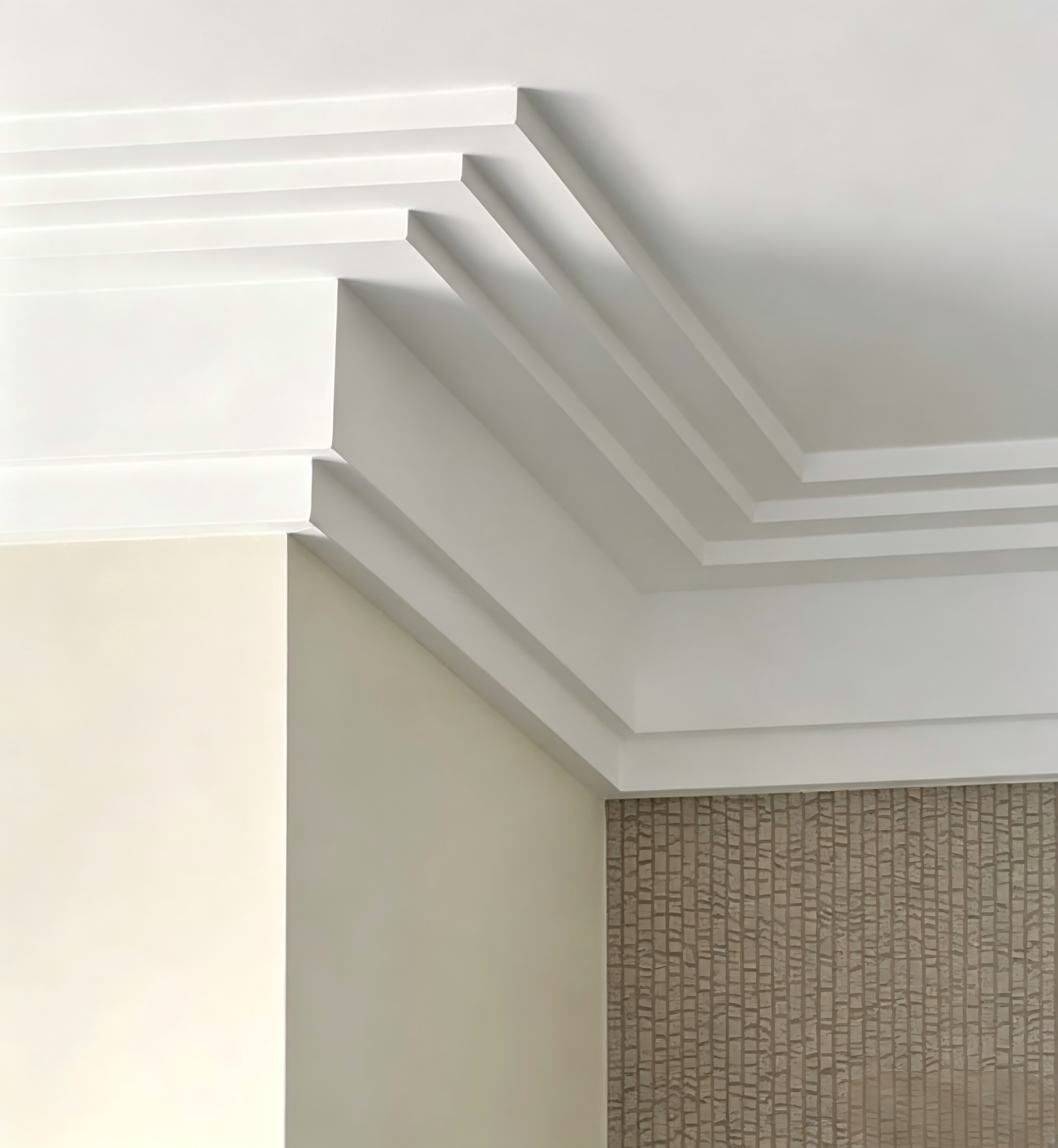
Cove moulding is a trim or profile with a concave curved surface, commonly used to create a smooth transition between two intersecting surfaces.
One of its most recognizable applications is at the junction between a wall and ceiling. However, cove moulding is also widely used around cabinets, furniture, shelving, built-in structures, doors, windows, and decorative panels.
The inward curve distinguishes cove moulding from quarter-round moulding, which has a convex outward curve. Because of its concave profile, cove moulding can create a subtle shadow line while avoiding the heavier appearance of elaborate architectural trim.
Cove moulding is available in many sizes and materials. Standard products may be available for common applications, while custom profiles can be developed from engineering drawings, CAD files, physical samples, or application requirements.
For custom plastic profiles, manufacturers can produce continuous cross-sections to specified dimensions and material requirements through extrusion.
What Is Cove Moulding Used For?
Common applications include:
- Wall-to-ceiling transitions
- Cabinet and furniture decoration
- Cabinet top and bottom edges
- Shelving and built-in furniture
- Door and window trim
- Decorative wall panels
- Architectural interior finishing
- Equipment and enclosure trim
- Protective edge finishing
- Custom OEM components
The profile can therefore serve either a primarily decorative function, a functional function, or both.
Cove Moulding vs. Other Moulding Profiles
Understanding the profile geometry is important when specifying a custom moulding.
Cove Moulding vs. Quarter-Round Moulding
Cove moulding has an inward, concave curve, while quarter-round moulding has an outward, convex curve.
Cove moulding is often selected when the objective is to create a recessed visual transition or shadow line. Quarter-round moulding is generally used to cover or soften an outside edge or corner.
Cove Moulding vs. Crown Moulding
Crown moulding is usually more elaborate and may incorporate multiple curves, steps, or decorative features. Cove moulding has a simpler concave profile.
This makes cove moulding particularly useful when a project requires a clean, minimalist transition rather than an ornate architectural appearance.
Types of Cove Moulding
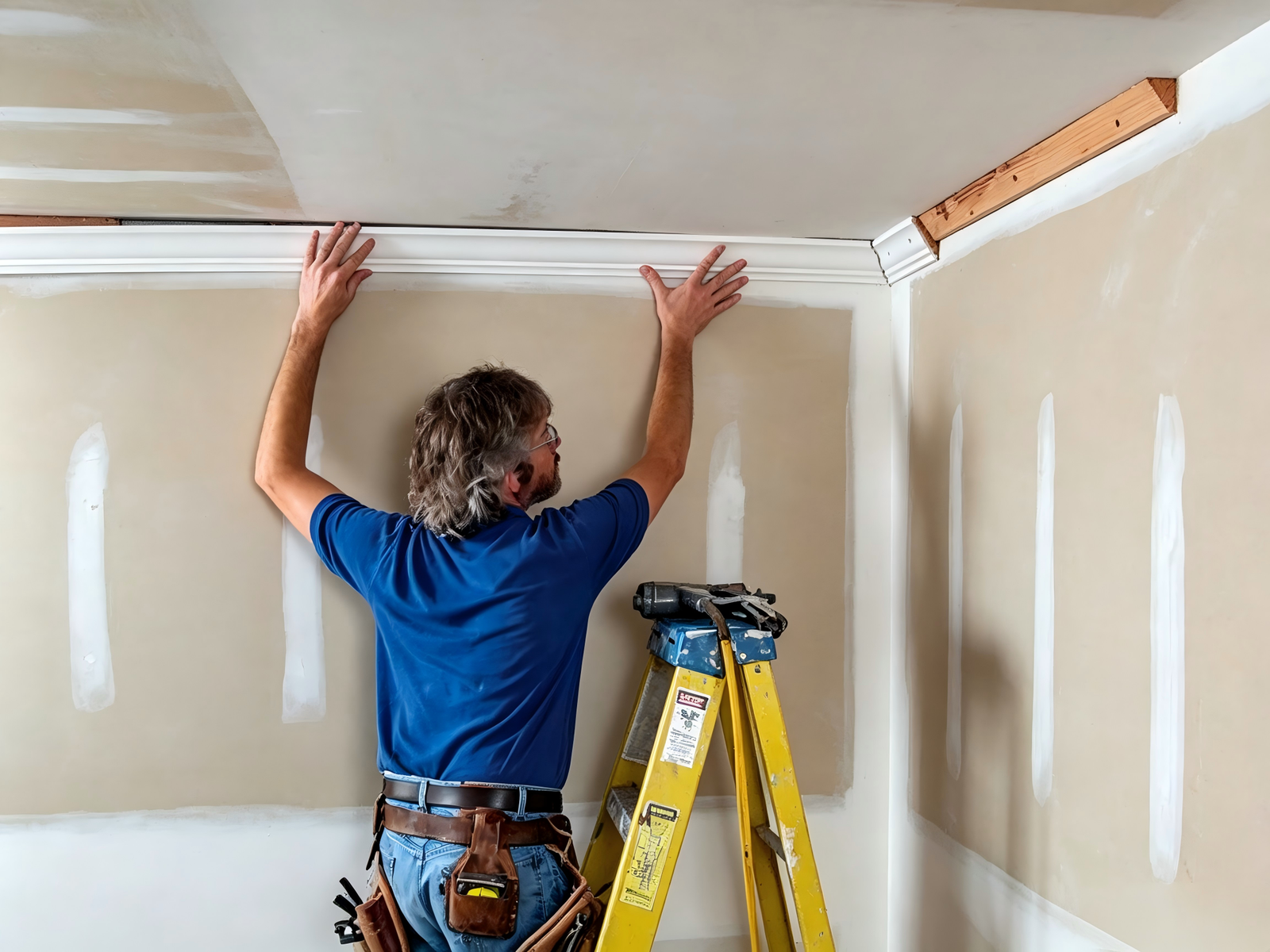
The best type of cove moulding depends on the required appearance, environment, mechanical performance, production volume, and budget.
Wood Cove Moulding
Wood is one of the traditional materials for architectural and furniture moulding.
Common wood species can include pine, poplar, oak, maple, cherry, and other hardwoods or softwoods, depending on the application.
Advantages
- Natural appearance
- Good machining characteristics
- Can be painted or stained
- Suitable for furniture and cabinetry
- Available in many wood species
- Can be matched with existing wood components
Limitations
Wood can be affected by moisture, temperature changes, and environmental conditions. Dimensional movement should therefore be considered when the moulding will be installed in humid or outdoor environments.
Wood cove moulding is particularly appropriate when natural appearance and compatibility with wooden furniture or architectural elements are important.
MDF Cove Moulding
Medium-density fiberboard, or MDF, is another common option for interior applications.
MDF provides a relatively smooth and uniform surface and is particularly suitable when the finished moulding will be painted.
Advantages
- Cost-effective
- Uniform material structure
- Smooth surface
- Easy to machine
- Suitable for painted applications
- Consistent appearance
Limitations
Standard MDF is not the best choice for high-moisture environments. Specialized moisture-resistant MDF can be considered when environmental exposure is higher.
Plastic Cove Moulding
Plastic cove moulding can provide a useful combination of dimensional consistency, moisture resistance, durability, and design flexibility.
Depending on the required performance, manufacturers may use materials such as PVC, ABS, PP, PE, PC, PMMA, TPE, TPU, or other engineering thermoplastics. Custom plastic profile manufacturers commonly select the resin according to requirements such as flexibility, impact resistance, UV resistance, chemical resistance, appearance, and cost.
Advantages
- Excellent moisture resistance for suitable materials
- Good dimensional consistency
- Wide range of colors
- Suitable for continuous profile production
- Custom cross-sections
- Suitable for indoor and outdoor applications, depending on material
- Can support secondary cutting and machining
Plastic cove moulding can therefore be a strong option for furniture, cabinetry, construction, lighting, automotive interiors, industrial equipment, and other applications where consistent profiles are required.
Metal Cove Moulding
Metal cove moulding can be manufactured from aluminum, stainless steel, or other suitable metals.
Metal profiles are normally selected when strength, durability, corrosion resistance, thermal performance, or a specific appearance is required.
Aluminum Cove Moulding
Aluminum provides a good combination of low weight, corrosion resistance, strength, and appearance.
Typical finishing options include:
- Anodizing
- Powder coating
- Painting
- Brushing
- Polishing
Stainless Steel Cove Moulding
Stainless steel is appropriate for applications requiring higher corrosion resistance, durability, or a premium metallic appearance.
It can be used in commercial interiors, architectural projects, kitchens, equipment, and other demanding environments.
Cove Moulding Materials: How to Choose the Right One
Material selection should be based on the actual operating environment rather than appearance alone.
| Material | Main Advantages | Typical Applications |
| Wood | Natural appearance, stainable, machinable | Furniture, cabinetry, interiors |
| MDF | Economical, smooth, paintable | Interior trim, furniture |
| PVC | Moisture resistance, flexible material options | Construction, kitchens, bathrooms |
| ABS | Impact resistance, appearance, processability | Furniture and industrial components |
| Aluminum | Lightweight, durable, corrosion resistant | Architectural and industrial applications |
| Stainless Steel | High durability and corrosion resistance | Commercial and industrial applications |
When selecting a material, consider:
- Operating temperature
- Humidity and water exposure
- UV exposure
- Chemical exposure
- Impact and wear
- Required stiffness or flexibility
- Surface appearance
- Fire-performance requirements
- Expected service life
- Production quantity
- Target cost
For custom plastic extrusion, material selection is normally considered together with profile geometry and production requirements because the resin affects flexibility, strength, appearance, processing behavior, and long-term performance.
How Is Cove Moulding Manufactured?
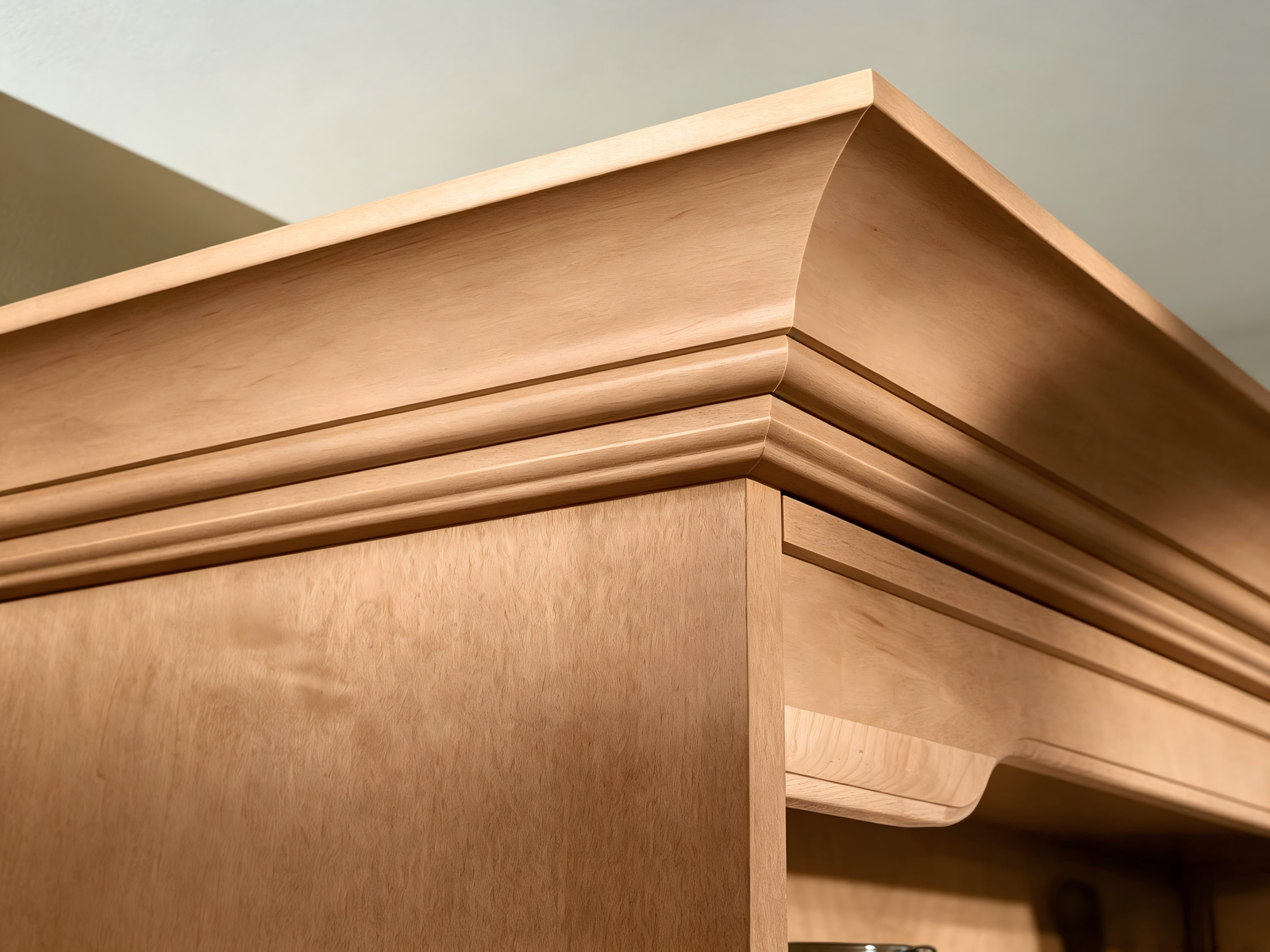
The manufacturing process depends heavily on the selected material and profile geometry.
A simple wooden profile may be machined using routers or moulders, while a continuous plastic profile may be manufactured through extrusion. Metal profiles may require forming, extrusion, stamping, machining, or a combination of processes.
A typical custom manufacturing workflow includes the following stages.
Step 1: Review the Design Requirements
The manufacturer first reviews the customer’s:
- 2D engineering drawing
- 3D CAD model
- Physical sample
- Profile dimensions
- Material requirements
- Tolerances
- Surface finish
- Required length
- Annual volume
- Application requirements
If a drawing is not available, a sample or detailed sketch may sometimes be sufficient for an initial feasibility assessment.
Step 2: Profile Design and DFM Review
For custom projects, the manufacturer evaluates the cross-section before tooling or production begins.
Important considerations include:
- Wall thickness
- Internal and external radii
- Profile symmetry
- Sharp corners
- Draft or forming requirements
- Material flow
- Cutting requirements
- Assembly method
- Dimensional tolerances
For plastic extrusion, the profile cross-section is especially important because the extrusion die must reproduce the required geometry consistently throughout continuous production.
Professional extrusion manufacturers may support customers from profile design and material selection through die development, trial production, and mass production.
Step 3: Tooling Development
If the required profile is not a standard product, dedicated tooling may be required.
For example, custom plastic extrusion generally requires a profile die designed around the required cross-section.
Tooling cost depends on factors such as:
- Profile complexity
- Material
- Dimensional requirements
- Die construction
- Number of cavities or flow channels
- Required production volume
- Secondary processing requirements
For high-volume programs, investing in dedicated tooling can significantly improve production consistency and unit economics.
Step 4: Forming or Machining
The actual manufacturing process depends on the material.
Possible processes include:
- CNC machining
- Routing
- Wood moulding
- Plastic extrusion
- Co-extrusion
- Injection molding
- Metal extrusion
- Roll forming
- Stamping
- Saw cutting
For constant cross-section plastic profiles, extrusion is particularly efficient because the profile can be produced continuously before being cut to the required length.
Step 5: Secondary Processing
Some cove moulding projects require additional operations after the primary forming process.
These may include:
- Precision cutting
- Drilling
- Punching
- CNC machining
- Slotting
- Notching
- Bonding
- Assembly
- End finishing
This allows a manufacturer to supply a finished component rather than simply a long extrusion or unfinished moulding.
Step 6: Surface Finishing
The required finish depends on the material and application.
Possible finishes include:
- Painting
- Staining
- Powder coating
- Anodizing
- Polishing
- Brushing
- Texturing
- Woodgrain finishing
- Custom color matching
For OEM applications, color consistency and surface appearance should be defined clearly in the specification.
Step 7: Quality Inspection
Quality control should cover both dimensional and visual requirements.
Typical inspection points include:
- Profile dimensions
- Wall thickness
- Radius
- Length
- Straightness
- Surface defects
- Color
- Gloss
- Material verification
- Fit and function
Custom profile manufacturers may also use first-article inspection, in-process dimensional checks, material traceability, and final packaging inspection to maintain production consistency.
Custom Cove Moulding: What Can Be Customized?
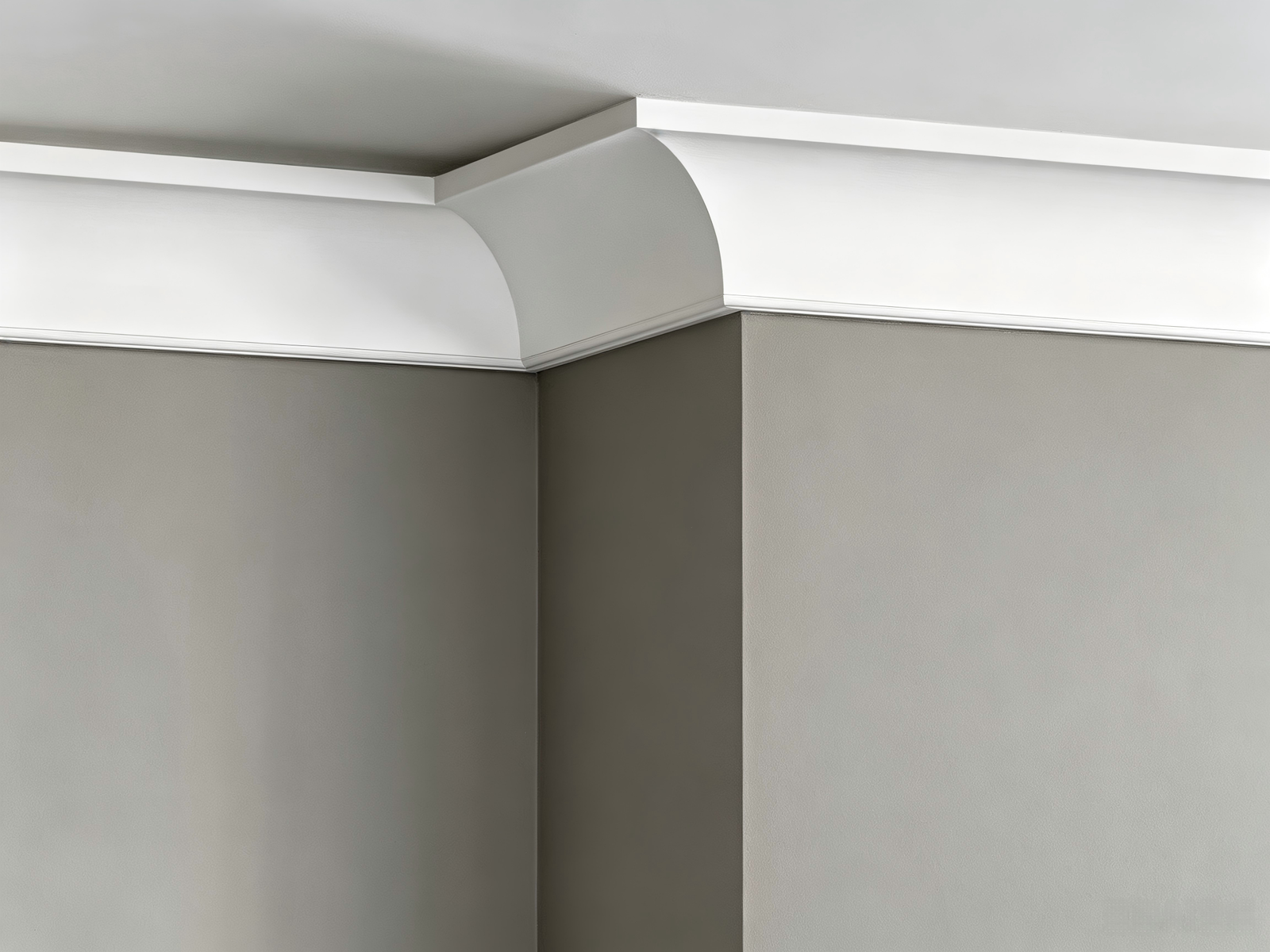
For OEM and industrial buyers, custom manufacturing is often more important than standard catalogue products.
A custom cove moulding can be developed around the customer’s actual installation or assembly requirements.
Profile Geometry
You can specify:
- Overall width
- Overall height
- Curve radius
- Wall thickness
- Internal dimensions
- External dimensions
- Mounting features
- Slots
- Holes
- Interlocking features
Material
The manufacturer can recommend an appropriate material based on:
- Strength
- Flexibility
- Temperature
- UV exposure
- Chemical resistance
- Moisture exposure
- Appearance
- Cost
Length
Standard moulding may be supplied in fixed lengths, while custom profiles can often be cut according to customer requirements.
For long continuous profiles, cut-length accuracy and packaging become important considerations during production and transportation.
Color and Finish
Custom colors, textures, gloss levels, and surface treatments can be specified for OEM applications.
Some plastic extrusion manufacturers support color matching from samples or specified color standards.
Tolerances
Not every dimension needs the same tolerance.
A better engineering approach is to identify critical dimensions that affect assembly or function and assign appropriate tolerances to them.
Overly tight tolerances can increase tooling and production costs without providing meaningful functional benefits.
Applications of Cove Moulding
Furniture Manufacturing
Cove moulding is widely used in:
- Cabinets
- Shelving
- Tables
- Storage furniture
- Kitchen furniture
- Decorative panels
- Built-in furniture
It can conceal joints and create a finished transition between different components.
Architectural Interiors
Architectural applications include:
- Wall-to-ceiling transitions
- Decorative trim
- Interior panels
- Door and window surrounds
- Feature walls
- Commercial interiors
Wood, MDF, polyurethane, and PVC are among the materials used for architectural moulding applications.
Kitchen and Bathroom Applications
Moisture-resistant materials can be considered for areas exposed to water or high humidity.
Plastic profiles are particularly useful when dimensional stability and moisture resistance are important.
Industrial and Commercial Applications
Cove-style profiles can also be adapted for industrial products, equipment, displays, enclosures, and other OEM applications.
In these cases, the profile may serve a functional purpose in addition to its decorative role, such as:
- Covering an edge
- Protecting a component
- Providing a transition
- Supporting assembly
- Improving product appearance
Advantages of Using Cove Moulding
Cove moulding offers several practical advantages.
1. Clean Appearance
The concave profile creates a smooth visual transition between surfaces.
2. Conceals Gaps and Joints
It can cover minor visual imperfections and create a more finished appearance.
3. Flexible Material Options
It can be produced from wood, MDF, plastic, aluminum, stainless steel, and other materials.
4. Suitable for Custom Designs
The relatively simple profile geometry makes cove moulding adaptable to custom dimensions and applications.
5. Suitable for Mass Production
Depending on the material and design, extrusion, moulding, forming, or machining processes can provide repeatable production.
6. Multiple Surface Finishes
Customers can select finishes according to both appearance and environmental requirements.
Common Cove Moulding Manufacturing Problems
Even a simple profile can create manufacturing challenges if the design, material, tooling, or process is not properly controlled.
Dimensional Inconsistency
Variation in width, height, wall thickness, or radius can cause assembly problems.
Solution: Define critical dimensions clearly and implement in-process dimensional inspection.
Profile Deformation
Plastic profiles can deform due to improper material selection, cooling conditions, tooling design, or production parameters.
Solution: Review the profile geometry and material before tooling and validate the process during sampling.
Warping
Warping can occur when material stresses are uneven or when the manufacturing process is not properly controlled.
Solution: Optimize tooling, material selection, cooling, forming, and handling procedures.
Surface Defects
Common defects can include:
- Scratches
- Contamination
- Uneven texture
- Color variation
- Sink or deformation marks
- Processing marks
Solution: Establish clear surface specifications and inspect both first samples and production batches.
Poor Fit
Even when the profile looks correct, incorrect dimensions or tolerances can cause problems during installation.
Solution: Test the moulding with the actual mating component whenever possible.
What Information Do You Need to Request a Cove Moulding Quote?
A manufacturer can usually provide a more accurate quotation when the RFQ includes the following information:
- 2D drawing or 3D CAD file
- Material specification
- Profile dimensions
- Required tolerances
- Surface finish
- Color requirements
- Cut length
- Order quantity
- Estimated annual volume
- Application and operating environment
- Packaging requirements
- Target delivery schedule
If you do not have a complete drawing, provide a physical sample, sketch, photographs, or basic dimensions. A capable manufacturer can then determine whether the design can be developed into a production-ready profile.
Cove Moulding Manufacturing FAQs
What is cove moulding used for?
Cove moulding is primarily used to create smooth transitions between surfaces, conceal joints and gaps, protect edges, and provide decorative finishing. Common applications include ceilings, walls, cabinets, furniture, shelving, and architectural interiors.
What is the difference between cove moulding and crown moulding?
Cove moulding generally has a simple concave curve, while crown moulding typically uses a more complex decorative profile. Cove moulding is often preferred for minimalist transitions and simple finishing details.
What materials can be used for cove moulding?
Common options include wood, MDF, PVC, ABS, polyurethane, aluminum, and stainless steel. The best material depends on the required appearance, mechanical properties, environmental resistance, production volume, and cost.
Can cove moulding be custom made?
Yes. Custom cove moulding can be manufactured according to CAD drawings, engineering drawings, samples, sketches, or specified dimensions. Customization may include profile geometry, material, length, color, surface finish, and tolerances.
What is the best material for outdoor cove moulding?
There is no single best material for every outdoor application. Material selection should consider UV exposure, temperature, moisture, impact, chemical exposure, and required service life. UV-stabilized plastics, suitable metals, and appropriately treated wood can all be considered depending on the application.
How is plastic cove moulding manufactured?
Plastic cove moulding with a constant cross-section is commonly produced using plastic extrusion. The process generally involves material preparation, die design, extrusion, cooling and sizing, cutting, inspection, and optional secondary processing.
What information is needed for a cove moulding quotation?
A drawing or sample, material, dimensions, tolerances, surface finish, cut length, quantity, and application requirements are the most useful starting information.
Can a manufacturer produce prototypes before mass production?
Yes. Custom profile manufacturers commonly develop tooling and produce trial samples before proceeding to volume production. This allows the customer to verify the design and fit before committing to a large production run.
What is the MOQ for custom cove moulding?
MOQ depends on the material, tooling, manufacturing process, profile complexity, and production economics. For custom extrusion or moulding, the required production volume should be discussed during the quotation stage.
How can I reduce the cost of custom cove moulding?
The most effective approach is to optimize the design before tooling. Avoid unnecessarily tight tolerances, use a suitable material, simplify the profile where possible, and provide accurate annual volume forecasts. Higher production quantities can also help distribute tooling costs across more parts.
Conclusion
Cove moulding is a relatively simple profile, but its manufacturing requirements can vary significantly depending on the material, dimensions, application, and production volume.
If you are sourcing custom cove moulding, the most efficient starting point is to provide your drawing, material requirement, dimensions, tolerances, quantity, surface finish, and application information. Tops Precision can then evaluate manufacturability, recommend suitable materials and processes, estimate tooling requirements, and provide a production quotation.


