


Your sheet metal protective film specification should define the surface being protected and the complete fabrication route. Identify the film grade and covered faces. Agree storage limits and removal conditions before ordering. Verify the exposed surface after peeling. Film color alone cannot establish compatibility or acceptance.
Define The Surface And Faces To Protect
You should identify the actual finish and every face requiring temporary protection.
State the metal grade and surface condition. Bare aluminum and brushed stainless steel can require different film choices. A painted surface adds coating compatibility questions. Identify visible faces on the drawing instead of relying on which side carries blue film.
Specify whether protection covers one face or both. Mark intentional openings and areas that must remain accessible. Include texture direction when appearance depends on it.
Use an agreed finish reference when evaluating cosmetic surfaces. Our brushed stainless steel finish guide explains that separate acceptance decision. Protective film preserves an acceptable finish; it does not create one.
Select A Film Grade For The Complete Route
You should approve a specific film system against its surface and processing conditions.
Record the manufacturer and product designation. Include the applicable datasheet revision and any supplier recommendation. State whether substitutions require approval. A thicker film or stronger adhesive is not automatically a better choice.
Nitto selection guidance considers application alongside processing and storage performance. It also treats peeling as a separate functional requirement. Use these stages when asking the film supplier for a recommendation.
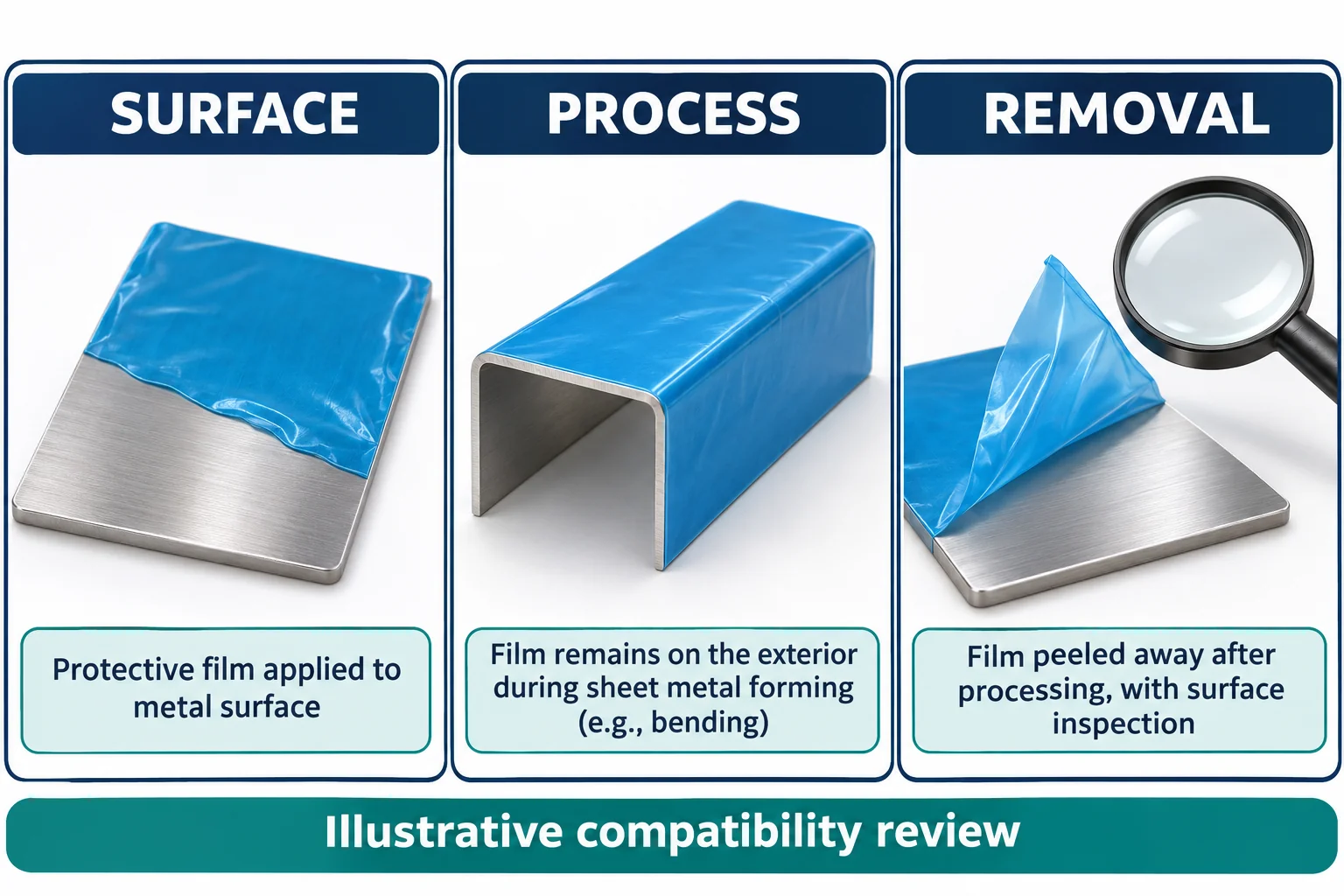
A film that remains attached during bending may still be difficult to remove after storage. An easily removed film may lift during processing. Your approval needs to address both situations on representative material.
| Requirement | Information To Agree | Evidence To Request |
|---|---|---|
| Surface and coverage | Finish and protected faces | Drawing and representative surface sample |
| Film identity | Manufacturer and exact grade | Current datasheet and substitution agreement |
| Fabrication route | Operations with film attached | Compatibility recommendation and production trial |
| Storage exposure | Environment and expected duration | Product limits and application validation |
| Removal and acceptance | Removal stage and surface criteria | Peel trial and inspection record |
Confirm Compatibility Before Laser Cutting Or Forming
You should confirm film suitability for each operation where it remains attached.
For laser cutting, identify the laser technology and the actual sheet surface. Request a film specifically recommended for that combination. Do not assume ordinary transport film is a laser process film.
Novacel laser film guidance identifies laser absorption and resistance to cutting gas pressure as selection factors. Its 4236 product listing explicitly identifies fiber and CO2 laser processes. That illustrates product-specific qualification; it does not approve the grade for every job.
For forming, review contact with tooling and any lubricants. Check whether film movement affects the operation or leaves an unacceptable mark. Include representative bends and handling in the trial.
Do not extend a cutting or bending approval to welding or a coating cure. Agree where the film must be removed. Select any process masking separately for the actual treatment conditions.
Control Application And Contamination
You should apply film under conditions that protect adhesion and avoid trapping damaging contamination.
Agree the surface condition before lamination. Oil or dirt can affect adhesion. Trapped particles can also compromise a cosmetic surface during subsequent handling. Define the permitted cleaning method for the metal or coating.
Review application pressure and tension with the film supplier. Inspect for unacceptable wrinkles or trapped debris. Include lifting edges in the control plan rather than treating every attached sheet as acceptable.
The cautions in Nitto surface protective materials literature discuss contamination and excessive lamination tension. They also call for verification using actual products. Apply the specific product instructions rather than copying a generic application recipe.
Define Storage And The Removal Deadline
You should specify exposure conditions and a removal deadline supported by the selected product and application.
Separate storage of unused film rolls from storage of laminated metal parts. These are different conditions. Record the application date when time on the surface matters to the approved protection plan.
Tell the supplier about expected outdoor exposure and transport conditions. Review heat and stacking pressure where relevant. Do not assign a universal outdoor lifetime to any blue or transparent film.
Manufacturer durability statements apply to their stated products and conditions. Confirm their applicability to your actual finish and manufacturing history. Obtain revised approval if storage or processing changes materially.
Temporary surface film is not automatically a complete corrosion protection system. Agree moisture control and packaging separately when the transport environment requires them.
Inspect The Surface After Film Removal
You need an agreed inspection stage that evaluates the exposed surface after peeling.
Film can conceal scratches or other cosmetic differences. Agree when representative parts are uncovered for inspection. Define how exposed surfaces are protected afterward if further handling remains.
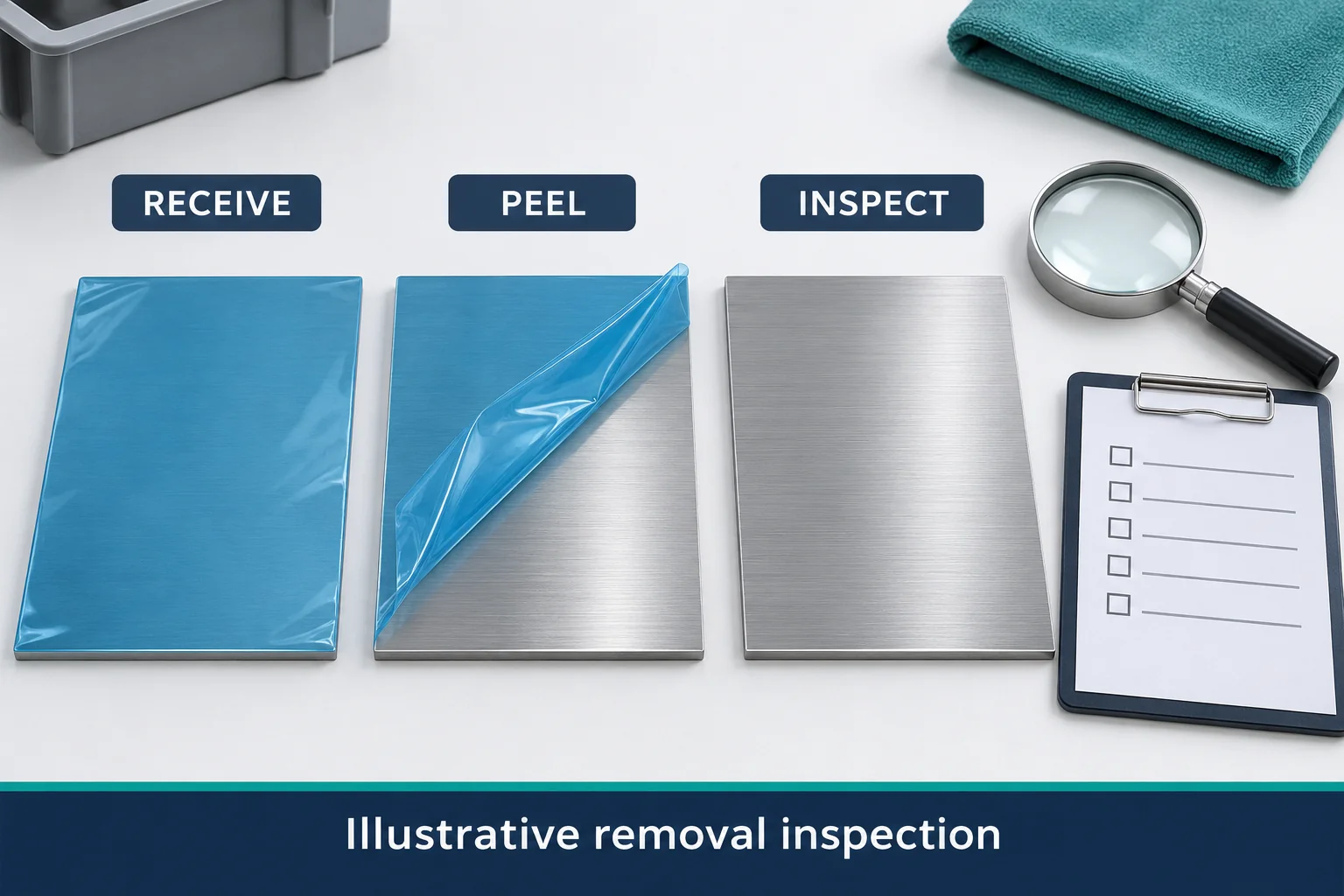
Specify the viewing conditions and acceptable surface reference. Check residue and visible marks against the agreed criteria. Record any permitted cleaning step. A surface that looks clean may still require additional verification before bonding or coating.
Nitto warns that small material transfers can affect later painting or bonding. Therefore, validate the downstream process when adhesive transfer could matter. Do not equate a successful visual peel check with universal chemical cleanliness.
If removal causes coating damage or unacceptable residue, hold the affected parts for review. Document the finish and processing history before selecting a remedy. Avoid unapproved solvents that could create further damage.
Include Film Handling In The Purchase Agreement
Your quotation should include the agreed protection route and its inspection responsibilities.
TOPS Precision offers sheet metal fabrication services板金加工サービス. Send the surface and process requirements for a project-specific review. Confirm the proposed film grade and trial arrangements before approving production.
Compare equivalent coverage and delivery conditions. Separate film supply from application labor and removal work. Additional inspection or replacement protection can also affect cost. Agree responsibility for peeling and cleaning at receiving.
A service listing does not establish an approved film brand for your application. Confirm supply arrangements and compatibility evidence within the order.
Frequently Asked Questions
You should resolve these protective film questions before releasing your sheet metal order.
Does Blue Film Identify A Particular Grade
No. Record the manufacturer and exact product designation. Color alone does not establish adhesive chemistry or process suitability.
Can Any Protective Film Stay On During Laser Cutting
No. Confirm compatibility with the laser technology and metal surface. Validate the proposed film under representative processing conditions.
Should Film Remain On During Bending
That depends on the film and operation. Review tooling contact and removal performance before approving that route.
Does Stronger Adhesion Always Improve Protection
No. Adhesion must support processing while allowing acceptable removal. Excessive removal difficulty can create additional handling risks.
Can You Inspect A Cosmetic Finish Through Film
Film can conceal relevant marks. Agree an inspection stage that exposes the surface and defines subsequent protection.
Is A Film Guaranteed To Leave No Residue
Do not make that assumption. Evaluate the actual surface after the intended processing and storage history.
Does Protective Film Replace Corrosion Packaging
Not automatically. Assess corrosion control and moisture exposure separately for the complete shipping and storage arrangement.
What Should You Do When Film Tears During Removal
Hold affected parts for review if removal or surface acceptance becomes uncertain. Use only an approved recovery and inspection method.
Request A Defined Protection Plan
Contact us with your drawing and required finish. Identify protected faces and the fabrication sequence. Include quantities and expected storage conditions. Request a quotation covering the film grade and the agreed removal and inspection responsibilities.