



Le point le plus important à comprendre est que 925 l'acier inoxydable n'est généralement pas une qualité d'acier inoxydable standard. La désignation 925 désigne traditionnellement 925 argent sterling, un alliage contenant 92.5% argent en masse. Acier inoxydable, en revanche, est une famille d'alliages à base de fer identifiés par des nuances telles que 304, 316, 316L, 410, et 17-4 PH.
Cette distinction est importante lors de la sélection du matériau pour un composant usiné, pièce fabriquée, produit de bijouterie, dispositif médical, ou application industrielle. Choisir le mauvais matériau en fonction d'un nom de qualité incorrect peut affecter la résistance à la corrosion, force, usinabilité, état de surface, coût, et durée de vie.
Dans ce guide, nous vous expliquons ce que signifie « acier inoxydable 925 », comment 925 l'argent sterling diffère de l'acier inoxydable, les propriétés et les applications des deux matériaux, et comment choisir la bonne nuance d'acier inoxydable pour les pièces personnalisées.
Qu'est-ce que 925 Acier inoxydable?
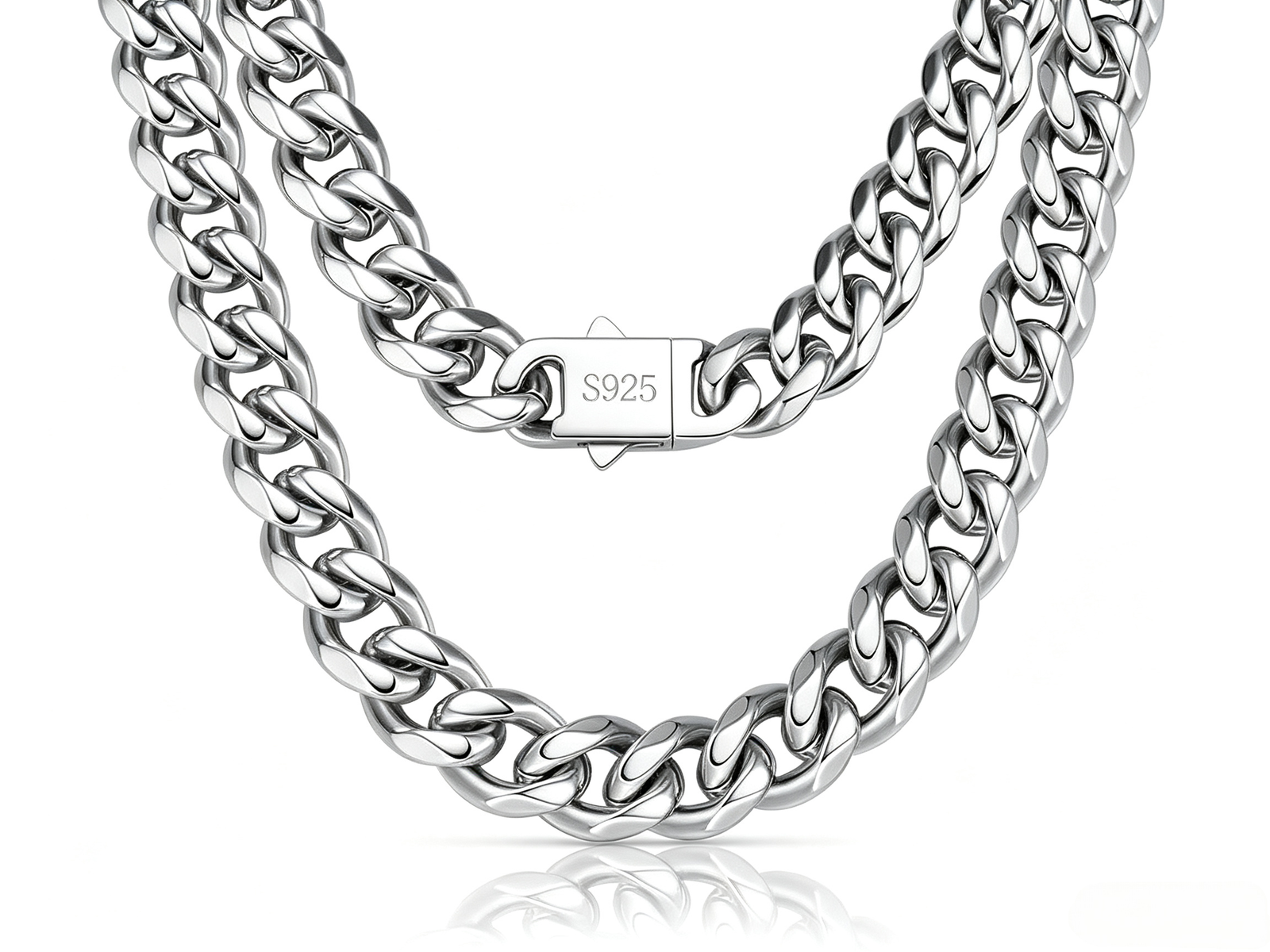
Est 925 L'acier inoxydable, une véritable qualité d'acier inoxydable?
À proprement parler, « L'acier inoxydable 925 » n'est pas une qualité d'acier inoxydable standard communément reconnue..
Le numéro 925 est principalement associé à argent sterling. UN 925 L'alliage d'argent sterling contient environ:
- 5% argent
- 5% autres éléments d'alliage, généralement du cuivre
Le but de l'ajout d'éléments d'alliage est d'améliorer la dureté et la durabilité de l'argent pur., qui est relativement doux.
L’inox est une toute autre famille de matériaux. Les aciers inoxydables sont des alliages à base de fer contenant au moins environ 10.5% chrome, ce qui permet la formation d'une fine couche, couche passive riche en chrome qui offre une résistance à la corrosion. Différentes qualités d'acier inoxydable ajoutent ensuite des éléments tels que le nickel, molybdène, manganèse, azote, carbone, ou d'autres éléments d'alliage pour obtenir des propriétés spécifiques.
Donc, si un fournisseur, liste de produits, dessin, ou l'article en ligne fait référence à "Acier inoxydable 925," il est important de confirmer à quel matériel est réellement destiné.
Il peut faire référence à:
- 925 argent sterling
- Un produit en acier inoxydable décrit à tort comme « acier inoxydable 925 »
- Une désignation exclusive ou commerciale qui n'est pas une nuance d'acier inoxydable reconnue
- Un produit combinant l'acier inoxydable avec un 925 composant ou finition en argent
Pour les applications d'ingénierie et de fabrication, précisez toujours le qualité de matériau reconnue et norme applicable plutôt que de se fier uniquement au terme « acier inoxydable 925 ».
Qu'est-ce que 925 Argent Sterling?
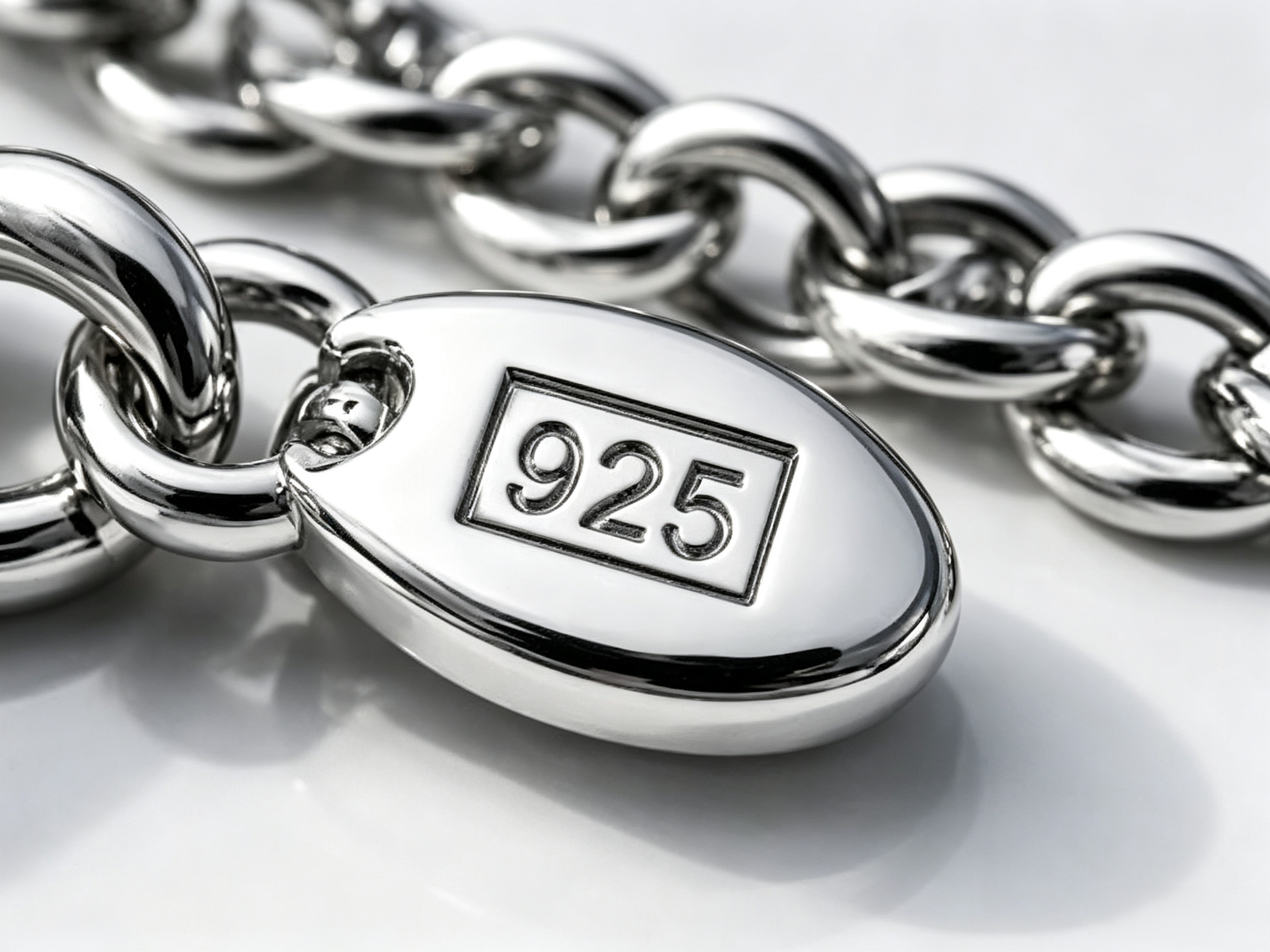
925 l'argent sterling est un alliage de métaux précieux contenant 92.5% argent et environ 7.5% autres métaux.
L'argent pur a une excellente conductivité électrique et thermique et un aspect attrayant, mais il est relativement doux. L'alliage de l'argent avec d'autres métaux augmente sa dureté et le rend plus pratique pour les produits devant résister à une manipulation quotidienne..
Caractéristiques typiques de 925 Argent Sterling
- Teneur élevée en argent
- Aspect métallique brillant
- Bonne conductivité électrique
- Excellente conductivité thermique
- Ductilité relativement bonne
- Plus facile à former que de nombreux aciers inoxydables
- Peut être poli pour obtenir un lustre élevé
- Peut se ternir avec le temps
L'argent sterling est particulièrement courant dans:
- Anneaux
- Colliers
- Bracelets
- Boucles d'oreilles
- Objets de décoration
- Vaisselle
- Objets de collection
- Composants électriques spécialisés
925 Argent sterling vs acier inoxydable
La plus grande différence est leur composition fondamentale.
| Propriété | 925 Argent Sterling | Acier inoxydable |
| Famille de matériaux | Alliage d'argent | Alliage à base de fer |
| Élément principal | 92.5% argent | Fer |
| Chrome | Normalement, ce n'est pas l'élément déterminant | Au moins ~10,5% en acier inoxydable |
| Catégories/désignations typiques | 925 | 304, 316, 316L, 410, 17-4 PH, etc.. |
| Comportement à la corrosion | Peut ternir | Résistance à la corrosion généralement excellente |
| Force | Relativement modéré | Varie considérablement selon le niveau |
| Dureté | Relativement doux | Généralement plus élevé |
| Apparence | Argent brillant | Argent/métallique |
| Entretien | Un nettoyage régulier peut être nécessaire | Généralement peu d'entretien |
| Coût | Plus élevé en raison de la teneur en argent | Généralement plus économique |
| Utilisations typiques | Bijoux et produits de décoration | Industriel, médical, automobile, produits architecturaux et de consommation |
L'acier inoxydable ne doit pas être traité comme un seul matériau. Différentes qualités ont des propriétés mécaniques et de corrosion sensiblement différentes. Par exemple, nuances austénitiques telles que 304 ont une excellente formabilité et résistance à la corrosion, alors que 316 offre une résistance améliorée dans les environnements contenant du chlorure plus exigeants en raison de sa teneur en molybdène.
Propriétés de 925 Argent Sterling
Si votre projet nécessite réellement 925 argent sterling, les propriétés suivantes sont pertinentes.
Propriétés physiques
925 l'argent sterling a un brillant, aspect métallique attrayant et peut être poli pour obtenir une finition très brillante.
Sa teneur élevée en argent lui confère également une excellente conductivité électrique et thermique par rapport à la plupart des nuances d'acier inoxydable..
Cela rend l'argent sterling particulièrement précieux lorsque la conductivité électrique ou thermique est importante en plus de l'apparence..
Propriétés mécaniques
L'argent pur est relativement mou, donc 925 l'argent sterling est allié pour améliorer la dureté et la durabilité.
Par rapport à l'acier inoxydable, cependant, l'argent sterling est généralement moins adapté aux composants exposés à des charges mécaniques élevées, abrasion sévère, ou impact répété.
Pour cette raison, L'acier inoxydable est normalement le meilleur choix technique lorsque la résistance et la longue durée de vie sont les principales exigences..
Ternissement et corrosion
Une idée fausse très répandue est que l’argent sterling « rouille ».
L'argent ne rouille pas de la même manière que l'acier à base de fer.. Plutôt, boîte en argent sterling ternir, résultant en une surface plus foncée ou décolorée.
Le ternissement peut être accéléré par l'exposition à:
- Composés contenant du soufre
- Humidité
- Produits de beauté
- Transpiration
- Produits chimiques ménagers
- Environnements pollués
Un nettoyage régulier et un stockage approprié peuvent aider à conserver son apparence.
Propriétés de l'acier inoxydable
L'acier inoxydable offre une combinaison différente de propriétés et est largement utilisé pour les composants techniques..
1. Résistance à la corrosion
La résistance à la corrosion est l’une des caractéristiques déterminantes de l’acier inoxydable.
Le chrome réagit avec l'oxygène pour former un film extrêmement fin., couche passive riche en chrome en surface. Cette couche protège le métal sous-jacent et peut se reformer lorsqu'elle est endommagée, à condition que des conditions environnementales appropriées soient présentes.
Cependant, l'acier inoxydable n'est pas complètement résistant à la corrosion.
La performance contre la corrosion dépend de:
- Nuance d'acier inoxydable
- Concentration de chlorure
- Température
- Exposition chimique
- État des surfaces
- Crevasses et joints
- Contamination de fabrication
- Procédures de nettoyage
Par exemple, 316 l'acier inoxydable est généralement plus approprié que 304 lorsque l’exposition aux chlorures est une préoccupation majeure.
2. Résistance et durabilité
Les nuances d'acier inoxydable offrent une large gamme de propriétés mécaniques.
Selon le grade et l'état, l'acier inoxydable peut fournir:
- Haute résistance à la traction
- Bonne limite d'élasticité
- Bonne ténacité
- Résistance à l'usure
- Résistance aux chocs
- Longue durée de vie
Cela rend l'acier inoxydable adapté aux composants structurels ainsi qu'aux petites pièces usinées avec précision..
3. Résistance à la chaleur
Certaines nuances d'acier inoxydable conservent des propriétés mécaniques et anticorrosion utiles à des températures élevées..
Cependant, les performances en température varient considérablement entre les qualités.
Si votre composant fonctionne en continu à des températures élevées, le matériau doit être sélectionné en fonction:
- Température de fonctionnement
- Cyclisme thermique
- Chargement mécanique
- Conditions d'oxydation
- Durée de vie requise
4. Fabrication et usinabilité
L'acier inoxydable peut être traité selon de nombreuses méthodes de fabrication, y compris:
- Fraisage CNC
- Tournage CNC
- Usinage CNC suisse
- Découpe au laser
- Fabrication de tôles
- Estampillage
- Pliant
- Soudage
- Affûtage
- Polissage
- Passivation
- Électropolition
Cependant, toutes les nuances d'acier inoxydable ne s'usinent pas de la même manière.
Par exemple, certains aciers inoxydables austénitiques peuvent écrouir lors de l'usinage. Cela rend les paramètres de coupe, outillage, stratégie de refroidissement, porte-pièce, et le contrôle des copeaux particulièrement important.
Pour les composants CNC de précision, la sélection des matériaux doit donc être considérée en même temps que le processus de fabrication.
Applications communes de 925 Argent Sterling
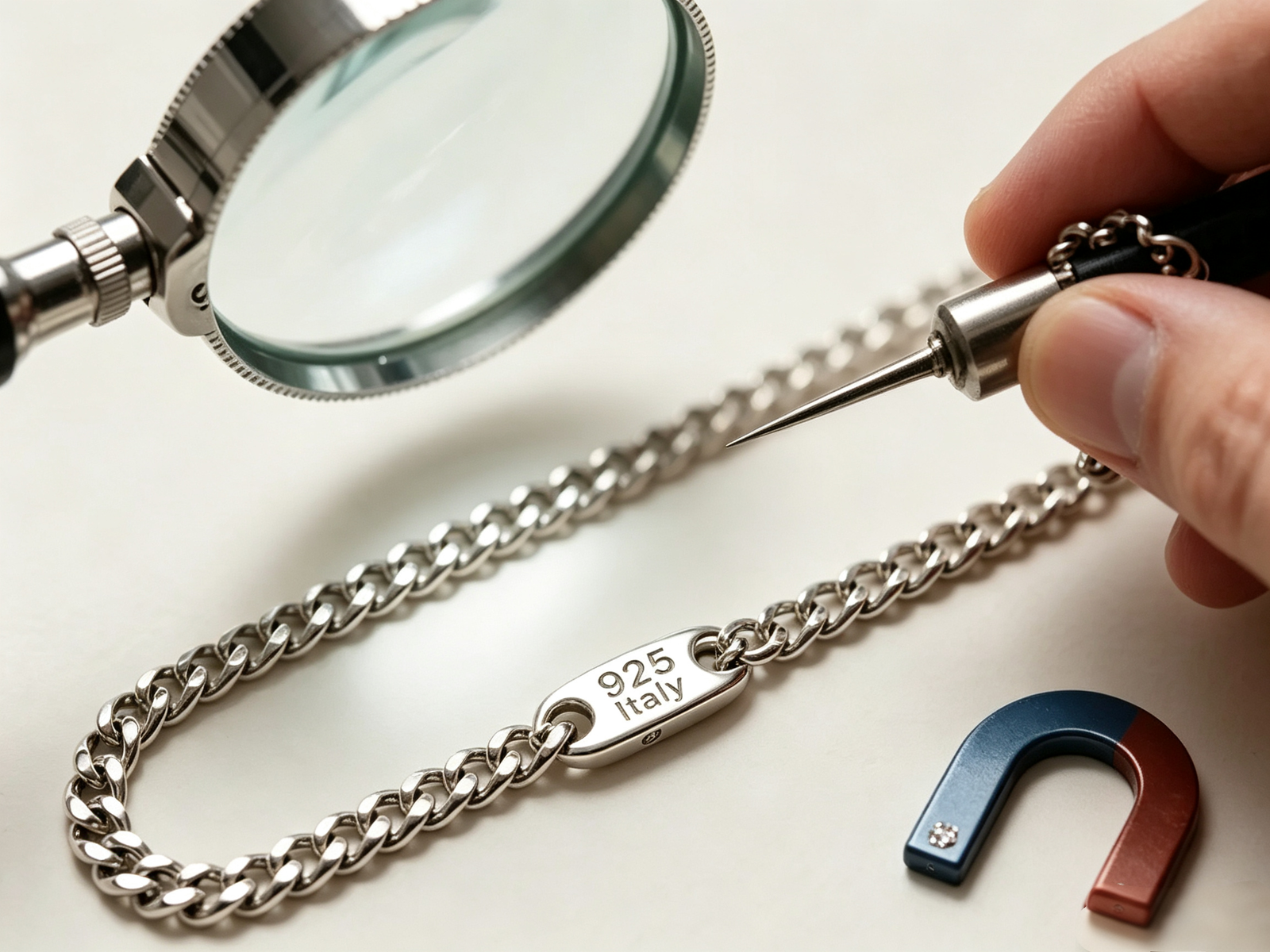
Bijoux
Les bijoux sont l'application la plus reconnaissable de 925 argent sterling.
Il est couramment utilisé pour:
- Anneaux
- Boucles d'oreilles
- Bracelets
- Colliers
- Pendentifs
- Charmes
- Accessoires décoratifs
Sa combinaison d'apparence, maniabilité, et sa teneur en métaux précieux le rend particulièrement adapté à la fabrication de bijoux.
Produits décoratifs
925 l'argent sterling est également utilisé pour les objets décoratifs où l'apparence et la valeur matérielle sont importantes.
Les exemples incluent:
- Ornements
- Objets de collection
- Composants décoratifs
- Accessoires de luxe
Applications électriques
L'argent a une conductivité électrique très élevée, les alliages d'argent peuvent donc être utilisés dans des applications électriques et électroniques spécialisées.
Cependant, le choix du matériau dépend de la conductivité requise, propriétés mécaniques, comportement de contact, environnement opérationnel, et le coût.
Applications courantes de l'acier inoxydable
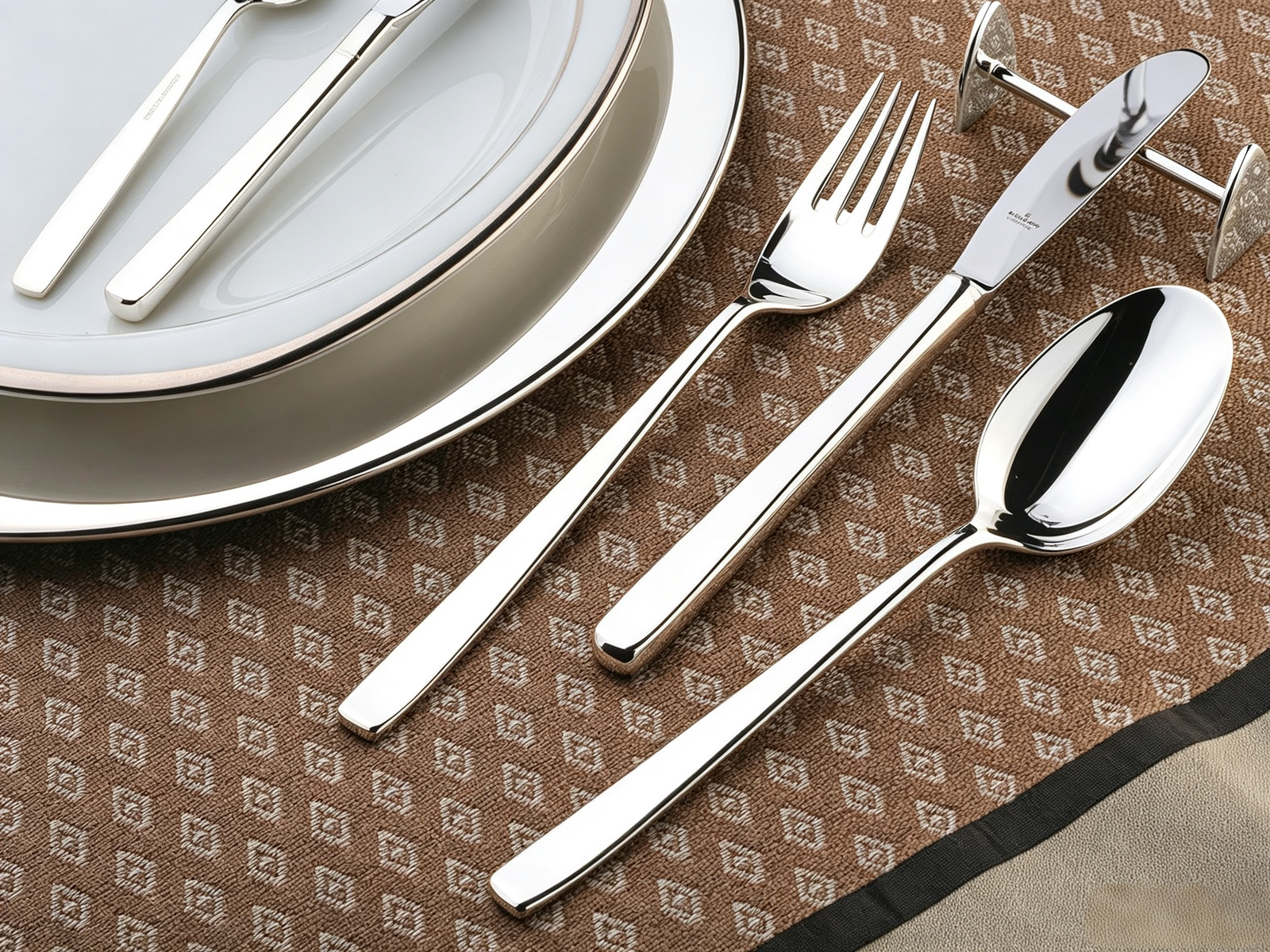
L'acier inoxydable a une gamme d'applications techniques beaucoup plus large.
Ustensiles de cuisine et équipement alimentaire
304 l'acier inoxydable est couramment utilisé dans de nombreuses applications alimentaires et domestiques en raison de sa résistance à la corrosion, nettoyabilité, et durabilité.
Les produits typiques incluent:
- Équipement de cuisine
- Composants agroalimentaires
- Couler
- Conteneurs
- Appareils
- Matériel de restauration commerciale
Équipement médical
L'acier inoxydable est largement utilisé dans les équipements médicaux et de soins de santé, car les qualités appropriées peuvent offrir une résistance à la corrosion., durabilité, nettoyabilité, et compatibilité avec les processus de stérilisation.
Les applications incluent:
- Instruments chirurgicaux
- Matériel médical
- Instruments dentaires
- Plateaux chirurgicaux
- Appareils médicaux
La qualité exacte et l’état de surface doivent être sélectionnés en fonction des exigences réglementaires et fonctionnelles de l’appareil..
Composants automobiles
L'acier inoxydable peut être utilisé dans:
- Composants d'échappement
- Supports
- Attaches
- Composants de garniture
- Pièces mécaniques de précision
- Composants résistants à la chaleur
La qualité doit être sélectionnée en fonction de la température, exposition à la corrosion, charges mécaniques, et exigences de fabrication.
Construction et architecture
L'acier inoxydable est largement utilisé dans:
- Mains courantes
- Panneaux architecturaux
- Bardage
- Composants structurels
- Attaches
- Éléments décoratifs
Sa résistance à la corrosion et son aspect de surface le rendent particulièrement attractif pour les applications architecturales.
Équipement industriel
Les applications industrielles incluent:
- Composants de machines
- Arbres
- Bagues
- Calendrier
- Attaches
- Composants de la pompe
- Vannes
- Équipement de traitement chimique
- Pièces usinées CNC sur mesure
Pour les applications exigeantes, le choix entre 304, 316, 17-4 PH, duplex en acier inoxydable, et d'autres qualités peuvent affecter considérablement les performances du produit.
925 Argent sterling contre 304 Acier inoxydable
304 L'acier inoxydable est l'une des nuances d'acier inoxydable austénitique les plus utilisées..
Il est communément associé à environ 18% chrome et 8% nickel, bien que la composition réelle dépende de la spécification applicable. Il offre une bonne résistance à la corrosion, ductilité, formabilité, et la soudabilité.
| Fonctionnalité | 925 Argent Sterling | 304 Acier inoxydable |
| Matériau principal | Alliage d'argent | Alliage à base de fer |
| Résistance à la corrosion | Bien mais peut ternir | Excellent pour de nombreux environnements |
| Force | Modéré | Généralement plus élevé |
| Dureté | Relativement faible | Plus haut |
| Apparence | Argent brillant | Métallique, poli ou brossé |
| Conductivité électrique | Très élevé | Beaucoup plus bas |
| Coût | Plus haut | Généralement inférieur |
| Usinage | Relativement réalisable | Nécessite un outillage et des paramètres appropriés |
| Applications courantes | Bijoux, produits décoratifs | Produits industriels et de consommation |
Choisir 925 argent sterling lorsque la teneur en métaux précieux, apparence, et la conductivité électrique sont importantes.
Choisir 304 acier inoxydable quand la force, résistance à la corrosion, durabilité, et la rentabilité sont plus importantes.
316 Acier inoxydable vs 925 Argent Sterling
316 acier inoxydable est un autre matériau d'ingénierie majeur.
Sa teneur en molybdène améliore la résistance à la corrosion, en particulier dans les environnements où les chlorures et les produits chimiques agressifs sont préoccupants.
| Fonctionnalité | 925 Argent Sterling | 316 Acier inoxydable |
| Famille de matériaux | Alliage d'argent | Acier inoxydable austénitique |
| Objectif principal | Aspect et applications de métaux précieux | Performances d'ingénierie |
| Résistance à la corrosion | Bien mais peut ternir | Excellent, particulièrement par rapport à de nombreuses qualités standards |
| Force | Modéré | Haut |
| Résistance aux chlorures | Ce n'est pas son principal avantage | Mieux adapté aux conditions riches en chlorures |
| Applications industrielles | Limité | Extensif |
| Coût typique | Plus haut | Modéré |
| Applications courantes | Bijoux | Marin, médical, chimique, équipement alimentaire et industriel |
Pour les composants industriels exposés à l'humidité, produits chimiques, ou environnements contenant des chlorures, 316 L'acier inoxydable est généralement un matériau d'ingénierie beaucoup plus approprié que 925 argent sterling.
316L Acier inoxydable vs 925 Argent Sterling
316L est la version bas carbone de 316 acier inoxydable.
La faible teneur en carbone contribue à réduire le risque de sensibilisation associé au soudage et rend le 316L particulièrement utile pour les composants fabriqués nécessitant des joints soudés..
Les applications typiques incluent:
- Matériel médical
- Équipement pharmaceutique
- Équipement de transformation des aliments
- Équipement de traitement chimique
- Composants marins
- Composants de précision
- Composants de bijoux et de montres
La décision entre 316L et 925 l’argent sterling doit donc être basé sur les exigences fonctionnelles de l’application plutôt que sur sa simple apparence..
Comment choisir la bonne qualité d'acier inoxydable
Si vous développez une pièce métallique sur mesure, la sélection d’un matériau générique « acier inoxydable » n’est généralement pas suffisante.
Considérez les facteurs suivants.
1. Environnement corrosif
Demander:
- Le composant entrera-t-il en contact avec l'eau?
- Est-il exposé à l'eau salée?
- Est-ce qu'il entrera en contact avec des produits chimiques?
- Est-il utilisé à l'extérieur?
- Une exposition au chlorure est-elle attendue?
Pour les environnements plus agressifs, 316 ou d'autres grades spécialisés peuvent être plus appropriés que 304.
2. Exigences mécaniques
Considérer:
- Résistance à la traction
- Limite d'élasticité
- Dureté
- Résistance aux chocs
- Résistance à l'usure
- Exigences en matière de fatigue
Un composant supportant des charges mécaniques peut nécessiter un acier inoxydable à plus haute résistance plutôt qu'une nuance à usage général..
3. Processus de fabrication
Le choix des matériaux doit être compatible avec la méthode de fabrication.
Par exemple:
- Usinage CNC
- Tournage CNC
- Fraisage
- Estampillage
- Emboutissage profond
- Soudage
- Découpe au laser
- Affûtage
- Polissage
Un matériau performant en service n’est pas nécessairement le matériau le plus simple à fabriquer..
4. Finition de surface
Pour les composants visibles, déterminer si vous avez besoin:
- Finition brossée
- Polissage miroir
- Finition satinée
- Passivation
- Électropolition
- Dynamitage des perles
- Traitement de surface sur mesure
Les exigences de surface doivent être communiquées avant la production car elles peuvent affecter les surépaisseurs d'usinage, tolérances, et inspection finale.
5. Tolérance dimensionnelle
Pour les composants de précision, définir:
- Dimensions critiques
- Tolérances générales
- DG&Exigences T
- Rugosité de surface
- Platitude
- Concentricité
- Exigences du fil
La sélection des matériaux et la stratégie d'usinage doivent être évaluées ensemble.
6. Volume de production
Le processus le plus économique peut différer en fonction du volume de production.
Par exemple:
- Prototype → Usinage CNC
- Faible volume → Usinage CNC ou fabrication de tôle
- Volume moyen → Usinage CNC, estampillage, ou former
- Volume élevé → Estampage, formation, fonderie, ou outillage dédié
Un partenaire de fabrication peut vous aider à déterminer la méthode de production la plus rentable.
Fabrication d'acier inoxydable et pièces sur mesure
Pour les entreprises achetant des composants en acier inoxydable sur mesure, la sélection des matériaux n'est qu'une partie du processus de fabrication.
Un fabricant compétent devrait également être en mesure d'évaluer:
Usinage CNC
Convient aux composants de précision avec des géométries complexes et des tolérances serrées.
Les opérations courantes incluent:
- Fraisage CNC
- Tournage CNC
- Usinage multi-axe
- Forage
- Enfilage
- Alésage
- Ennuyeux
- Finition de surface
Fabrication de tôles
Adapté à:
- Enclos
- Supports
- Panneaux
- Couvertures
- Cadres
- Composants structurels
Les processus typiques incluent la découpe au laser, pliant, soudage, affûtage, et finition.
Estampillage
Pour une production en grand volume, l'estampage peut fournir:
- Vitesse de production élevée
- Dimensions cohérentes
- Répétabilité
- Coût unitaire inférieur à volumes suffisants
Traitement de surface
Selon l'application, les pièces en acier inoxydable peuvent nécessiter:
- Polissage
- Brossage
- Passivation
- Électropolition
- Décapage
- Dynamitage des perles
Le décapage et la passivation peuvent aider à éliminer les contaminants et favoriser la formation d'un film passif continu riche en chrome..
Avantages et inconvénients de 925 Argent Sterling
Avantages
Apparence attractive
925 l'argent sterling a un brillant, aspect premium particulièrement adapté aux bijoux et aux produits de décoration.
Teneur élevée en argent
C'est 92.5% la teneur en argent confère au matériau les caractéristiques attendues d'un alliage de métaux précieux.
Excellente conductivité
L'argent offre une conductivité électrique et thermique exceptionnellement élevée.
Bonne maniabilité
L'argent sterling peut être formé, brillant, et fabriqué dans des conceptions détaillées.
Désavantages
Peut ternir
Contrairement à l'acier inoxydable, l'argent sterling peut se ternir en surface avec le temps.
Résistance inférieure
Il est généralement moins adapté que l'acier inoxydable technique pour les composants mécaniques fortement chargés..
Coût des matériaux plus élevé
Parce qu'il contient un pourcentage élevé d'argent, son coût des matériaux est généralement beaucoup plus élevé que celui des nuances d'acier inoxydable courantes.
Nécessite plus d’entretien
Les produits décoratifs en argent sterling peuvent nécessiter un nettoyage et un polissage réguliers pour conserver leur apparence..
Avantages et inconvénients de l'acier inoxydable
Avantages
Excellente résistance à la corrosion
Le chrome crée une couche protectrice passive qui confère à l'acier inoxydable sa résistance caractéristique à la corrosion..
Haute durabilité
De nombreuses nuances d'acier inoxydable offrent une excellente résistance, dureté, et résistance à l'usure.
Sélection de matériaux larges
Il existe de nombreuses qualités d'acier inoxydable conçues pour répondre à différentes exigences..
À faible entretien
L'acier inoxydable correctement sélectionné nécessite généralement relativement peu d'entretien par rapport à de nombreux matériaux alternatifs..
Excellentes options de fabrication
L'acier inoxydable peut être usiné, timbré, formé, soudé, brillant, et fini pour une grande variété d'applications.
Longue durée de vie
Lorsque le niveau correct est sélectionné pour l'environnement de service, l'acier inoxydable peut offrir une longue durée de vie.
Désavantages
Coût plus élevé que l’acier au carbone
L'acier inoxydable est généralement plus cher que l'acier au carbone ordinaire.
L'usinage peut être difficile
Certaines nuances peuvent durcir ou générer une chaleur de coupe importante, difficulté d'usinage croissante.
La sélection des notes est essentielle
304 peut être excellent pour une application mais inadapté à une autre. Des environnements plus exigeants peuvent nécessiter 316, duplex, durcissement par précipitation, ou d'autres qualités spécialisées.
Pas complètement résistant à la corrosion
L'acier inoxydable peut encore subir des piqûres, corrosion caverneuse, fissuration par corrosion sous contrainte, ou d'autres formes de corrosion dans des conditions défavorables.
925 Acier inoxydable: Quel matériau devriez-vous réellement choisir?
Si vous envisagez "Acier inoxydable 925" pour un produit ou un projet d'ingénierie, déterminez d’abord de quel matériel vous avez réellement besoin.
Choisir 925 Argent sterling Quand:
- Vous fabriquez des bijoux
- La teneur en métaux précieux est importante
- L’apparence est une priorité majeure
- Une conductivité électrique élevée est bénéfique
- L'application ne nécessite pas de résistance mécanique élevée
Choisir 304 Acier inoxydable Quand:
- Vous avez besoin d'un acier inoxydable à usage général
- Une bonne résistance à la corrosion est requise
- La résistance et la durabilité comptent
- Le produit est destiné à un usage industriel ou grand public
- Vous avez besoin d’une solution rentable en acier inoxydable
Choisir 316 Acier inoxydable Quand:
- Une exposition au chlorure est attendue
- Le composant est utilisé à proximité de l'eau de mer
- La résistance chimique est importante
- Une résistance à la corrosion plus élevée est requise
Choisissez le 316L Quand:
- Le soudage est impliqué
- L'acier inoxydable à faible teneur en carbone est préféré
- Médical, pharmaceutique, ou des applications hygiéniques sont impliquées
- La résistance à la corrosion et les performances de fabrication sont toutes deux importantes
Choisissez une nuance d'acier inoxydable spécialisée lorsque:
- Une haute résistance est requise
- La résistance à l’usure est essentielle
- Des températures élevées sont impliquées
- Le composant fonctionne dans un environnement hautement corrosif
- Magnétique spécifique, mécanique, ou des propriétés chimiques sont requises
Foire aux questions sur 925 Acier inoxydable
Est 925 l'acier inoxydable une véritable nuance d'acier inoxydable?
En général, Non. 925 est avant tout une désignation pour l'argent sterling contenant 92.5% argent. L'acier inoxydable est normalement identifié par des qualités reconnues telles que 304, 316, 316L, 410, ou 17-4 PH.
Qu'est-ce que 925 méchant sur le métal?
Le 925 la désignation signifie normalement qu'un alliage contient 92.5% argent en masse, avec le reste 7.5% constitué d'autres éléments d'alliage.
Est 925 argent identique à l'acier inoxydable?
Non. 925 l'argent sterling est un alliage à base d'argent, tandis que l'acier inoxydable est un alliage à base de fer contenant au moins environ 10.5% chrome.
Fait 925 rouille en argent sterling?
Non, l'argent sterling ne rouille pas de la même manière que l'acier à base de fer. Cependant, ça peut ternir et décolorer en raison de réactions chimiques avec des composés présents dans l'environnement.
L'acier inoxydable ternit-il?
L'acier inoxydable ne ternit généralement pas de la même manière que l'argent sterling. Sa résistance à la corrosion provient d'une couche passive riche en chrome. Cependant, l'acier inoxydable peut encore se tacher ou se corroder dans des environnements agressifs.
Est 316 l'acier inoxydable est meilleur que 925 argent?
Aucun des deux matériaux n’est universellement « meilleur ». Ils sont conçus à des fins différentes.
Pour les bijoux et les applications décoratives, 925 l'argent sterling peut être préférable.
Pour les composants industriels nécessitant de la solidité, durabilité, et résistance à la corrosion, 316 l'acier inoxydable est généralement plus approprié.
Est 304 ou 316 l'acier inoxydable est meilleur?
Cela dépend de l'application.
304 est un excellent acier inoxydable à usage général.
316 est généralement préféré lorsqu’une résistance améliorée aux environnements contenant des chlorures ou plus agressifs est requise.
L'acier inoxydable peut-il être usiné CNC?
Oui. L'acier inoxydable est largement utilisé pour les composants usinés CNC. Cependant, différentes qualités ont des caractéristiques d'usinage différentes, donc des outils de coupe, aliments, vitesses, liquide de refroidissement, porte-pièce, et les processus de finition doivent être sélectionnés en fonction de la qualité spécifique.
Quel acier inoxydable est le meilleur pour les pièces usinées sur mesure?
Il n’y a pas de « meilleure » note unique.
Les choix courants incluent:
- 304pour composants à usage général
- 316/316Lpour une meilleure résistance à la corrosion
- 17-4 PHpour les applications à haute résistance
- 410/420où la dureté et la résistance à l'usure sont importantes
- Autres qualités spécialisées pour haute température, marin, chimique, ou applications très exigeantes
La meilleure note dépend de l'environnement d'exploitation réel et des exigences de performances.
Conclusion: 925 Acier inoxydable vs. 925 Argent Sterling
Le terme « L’acier inoxydable 925 » peut être trompeur.
Si vous voyez « 925 », la première question devrait être de savoir si le produit fait réellement référence à 925 argent sterling. L'argent sterling contient 92.5% argent, tandis que l'acier inoxydable est une famille d'alliages à base de fer définie par sa teneur en chrome et des qualités de matériaux spécifiques..
Pour les bijoux et les applications décoratives, 925 argent sterling offre une apparence attrayante et une teneur élevée en métaux précieux.
Pour les applications d'ingénierie et industrielles, 304, 316, 316L, 17-4 PH, et autres nuances d'acier inoxydable fournir une gamme de force beaucoup plus large, résistance à la corrosion, usinabilité, et caractéristiques de performance du service.
Pour les pièces personnalisées, ne sélectionnez pas de matériau en vous basant uniquement sur un nom de produit tel que « acier inoxydable 925 ». Plutôt, préciser le qualité exacte du matériau, environnement d'application, exigences mécaniques, tolérances, état de surface, volume de production, et processus de fabrication.
Si vous avez un 2Dessin D, 3Fichier CAO D, exigence matérielle, ou un échantillon de pièce, Précision au sommet-un fabricant de précision qualifié peut évaluer l'application et recommander la qualité d'acier inoxydable et le processus de fabrication appropriés avant la production.
Points clés à retenir
- 925 l'acier inoxydable n'est généralement pas une qualité d'acier inoxydable standard.
- 925 fait normalement référence à l'argent sterling contenant 92.5% argent.
- Les nuances d'acier inoxydable comprennent 304, 316, 316L, 410, 420, et 17-4 PH, parmi tant d'autres.
- La résistance à la corrosion de l'acier inoxydable provient principalement de sa couche passive riche en chrome.
- 304est un acier inoxydable à usage général courant.
- 316/316Lsont mieux adaptés à de nombreux environnements riches en chlorures ou plus agressifs.
- L'acier inoxydable peut être traité par Usinage CNC, tournant, fraisage, estampillage, fabrication de tôle, soudage, polissage, et passivation.
- Pour les pièces en acier inoxydable sur mesure, la sélection des matériaux doit être basée sur application, environnement, exigences mécaniques, tolérances, état de surface, et volume de production.


