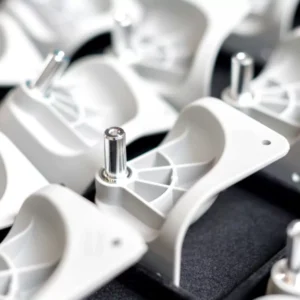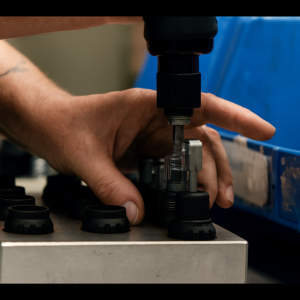


Concevoir une pièce en plastique robuste qui peut être fabriquée de manière cohérente et rentable : un processus connu sous le nom de conception pour la fabricabilité. (DFM)-nécessite une vision holistique qui intègre la science des matériaux, ingénierie d'outillage, et contraintes de production. Un DFM réussi se concentre sur la réalisation de l'intention fonctionnelle de la pièce tout en éliminant de manière proactive les risques liés aux défauts matériels., faiblesses structurelles, et cycles de moulage complexes.
Voici une exploration approfondie de huit facteurs essentiels à prendre en compte pour garantir un processus de production réussi..
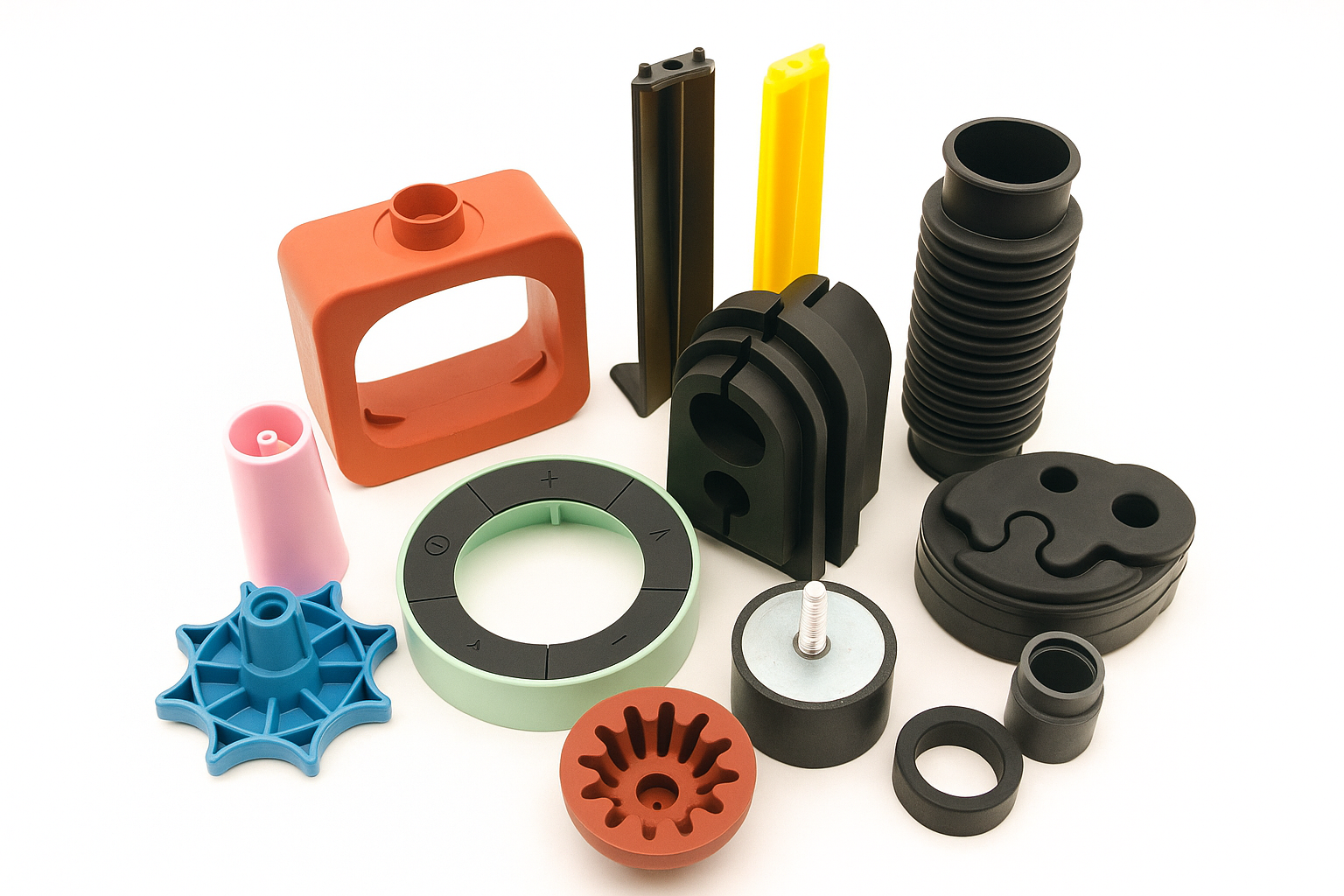
Conception de pièces en plastique pour la fabricabilité
1. Considérations matérielles
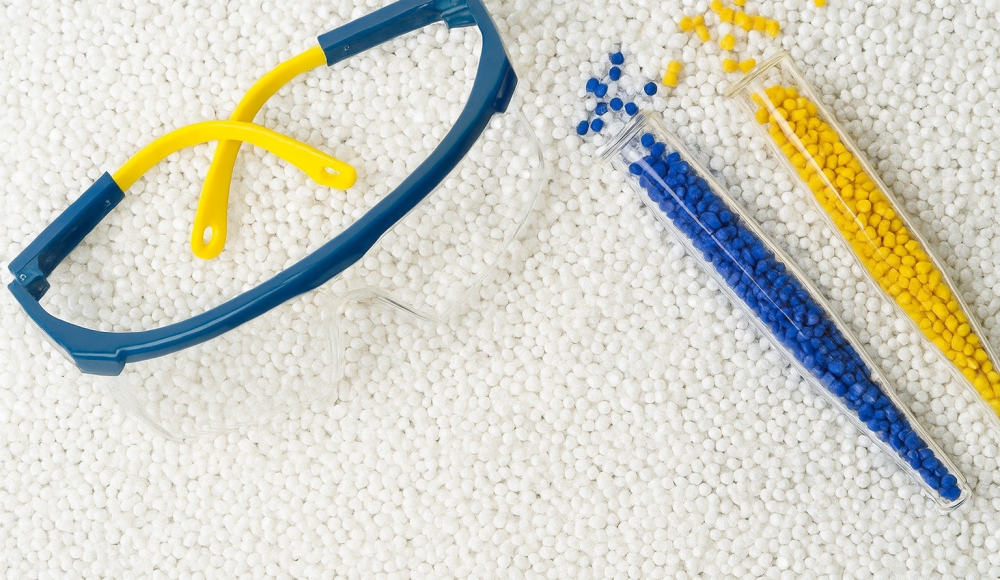
Le choix de la résine est sans doute la décision la plus importante en matière de conception de pièces en plastique.. Choisir simplement une note familière n’est pas suffisant; le matériau doit être optimisé pour l'environnement d'utilisation finale et le processus de fabrication.
| Considération | Détail pour la fabricabilité |
| Température | Déterminer la température de déflexion thermique (HDT) et point de ramollissement Vicat. Contrainte thermique élevée (par exemple., exposition prolongée ou changements rapides de température) nécessite des matériaux avec une stabilité thermique élevée pour éviter le ramollissement ou la rupture par fluage. |
| Résistance chimique | Évaluer le contact potentiel avec des solvants, huiles, et produits de nettoyage. Une incompatibilité chimique peut entraîner des fissures sous contrainte, gonflement, ou dégradation, compromettre l’intégrité à long terme de la pièce. |
| Approbations de l'agence | Vérifier la conformité aux normes réglementaires spécifiques (par exemple., Classements UL pour l'inflammabilité, Normes FDA/ISO pour le contact médical ou alimentaire). La non-conformité nécessite des modifications matérielles coûteuses ultérieurement. |
| Assemblée | Le matériau doit être compatible avec les méthodes d'assemblage telles que le soudage par ultrasons, liaison par solvant, fonctionnalités d'encliquetage, ou fixations mécaniques. Faible frottement des matériaux comme l'acétal (POM) sont préférés pour les pièces mobiles. |
| Finition | Les propriétés inhérentes à la résine et la cohérence de sa couleur doivent répondre aux exigences cosmétiques (par exemple., niveau de brillance, normes de texture comme les finitions MT ou SPI) comme moulé, minimiser les opérations secondaires. |
| Coût & Disponibilité | Au-delà du prix de la résine, considérer l’impact du matériau sur temps de cycle (les matériaux à refroidissement plus lent augmentent le coût). Veiller à ce que le volume requis soit constamment disponible auprès des fournisseurs afin d'atténuer les risques liés à la chaîne d'approvisionnement.. |
2. Transitions de rayon et de coin
Les coins internes pointus sont des emplacements privilégiés pour les défaillances structurelles dues à concentration de stress. Lorsqu'une charge est appliquée, la force est concentrée au sommet d'un angle vif, conduisant à des fissures prématurées.
Rayon interne (Filets): Les rayons doivent être incorporés à tous les coins internes. Le rayon interne $(R.)$ devrait idéalement être égal ou supérieur à $50\%$ de l'épaisseur nominale de la paroi $(T)$ pour minimiser le stress, c'est à dire., $R ge 0,5T$.
Règle d'épaisseur de coin: Pour éviter la formation d'épais, zones sujettes au refroidissement dans les coins, l'épaisseur au coin doit être maintenue dans une plage étroite. Une ligne directrice courante consiste à maintenir l’épaisseur du coin résultante entre $0.9 \fois T$ et $1.2 \fois T$ de l'épaisseur nominale de la paroi. Cela garantit un comportement de refroidissement uniforme.
3. Cohérence de l'épaisseur de paroi
Le maintien d'une épaisseur de paroi uniforme sur toute la pièce est la règle la plus critique du DFM.. Une épaisseur incohérente entraîne une multitude de défauts lors du moulage:
Flux incohérent: Le plastique fondu suit le chemin de moindre résistance. Si une section épaisse précède une section mince, la zone la plus épaisse peut se remplir en premier, caution chauffage par cisaillement dans la zone mince ou en ne la remplissant pas complètement (plans courts).
Écart de taux de refroidissement: Les zones plus épaisses nécessitent beaucoup plus de temps pour refroidir que les zones plus minces. Cette disparité des temps de refroidissement crée un stress thermique entre les sections.
Défauts: Un refroidissement non uniforme provoque un retrait différentiel, qui se manifeste comme:
Marques d'évier: Dépression sur la surface opposée à une section épaisse due à la traction du matériau vers l'intérieur lorsque le noyau refroidit.
Vides: Gaz piégés ou bulles de vide profondément dans une section épaisse.
Déformation: Distorsion de la pièce car les contraintes internes sont libérées lors de l'éjection.
4. Emplacement de la porte
La porte (la petite ouverture reliant le système de canaux à la cavité de la pièce) est le point de départ de la transmission de la pression et du contrôle du flux de matière.. Son emplacement dicte le motif de remplissage et la qualité finale.
Emplacement idéal: Les portes devraient idéalement être placées au section la plus épaisse de la pièce pour garantir que le matériau peut être emballé efficacement dans les sections les plus fines en aval.
Esthétique: L'emplacement de la porte détermine également l'emplacement du vestige de la porte (la marque laissée lorsque le coureur est retiré). Le placement doit minimiser l’impact esthétique.
Types de portes: Différents types de portes contrôlent le débit et le cisaillement:
Portes à broches: Utilisé pour les moules multi-empreintes; offrir un déclassement automatique mais créer un cisaillement élevé.
Portes sous-marines: Autoriser le dégâtage automatique sous la surface de la pièce; nécessitent un petit rayon au niveau de la zone de la porte.
Portes à pointe chaude: Utilisé dans les systèmes à canaux chauds; offrir un remplissage efficace et un minimum de déchets.
5. Brouillon
La dépouille est la conicité essentielle appliquée aux parois verticales d'une pièce en plastique pour faciliter son démoulage du noyau ou de la cavité du moule..
Mécanisme: Sans brouillon, le frottement entre la pièce solidifiée et la surface du moule, combiné au vide créé lors de la séparation, peut empêcher l’éjection ou provoquer des marques de traînée.
Exigence standard: Un angle de dépouille minimum de $1^circ$ à $2^circ$ est généralement requis pour les murs verticaux lisses.
Surfaces texturées: Si la surface du moule a une texture (ce qui crée plus de frictions), l'angle de dépouille doit être augmenté, souvent à 3 $^circ$ ou 5 $^circ$ par côté, en fonction de la profondeur de la texture.
Échec d'éjection: Un tirage insuffisant peut entraîner une contrainte excessive sur les broches d'éjection, conduisant à marques de poussée des broches ou endommager l'acier du moule.
6. Inclusion de côtes levées
Les côtes sont fines, projections en forme de paroi utilisées pour augmenter la rigidité à la flexion et la résistance structurelle d'une pièce en plastique sans augmenter sensiblement la masse globale de la paroi, maintenant ainsi un temps de cycle plus court.
Renforcement: Les nervures canalisent efficacement les contraintes et empêchent la flexion des pièces conçues avec une épaisseur de paroi nominale minimale.
Prévention des marques d'évier: L'épaisseur de la nervure doit être soigneusement gérée pour éviter la formation de traces d'enfoncement sur le côté opposé., surface visible de la pièce.
Rapport nervure/mur: Pour éviter de créer un point chaud qui refroidit lentement et tire la surface vers l'intérieur, l'épaisseur des nervures doit être limitée entre $50\%$ et $70\%$ (communément $60\%$) de l'épaisseur nominale de la paroi adjacente $(T)$. Si une nervure plus épaisse est nécessaire pour plus de solidité, le concepteur doit noyau le matériau de base pour réduire la masse et favoriser un refroidissement uniforme.
7. Retrait de moisissure
Tous les plastiques rétrécissent en refroidissant de la température de fusion à la température ambiante.. Cette réduction volumétrique doit être prise en compte dans la conception du moule, pas la conception de la pièce elle-même.
Cristallin vs. Amorphe:
Matériaux cristallins/semi-cristallins (par exemple., PP, PE): Présentent un retrait plus élevé et plus variable (jusqu'à $20\%$ en volume). Ils sont sujets à retrait anisotrope (rétrécissant davantage dans le sens de l'écoulement).
Matériaux amorphes (par exemple., abdos, PS): Présentent un retrait plus faible et plus prévisible (isotrope).
Stratégies de compensation du retrait:
Ajustement de la conception des outils: La solution la plus courante consiste à appliquer un facteur de retrait lors de l'usinage de la cavité du moule.
Optimisation du traitement: Ajustement du pression d'emballage et temps de maintien permet à plus de matériau d'être entassé dans la cavité, compenser le retrait et minimiser les vides.
Ajustement de la formulation: Ajout de charges (comme les fibres de verre ou les minéraux) peut réduire considérablement le taux de retrait thermique du matériau.
8. Fonctionnalités spéciales (Contre-dépouilles et actions secondaires)
Les caractéristiques qui interdisent à la pièce d'être dénudée perpendiculairement à la direction d'ouverture du moule sont appelées contre-dépouilles. (par exemple., trous latéraux, fonctionnalités de verrouillage, et fils externes). Ils nécessitent des composants de moule mobiles.
Exigence d’actions secondaires: Lorsqu'une contre-dépouille existe, actions secondaires (également appelés diapositives, noyaux mobiles, ou tractions hydrauliques) doit être intégré à l’outillage.
Mécanisme: Les actions secondaires se déplacent dans une direction latéral à l'axe d'ouverture du moule. Ils forment la fonction de contre-dépouille et doivent rétracter avant que le moule ne commence à se séparer, éliminer l'interférence.
Coût et complexité: L'intégration d'actions secondaires ajoute des coûts substantiels, car ils nécessitent une activation hydraulique ou mécanique dédiée, composants de guidage de précision, et augmenter la complexité de la maintenance et de la configuration des moules. Travailler en étroite collaboration avec un mouleur expérimenté est essentiel pour déterminer si le coût de l'action secondaire est justifié par la nécessité fonctionnelle de la fonctionnalité..
Conclusion
Un projet de moulage par injection plastique réussi est forgé dès la phase de conception. En appliquant rigoureusement ces huit facteurs DFM, depuis la sélection de la résine optimale en fonction des exigences thermiques et chimiques jusqu'à la gestion correcte des transitions d'épaisseur., rayon, et brouillon : les concepteurs peuvent atténuer les risques de production courants. Le partenariat avec un ingénieur en plasturgie compétent garantit que les exigences fonctionnelles de la pièce sont satisfaites tout en obtenant simultanément la meilleure qualité possible au coût de fabrication le plus bas., accélérer le parcours du produit vers le marché. Contactez-nous pour plus d'informations.