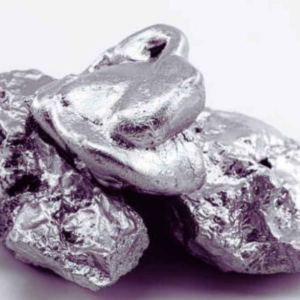
La fusione centrifuga è il metodo di produzione più efficiente e affidabile per la produzione di componenti metallici cilindrici ad alta resistenza. Dai tubi in acciaio inossidabile e manicotti in lega alle canne dei cilindri e agli anelli dei cuscinetti, questo processo è ampiamente utilizzato nei settori che richiedono proprietà meccaniche eccezionali, integrità strutturale, e consistenza dimensionale.
Rispetto ai metodi di fusione tradizionali, la fusione centrifuga offre notevoli vantaggi in termini di densità, raffinazione del grano, porosità ridotta, ed efficienza produttiva. È particolarmente adatto per la produzione di componenti tubolari e rotazionalmente simmetrici dove prestazioni e durata sono fondamentali.
In questa guida completa, imparerai:
Cos'è la fusione centrifuga
Come funziona il processo di fusione centrifuga
Principali tipologie di colata centrifuga
Procedure di produzione passo dopo passo
Vantaggi e limiti
Materiali e difetti comuni
Applicazioni industriali
Differenze tra colata centrifuga e altri metodi di colata
Come scegliere il giusto fornitore di colata centrifuga
Cos'è la fusione centrifuga?
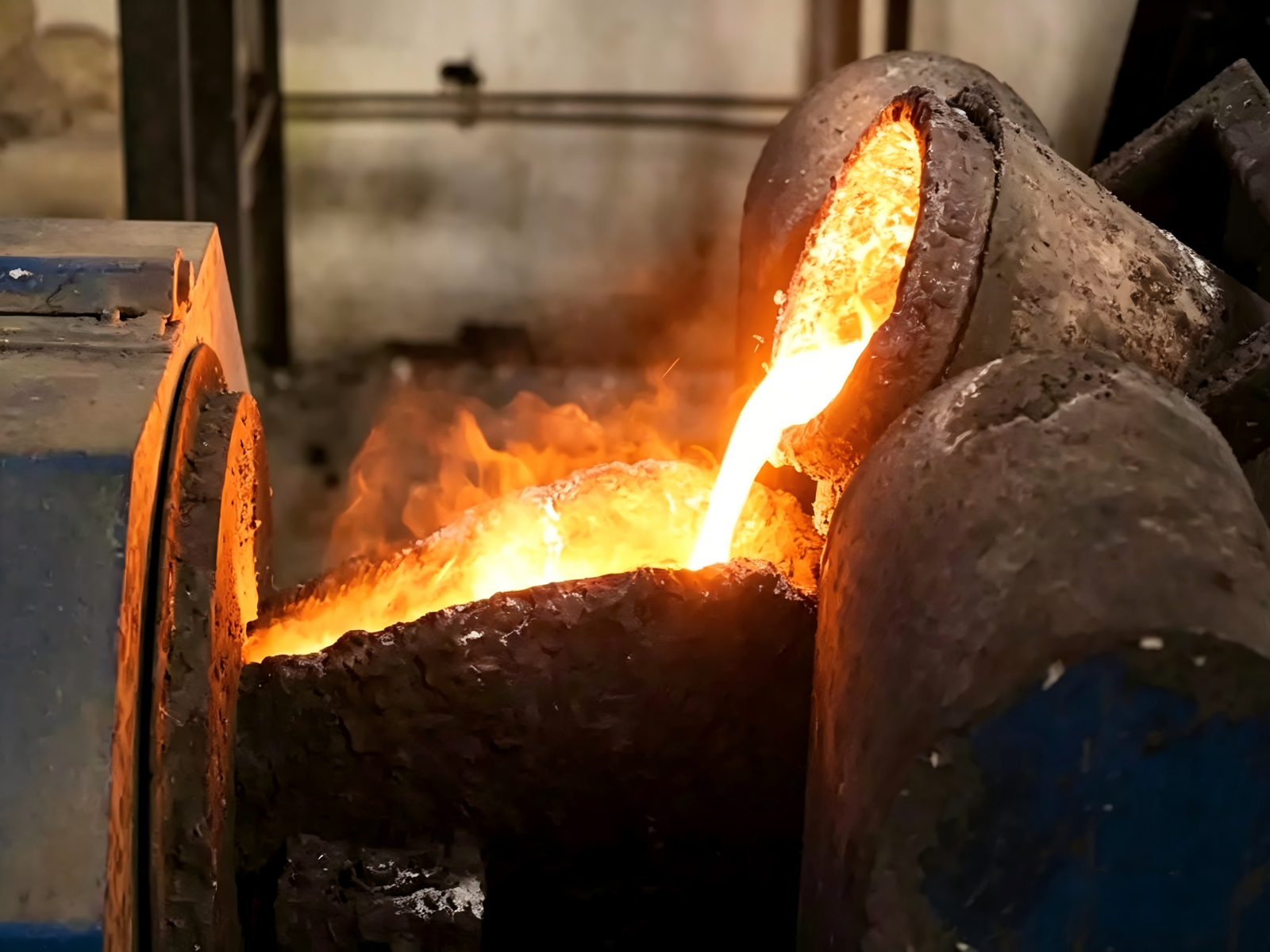
La fusione centrifuga è un processo di fusione del metallo in cui il metallo fuso viene versato in uno stampo rotante. La forza di rotazione generata dallo stampo rotante spinge il metallo fuso verso la parete dello stampo, dove solidifica in condizioni controllate.
Il processo è anche comunemente noto come:
Colata rotante
Colata rotazionale
Rotofusione
A differenza della fusione a gravità convenzionale, la fusione centrifuga utilizza la forza centrifuga per distribuire uniformemente il metallo fuso nella cavità dello stampo. Ciò crea strutture dense e a grana fine con difetti interni minimi.
Il processo viene utilizzato principalmente per la produzione:
Tubi
Tubi
Boccole
Maniche
Anelli
Alloggiamenti dei cuscinetti
Canne dei cilindri
Grezzi per ingranaggi
Per la sua capacità di produrre parti altamente affidabili con eccellenti proprietà metallurgiche, la fusione centrifuga è ampiamente adottata in settori come quello del petrolio e del gas, aerospaziale, settore automobilistico, minerario, generazione di energia, e macchinari pesanti.
Perché la fusione centrifuga è importante nella produzione moderna
I moderni sistemi industriali richiedono componenti in grado di resistere:
Temperature elevate
Carichi pesanti
Fluttuazioni di pressione
Ambienti corrosivi
Usura abrasiva
I processi di fusione tradizionali a volte faticano a soddisfare queste esigenze a causa della porosità, difetti di ritiro, e strutture dei grani incoerenti. La fusione centrifuga affronta queste sfide migliorando la densità del metallo e riducendo le impurità.
I motivi principali per cui la fusione centrifuga rimane importante includono:
Eccellente resistenza meccanica
La forza centrifuga compatta il metallo fuso durante la solidificazione, producendo microstrutture dense e proprietà meccaniche migliorate.
Porosità ridotta
Le bolle di gas e le impurità tendono a migrare verso il diametro interno, consentendo ai produttori di rimuovere sezioni soggette a difetti attraverso la lavorazione.
Struttura della grana superiore
La solidificazione direzionale migliora l'affinamento del grano, che aumenta la tenacità, resistenza alla fatica, e durata.
Efficienza dei costi
Il processo riduce al minimo lo spreco di materiale e riduce i requisiti di lavorazione secondaria per le parti cilindriche.
Colata cava senza nucleo
A differenza di molti metodi di fusione tradizionali, la fusione centrifuga può produrre tubi cavi e cilindri senza utilizzare anime.
Come funziona il processo di colata centrifuga
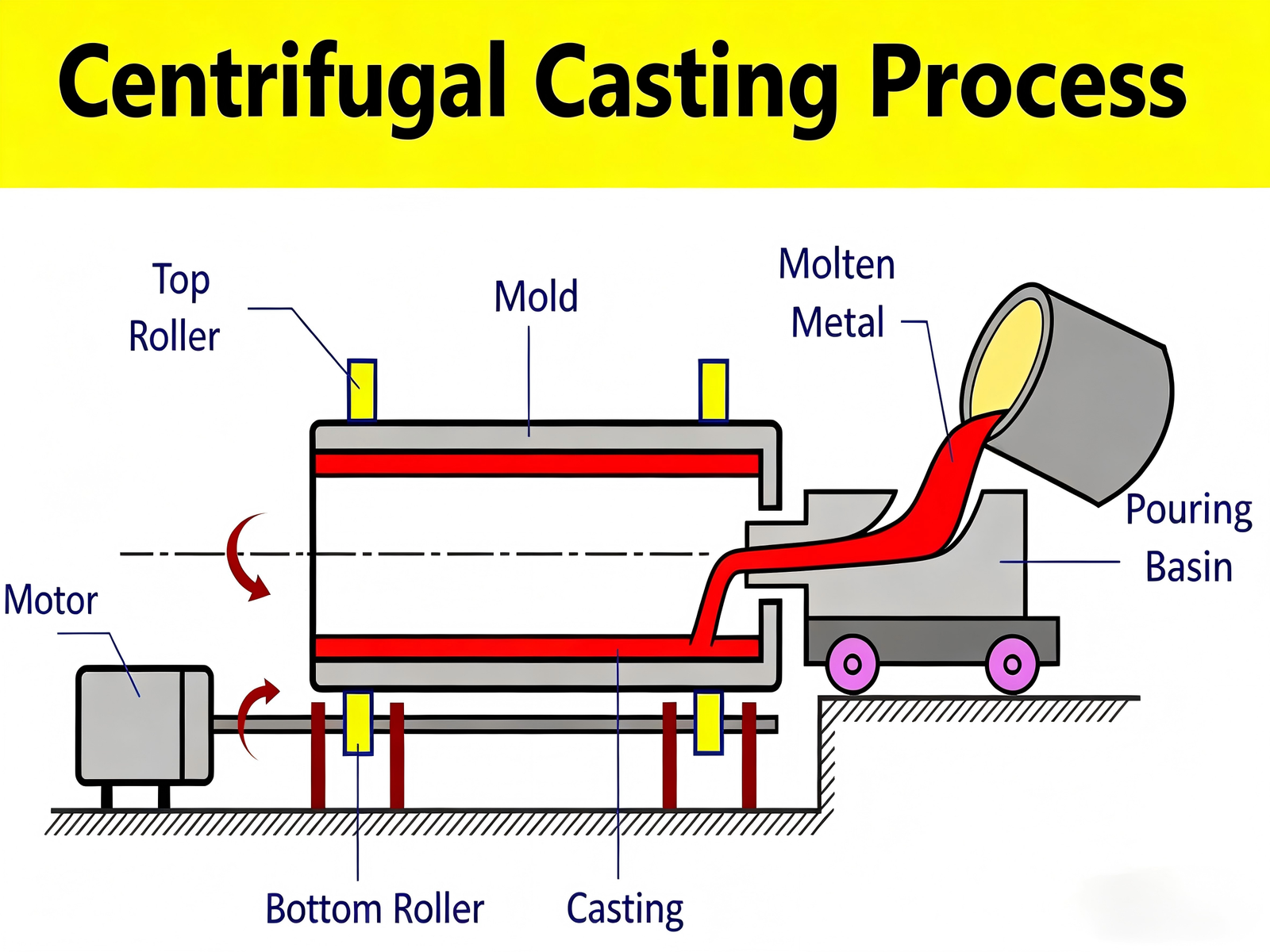
Il processo di colata centrifuga si basa sulla forza di rotazione controllata e sulla solidificazione direzionale.
Principio di funzionamento fondamentale
Il processo in genere segue questi passaggi:
Uno stampo ruota ad alta velocità.
Il metallo fuso viene colato nello stampo rotante.
La forza centrifuga spinge il metallo fuso contro la parete dello stampo.
Il metallo solidifica dal diametro esterno verso l'interno.
Il getto finito viene estratto e lavorato.
Più velocemente ruota lo stampo, tanto più forte è la forza centrifuga che agisce sul metallo fuso.
Questa forza aiuta:
Compattare la struttura metallica
Rimuovere le sacche di gas
Migliora la densità
Ridurre le inclusioni
Ruolo della forza centrifuga nella solidificazione dei metalli
La forza centrifuga è il meccanismo principale alla base del processo.
Durante la rotazione:
Le particelle metalliche più pesanti e dense si muovono verso l'esterno
Le impurità più leggere migrano verso l'interno
Le sacche di gas si spostano verso la superficie interna
Ciò crea diversi vantaggi:
Purezza migliorata
La regione esterna del getto diventa più pulita e più densa.
Formazione di grana fine
Il raffreddamento direzionale rapido migliora la struttura metallurgica.
Difetti da ritiro ridotti
Il processo compensa naturalmente il ritiro durante la solidificazione.
Migliori prestazioni meccaniche
Le parti risultanti mostrano:
Maggiore resistenza alla trazione
Resistenza agli urti migliorata
Migliori prestazioni a fatica
Materiali utilizzati nella fusione centrifuga
Uno dei principali vantaggi della fusione centrifuga è la sua compatibilità con un'ampia gamma di metalli e leghe.
I materiali comuni includono:
Acciaio inossidabile
Ampiamente usato per:
Tubi resistenti alla corrosione
Attrezzature per il trattamento chimico
Tubi per alimenti
Gradi popolari:
304 acciaio inossidabile
316 acciaio inossidabile
Acciaio inossidabile duplex
Acciaio al carbonio
Adatto per:
Applicazioni strutturali
Attrezzature industriali pesanti
Sistemi di pressione
Ghisa
Comune per:
Canne dei cilindri del motore
Tamburi dei freni
Tubi
Leghe di nichel
Usato in:
Aerospaziale
Sistemi marini
Ambienti ad alta temperatura
Esempi:
Inconel
Hastelloy
Leghe di cobalto
Adatto per:
Applicazioni resistenti all'usura
Ambienti a temperature estreme
Leghe di rame
Usato per:
Boccole
Cuscinetti
Hardware marino
Principali tipologie di colata centrifuga
La colata centrifuga può essere classificata in due modi principali:
Per orientamento dello stampo
Con il metodo di fusione
Classificazione per orientamento dello stampo
Colata centrifuga orizzontale
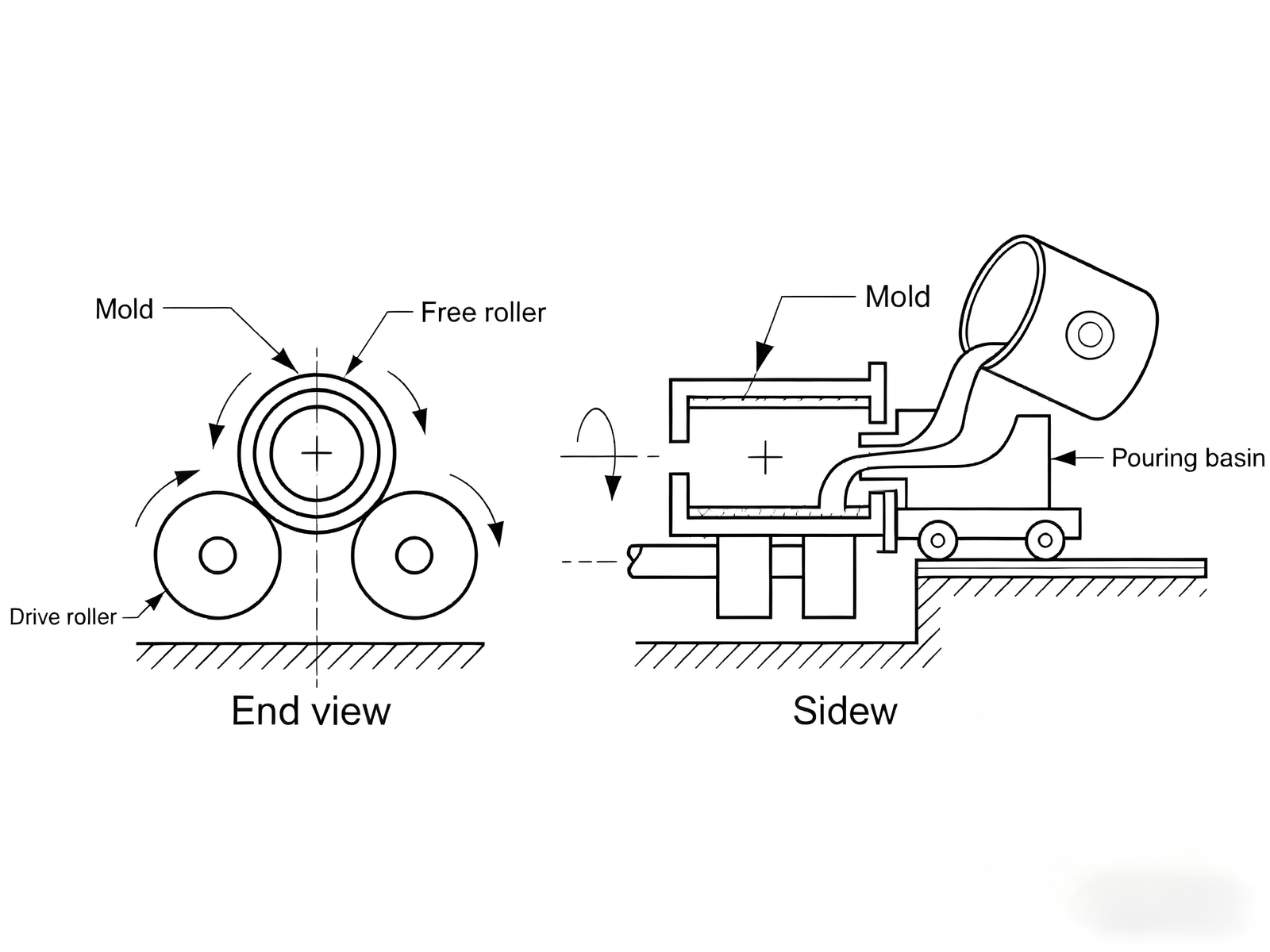
In colata centrifuga orizzontale, lo stampo ruota lungo un asse orizzontale.
Questo metodo è ideale per la produzione:
Tubi lunghi
Tubi
Maniche
Gusci cilindrici
Vantaggi
Ottima consistenza dimensionale
Alta produttività
Spessore della parete uniforme
Ideale per parti con rapporto L/D elevato
Applicazioni tipiche
Tubi d'acciaio
Tubi per forni resistenti al calore
Cilindri idraulici
Tubazioni per giacimenti petroliferi
La fusione centrifuga orizzontale è particolarmente apprezzata nei settori del petrolio e del gas e della produzione di energia.
Colata centrifuga verticale
Nella colata centrifuga verticale, lo stampo ruota attorno ad un asse verticale.
Questo processo è più adatto per componenti con lunghezze inferiori e diametri maggiori.
Vantaggi
Adatto per componenti ad anello
Meglio per forme simmetriche complesse
Minore complessità degli utensili per alcune applicazioni
Prodotti Tipici
Anelli dei cuscinetti
Grezzi per ingranaggi
Volani
Canne dei cilindri
Per ridurre al minimo la distorsione causata dalla gravità, i produttori spesso utilizzano stampi appositamente progettati e velocità di rotazione ottimizzate.
Classificazione per metodo di fusione
Vera fusione centrifuga
La vera fusione centrifuga viene utilizzata principalmente per parti cilindriche cave.
Non sono necessari nuclei perché la forza centrifuga forma naturalmente il centro cavo.
Panoramica del processo
Il metallo fuso entra nello stampo rotante
La forza centrifuga distribuisce il metallo lungo la parete dello stampo
La solidificazione avviene dall'esterno verso l'interno
Le impurità interne vengono rimosse
Vantaggi
Ottima densità
Proprietà meccaniche superiori
Difetti interni ridotti
Prodotti comuni
Tubi
Tubi
Boccole
Maniche
Colata semicentrifuga
La fusione semicentrifuga viene utilizzata per parti solide a simmetria rotazionale.
A differenza della vera fusione centrifuga, questo metodo crea componenti solidi anziché sezioni cave.
Prodotti Tipici
Volani
Tamburi dei freni
Grezzi per ingranaggi
Pulegge
Vantaggio chiave
La forza di rotazione migliora la densità e le caratteristiche di alimentazione durante la solidificazione.
Colata centrifugata
La fusione centrifuga viene utilizzata per produrre parti più piccole e complesse.
Il metallo fuso scorre da un canale di colata centrale attraverso i canali in più cavità dello stampo.
Applicazioni
Gioielleria
Componenti dentali
Piccole boccole
Parti industriali di precisione
Questo processo consente ai produttori di produrre più componenti contemporaneamente con eccellenti caratteristiche di riempimento.
Processo di fusione centrifuga passo dopo passo
Sebbene i dettagli del processo varino a seconda della geometria del componente e della selezione del materiale, il flusso di lavoro complessivo comprende generalmente le seguenti fasi.
1. Preparazione della muffa
Una corretta preparazione dello stampo è essenziale per ottenere fusioni di alta qualità.
Pulizia
La superficie dello stampo deve essere libera:
Polvere
Ossidi
Materiali residui
Contaminanti
Preriscaldamento
Il preriscaldamento impedisce:
Shock termico
Solidificazione prematura
Difetti superficiali
Applicazione del rivestimento refrattario
Viene applicato un rivestimento ceramico o refrattario:
Proteggi la muffa
Controllare il trasferimento di calore
Migliora la finitura superficiale
Facilitare la rimozione delle parti
Lo spessore adeguato del rivestimento è fondamentale per la stabilità del processo.
2. Colata di metallo fuso
Il metallo fuso viene trasferito dal forno tramite siviere o sistemi di colata automatizzati.
Importanti variabili di processo includono:
Temperatura di versamento
Temperature eccessivamente elevate potrebbero causare:
Ossidazione
Ingrossamento del grano
Difetti superficiali
Le basse temperature possono causare:
Errori
Riempimento incompleto
Velocità di versamento
Il versamento stabile riduce al minimo la turbolenza e l'intrappolamento del gas.
Sincronizzazione della rotazione dello stampo
Lo stampo potrebbe:
Ruotare prima di versare
Inizia a ruotare durante il versamento
La sincronizzazione precisa migliora la distribuzione del metallo.
3. Solidificazione rotazionale
Dopo aver versato, lo stampo continua a girare mentre il metallo si solidifica.
Solidificazione direzionale
Il raffreddamento inizia dalla parete dello stampo e procede verso l'interno.
Questo crea:
Strutture a grana fine
Densità migliorata
Migliori proprietà metallurgiche
Segregazione delle impurità
Le impurità più leggere si spostano verso il diametro interno, dove possono essere successivamente rimossi mediante lavorazione.
4. Raffreddamento ed estrazione delle parti
Dopo la solidificazione, il componente viene raffreddato in condizioni controllate.
Un raffreddamento inadeguato può causare:
Cracking
Distorsione
Stress residuo
È possibile utilizzare attrezzature di estrazione speciali per rimuovere la parte in sicurezza.
5. Operazioni di post-elaborazione
La maggior parte delle fusioni centrifughe richiedono una lavorazione secondaria.
Le operazioni tipiche includono:
Trattamento termico
Migliora:
Forza
Durezza
Resistenza all'usura
Lavorazione
Migliora:
Precisione dimensionale
Finitura superficiale
Concentricità
Trattamento superficiale
Esempi:
Rettifica
Lucidatura
Rivestimento
Granigliatura
Ispezione
I metodi di controllo della qualità possono includere:
Test ad ultrasuoni
Ispezione a raggi X
Test con liquidi penetranti
Controllo dimensionale
Vantaggi della fusione centrifuga
La fusione centrifuga offre numerosi vantaggi significativi rispetto ai processi di fusione convenzionali.
Proprietà meccaniche superiori
Il processo crea strutture a grana densa e raffinata.
I benefici includono:
Maggiore resistenza alla trazione
Migliore resistenza alla fatica
Resistenza agli urti migliorata
Difetti di fusione ridotti
La forza centrifuga è ridotta al minimo:
Porosità da gas
Cavità da ritiro
Inclusioni
Ciò migliora l'affidabilità del prodotto.
Eccellente finitura superficiale
La parete dello stampo funge da superficie di formatura liscia, riducendo la rugosità e le esigenze di lavorazione.
Elevata efficienza produttiva
I vantaggi includono:
Tempi di ciclo più rapidi
Ridotto spreco di materiale
Tassi di rifiuto più bassi
Non c'è bisogno di core
I componenti cavi possono essere prodotti senza nuclei interni, semplificando gli strumenti e riducendo i costi.
Spessore della parete flessibile
I produttori possono produrre:
Tubi a parete sottile
Cilindri a pareti spesse
Strutture multistrato
Capacità di fusione multistrato
La fusione centrifuga supporta strutture bimetalliche e composite.
Per esempio:
Strati esterni resistenti all'usura
Strati interni resistenti alla corrosione
Ciò è particolarmente utile nelle industrie minerarie e chimiche.
Limitazioni della colata centrifuga
Nonostante i suoi vantaggi, anche la fusione centrifuga presenta alcune limitazioni.
Capacità di forma limitata
Il processo funziona meglio per i componenti rotazionalmente simmetrici.
Le forme complesse non cilindriche sono generalmente inadatte.
Costo iniziale elevato dell'attrezzatura
I produttori devono investire:
Macchine per colata rotazionale
Stampi specializzati
Sistemi di controllo
Sfide relative alla precisione del diametro interno
La superficie interna potrebbe richiedere una lavorazione per ottenere tolleranze precise.
Complessità del controllo di processo
I parametri critici includono:
Velocità di rotazione
Temperatura di versamento
Tasso di raffreddamento
Bilanciamento dello stampo
Uno scarso controllo può portare a difetti.
Parametri chiave del processo che influiscono sulla qualità della fusione
Diversi fattori influenzano direttamente le prestazioni della colata centrifuga.
Velocità di rotazione
Troppo lento:
Distribuzione incompleta dei metalli
Troppo veloce:
Turbolenza
Segregazione
Temperatura di versamento
Deve corrispondere:
Caratteristiche della lega
Dimensioni dello stampo
Geometria della parte
Rivestimento dello stampo
I rivestimenti refrattari adeguati migliorano:
Finitura superficiale
Controllo termico
Vita della muffa
Velocità di raffreddamento
Il raffreddamento influisce:
Struttura del grano
Stress residuo
Proprietà meccaniche
Pulizia del metallo
Il metallo fuso di elevata purezza riduce inclusioni e difetti.
Difetti comuni nella fusione centrifuga
Anche i processi avanzati possono presentare difetti di fusione.
Porosità del gas
Cause
Gas intrappolato
Turbolenza eccessiva
Versamento improprio
Soluzioni
Degasaggio
Versamento controllato
Velocità dello stampo ottimizzata
Segregazione
Cause
Solidificazione impropria
Forza di rotazione eccessiva
Soluzioni
Controllo corretto della velocità
Ottimizzazione delle leghe
Cracking
Cause
Stress termico
Raffreddamento irregolare
Soluzioni
Raffreddamento controllato
Preriscaldamento corretto dello stampo
Difetti superficiali
Cause
Rivestimento della muffa scadente
Muffe contaminate
Soluzioni
Migliore preparazione dello stampo
Applicazione refrattaria corretta
Applicazioni industriali della colata centrifuga
La fusione centrifuga serve molte industrie che richiedono componenti cilindrici durevoli.
Industria del petrolio e del gas
I prodotti includono:
Sistemi di tubazioni
Manicotti di perforazione
Tubi resistenti alla corrosione
Questi componenti devono resistere:
Alta pressione
Fluidi abrasivi
Ambienti corrosivi
Industria automobilistica
Le applicazioni includono:
Tamburi dei freni
Canne dei cilindri
Alloggiamenti dei cuscinetti
Il processo migliora la resistenza all'usura e l'integrità strutturale.
Industria aerospaziale
Vengono utilizzate fusioni centrifughe in leghe di nichel e cobalto:
Sistemi ad alta temperatura
Applicazioni delle turbine
Componenti del motore
Industria della produzione di energia
I prodotti includono:
Tubi resistenti al calore
Componenti della caldaia
Manicotti della turbina
Attrezzature minerarie e pesanti
Le applicazioni minerarie richiedono:
Resistenza all'abrasione
Durata ai carichi pesanti
Prodotti comuni:
Boccole
Rulli
Indossare le maniche
Colata centrifuga vs altri processi di fusione
Comprendere le differenze tra i metodi di fusione aiuta i produttori a scegliere la soluzione giusta.
Colata centrifuga vs Colata in sabbia
| Caratteristica | Colata centrifuga | Colata in sabbia |
| Densità | Più alto | Inferiore |
| Porosità | Minimo | Più comune |
| Finitura superficiale | Meglio | Più ruvido |
| Resistenza meccanica | Più alto | Moderare |
| Meglio per | Parti cilindriche | Forme complesse |
Colata centrifuga vs Colata di investimento
La fusione di investimento è migliore per:
Geometrie complesse
Tolleranze strette
La fusione centrifuga è migliore:
Parti tubolari
Strutture dense
Componenti cilindrici ad alto volume
Colata centrifuga vs Pressofusione
La pressofusione è adatta per:
Leghe non ferrose
Parti complesse a parete sottile
Si preferisce la colata centrifuga:
Componenti cilindrici più grandi
Applicazioni ad alta resistenza
Come scegliere il giusto fornitore di colata centrifuga
La selezione del giusto partner di produzione influisce direttamente sulla qualità del prodotto e sul successo del progetto.
Capacità ingegneristica
Un fornitore qualificato dovrebbe fornire:
Analisi DFM
Raccomandazioni sui materiali
Ottimizzazione dei processi
Competenza sui materiali
Il fornitore dovrebbe capire:
Fusione di acciaio inossidabile
Leghe di nichel
Materiali resistenti al calore
Leghe resistenti all'usura
Sistemi di controllo qualità
Cercare:
Certificazioni ISO
Funzionalità NDT
Prove metallurgiche
Capacità di lavorazione
Molti progetti richiedono:
Tornitura CNC
Noioso
Fresatura
Rettifica
I servizi di lavorazione integrati riducono tempi e costi.
Capacità produttiva
Considerare:
Gamma di dimensioni del getto
Produzione mensile
Capacità di attrezzaggio
Flessibilità di personalizzazione
Conclusione
La fusione centrifuga rimane uno dei metodi di produzione più efficaci per produrre componenti metallici cilindrici ad alta resistenza con densità superiore, eccellente struttura del grano, e minimi difetti interni.
Rispetto ai metodi di colata convenzionali, offre grandi vantaggi in:
Prestazioni meccaniche
Efficienza della produzione
Utilizzo dei materiali
Riduzione dei difetti
Il processo è ampiamente utilizzato in settori come quello del petrolio e del gas, settore automobilistico, aerospaziale, minerario, e produzione di energia grazie alla sua capacità di produrre componenti durevoli e affidabili in condizioni operative impegnative.
Tuttavia, il raggiungimento di una qualità costante richiede un controllo preciso di:
Velocità di rotazione
Temperatura di versamento
Preparazione dello stampo
Tasso di raffreddamento
Composizione materiale
Per le aziende che cercano componenti in metallo fuso ad alte prestazioni, è essenziale collaborare con un produttore esperto di colate centrifughe.
Un fornitore affidabile può aiutare a ottimizzare:
Selezione dei materiali
Progettazione della fusione
Operazioni di lavorazione
Procedure di ispezione
Efficienza della produzione
Se hai bisogno di tubi in acciaio inossidabile, manicotti in lega, canne dei cilindri, o fusioni industriali personalizzate, la fusione centrifuga fornisce una soluzione di produzione altamente efficiente ed economica per applicazioni impegnative.
Domande frequenti
A cosa serve principalmente la fusione centrifuga??
La fusione centrifuga viene utilizzata principalmente per produrre componenti metallici cilindrici come tubi, tubi, maniche, boccole, e canne dei cilindri.
Quali metalli possono essere utilizzati nella fusione centrifuga?
I materiali comuni includono l'acciaio inossidabile, acciaio al carbonio, ghisa, leghe di nichel, leghe di cobalto, e leghe di rame.
Qual è la differenza tra la vera fusione centrifuga e la fusione semi-centrifuga??
La vera fusione centrifuga produce parti cilindriche cave, mentre la fusione semicentrifuga viene utilizzata per componenti rotanti solidi come volani e tamburi freno.
La fusione centrifuga è costosa??
L'investimento iniziale in attrezzature è relativamente elevato, ma il processo diventa conveniente per il medio- e produzione di componenti cilindrici in grandi volumi.
Quali sono i principali vantaggi della fusione centrifuga?
I principali vantaggi includono:
Alta densità
Porosità ridotta
Eccellenti proprietà meccaniche
Struttura del grano migliorata
Costi di lavorazione inferiori
La fusione centrifuga richiede anime?
NO. I componenti cilindrici cavi possono spesso essere prodotti senza nucleo perché la forza centrifuga crea naturalmente la sezione cava.
Quali industrie utilizzano la fusione centrifuga?
Le industrie includono:
Petrolio e gas
Settore automobilistico
Aerospaziale
Generazione di energia
Estrazione mineraria
Produzione di attrezzature pesanti
Cosa causa i difetti nella fusione centrifuga?
Le cause comuni includono:
Velocità di rotazione non corretta
Preparazione dello stampo inadeguata
Temperatura di versamento errata
Controllo del raffreddamento inadeguato
L'acciaio inossidabile può essere colato mediante centrifugazione?
SÌ. L'acciaio inossidabile è uno dei materiali più comunemente utilizzati nella fusione centrifuga grazie alla sua resistenza alla corrosione e resistenza meccanica.
Quanto è precisa la fusione centrifuga?
Il processo offre una buona consistenza dimensionale, sebbene la lavorazione secondaria sia spesso necessaria per tolleranze critiche e diametri interni.
Link rilevanti:
Pressofusione o fusione a cera persa;
Guida completa al casting da morire in alluminio: Processi, Leghe, Finitura & Applicazioni;
Pressofusione di zinco: Processi, Leghe, Macchine, e vantaggi industriali;
Servizi di pressofusione del magnesio.