



A differenza dei tradizionali alberi con chiavetta, gli alberi scanalati distribuiscono i carichi su più denti, con conseguente maggiore capacità di coppia, durata migliorata, usura ridotta, e una maggiore efficienza operativa. Questi vantaggi li rendono la scelta preferita per applicazioni esigenti in cui è richiesta precisione, forza, e una lunga durata sono essenziali.
In questa guida completa, esploreremo cosa sono gli alberi scanalati, come funzionano, le diverse tipologie disponibili, metodi di produzione, Selezione del materiale, applicazioni industriali, e considerazioni chiave sulla progettazione.
Che cos'è un albero scanalato?
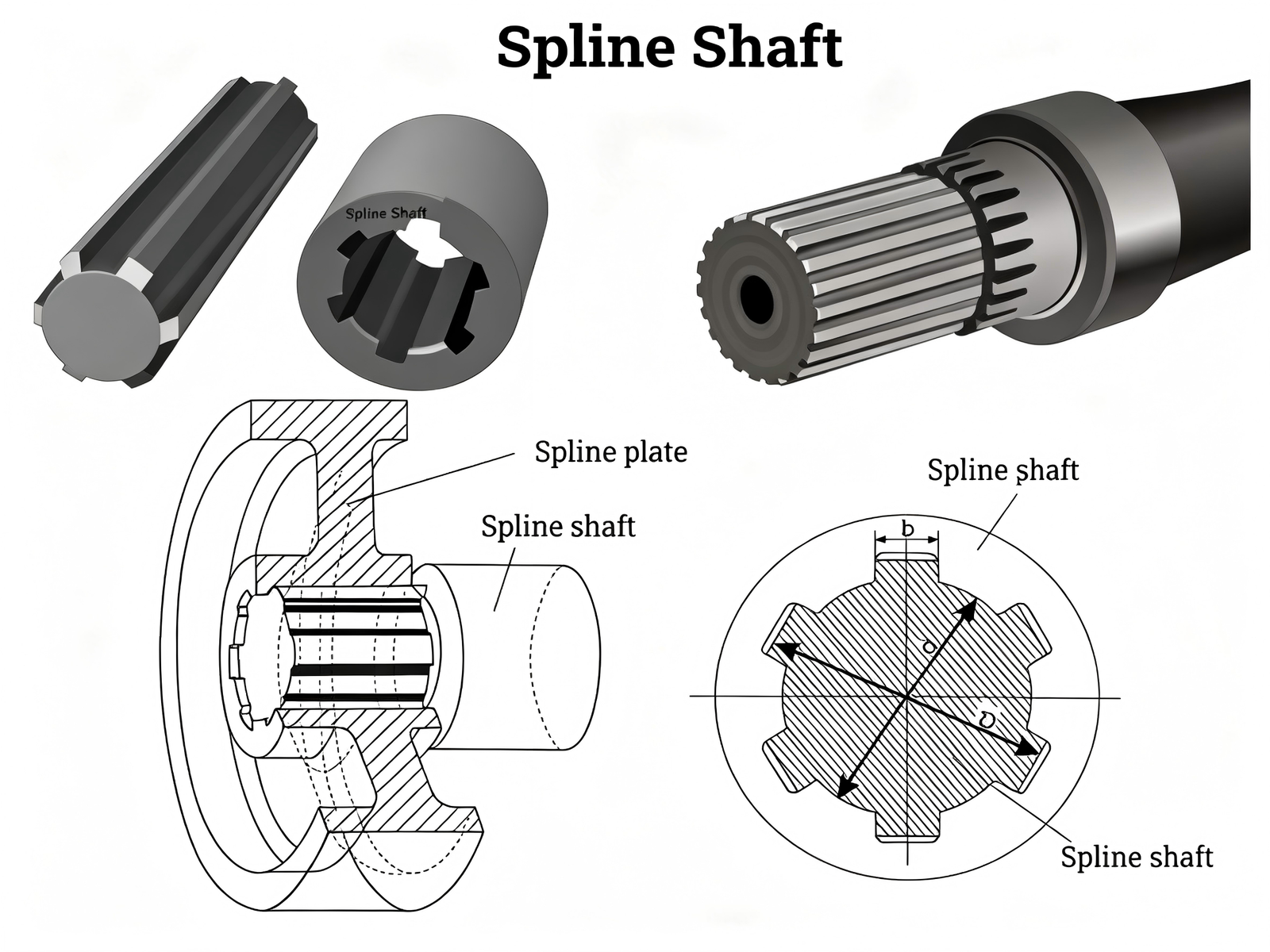
Un albero scanalato è un componente meccanico cilindrico caratterizzato da una serie di creste o denti esterni noti come scanalature. Queste spline si accoppiano con le scanalature corrispondenti all'interno di un mozzo, ingranaggio, accoppiamento, puleggia, o altro componente meccanico.
I denti ad incastro creano una connessione meccanica positiva che consente un'efficiente trasmissione della coppia mantenendo un preciso allineamento rotazionale.
Gli alberi scanalati sono ampiamente utilizzati perché offrono:
- Capacità di trasmissione di coppia elevata
- Allineamento accurato albero-mozzo
- Gioco ridotto
- Migliore distribuzione del carico
- Durata migliorata
- Possibilità di movimento assiale in alcuni modelli
Componenti principali di un albero scanalato
Un tipico albero scanalato è costituito da:
Corpo dell'albero
La sezione cilindrica centrale che supporta le scanalature e trasferisce la forza di rotazione.
Denti scanalati
Le creste rialzate lavorate lungo la superficie dell'albero che si innestano con i componenti accoppiati.
Diametro maggiore
Il diametro esterno misurato sulla parte superiore dei denti della scanalatura.
Diametro minore
Il diametro misurato attraverso la radice dei denti della scanalatura.
Raggio della radice
L'area di transizione curva tra i denti della scanalatura che aiuta a ridurre la concentrazione dello stress.
Angolo di pressione
L'angolo tra le superfici della spline di accoppiamento che influisce sulla distribuzione del carico e sulle caratteristiche di impegno.
Come funziona un albero scanalato?
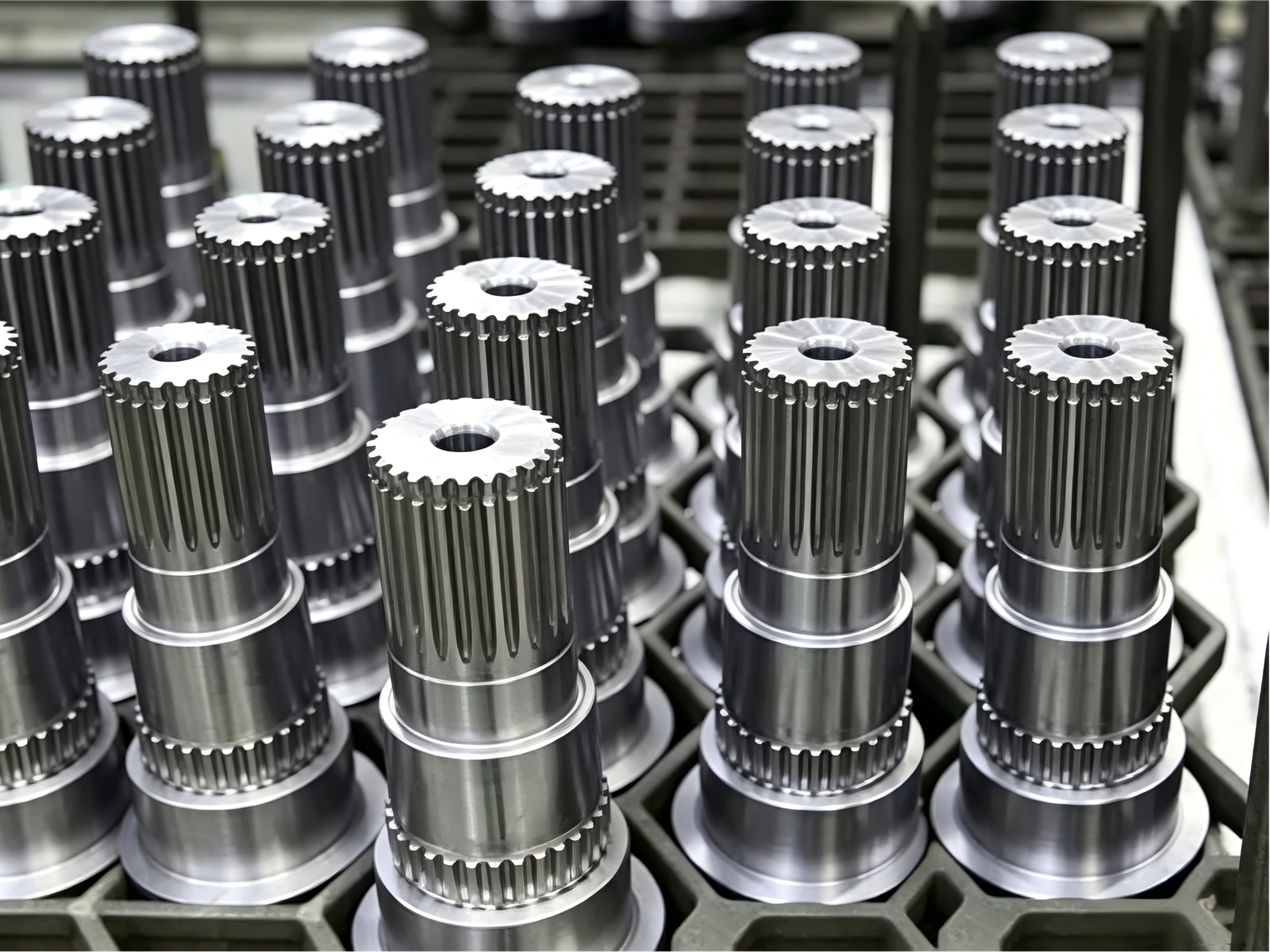
Un albero scanalato trasmette la forza di rotazione attraverso l'impegno meccanico diretto tra le scanalature esterne e interne.
Quando viene applicata la coppia:
- L'albero ruota.
- I denti della scanalatura si innestano nel componente di accoppiamento.
- Il carico viene distribuito su più superfici spline.
- La coppia viene trasferita in modo efficiente con uno slittamento minimo.
A differenza delle connessioni basate sull'attrito, gli alberi scanalati forniscono un meccanismo di azionamento positivo, rendendoli altamente affidabili nelle applicazioni ad alto carico.
Spline fisse
Le scanalature fisse bloccano insieme l'albero e il componente accoppiato, impedendo il movimento assiale.
Le applicazioni comuni includono:
- Cambi
- Accoppiamenti
- Sistemi di trasmissione di potenza
Spline scorrevoli
Le scanalature scorrevoli consentono ai componenti di muoversi lungo l'albero trasmettendo comunque la coppia.
Questi si trovano comunemente in:
- Alberi di trasmissione automobilistici
- Aste telescopiche
- Sistemi di presa di forza
Alberi scanalati e alberi con chiavetta
| Caratteristica | ALBERO SPAGNATO | Albero con chiavetta |
| Capacità di coppia | Alto | Moderare |
| Distribuzione del carico | Uniforme | Concentrato |
| Resistenza all'usura | Eccellente | Bene |
| Precisione di allineamento | Alto | Moderare |
| Vita affaticata | Più lungo | Più corto |
| Gioco | Inferiore | Più alto |
| Costo di produzione | Più alto | Inferiore |
Per applicazioni ad alte prestazioni, gli alberi scanalati generalmente hanno prestazioni migliori degli alberi con chiavetta tradizionali.
Perché gli alberi scanalati sono importanti?
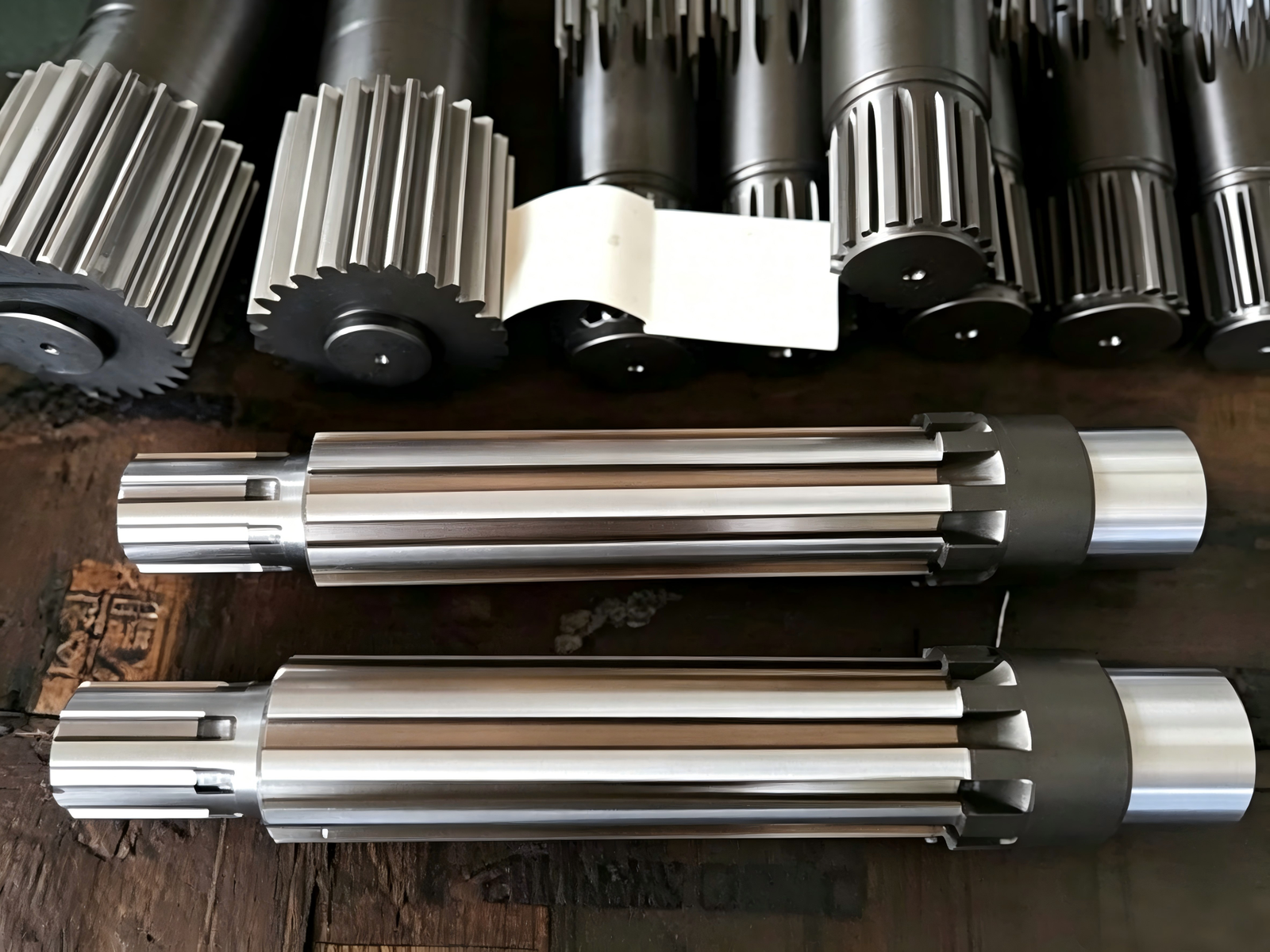
Trasmissione efficiente della coppia
Perché la coppia è distribuita su più denti, gli alberi scanalati possono sopportare carichi significativamente più elevati rispetto alle connessioni con chiavetta.
Allineamento di precisione
La geometria ad incastro mantiene un posizionamento rotazionale accurato tra i componenti collegati.
Migliore distribuzione del carico
Punti di contatto multipli distribuiscono le forze in modo uniforme, riducendo lo stress localizzato.
Usura ridotta
La condivisione del carico riduce al minimo i danni alla superficie e prolunga la durata dei componenti.
Maggiore affidabilità
Gli alberi scanalati offrono prestazioni costanti anche in condizioni operative gravose.
Tipi di alberi scanalati
Sono disponibili vari profili spline a seconda dei requisiti dell'applicazione.
Spline ad evolvente
Le spline ad evolvente sono il disegno di spline più comunemente utilizzato in tutto il mondo.
Caratteristiche
- Profilo del dente curvo
- Distribuzione uniforme del carico
- Facile produzione e ispezione
- Ottima capacità di autocentraggio
Applicazioni
- Trasmissioni automobilistiche
- Cambi industriali
- Sistemi aerospaziali
- Macchinari pesanti
Vantaggi
- Elevata capacità di coppia
- Lunga vita a fatica
- Dimensioni standardizzate
Lato dritto (Parallelo) Spline
Le scanalature a lati diritti presentano fianchi dei denti paralleli.
Caratteristiche
- Geometria semplice
- Lavorazione facile
- Produzione economicamente vantaggiosa
Applicazioni
- Macchine agricole
- Equipaggiamento industriale
- Sistemi generali di trasmissione di potenza
Vantaggi
- Costi di produzione inferiori
- Facile montaggio e smontaggio
Spline seghettate
Le spline seghettate utilizzano denti a forma di V o triangolari.
Caratteristiche
- Elevata precisione di posizionamento
- Forte capacità di bloccaggio
- Maggiore resistenza all'attrito
Applicazioni
- Sistemi di sterzo
- Macchinari di precisione
- Componenti aerospaziali
Vantaggi
- Eccellenti prestazioni antiscivolo
- Posizionamento angolare preciso
Spline elicoidali
Le scanalature elicoidali presentano denti tagliati ad angolo attorno all'albero.
Caratteristiche
- Coinvolgimento fluido
- Vibrazioni ridotte
- Riduzione del rumore operativo
Applicazioni
- Trasmissioni ad alta velocità
- Macchinari di precisione
- Sistemi di azionamento aerospaziale
Vantaggi
- Funzionamento silenzioso
- Migliore condivisione del carico
Spline coronate
Le spline coronate hanno superfici dei denti leggermente curve.
Caratteristiche
- Compensare il disallineamento
- Ridurre il carico sui bordi
Applicazioni
- Sistemi aeronautici
- Giunti flessibili
- Attrezzature pesanti
Vantaggi
- Vita utile migliorata
- Migliore tolleranza di allineamento
Spline a sfera
Le scanalature a sfera incorporano cuscinetti a ricircolo di sfere.
Caratteristiche
- Movimento rotatorio e lineare simultaneo
- Attrito estremamente basso
Applicazioni
- Robotica
- Sistemi di automazione
- Macchinari CNC
Vantaggi
- Movimento fluido
- Alta precisione
Materiali utilizzati per alberi scanalati
La selezione dei materiali influisce in modo significativo sulle prestazioni e sulla durata.
Acciaio al carbonio
I voti comuni includono:
- AISI 1045
- AISI 1050
Benefici:
- Buona lavorabilità
- Conveniente
- Forza moderata
Acciaio legato
Gradi popolari:
- 4140
- 4340
- 8620
Benefici:
- Molta forza
- Eccellente resistenza all'usura
- Proprietà di fatica superiori
Acciaio inossidabile
Gradi comuni:
- 304
- 316
- 17-4PH
Benefici:
- Resistenza alla corrosione
- Adatto per ambienti difficili
- Durata eccellente
Leghe di alluminio
Gradi comuni:
- 6061-T6
- 7075-T6
Benefici:
- Leggero
- Resistente alla corrosione
- Buon rapporto resistenza/peso
Leghe di titanio
Benefici:
- Forza eccezionale
- Peso ridotto
- Eccezionale resistenza alla corrosione
Applicazioni:
- Aerospaziale
- Difesa
- Attrezzatura medica
Processi di produzione di alberi scanalati
La produzione di precisione è fondamentale per le prestazioni della spline.
Tornitura CNC
Il corpo dell'albero viene inizialmente lavorato alle dimensioni richieste.
Fresatura di spline
Fresatura CNC le frese creano profili spline.
Vantaggi:
- Produzione flessibile
- Adatto per prototipi
Hobbing di spline
Uno dei metodi più efficienti per la produzione di grandi volumi.
Benefici:
- Alta precisione
- Produttività eccellente
Brocciatura
Utilizzato principalmente per spline interne.
Benefici:
- Alta precisione
- Tempi di ciclo veloci
Modellazione degli ingranaggi
Ideale per spline interne ed esterne.
Benefici:
- Versatile
- Adatto per profili complessi
Elettroerosione a filo
Utilizzato per geometrie di spline complesse e tolleranze strette.
Benefici:
- Precisione eccezionale
- Capacità di profili complessi
Trattamenti superficiali per alberi scanalati
Il trattamento superficiale migliora la durata e la resistenza all'usura.
Tempra ad induzione
Fornisce durezza localizzata sui denti scanalati.
Carburazione
Crea una superficie dura e resistente all'usura mantenendo un nucleo resistente.
Nitrurazione
Migliora la resistenza all'usura senza distorsioni significative.
Ossido nero
Fornisce una leggera protezione dalla corrosione.
Zincatura
Migliora la resistenza alla corrosione.
Cromatura dura
Migliora la resistenza all'usura e la durezza superficiale.
Considerazioni sulla progettazione chiave
Una progettazione adeguata garantisce prestazioni affidabili a lungo termine.
Requisiti di coppia
Il profilo scanalato deve supportare la coppia operativa massima.
Numero di denti
Più denti generalmente migliorano la distribuzione del carico.
Diametro dell'albero
Determina la resistenza complessiva e la rigidità torsionale.
Angolo di pressione
Influisce sulle caratteristiche di innesto e sul trasferimento del carico.
Tolleranza al disallineamento
Importante per sistemi soggetti a vibrazioni o movimento.
Vita affaticata
Fondamentale per le applicazioni di carico ciclico.
Standard di settore per alberi scanalati
Numerosi standard regolano le dimensioni e le tolleranze delle spline.
ANSI B92.1
Ampiamente usato in Nord America.
DA 5480
Popolare in Europa.
DA 5482
Comune per i sistemi spline metrici.
ISO 4156
Standard internazionale per le spline ad evolvente.
Standard SAE
Utilizzato frequentemente nelle applicazioni automobilistiche.
Il rispetto di questi standard garantisce compatibilità e intercambiabilità.
Applicazioni comuni degli alberi scanalati
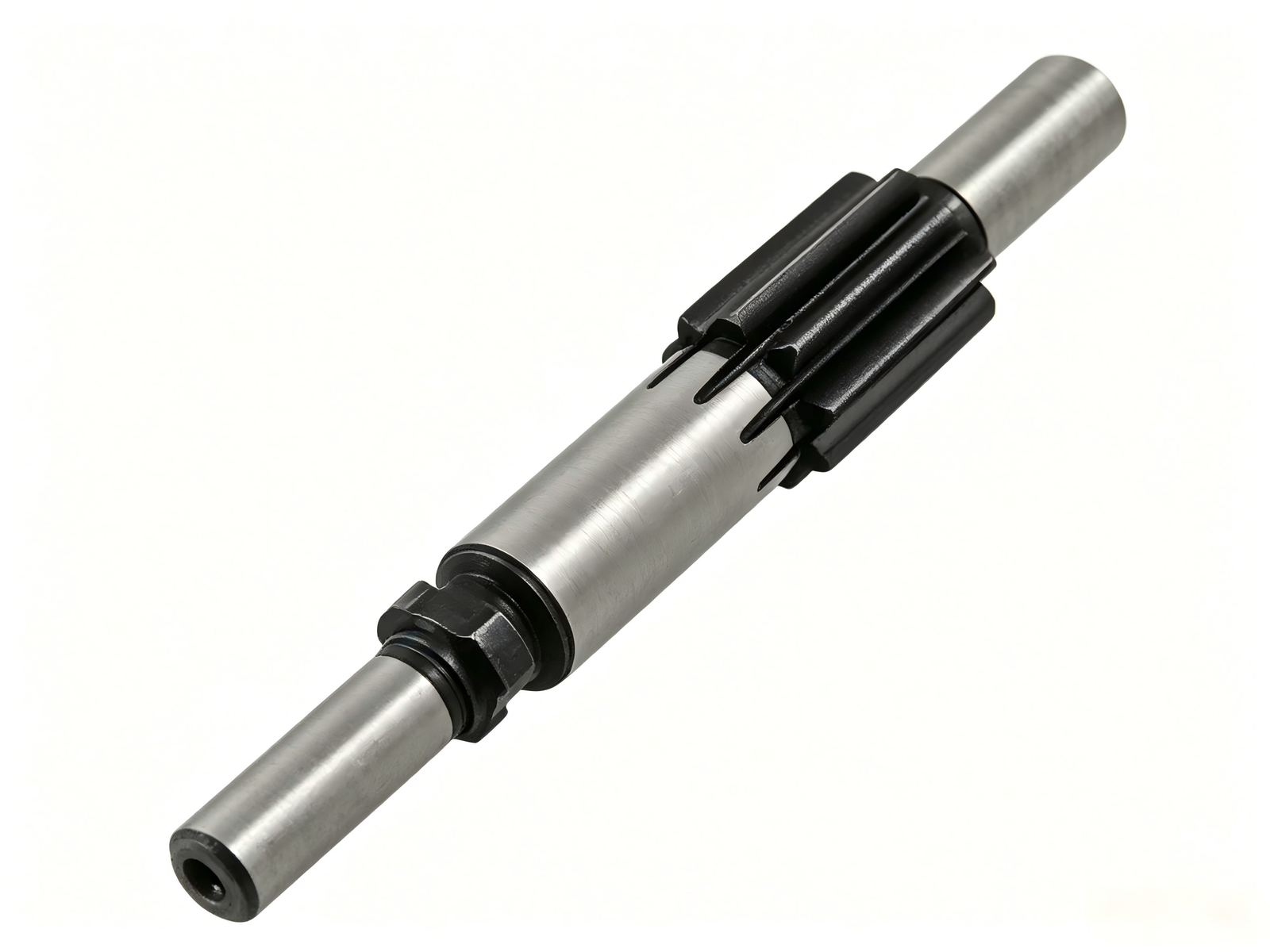
Industria automobilistica
Le applicazioni includono:
- Alberi di trasmissione
- Alberi di trasmissione
- Colonne dello sterzo
- Sistemi differenziali
Industria aerospaziale
Le applicazioni includono:
- Sistemi di controllo del volo
- Meccanismi del carrello di atterraggio
- Sistemi di trasmissione della potenza del motore
Macchinario industriale
Le applicazioni includono:
- Cambi
- Pompe
- Compressori
- Trasportatori
Robotica e Automazione
Le applicazioni includono:
- Servoazionamenti
- Attuatori di precisione
- Sistemi di movimento lineare
Attrezzature agricole
Le applicazioni includono:
- Alberi cardanici
- Mietitrici
- Trattori
Attrezzatura da costruzione
Le applicazioni includono:
- Escavatori
- Pale gommate
- Sistemi di azionamento idraulico
Guasti comuni e prevenzione degli alberi scanalati
Usura dei denti
Causa:
- Lubrificazione insufficiente
Prevenzione:
- Programmi di lubrificazione adeguati
Corrosione da sfregamento
Causa:
- Micromovimento tra le superfici accoppiate
Prevenzione:
- Montaggio e lubrificazione corretti
Crepe da fatica
Causa:
- Carico ciclico ripetuto
Prevenzione:
- Selezione corretta del materiale
- Indurimento superficiale
Danno da disallineamento
Causa:
- Installazione non corretta
Prevenzione:
- Procedure di assemblaggio di precisione
Come scegliere l'albero scanalato giusto
Considera i seguenti fattori:
Requisiti di coppia
Determinare i carichi operativi e di punta.
Selezione dei materiali
Abbina le proprietà dei materiali ai requisiti dell'applicazione.
Condizioni ambientali
Considera la temperatura, umidità, sostanze chimiche, e corrosione.
Tolleranze di produzione
Garantire la precisione per un innesto corretto.
Requisiti del trattamento superficiale
Migliorare la resistenza all'usura e la durata.
Standard di settore
Verificare la conformità alle specifiche del cliente.
Perché scegliere un fornitore professionale di lavorazione CNC per alberi scanalati personalizzati?
La scelta di un partner esperto nella lavorazione può migliorare significativamente la qualità e l'affidabilità del prodotto.
Un produttore professionale dovrebbe offrire:
- Lavorazione CNC di precisione
- Funzionalità di fresatura e dentatura di spline
- Controllo stretto della tolleranza
- Tracciabilità dei materiali
- Opzioni di trattamento superficiale
- Rapporti di ispezione completi
- Prototipo e supporto alla produzione
Se hai bisogno di spline ad evolvente personalizzate, spline a facce diritte, o complessi alberi scanalati di tipo aerospaziale, lavorare con un fornitore qualificato di lavorazioni CNC garantisce qualità e prestazioni costanti.
Domande frequenti
1.Qual è lo scopo di un albero scanalato?
Un albero scanalato trasmette la coppia mantenendo un allineamento preciso tra i componenti collegati.
2.Qual è la differenza tra una spline e una chiavetta??
Una spline utilizza più denti per la distribuzione del carico, mentre una sede per chiavetta si basa su una singola chiave.
3.Quale tipo di spline è più comune?
Le spline ad evolvente sono le più utilizzate grazie alla loro resistenza e standardizzazione.
4.Gli alberi scanalati possono accogliere il movimento assiale?
SÌ. Le scanalature scorrevoli sono progettate specificatamente per il movimento assiale durante la trasmissione della coppia.
5.Quali materiali sono comunemente usati per gli alberi scanalati?
Acciaio al carbonio, acciaio legato, acciaio inossidabile, alluminio, e il titanio sono i materiali più comuni.
6.Come vengono prodotti gli alberi scanalati?
Sono generalmente prodotti mediante tornitura CNC, fresatura, zoppicando, brocciatura, modellando, o lavorazione per elettroerosione.
Conclusione
Comprensione dei tipi di spline, materiali, metodi di produzione, e le considerazioni sulla progettazione consentono agli ingegneri e agli acquirenti di selezionare la soluzione più adatta alla loro applicazione. Se avete bisogno di alberi scanalati standard o di componenti di precisione altamente personalizzati, collaborare con Massima precisione può aiutare a garantire prestazioni ottimali, durabilità, ed efficienza dei costi.


