



CNC racing parts play a critical role. Modern CNC machining technology enables manufacturers to produce lightweight, high-strength components with exceptional dimensional accuracy and repeatability. Compared with traditional manufacturing methods, CNC machining offers superior quality, faster prototyping, and greater design flexibility, making it the preferred solution for both professional racing teams and custom performance vehicle builders.
In this guide, you’ll learn everything about CNC racing parts, including their materials, manufacturing processes, applications, benefits, and how to select the right CNC machining partner for your next motorsport project.
What Are CNC Racing Parts?
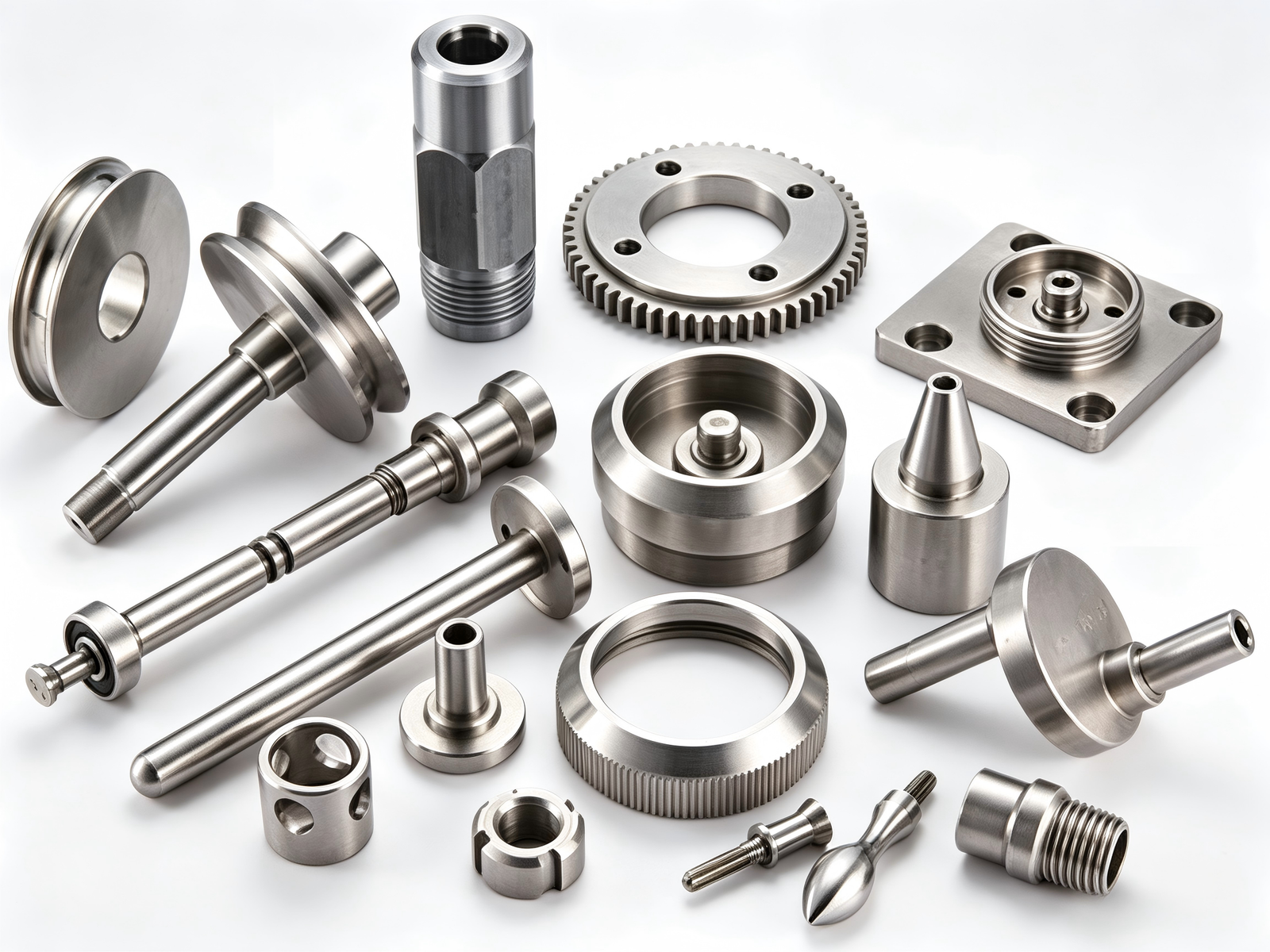
CNC racing parts are precision-engineered automotive components manufactured using Computer Numerical Control (CNC) machining. Unlike cast or stamped parts, CNC-machined components are produced by removing material from a solid metal or plastic billet according to highly accurate digital CAD/CAM programs.
These parts are specifically designed for high-performance vehicles where precision, strength, weight reduction, and reliability are essential. Because racing vehicles operate under significantly higher loads, temperatures, and vibration levels than standard road cars, every component must meet strict engineering requirements.
Common Materials Used for CNC Racing Parts
Material selection directly influences the performance, durability, and weight of racing components. Different applications require different combinations of strength, corrosion resistance, machinability, and thermal stability.
Aluminum Alloys
Aluminum remains the most popular material for CNC racing parts because it offers an excellent balance between weight, strength, and cost.
Popular grades include:
6061 Aluminum
Advantages:
Excellent machinability
Good corrosion resistance
Affordable cost
Easy anodizing
Applications:
Brackets
Intake manifolds
Engine covers
Suspension mounts
7075 Aluminum
Often referred to as aerospace aluminum, 7075 offers significantly higher strength than 6061.
Advantages:
Outstanding strength-to-weight ratio
Excellent fatigue resistance
Lightweight
High stiffness
Applications:
Suspension arms
Steering knuckles
Racing pedals
Wheel hubs
Chassis components
Titanium Alloys
Titanium is widely used in professional motorsports due to its exceptional strength and low weight.
The most common grade is Ti-6Al-4V (Grade 5 Titanium).
Benefits include:
Extremely high strength
Low density
Excellent corrosion resistance
High temperature resistance
Long fatigue life
Typical applications include:
Connecting rods
Exhaust components
Fasteners
Suspension hardware
Brake pistons
Although titanium is more expensive to machine than aluminum, its performance advantages often justify the investment in competitive racing.
Stainless Steel
Stainless steel is selected for components requiring excellent wear resistance and corrosion protection.
Popular grades include:
304
316
17-4PH
Applications include:
Shafts
Brake fittings
Fuel system connectors
Hydraulic components
Fasteners
17-4PH stainless steel is particularly valued because it combines excellent corrosion resistance with high mechanical strength after heat treatment.
Alloy Steel
High-strength alloy steels are commonly used for drivetrain and engine components subjected to heavy loads.
Examples include:
4140
4340
8620
These materials provide:
Excellent hardness
High fatigue strength
Superior impact resistance
Typical applications include:
Gears
Drive shafts
Axles
Differential components
Crankshafts
Engineering Plastics
Not every racing component needs to be made from metal.
Advanced engineering plastics are widely used because they reduce weight while offering excellent wear resistance.
Popular materials include:
PEEK
High temperature resistance
Chemical resistance
Low friction
Delrin (POM)
Excellent dimensional stability
Easy machining
Good wear resistance
Nylon
Lightweight
Cost-effective
Good impact resistance
Typical applications include:
Bushings
Spacers
Cable guides
Bearing retainers
Electrical insulation components
Material Comparison
| Material | Weight | Strength | Corrosion Resistance | Typical Racing Applications |
| 6061 Aluminum | Very Light | Medium | Excellent | Brackets, engine covers |
| 7075 Aluminum | Very Light | Very High | Good | Suspension, steering |
| Titanium Grade 5 | Ultra Light | Extremely High | Excellent | Engine, suspension, fasteners |
| Stainless Steel | Medium | High | Excellent | Shafts, fittings, brake parts |
| 4140 Alloy Steel | Heavy | Very High | Moderate | Gears, axles, crankshafts |
| PEEK | Ultra Light | Medium | Excellent | Bushings, insulators |
Selecting the right material depends on several factors, including vehicle weight targets, mechanical loads, operating temperatures, corrosion exposure, and budget. An experienced CNC machining supplier can recommend the most suitable material based on your performance goals and application requirements.
Types of CNC Racing Parts
Racing vehicles contain hundreds of precision-machined components. However, several categories have the greatest impact on performance, reliability, and handling.
Engine Components
The engine is the heart of any race car, and CNC machining is widely used to produce critical engine parts with extremely tight tolerances.
Common CNC-machined engine components include:
Cylinder heads
Pistons
Connecting rods
Throttle bodies
Intake manifolds
Valve covers
Camshaft supports
Precision machining improves combustion efficiency, reduces friction, and enhances power delivery. In turbocharged racing engines, CNC-machined intake and exhaust components also help optimize airflow and thermal management.
Transmission Components
Efficient power transfer is essential for acceleration and lap times. CNC machining enables the production of highly accurate drivetrain components.
Typical transmission parts include:
Gear sets
Shift forks
Clutch hubs
Flywheels
Differential housings
These components must withstand repeated shock loads while maintaining precise gear engagement under extreme RPM conditions.
Suspension Components
Suspension geometry directly affects cornering performance and tire contact. CNC machining allows manufacturers to produce lightweight yet rigid suspension parts.
Common examples include:
Control arms
Steering knuckles
Uprights
Wheel spacers
Shock absorber mounts
High-strength aluminum alloys such as 7075 are frequently used to minimize unsprung weight while preserving structural integrity.
Brake Components
Braking systems experience enormous heat and pressure during racing. CNC machining ensures precise alignment and consistent performance.
Typical brake components include:
Brake calipers
Brake hats
Rotor adapters
Pedal assemblies
Master cylinder brackets
Accurate machining helps maintain even pad contact and improves braking feel and stability.
Chassis and Structural Components
Race cars require numerous custom brackets and reinforcement parts that are often produced in small batches.
Examples include:
Engine mounts
Transmission mounts
Roll cage connectors
Reinforcement plates
Sensor mounting brackets
CNC machining is ideal for these low-volume, high-precision components because tooling costs remain relatively low compared with casting or forging.
Cooling and Fuel System Components
Thermal management becomes increasingly important as engine output rises. CNC-machined fittings and housings provide reliable sealing and flow characteristics.
Common parts include:
Water pump housings
Oil cooler adapters
Radiator fittings
Fuel rails
Injector spacers
AN fittings
Aerodynamic Hardware
Modern motorsports rely heavily on aerodynamic efficiency. CNC-machined hardware supports aerodynamic components while minimizing weight.
Typical parts include:
Wing mounts
Splitter brackets
Diffuser supports
Air duct mounts
CNC Machining Processes Used for Racing Parts
Different racing components require different machining technologies depending on their geometry, tolerance requirements, and production volume.
CNC Milling
CNC milling is the most common process for racing parts. Rotating cutting tools remove material from a stationary workpiece to create complex shapes.
Best suited for:
Engine blocks
Suspension arms
Brake calipers
Mounting brackets
CNC Turning
CNC turning is used for cylindrical components where the workpiece rotates while the cutting tool remains stationary.
Typical applications:
Shafts
Wheel hubs
Spacers
Fittings
5-Axis CNC Machining
Advanced racing components often contain complex curves and undercuts that cannot be produced efficiently with standard 3-axis machines.
Advantages of 5-axis machining:
Fewer setups
Higher accuracy
Better surface finish
Reduced production time
5-axis machining is widely used for cylinder heads, intake manifolds, turbine housings, and aerospace-style suspension components.
Wire EDM
Wire Electrical Discharge Machining is used for extremely precise profiles and hard materials.
Common applications include:
Gear profiles
Precision slots
Hardened steel components
Grinding and Honing
After primary machining, critical surfaces may be ground or honed to achieve extremely tight tolerances and superior surface quality.
Used for:
Crankshaft journals
Camshaft lobes
Bearing surfaces
Cylinder bores
Surface Finishes for CNC Racing Parts
Surface treatment improves durability, corrosion resistance, and appearance.
| Finish | Main Benefit |
| Anodizing | Corrosion resistance and color options |
| Hard anodizing | Improved wear resistance |
| Electroless nickel | Uniform hardness and corrosion protection |
| Black oxide | Low-glare protective coating |
| Powder coating | Durable decorative finish |
| Polishing | Reduced friction and improved appearance |
| Bead blasting | Uniform matte texture |
| Cerakote | High-temperature and chemical resistance |
For motorsport applications, hard anodizing and electroless nickel are particularly popular because they provide excellent wear resistance without adding significant weight.
In the next section, we’ll explore Applications of CNC Racing Parts in Formula Racing, Rally, Drag Racing, MotoGP, and EV Motorsport, along with the performance benefits, design considerations, and quality control standards that racing teams look for when selecting a CNC machining supplier.
Applications of CNC Racing Parts
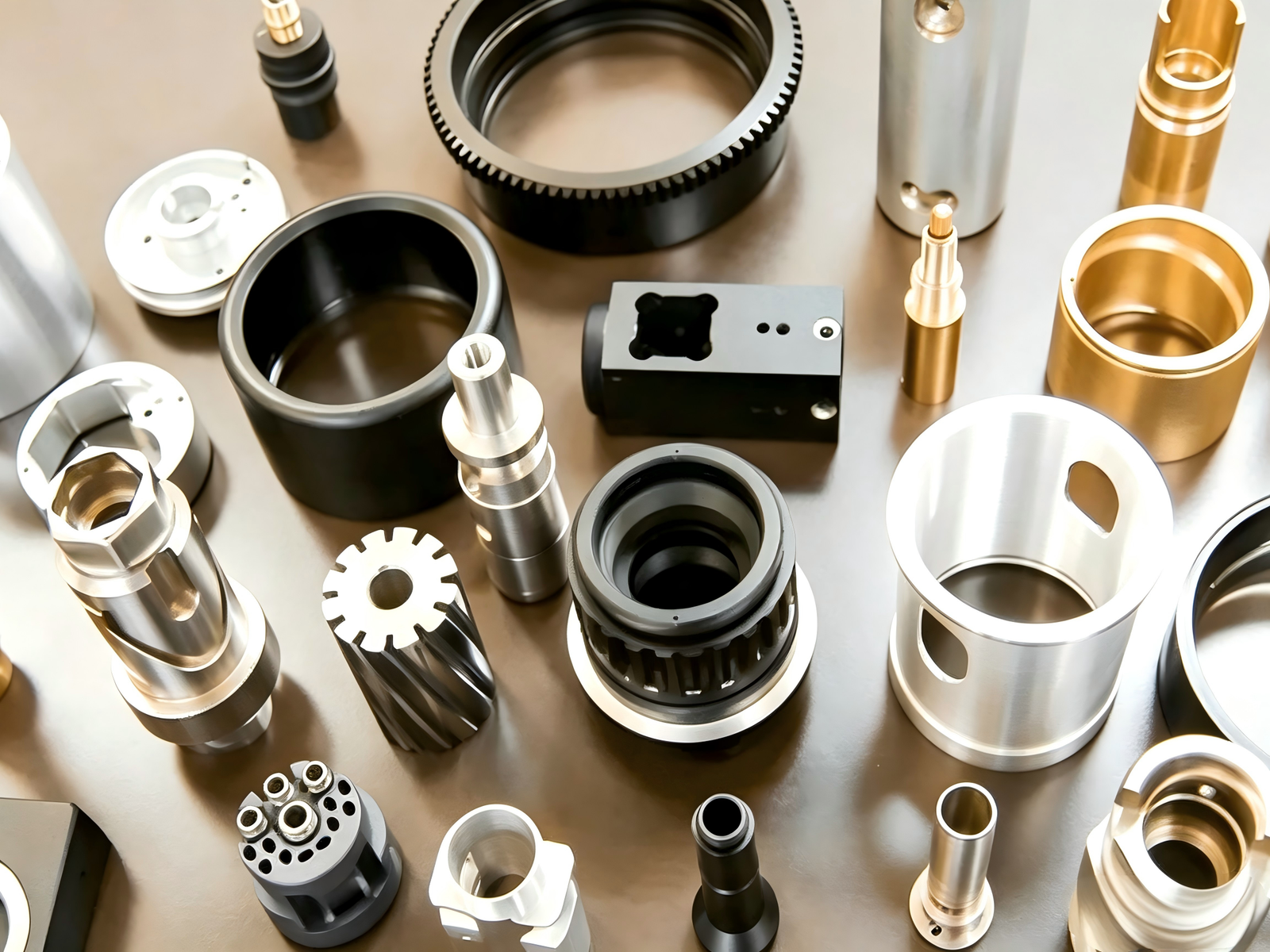
CNC racing parts are used across nearly every form of motorsport, where precision engineering directly impacts speed, handling, durability, and safety. As racing technology advances, manufacturers continue to develop lightweight, high-strength components tailored to the specific demands of each racing discipline.
Formula Racing
Formula racing represents the highest level of automotive engineering, where even the smallest improvement can make a significant difference in lap times.
CNC machining is used extensively to manufacture:
Suspension uprights
Steering components
Gearbox housings
Brake calipers
Engine brackets
Cooling system components
Aerodynamic mounting hardware
Because Formula race cars prioritize lightweight construction and aerodynamic efficiency, most components are machined from aerospace-grade aluminum or titanium. Five-axis CNC machining enables engineers to produce highly complex geometries that maximize strength while minimizing weight.
GT and Touring Car Racing
GT racing vehicles are designed for endurance, requiring components that can withstand long hours of high-speed operation.
Common CNC-machined parts include:
Intake manifolds
Brake hats
Wheel hubs
Differential housings
Adjustable suspension components
Lightweight engine pulleys
Precision-machined parts improve vehicle reliability while reducing maintenance during endurance races.
Rally Racing
Rally cars encounter rough terrain, frequent impacts, mud, gravel, and extreme temperature variations.
As a result, racing components must balance lightweight design with exceptional durability.
Typical CNC racing parts include:
Reinforced suspension arms
Steering knuckles
Skid plate mounts
Differential components
Heavy-duty brake brackets
Engine protection hardware
Manufacturers often select high-strength aluminum alloys or chromoly steel to ensure these parts survive demanding off-road conditions.
Drag Racing
Drag racing focuses on maximum acceleration over a short distance. Every component must withstand tremendous torque and engine output.
Frequently machined components include:
Billet cylinder heads
Custom pistons
Connecting rods
Flywheels
Transmission gears
Clutch hubs
Driveshaft yokes
CNC machining allows these components to achieve perfect balance, reducing vibration at extremely high engine speeds.
Motorcycle Racing
Performance motorcycles require lightweight components without sacrificing strength.
Common CNC motorcycle racing parts include:
Triple clamps
Rearsets
Brake levers
Clutch levers
Foot pegs
Chain adjusters
Handlebar clamps
Many aftermarket motorcycle performance parts are CNC-machined because riders demand improved ergonomics, durability, and aesthetics.
Off-Road and Desert Racing
Off-road racing places enormous stress on suspension and chassis components.
Manufacturers produce CNC parts such as:
Suspension brackets
Wheel spacers
Hub assemblies
Shock mounts
Reinforced steering arms
These components must resist repeated impacts while maintaining precise alignment throughout the race.
Electric Racing Vehicles (EV Motorsport)
Electric racing is one of the fastest-growing sectors in motorsports. Although electric vehicles eliminate many traditional engine components, they introduce new engineering challenges.
CNC machining supports EV racing through precision manufacturing of:
Motor housings
Cooling plates
Heat sinks
Inverter housings
Lightweight chassis components
As battery technology continues to evolve, CNC machining will remain essential for producing lightweight, thermally efficient components that maximize vehicle performance.
Advantages of CNC Racing Parts
Choosing CNC-machined racing components provides significant advantages over cast, stamped, or conventionally manufactured alternatives.
Exceptional Precision
High-performance vehicles require components that fit together perfectly.
CNC machining routinely achieves tolerances within ±0.005 mm, reducing assembly errors and ensuring smooth mechanical operation.
Accurate parts also improve:
Gear engagement
Bearing alignment
Brake performance
Engine efficiency
Reduced Vehicle Weight
Weight reduction remains one of the most effective ways to improve racing performance.
CNC machining enables engineers to remove unnecessary material while maintaining structural strength.
Benefits include:
Faster acceleration
Shorter braking distances
Improved cornering
Better fuel efficiency
Reduced tire wear
Improved Mechanical Strength
Billet-machined components often outperform cast parts because they are produced from solid material with a more uniform grain structure.
Advantages include:
Higher tensile strength
Better fatigue resistance
Increased impact resistance
Longer service life
This is especially valuable for drivetrain, suspension, and engine components subjected to repeated stress cycles.
Better Heat Management
Many racing applications generate extreme temperatures.
CNC machining allows engineers to incorporate:
Cooling channels
Heat sinks
Optimized airflow passages
Lightweight fin structures
These design features improve thermal performance without increasing overall component weight.
Greater Design Flexibility
Unlike traditional manufacturing methods that require expensive tooling, CNC machining allows engineers to quickly modify digital designs.
This flexibility is particularly valuable for:
Prototype development
Custom race builds
Low-volume production
Performance upgrades
Design changes can often be implemented without investing in new molds or dies.
Consistent Quality
Every CNC program produces identical components, ensuring consistency across production batches.
This repeatability simplifies:
Vehicle assembly
Spare parts replacement
Maintenance scheduling
Performance tuning
For racing teams operating multiple vehicles, consistent component quality is essential.
Design Considerations for CNC Racing Components
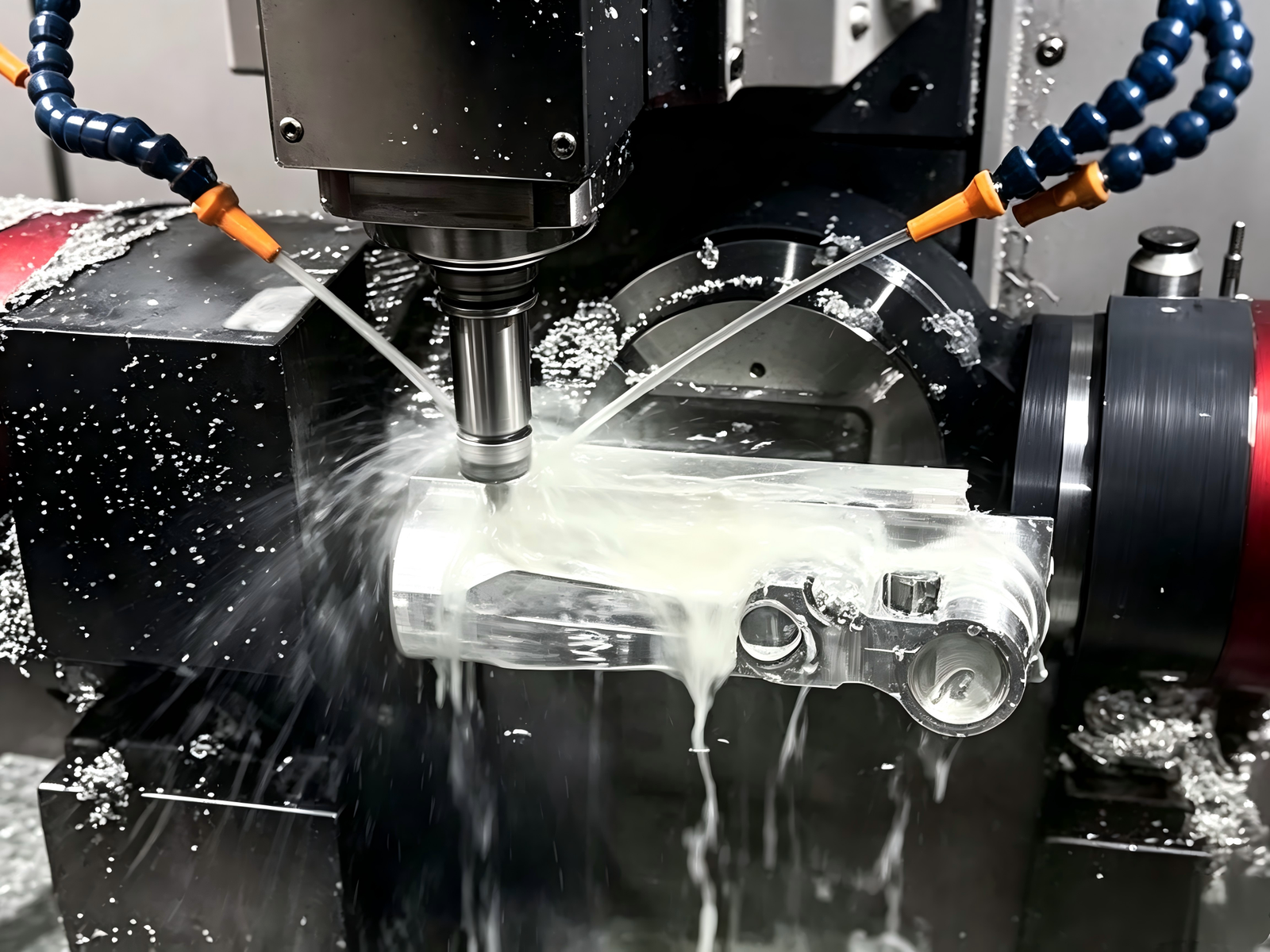
Producing a high-performance racing part involves more than simply machining metal. Engineers must carefully balance strength, weight, manufacturability, and cost.
Lightweight Engineering
Weight reduction should never compromise structural integrity.
Engineers often use:
Pocket machining
Rib reinforcement
Hollow sections
Topology optimization
These techniques reduce mass while maintaining stiffness.
Fatigue Resistance
Unlike static industrial components, racing parts experience continuous vibration and repeated load cycles.
Designers carefully eliminate:
Sharp internal corners
Stress concentration points
Sudden thickness changes
Rounded transitions and optimized fillets help improve fatigue life.
Thermal Expansion
Engine components regularly experience temperatures exceeding several hundred degrees Celsius.
Designers must consider:
Material expansion rates
Clearance requirements
Heat dissipation
Lubrication paths
Proper thermal design ensures reliable performance throughout the race.
Ease of Assembly
Well-designed CNC parts simplify maintenance and reduce pit-stop times.
Important considerations include:
Standard fastener sizes
Tool accessibility
Alignment features
Modular component design
Surface Finish Requirements
Different applications require different surface finishes.
Examples include:
Polished intake runners for improved airflow
Precision-ground bearing surfaces
Bead-blasted cosmetic parts
Hard-anodized suspension components
Selecting the appropriate finish improves both performance and durability.
Quality Control for CNC Racing Parts
Precision machining alone does not guarantee quality. Comprehensive inspection and testing ensure every component meets engineering specifications before installation.
Coordinate Measuring Machine (CMM) Inspection
CMM equipment verifies critical dimensions with micron-level accuracy.
Measurements typically include:
Hole locations
Surface profiles
Flatness
Parallelism
Concentricity
First Article Inspection (FAI)
Before full production begins, manufacturers inspect the initial component against engineering drawings.
FAI confirms:
Dimensions
Material compliance
Surface finish
Manufacturing process capability
Material Certification
Reliable manufacturers provide certificates verifying:
Material grade
Chemical composition
Mechanical properties
Heat treatment status
Material traceability is particularly important for aerospace-grade aluminum and titanium racing components.
Surface Roughness Testing
Certain engine and transmission components require specific surface roughness values to reduce friction and improve sealing performance.
Surface finish is measured using specialized roughness testers to ensure compliance with design specifications.
Hardness Testing
Heat-treated steel components undergo hardness testing to verify their mechanical properties.
Common methods include:
Rockwell Hardness (HRC)
Brinell Hardness (HB)
Vickers Hardness (HV)
Functional Testing
Depending on the application, manufacturers may also perform:
Pressure testing
Leak testing
Dynamic balancing
Thread gauge inspection
Assembly verification
These inspections help prevent failures during high-speed operation and ensure every component performs reliably under racing conditions.
CNC Racing Parts vs. Cast Racing Parts
Both CNC machining and casting are widely used in automotive manufacturing, but each process offers distinct advantages depending on the application.
| Feature | CNC Machined Parts | Cast Parts |
| Precision | Excellent (±0.005 mm possible) | Moderate |
| Strength | High (billet material) | Lower due to potential porosity |
| Surface Finish | Superior | Often requires additional machining |
| Tooling Cost | Low | High mold cost |
| Prototype Speed | Fast | Slower due to tooling |
| Design Flexibility | Excellent | Limited once molds are produced |
| Production Volume | Low to medium | High-volume production |
| Material Waste | Higher | Lower |
| Unit Cost | Higher for small batches | Lower for large volumes |
When to Choose CNC Machining
CNC machining is ideal for:
Prototype development
Custom racing parts
Low-volume production
High-performance applications
Complex geometries
Tight tolerance components
When Casting Is More Suitable
Casting becomes cost-effective for:
Very high production volumes
Less complex geometries
Components with lower precision requirements
Many manufacturers combine both processes by casting the basic shape and then performing CNC machining on critical surfaces to achieve the required accuracy.
Cost Factors of CNC Racing Parts
The cost of CNC racing parts depends on several variables beyond material price alone.
Material Selection
Premium materials such as titanium or aerospace-grade aluminum increase raw material costs but offer superior performance.
Part Complexity
Features such as deep pockets, thin walls, complex curves, and undercuts increase machining time and programming complexity.
Tolerance Requirements
Achieving ultra-tight tolerances requires additional machining operations, precision tooling, and more rigorous inspections.
Surface Treatments
Processes like hard anodizing, nickel plating, or precision polishing add both time and cost but significantly enhance performance and durability.
Batch Size
Prototype and low-volume production generally have higher per-unit costs because setup and programming expenses are distributed across fewer parts. Larger production runs reduce the unit cost through economies of scale.
Inspection Requirements
Comprehensive quality inspections, dimensional reports, and material certifications add value but also contribute to the overall manufacturing cost.
Understanding these factors early in the design phase helps optimize both performance and budget.
Conclusion
Compared with traditional manufacturing methods, CNC machining offers superior dimensional accuracy, faster product development, greater design flexibility, and repeatable quality. Whether you’re building a custom race car, upgrading a motorcycle, or developing components for professional motorsport applications, precision-machined parts provide the performance advantage needed to stay competitive.
Partnering with Tops Precision-an experienced CNC machining manufacturer is equally important. Tops Precision with advanced equipment, material expertise, rigorous quality control, and engineering support can help transform your concepts into reliable, race-ready components.
FAQs
1. What are CNC racing parts?
CNC racing parts are high-precision components manufactured using Computer Numerical Control (CNC) machining. They are designed for motorsport applications where tight tolerances, lightweight construction, and exceptional durability are critical.
2. Why are CNC-machined racing parts better than cast parts?
CNC-machined parts are typically produced from solid billet materials, offering greater strength, higher precision, improved surface finish, and better dimensional consistency than most cast components.
3. Which aluminum alloy is best for racing parts?
7075 aluminum is widely preferred for high-stress racing applications due to its excellent strength-to-weight ratio. 6061 aluminum is a cost-effective alternative for components requiring good corrosion resistance and machinability.
4. Is titanium worth the additional cost?
For critical performance components where weight reduction and strength are top priorities, titanium is often a worthwhile investment. It is commonly used in professional motorsports despite its higher machining cost.
5. What tolerances can CNC machining achieve?
Modern CNC machining centers can routinely achieve tolerances of ±0.005 mm, depending on the material, geometry, and machining process.
6. Can CNC racing parts be customized?
Yes. CNC machining is ideal for custom designs, allowing manufacturers to produce one-off prototypes, low-volume production runs, or fully customized components based on customer drawings or CAD models.
7. What surface finish is best for CNC racing parts?
The ideal finish depends on the application. Hard anodizing is popular for aluminum suspension components, while electroless nickel plating provides excellent wear and corrosion resistance for steel parts.
8. How long does it take to manufacture custom CNC racing parts?
Lead times vary depending on part complexity and order quantity. Prototype components are often completed within 1–3 weeks, while production orders may require additional time based on machining and finishing requirements.
9. Are CNC racing parts suitable for electric race cars?
Absolutely. CNC machining is widely used to produce battery housings, motor mounts, cooling plates, inverter enclosures, and lightweight structural components for electric racing vehicles.
10. Can CNC machining handle small production runs?
Yes. Unlike casting, CNC machining requires minimal tooling, making it highly cost-effective for prototypes, custom parts, and low-volume production.
11. What industries besides motorsports use CNC racing technologies?
The same high-precision machining techniques are widely used in aerospace, defense, medical devices, robotics, performance automotive, and high-end industrial equipment.
12. How can CNC machining reduce vehicle weight?
Engineers use advanced CAD software and topology optimization to remove unnecessary material while maintaining structural integrity, producing lightweight parts without compromising strength.
13. What certifications should a CNC racing parts manufacturer have?
Look for manufacturers certified to ISO 9001 for quality management. If they also serve the automotive industry, IATF 16949 certification is an additional indicator of robust manufacturing and quality processes.
14. What files are required for a custom CNC racing parts quotation?
Most manufacturers accept STEP, IGES, Parasolid, SolidWorks, or AutoCAD files. Providing 2D engineering drawings with tolerance, material, and surface finish requirements helps ensure an accurate quotation.
15. How do I choose the right CNC racing parts supplier?
Choose a supplier with proven motorsport experience, advanced CNC equipment, comprehensive inspection capabilities, engineering support, and flexible production services. A reliable partner should also provide rapid quotations, transparent communication, and consistent on-time delivery to support your project from prototype to full-scale production.


