



When investing in an LED display system, many buyers focus primarily on pixel pitch, brightness, and display quality. However, one of the most critical yet often overlooked components is the LED screen cabinet.
An LED screen cabinet serves as the structural foundation of an LED display. It supports LED modules, protects internal electronics, ensures heat dissipation, facilitates maintenance, and directly impacts the overall performance and lifespan of the display.
This comprehensive guide explains everything you need to know about LED screen cabinets, including their components, materials, manufacturing processes, applications, selection criteria, and maintenance requirements.
What Is an LED Screen Cabinet?
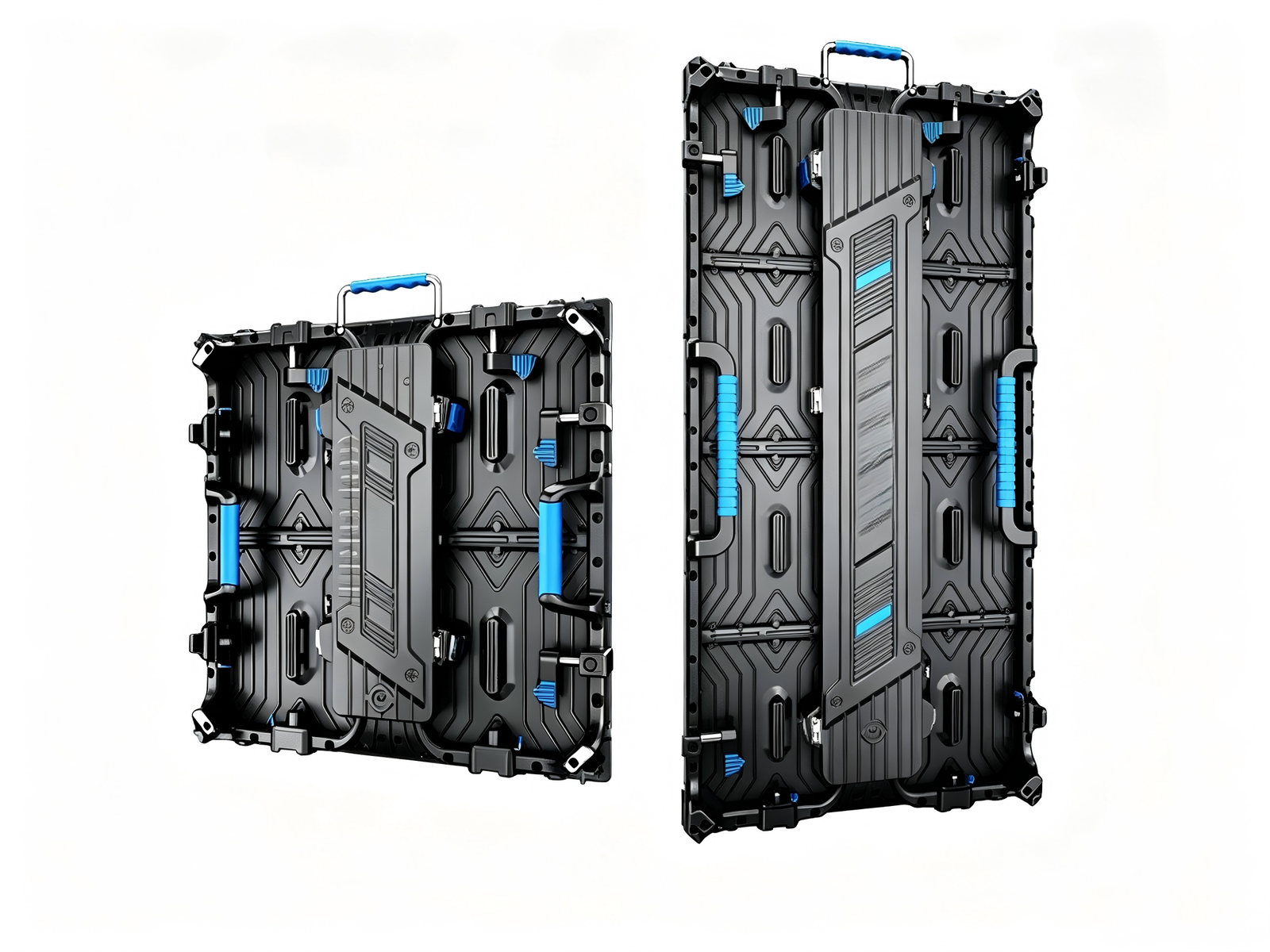
An LED screen cabinet, also known as an LED display cabinet or LED display enclosure, is the structural housing that contains and supports the various components of an LED display system.
The cabinet serves as the framework that holds:
LED modules
Power supplies
Receiving cards
HUB boards
Cooling systems
Signal cables
Power cables
Protection systems
Without a properly designed cabinet, even the highest-quality LED modules cannot achieve optimal display performance.
Main Components of an LED Screen Cabinet
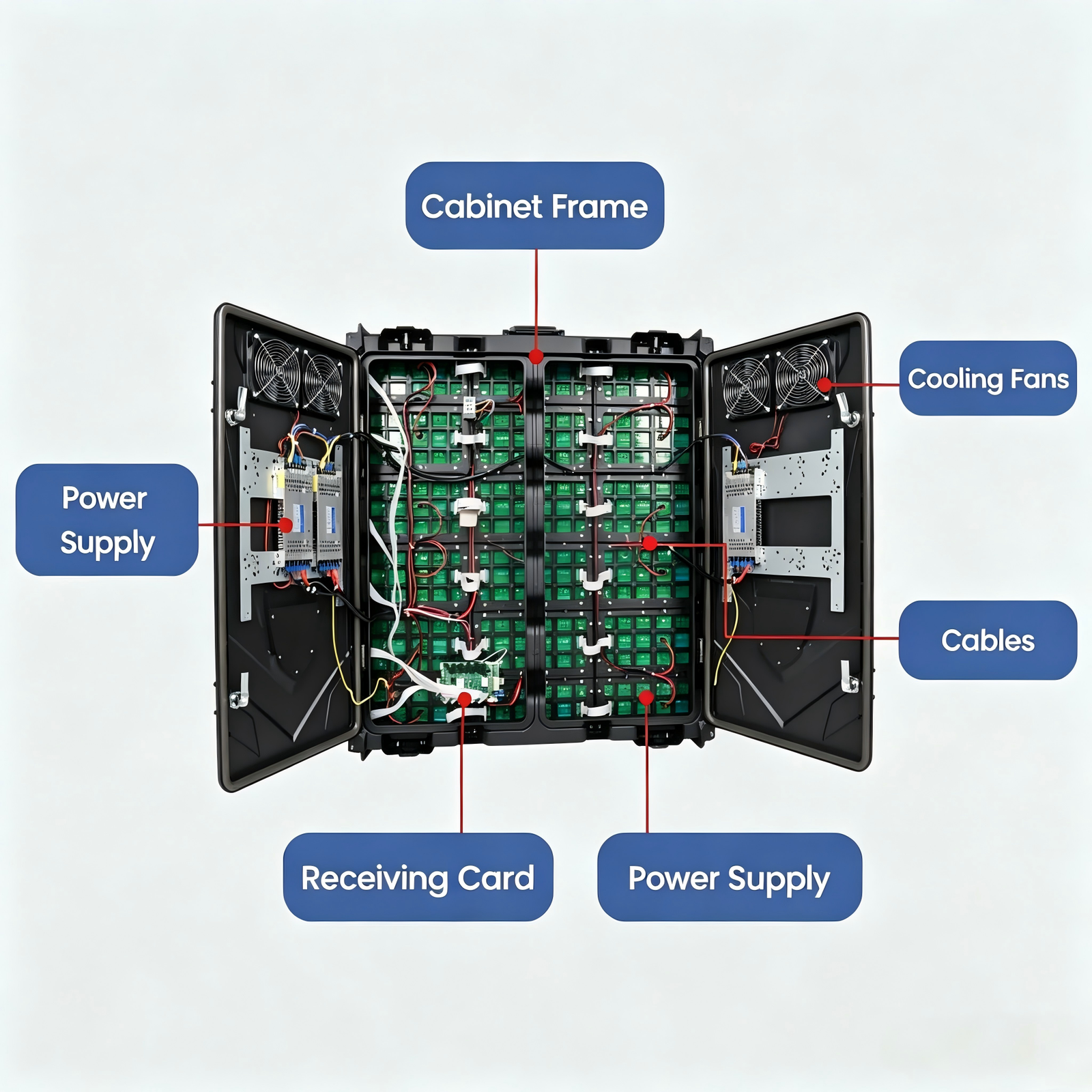
Cabinet Frame
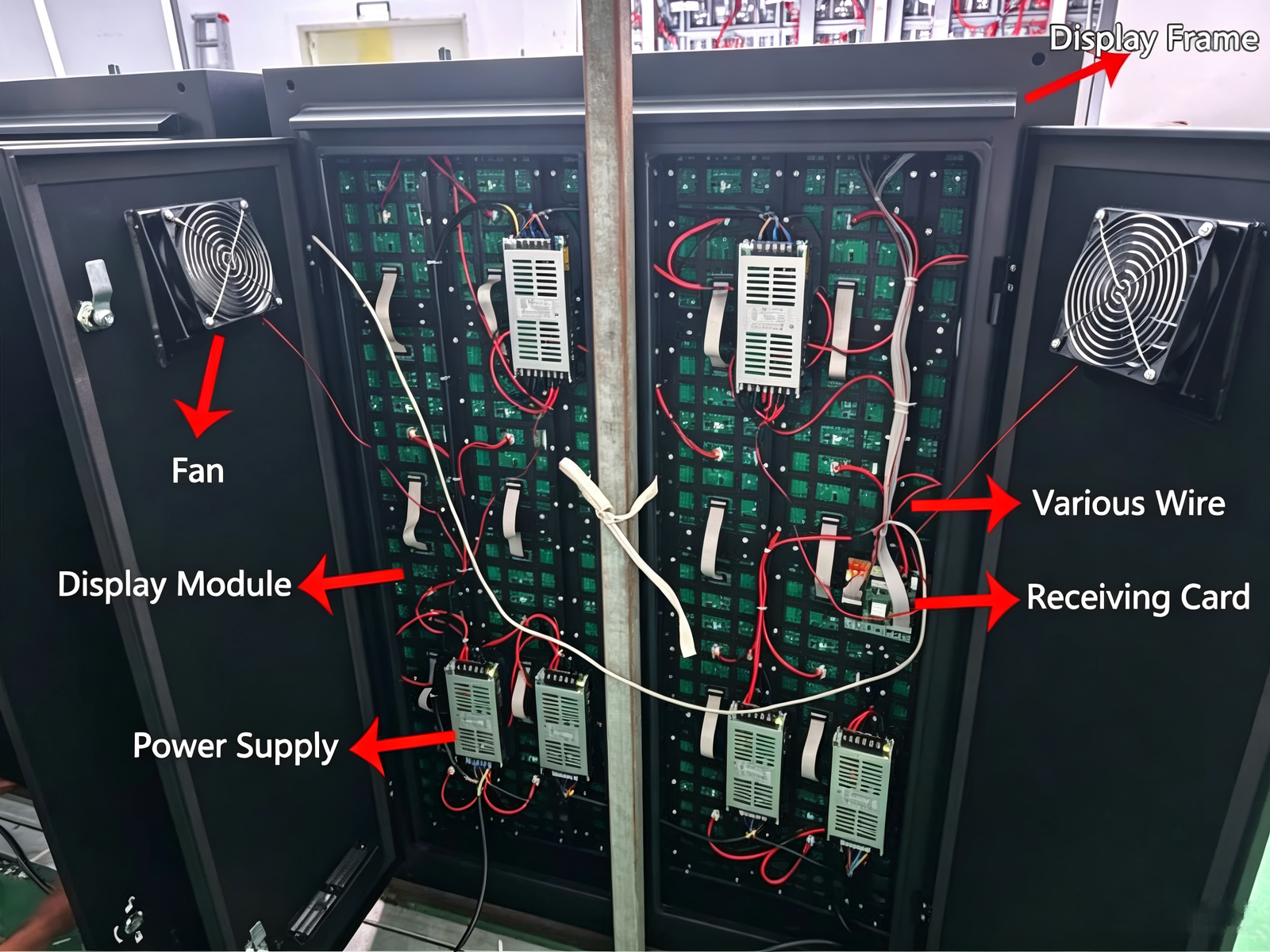
The cabinet frame is the primary structural component of the display.
Key Functions
Supports all internal components
Maintains structural stability
Ensures screen flatness
Facilitates cabinet connection
Important Design Factors
Mechanical strength
Dimensional accuracy
Weight optimization
Corrosion resistance
Precision CNC machining is commonly used to achieve tight tolerances and seamless panel alignment.
LED Modules
LED modules are mounted directly onto the cabinet surface and generate the visual content displayed on the screen.
Each module consists of:
LED chips
PCB boards
Driver ICs
Connectors
The cabinet must securely support the modules while maintaining perfect alignment.
Power Supply System
The power supply converts incoming electrical power into stable voltage for LED operation.
Requirements
High efficiency
Stable output
Surge protection
Long service life
Outdoor applications typically require waterproof power supplies.
Receiving Card and HUB Board
These electronic components manage signal transmission.
Receiving Card Functions
Receives video signals
Processes display data
Controls LED modules
HUB Board Functions
Distributes power
Simplifies wiring
Improves reliability
Together they ensure accurate image reproduction.
Cooling System
LED displays generate considerable heat during operation.
Proper thermal management prevents:
Brightness degradation
Color inconsistency
Electronic failures
Reduced lifespan
Common Cooling Methods
Natural Convection
Suitable for indoor displays.
Fan Cooling
Common in outdoor displays.
Advanced Thermal Management
Used in high-brightness and large-format displays.
Locking and Assembly Systems
Modern LED cabinets often include quick-lock mechanisms.
Benefits
Faster installation
Improved alignment
Reduced labor costs
Better structural integrity
These systems are particularly valuable for rental LED displays.
Waterproof and Protective Components
Outdoor LED cabinets incorporate:
Rubber sealing strips
Waterproof gaskets
Dust-proof barriers
Corrosion-resistant coatings
These features help achieve protection ratings such as IP65 or higher.
Types of LED Screen Cabinets
Indoor LED Cabinets
Indoor cabinets are designed for controlled environments.
Features
Lightweight construction
Slim profile
High precision
Excellent flatness
Applications
Retail stores
Shopping malls
Conference rooms
Corporate lobbies
Broadcast studios
Outdoor LED Cabinets
Outdoor cabinets must survive harsh environmental conditions.
Features
Waterproof design
Dust resistance
Enhanced cooling
High structural strength
Applications
Billboards
Stadiums
Transportation hubs
Building facades
Rental LED Cabinets
Rental displays prioritize mobility and fast deployment.
Features
Lightweight materials
Quick-lock systems
Modular construction
High durability
Applications
Concerts
Exhibitions
Trade shows
Live events
Corporate presentations
Front-Service LED Cabinets
These cabinets allow maintenance from the front side.
Advantages
Space-saving
Easier maintenance
Ideal for wall-mounted installations
Applications
Retail displays
Indoor advertising screens
Airports
Hotels
Rear-Service LED Cabinets
Maintenance is performed from the rear side.
Advantages
Lower manufacturing cost
Simpler structure
Better ventilation
Applications
Outdoor displays
Stadium screens
Large digital billboards
Fixed Installation Cabinets
Designed for permanent projects.
Benefits
High durability
Cost efficiency
Long service life
Applications
Commercial advertising
Government projects
Smart city displays
Curved LED Cabinets
Curved cabinets enable creative display designs.
Display Shapes
Convex curves
Concave curves
Circular screens
Wave designs
Applications
Museums
Exhibition halls
Luxury retail stores
Brand experience centers
Common Materials Used for LED Cabinets
Material selection significantly affects performance, weight, durability, and cost.
Die-Cast Aluminum Cabinets
The industry standard for premium LED displays.
Advantages
Lightweight
Excellent heat dissipation
High precision
Corrosion resistance
Best Applications
Rental displays
Fine-pitch displays
High-end installations
Limitations
Higher manufacturing cost
Steel Cabinets
A cost-effective option for large projects.
Advantages
High strength
Lower material cost
Excellent durability
Best Applications
Outdoor billboards
Large fixed installations
Limitations
Heavy weight
More difficult transportation
Magnesium Alloy Cabinets
An advanced lightweight material.
Advantages
Extremely lightweight
Excellent rigidity
Outstanding heat dissipation
Best Applications
Premium rental displays
Aerospace-grade display projects
Limitations
Higher material cost
Extruded Aluminum Cabinets
A balanced solution between cost and performance.
Advantages
Moderate weight
Good structural stability
Excellent corrosion resistance
Best Applications
Indoor displays
Commercial signage
Transportation systems
LED Cabinet Manufacturing Process
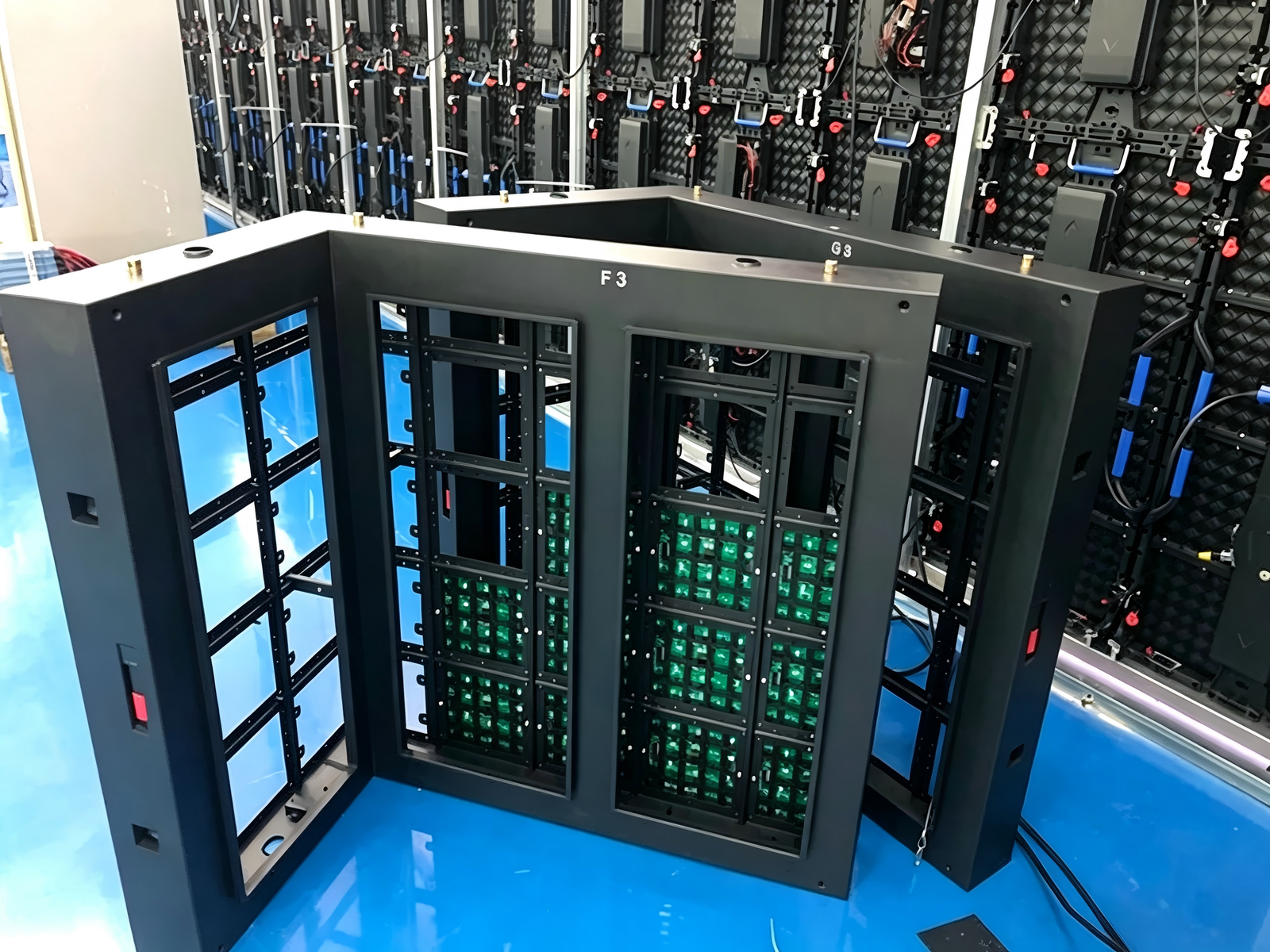
Understanding the manufacturing process helps buyers evaluate supplier capabilities.
Design Engineering
Engineers develop:
Structural drawings
Thermal simulations
Load calculations
Installation plans
Material Selection
Material choice depends on:
Budget
Weight requirements
Environmental conditions
Application type
CNC Machining
Precision CNC machining creates:
Mounting surfaces
Alignment features
Connection interfaces
High machining accuracy ensures seamless screen assembly.
Sheet Metal Fabrication
Processes include:
Laser cutting
Punching
Bending
Forming
Welding and Assembly
Professional welding ensures:
Structural strength
Dimensional consistency
Long-term durability
Surface Treatment
Powder Coating
Provides:
Corrosion resistance
Improved appearance
Enhanced durability
Anodizing
Common for aluminum cabinets.
Anti-Corrosion Treatment
Essential for outdoor applications.
Quality Inspection
Manufacturers typically perform:
Dimensional inspection
Flatness testing
Load testing
Waterproof testing
Assembly verification
Key Factors When Choosing an LED Screen Cabinet
Indoor or Outdoor Application
Environmental conditions determine cabinet design requirements.
Weight Requirements
Lighter cabinets reduce:
Shipping costs
Installation effort
Structural load
Maintenance Accessibility
Choose:
Front-service designs for limited spaces
Rear-service designs when sufficient maintenance space exists
Protection Rating
Outdoor projects generally require:
IP65 minimum
Higher ratings for extreme environments
Thermal Management
Effective cooling increases:
Reliability
Brightness consistency
Lifespan
Budget Considerations
Balancing cost and performance is essential.
Higher initial investment often results in lower long-term ownership costs.
Standard LED Cabinet Sizes
Common industry dimensions include:
500 × 500 mm
Ideal for rental applications.
500 × 1000 mm
Popular for stage and event displays.
Custom Sizes
Used for:
Architectural displays
Creative installations
Irregular screen shapes
LED Cabinet Protection Ratings Explained
What Is an IP Rating?
IP ratings measure protection against:
Dust
Water intrusion
IP54
Basic outdoor protection.
IP65
Industry standard for outdoor LED displays.
IP67
Suitable for extreme environments.
Common LED Cabinet Problems and Solutions
Cabinet Deformation
Causes
Poor material quality
Improper installation
Solution
Use precision-machined aluminum cabinets.
Poor Heat Dissipation
Causes
Inadequate ventilation
Low-quality cabinet design
Solution
Improve airflow and thermal management.
Water Leakage
Causes
Failed seals
Poor waterproof design
Solution
Replace gaskets and improve sealing systems.
Signal Transmission Failures
Causes
Damaged cables
Poor connections
Solution
Routine inspection and maintenance.
Industries Using LED Screen Cabinets
LED cabinets are widely used in:
Digital advertising
Sports venues
Transportation systems
Retail environments
Shopping malls
Command centers
Corporate facilities
Entertainment venues
Museums
Exhibition centers
How to Maintain an LED Screen Cabinet
Daily Inspection
Check:
Structural integrity
Electrical connections
Surface cleanliness
Cleaning Procedures
Use:
Soft cloths
Non-corrosive cleaners
Compressed air for ventilation areas
Waterproof Maintenance
Inspect:
Sealing strips
Gaskets
Waterproof joints
Cable Inspection
Regularly verify:
Power cables
Signal cables
Connectors
Proper Storage
Store cabinets in:
Dry environments
Controlled temperatures
Dust-free conditions
Why Work with a Professional LED Cabinet Manufacturer?
A professional manufacturer offers:
Engineering Expertise
Customized structural solutions.
Advanced Manufacturing
Precision CNC machining and fabrication.
Strict Quality Control
Consistent product quality.
Faster Production
Efficient project execution.
OEM & ODM Services
Tailored solutions for specific projects.
Technical Support
Long-term maintenance and engineering assistance.
Choosing the right manufacturing partner significantly reduces project risk and improves overall display performance.
Final Thoughts
An LED screen cabinet is far more than a simple enclosure—it is the structural backbone of the entire LED display system. The right cabinet improves screen flatness, protects critical electronics, enhances heat dissipation, simplifies maintenance, and extends display lifespan.
Whether you are purchasing a fixed outdoor billboard, a rental stage display, or a fine-pitch indoor video wall, understanding cabinet materials, manufacturing processes, protection ratings, and maintenance requirements will help you make a smarter investment.
For large-scale commercial projects, partnering with an experienced LED cabinet manufacturer ensures better quality, longer service life, and lower total ownership costs.
FAQs
1.What is the lifespan of an LED cabinet?
High-quality LED cabinets typically last between 8 and 15 years depending on materials, environment, and maintenance.
2.Which material is best for LED cabinets?
Die-cast aluminum is generally considered the best balance of precision, weight, and durability.
3.Are lightweight cabinets better for rental screens?
Yes. Lightweight cabinets simplify transportation, installation, and dismantling.
4.What IP rating should outdoor LED cabinets have?
IP65 is generally recommended for most outdoor applications.
5.What is the difference between front-service and rear-service cabinets?
Front-service cabinets allow maintenance from the front, while rear-service cabinets require rear access.
6.Can LED cabinets be customized?
Yes. Manufacturers can customize dimensions, materials, structures, and mounting methods.
7.How often should LED cabinets be maintained?
A visual inspection every month and comprehensive maintenance every six months is recommended.
8.Do LED cabinets affect display quality?
Absolutely. Cabinet precision directly impacts screen flatness, alignment, and visual performance.


