


The global unmanned aerial vehicle (UAV) industry is experiencing rapid growth across sectors such as agriculture, infrastructure inspection, surveying, logistics, defense, and aerial photography. As drone technology advances, manufacturers face increasing demands for lighter, stronger, and more precise components that can withstand challenging operating conditions.
The performance, reliability, and lifespan of a drone largely depend on the quality of its components. From structural frames and motor mounts to camera brackets and sensor housings, precision-engineered parts are critical to achieving optimal flight performance.
Among the various manufacturing methods available today, CNC machining has become one of the most trusted solutions for producing high-precision drone components. CNC machining offers exceptional accuracy, material flexibility, repeatability, and customization capabilities, making it ideal for both prototype development and production runs.
In this comprehensive guide, we will explore CNC machined drone parts, manufacturing processes, material selection, design considerations, industry applications, and how to choose the right CNC machining partner for your UAV project.
What Are CNC Drone Parts?
CNC drone parts are components manufactured using Computer Numerical Control (CNC) machining technology. CNC machines remove material from solid blocks of metal or plastic using computer-controlled cutting tools, creating highly accurate and repeatable parts.
Common CNC-machined UAV components include:
Drone frames
Motor mounts
Propeller hubs
Landing gear
Camera gimbals
Sensor housings
Electronic enclosures
Custom payload brackets
Unlike molded or stamped components, CNC machined parts can achieve extremely tight tolerances and complex geometries while maintaining excellent structural integrity.
Why CNC Machining Is Used for Drone Manufacturing
Drone manufacturers choose CNC machining because it offers:
Exceptional Precision
High-end CNC equipment can achieve tolerances as tight as ±0.005 mm, ensuring accurate assembly and reduced vibration during flight.
Superior Strength
Components are machined from solid billets rather than layered or molded materials, resulting in better mechanical properties.
Rapid Product Development
Design modifications can be implemented quickly without investing in expensive tooling.
Flexible Production Volumes
Whether producing one prototype or thousands of components, CNC machining offers excellent scalability.
CNC Machining vs. 3D Printing for Drone Parts
| Factor | CNC Machining | 3D Printing |
| Precision | Excellent | Moderate |
| Surface Finish | Superior | Often Requires Post-Processing |
| Material Strength | High | Lower |
| Production Speed | Fast for Production | Fast for Prototyping |
| Material Options | Extensive | Limited |
| Structural Integrity | Excellent | Layer-Dependent |
While 3D printing is useful for concept validation, CNC machining remains the preferred solution for functional drone components that require strength, durability, and precision.
CNC Manufacturing Process for Drone Parts
CAD Design
Every UAV component begins with a 3D CAD model. Engineers define:
Dimensions
Tolerances
Mounting interfaces
Weight targets
Structural requirements
Modern simulation software allows designers to optimize weight distribution while maintaining structural integrity.
Engineering Analysis
Finite Element Analysis (FEA) is often used to evaluate:
Stress concentration
Fatigue resistance
Impact performance
Vibration behavior
This step helps eliminate potential failures before manufacturing begins.
CAM Programming
After design approval, the CAD model is imported into CAM software.
The software generates:
Toolpaths
Cutting parameters
Tool selections
Machining sequences
Efficient CAM programming reduces production costs while improving machining quality.
CNC Milling and Turning
Precision CNC equipment performs:
3-Axis Milling
Suitable for simple geometries and flat surfaces.
4-Axis Machining
Allows machining on multiple sides with fewer setups.
5-Axis Machining
Ideal for complex aerospace-grade drone components requiring intricate features and tight tolerances.
CNC Turning
Used for cylindrical parts such as:
Shafts
Bushings
Connectors
Propeller adapters
Surface Finishing
Post-processing improves appearance and performance.
Common finishes include:
Anodizing
Hard Anodizing
Powder Coating
Bead Blasting
Polishing
Electroless Nickel Plating
Black Oxide
These treatments improve corrosion resistance, wear resistance, and aesthetics.
Quality Inspection
Quality control includes:
CMM Inspection
Optical Measurement
Surface Roughness Testing
Material Verification
Functional Testing
This ensures every UAV component meets design specifications.
Common Types of CNC Drone Parts
Drone Frames
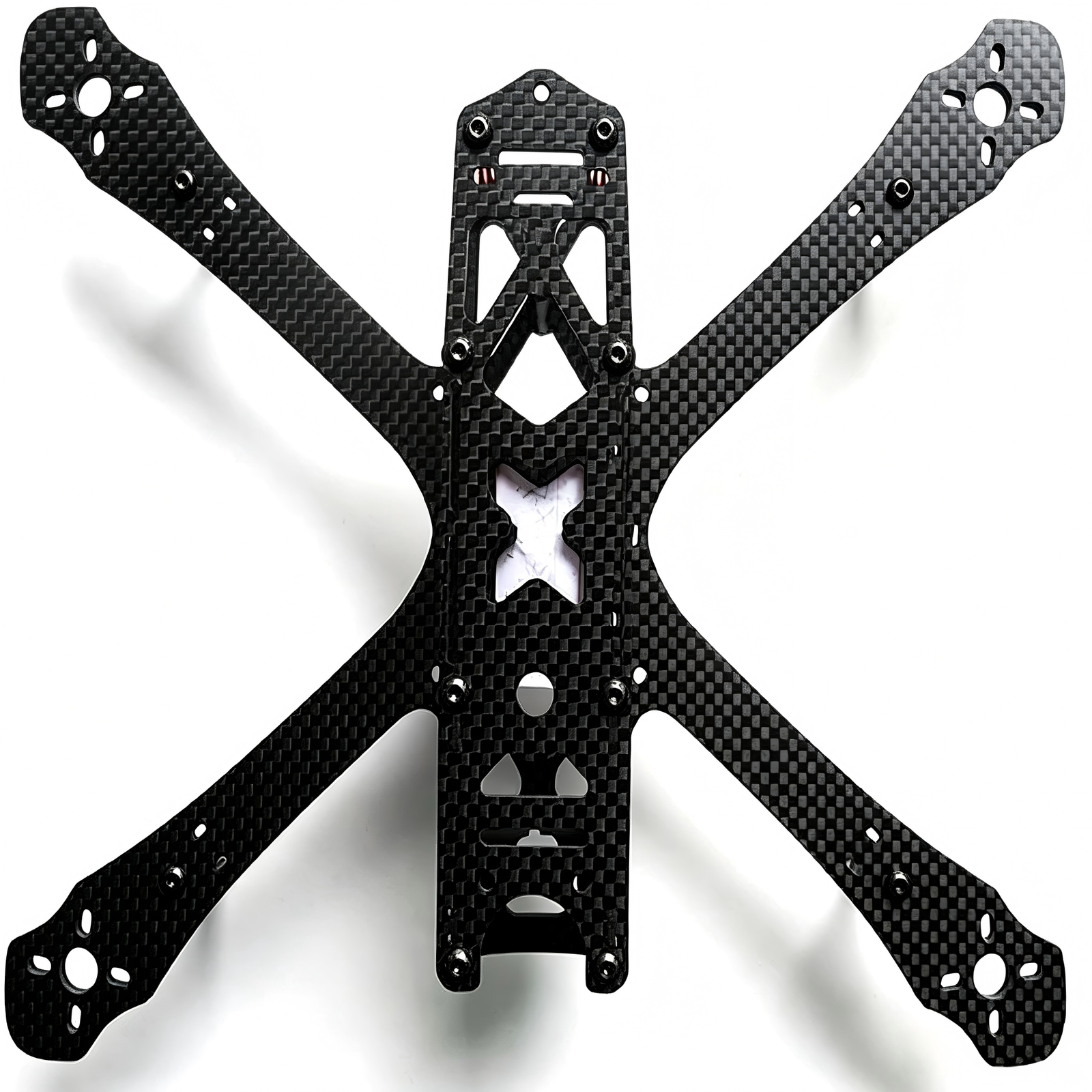
The frame serves as the structural foundation of the drone.
Requirements include:
Lightweight construction
High rigidity
Impact resistance
Fatigue durability
Aluminum 7075 and carbon fiber are commonly used.
Drone Arms
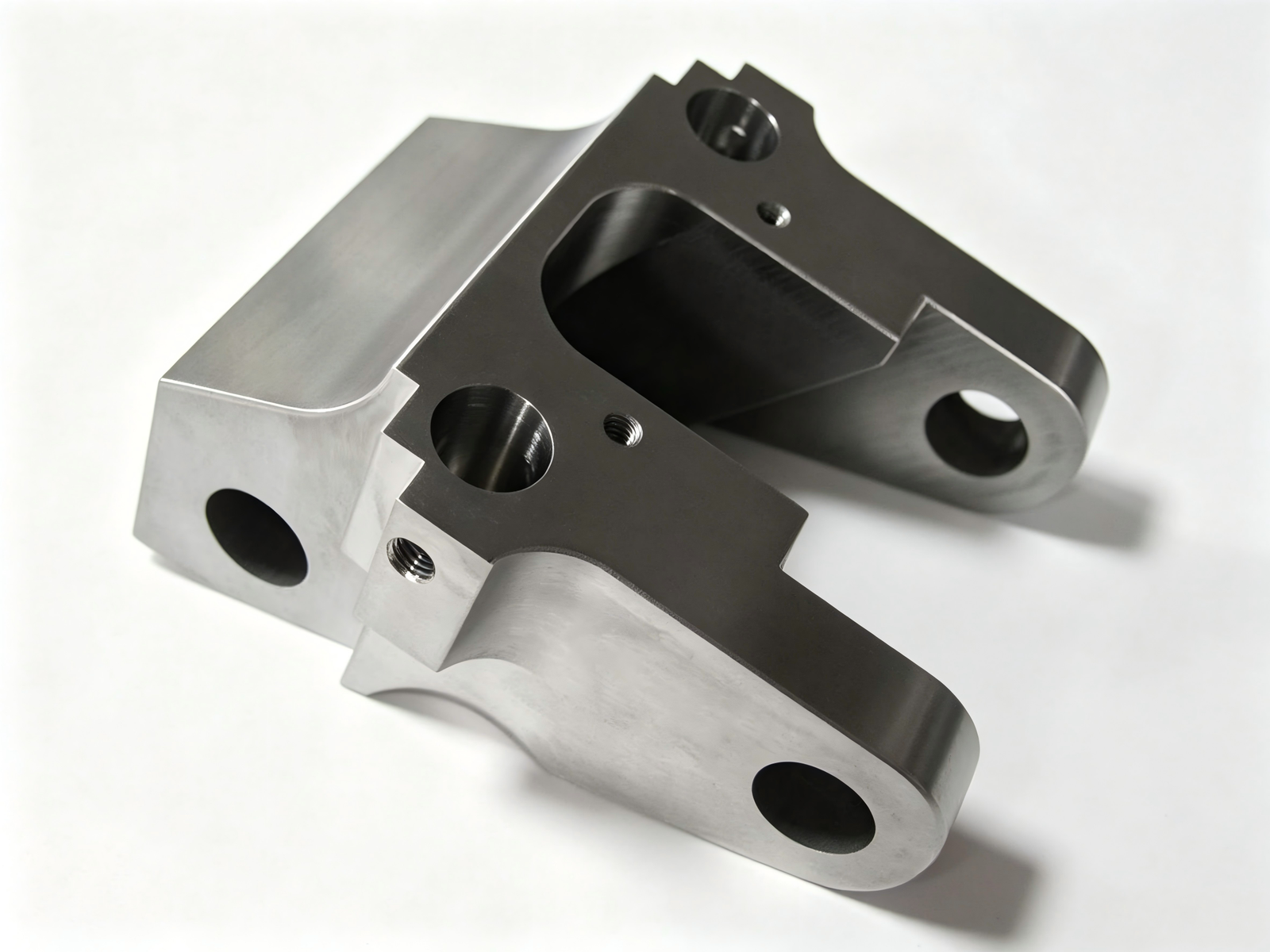
Arms connect the motors to the main frame and directly affect flight stability.
Precision machining helps:
Minimize vibration
Improve weight distribution
Increase structural strength
Motor Mounts
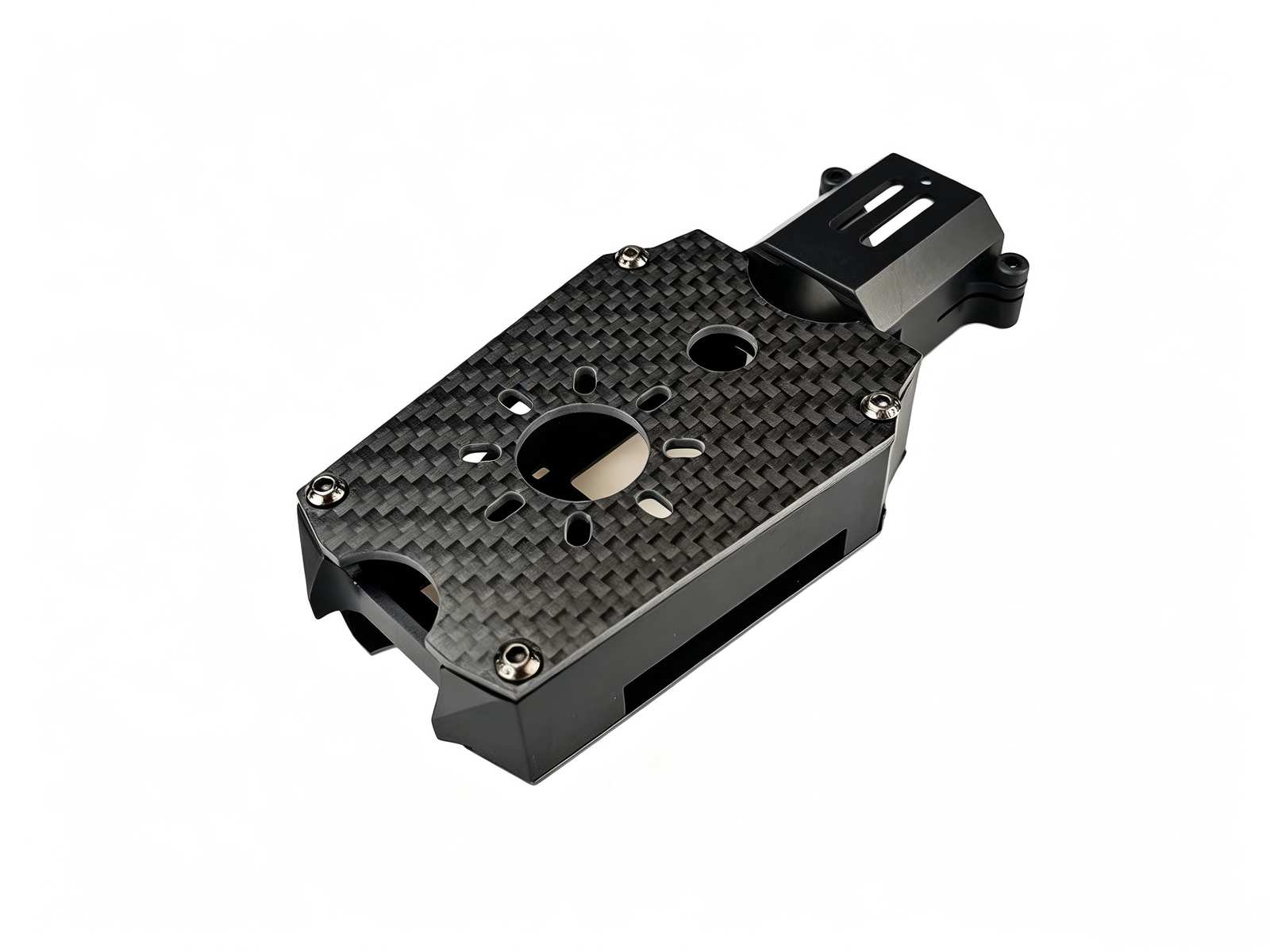
Motor mounts transfer thrust loads into the drone structure.
High-quality CNC motor mounts provide:
Precise motor alignment
Reduced vibration
Improved flight efficiency
Propeller Hubs
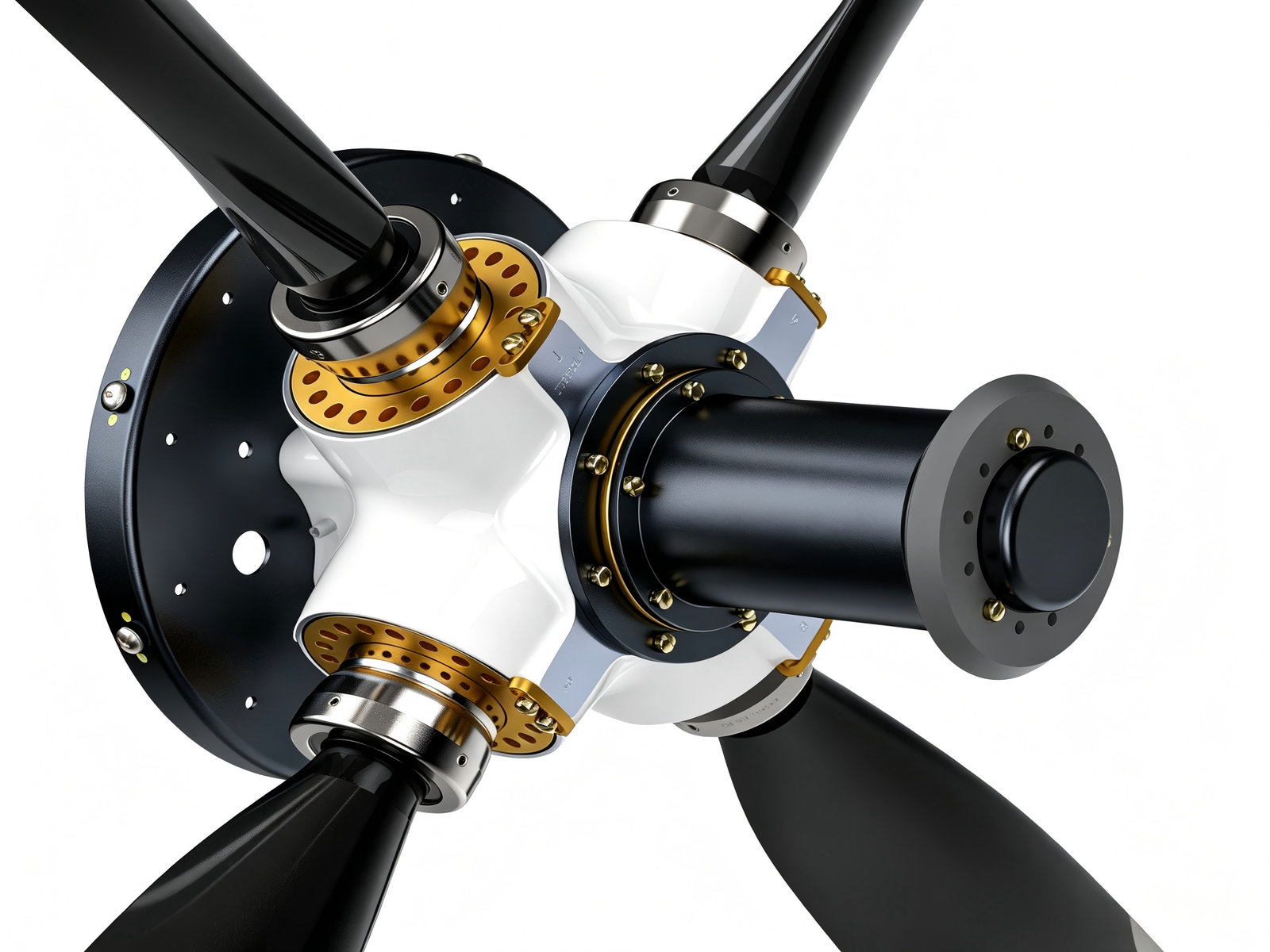
Propeller hubs require exceptional concentricity and balance.
Benefits include:
Reduced vibration
Improved energy efficiency
Longer motor lifespan
Landing Gear
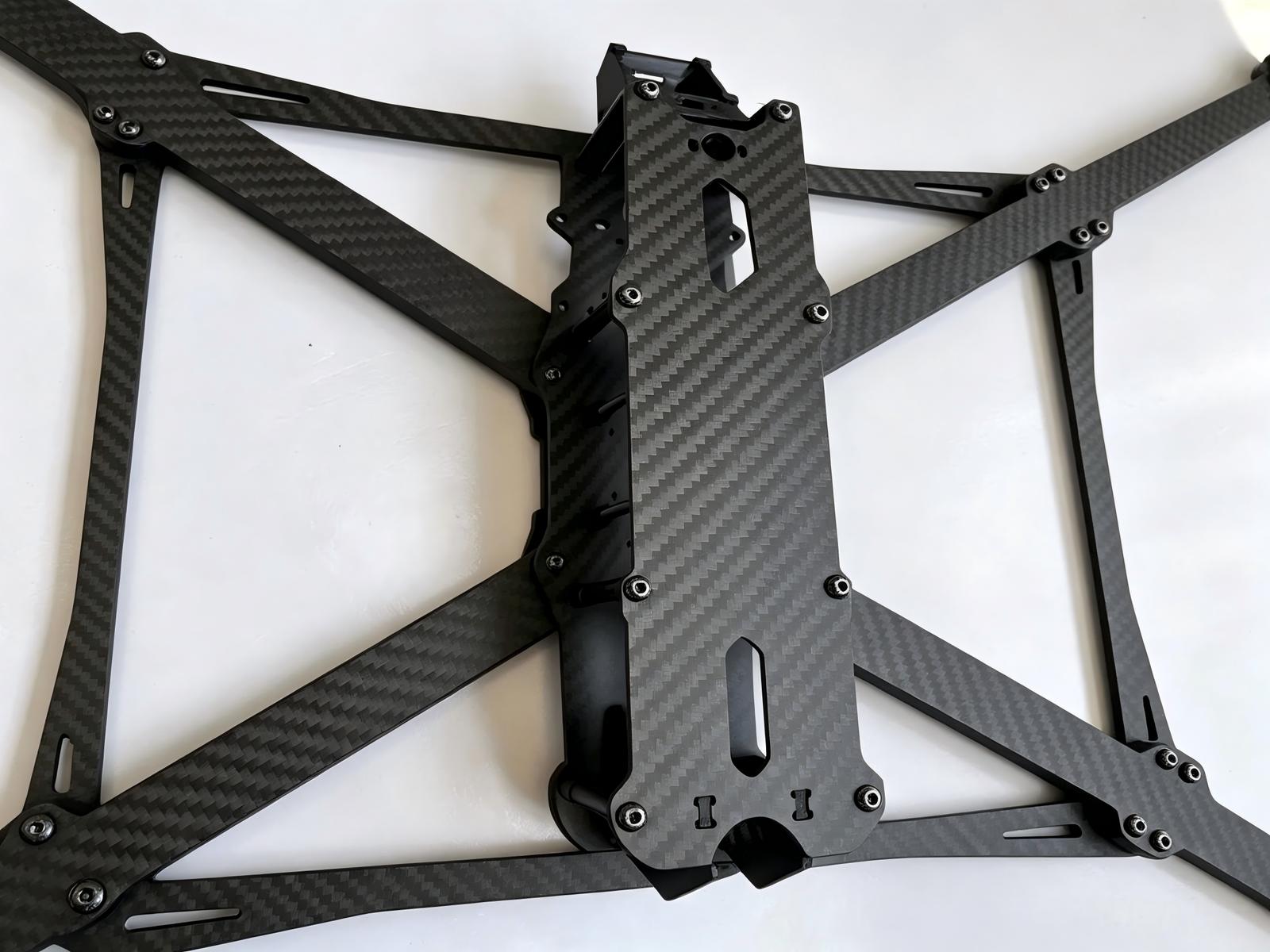
Landing gear protects drones during takeoff and landing.
CNC-machined landing gear offers:
High impact resistance
Lightweight construction
Superior durability
Camera Mounts and Gimbals
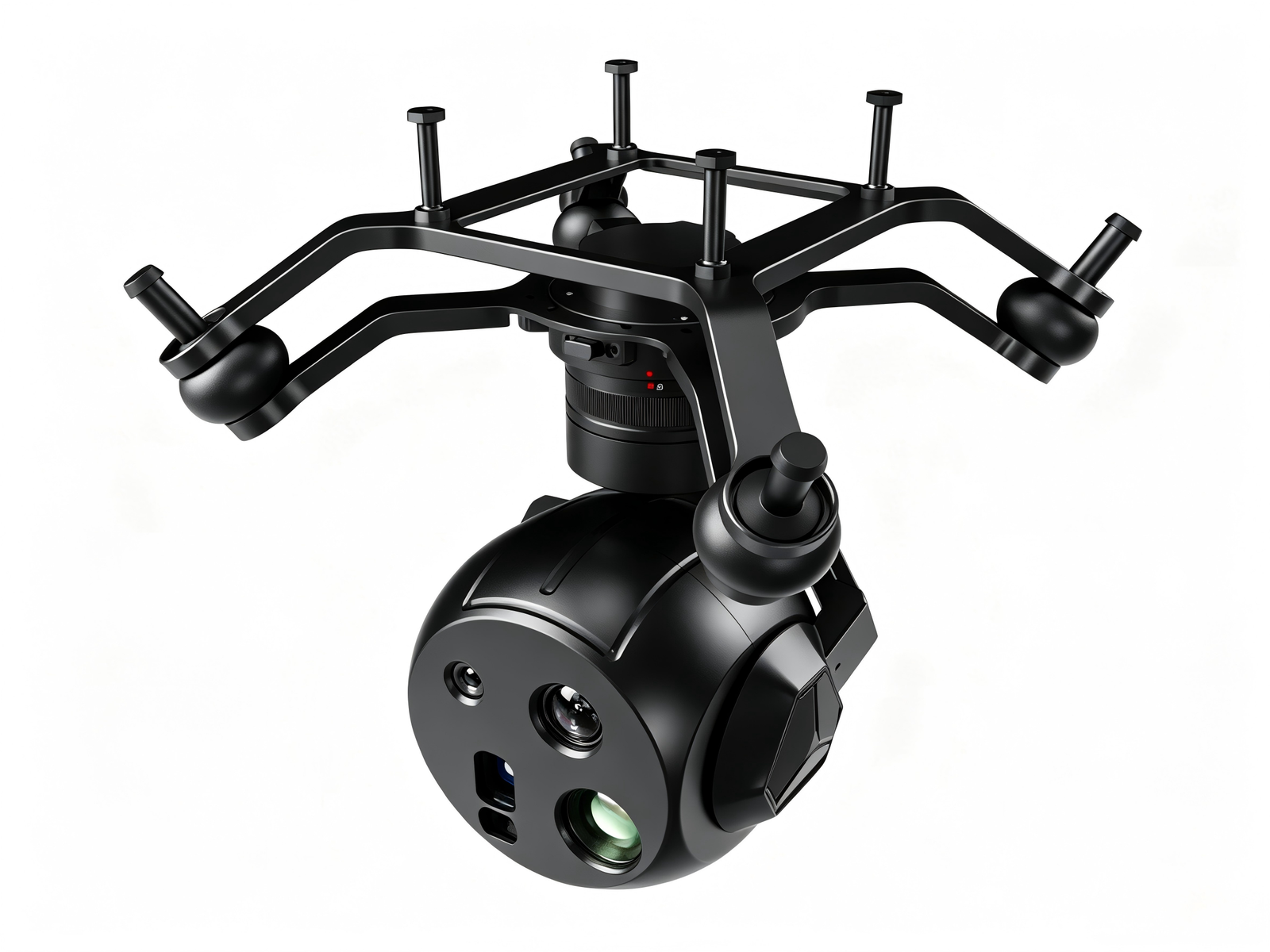
Professional UAV applications require stable imaging systems.
Precision CNC machining enables:
Smooth camera operation
Reduced vibration
Enhanced image quality
Electronic Enclosures
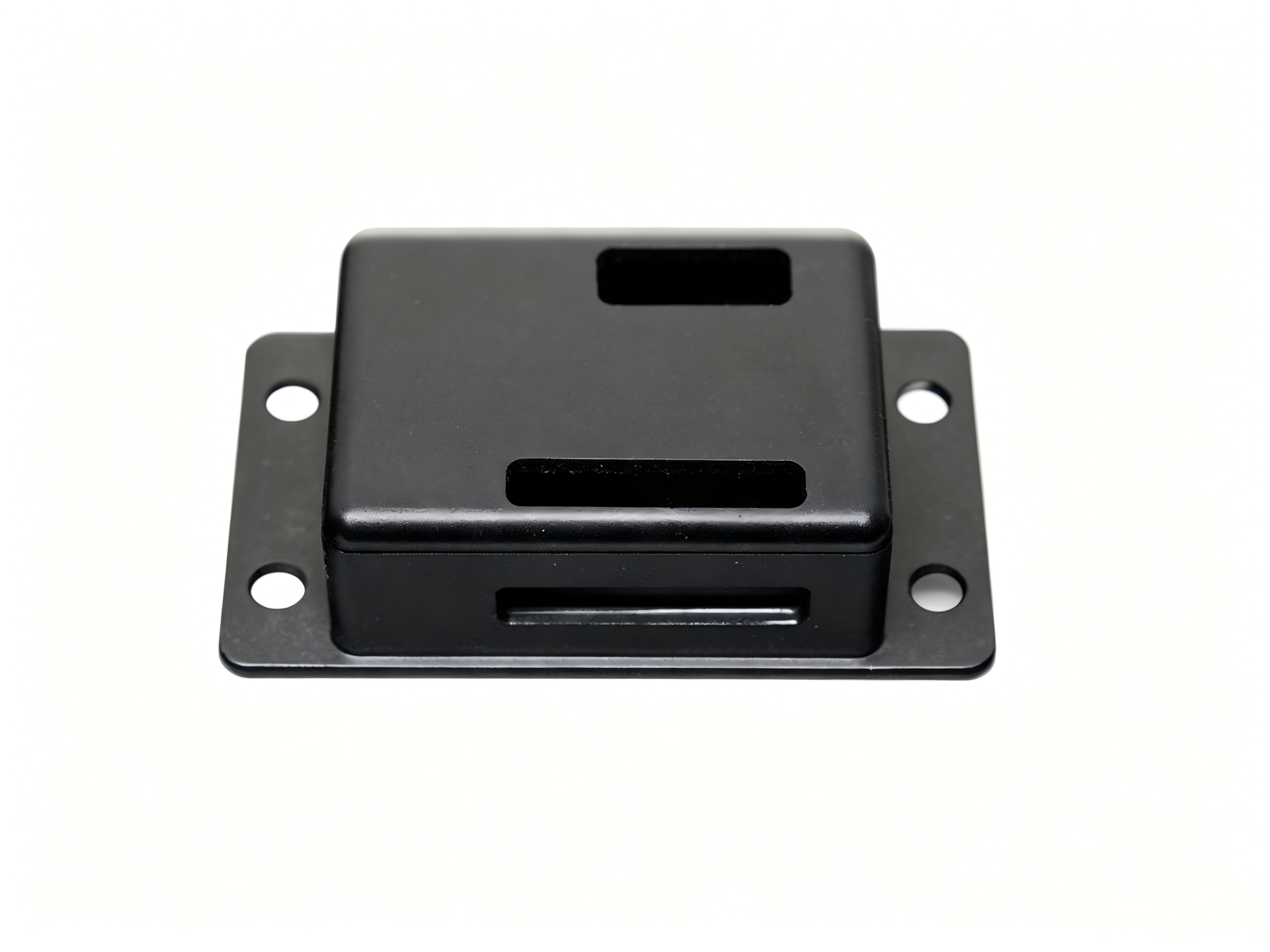
Electronic housings protect:
Flight controllers
GPS modules
Communication systems
Batteries
Precision machining ensures proper fit and thermal management.
Sensor Housings
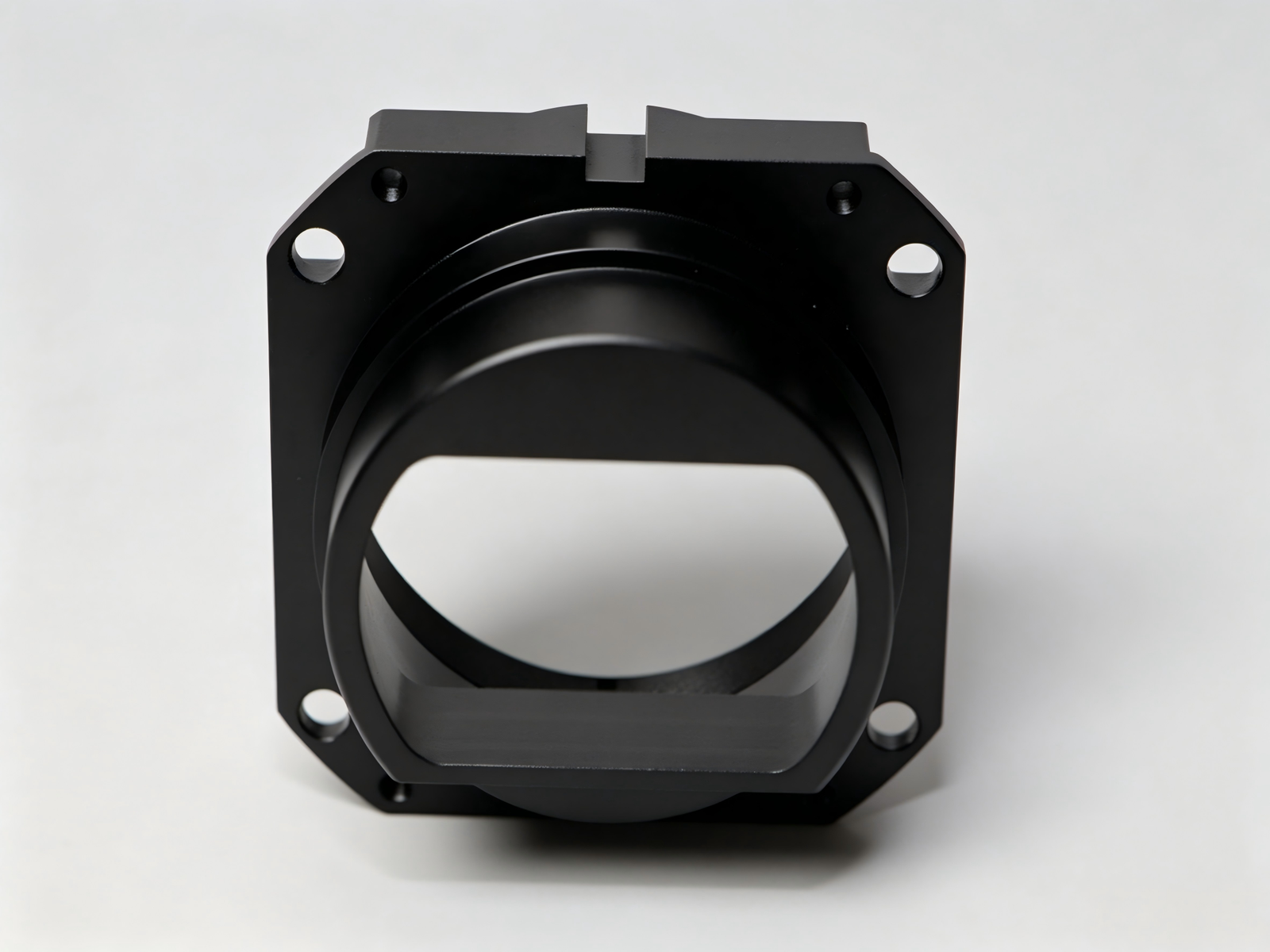
Inspection and surveying drones often use:
LiDAR
Thermal Cameras
Multispectral Sensors
Custom CNC housings protect these valuable components while maintaining measurement accuracy.
Best Materials for CNC Drone Components
Aluminum 6061-T6
Advantages:
Lightweight
Corrosion-resistant
Cost-effective
Easy to machine
Applications:
Frames
Brackets
General structural components
Aluminum 7075-T6
Advantages:
Aerospace-grade strength
Excellent fatigue resistance
Lightweight
Applications:
High-performance UAV structures
Racing drones
Military drones
Titanium
Advantages:
Exceptional strength-to-weight ratio
Corrosion resistance
Heat resistance
Applications:
Critical load-bearing components
Specialized aerospace systems
Stainless Steel
Advantages:
Excellent wear resistance
High durability
Applications:
Shafts
Fasteners
Mechanical transmission components
Carbon Fiber
Advantages:
Extremely lightweight
Outstanding stiffness
Applications:
Racing drones
Professional cinematography drones
Engineering Plastics
Delrin (POM)
Ideal for:
Precision mechanisms
Gimbal components
Nylon
Ideal for:
Lightweight mounts
Protective components
PEEK
Ideal for:
High-temperature environments
Specialized aerospace applications
CNC Drone Parts by Industry
Agricultural Drones
Applications:
Crop spraying
Field mapping
Crop monitoring
Required components:
Heavy-duty arms
Corrosion-resistant mounts
Reinforced frames
Surveying and Mapping Drones
Require:
Precision sensor mounts
Stable camera platforms
Lightweight structures
Inspection Drones
Used for:
Power lines
Bridges
Pipelines
Wind turbines
Require highly accurate sensor housings and gimbal systems.
Security and Surveillance Drones
Need:
Long endurance
Reliable payload systems
Ruggedized structures
FPV Racing Drones
Require:
Ultra-lightweight components
High-strength frames
Impact-resistant structures
Military UAVs
Demand:
Aerospace-grade materials
Tight tolerances
Extreme reliability
Advantages of CNC Machined Drone Parts
High Precision
Tight tolerances improve assembly quality and flight performance.
Lightweight Design
Optimized machining reduces unnecessary weight.
Improved Structural Strength
Machined components maintain superior integrity.
Better Durability
Excellent resistance to wear, fatigue, and impact.
Fast Prototyping
Accelerates product development cycles.
Low-Volume Production Capability
Ideal for custom UAV programs and specialized projects.
Design Considerations for CNC Drone Parts
Weight Optimization
Reducing weight extends flight time and improves maneuverability.
Vibration Reduction
Proper design improves sensor accuracy and image stability.
Heat Dissipation
Effective thermal management protects electronic systems.
Corrosion Resistance
Critical for outdoor and marine applications.
Assembly Efficiency
Well-designed components reduce manufacturing and maintenance costs.
How to Choose a CNC Drone Parts Manufacturer
Manufacturing Capabilities
Evaluate:
3-Axis CNC
4-Axis CNC
5-Axis CNC
CNC Turning
Material Availability
Choose suppliers experienced with:
Aluminum
Titanium
Stainless Steel
Engineering Plastics
Quality Control System
Look for:
ISO-certified processes
CMM inspection
Full traceability
Lead Time
Fast turnaround is crucial for UAV development projects.
Engineering Support
A capable supplier should provide DFM feedback and design optimization suggestions.
Certifications
Industry certifications indicate process consistency and quality management.
Why Choose Tops Precision for CNC Drone Parts?
Tops Precision specializes in custom CNC machining services for aerospace, electronics, industrial equipment, and UAV applications.
Our capabilities include:
Precision CNC Milling
CNC Turning
Multi-Axis Machining
Rapid Prototyping
Low-Volume Production
High-Volume Manufacturing
We work with a wide range of materials including:
Aluminum 6061 & 7075
Titanium
Stainless Steel
Brass
Copper
Delrin
Nylon
PEEK
Our experienced engineering team supports customers throughout the entire development cycle, from prototype validation to full-scale production.
Whether you need lightweight drone frames, precision motor mounts, custom sensor housings, or complex aerospace-grade UAV components, Tops Precision delivers reliable quality, competitive lead times, and exceptional manufacturing expertise.
Conclusion
As drone technology continues to evolve, manufacturers require components that combine precision, durability, and lightweight performance. CNC machining remains one of the most effective manufacturing methods for producing high-quality UAV parts that meet the demanding requirements of modern drone applications.
By selecting the right materials, optimizing designs, and partnering with an experienced CNC machining supplier, drone manufacturers can improve performance, reduce development risks, and accelerate time-to-market.
For companies seeking custom CNC drone components, working with a trusted manufacturing partner like Tops Precision can help transform innovative UAV concepts into reliable, production-ready products.
FAQs
1. What is the best material for drone frames?
Aluminum 7075-T6 and carbon fiber are commonly considered the best choices due to their excellent strength-to-weight ratio.
2. Is CNC machining better than 3D printing for drone parts?
For functional and load-bearing components, CNC machining offers superior strength, precision, and durability.
3. What tolerances can CNC drone parts achieve?
High-precision CNC machining can typically achieve tolerances from ±0.01 mm to ±0.005 mm depending on the component.
4. Can CNC machining produce lightweight drone parts?
Yes. Advanced CNC machining allows engineers to create optimized geometries that reduce weight without sacrificing strength.
5. How much do custom CNC drone parts cost?
Costs depend on material selection, complexity, tolerances, quantity, and finishing requirements.
6. What surface finishes are available for UAV components?
Common finishes include anodizing, hard anodizing, powder coating, polishing, bead blasting, and electroless nickel plating.
7. Can Tops Precision support prototype and production quantities?
Yes. We support everything from rapid prototyping to full-scale production runs.
8. How quickly can CNC drone parts be manufactured?
Lead times vary depending on complexity and quantity, but prototype parts can often be delivered within days after design approval.