



Ya sea que se produzcan neumáticos para turismos, llantas para camiones, neumáticos todoterreno, o neumáticos de carreras de alto rendimiento, Seleccionar la tecnología correcta de moldeo de neumáticos es esencial para lograr la consistencia del producto., eficiencia de producción, y durabilidad a largo plazo.
A medida que la industria automotriz mundial continúa evolucionando hacia los vehículos eléctricos, conducción autónoma, y transporte sostenible, Los fabricantes de neumáticos exigen soluciones de moldes más avanzadas y con mayor precisión., ciclos de producción más rápidos, y calidad superficial mejorada.
En esta guía completa, Exploraremos los principales tipos de moldes de neumáticos., sus tecnologías de fabricación, materiales, ventajas, desventajas, y aplicaciones en diferentes categorías de neumáticos. Este artículo está diseñado para fabricantes de neumáticos., fabricantes de moldes, proveedores automotrices, y equipos de adquisiciones que buscan soluciones profesionales de moldes para neumáticos.
¿Qué son los moldes de neumáticos??
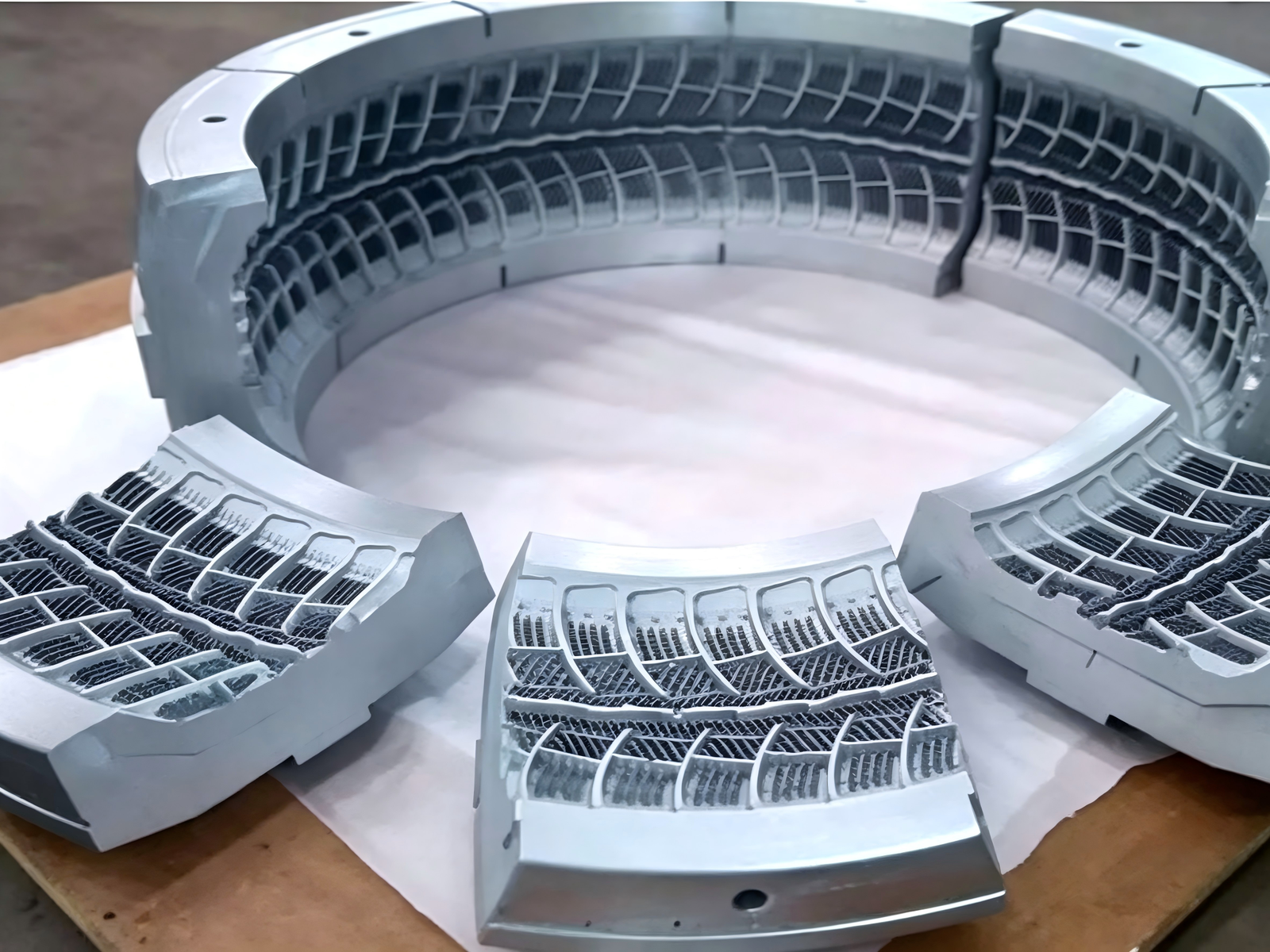
Los moldes para neumáticos son sistemas de herramientas de precisión que se utilizan durante el proceso de vulcanización de neumáticos para dar forma a neumáticos verdes y convertirlos en productos terminados.. Durante el curado, el molde aplica calor y presión para formar la estructura final del neumático, patrón de la banda de rodadura, marcas en las paredes laterales, y detalles de marca.
Un molde de neumático estándar generalmente consta de:
Segmentos de anillos de banda de rodadura
Placas laterales
Sistemas de núcleo de molde
Canales de ventilación
Sistemas de calefacción y refrigeración.
El molde determina varias características importantes del neumático., incluido:
Precisión del dibujo de la banda de rodadura
Equilibrio y uniformidad de los neumáticos.
Resistencia a la rodadura
Rendimiento de tracción
Reducción de ruido
Aspecto de la pared lateral
Los moldes de neumáticos de alta calidad ayudan a los fabricantes a mejorar la eficiencia de la producción y al mismo tiempo reducir defectos como el aire atrapado., formación de destello, y curado desigual.
Principales tipos de moldes para neumáticos
Moldes segmentados
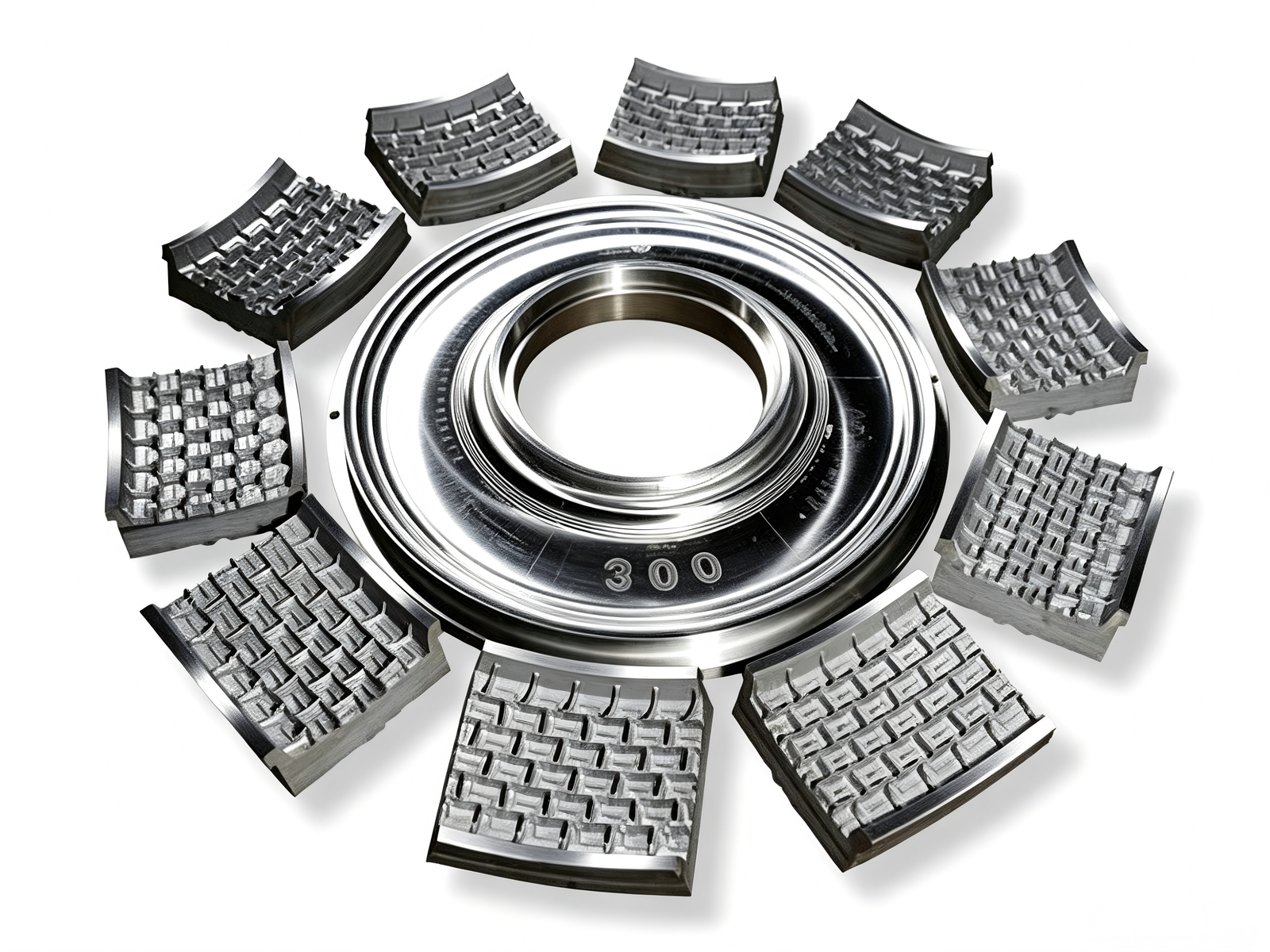
Los moldes segmentados se encuentran entre los tipos de moldes para neumáticos más utilizados en la fabricación moderna de neumáticos.. El molde está dividido en múltiples segmentos móviles que se abren y cierran durante el proceso de curado..
Características clave
Normalmente consta de 6 a 12 segmentos.
Permite una fácil liberación del neumático después del curado.
Admite patrones de banda de rodadura altamente complejos
Proporciona una excelente precisión dimensional
Ventajas
Ideal para diseños complejos de bandas de rodadura
Reducción de la deformación del neumático durante el desmolde
Mejor consistencia para producción de gran volumen
Adecuado para líneas de producción automatizadas
Limitaciones
Mayor coste de fabricación
Requisitos de mantenimiento más complejos
Aplicaciones
Los moldes segmentados se utilizan comúnmente para:
Neumáticos radiales para turismos
neumáticos para vehículos eléctricos
Neumáticos de ultra alto rendimiento
neumáticos para todoterrenos
Dado que los neumáticos de los vehículos eléctricos requieren una baja resistencia a la rodadura y una geometría precisa de la banda de rodadura, Los moldes segmentados se han vuelto cada vez más importantes en la producción de neumáticos para vehículos eléctricos..
Moldes de dos piezas
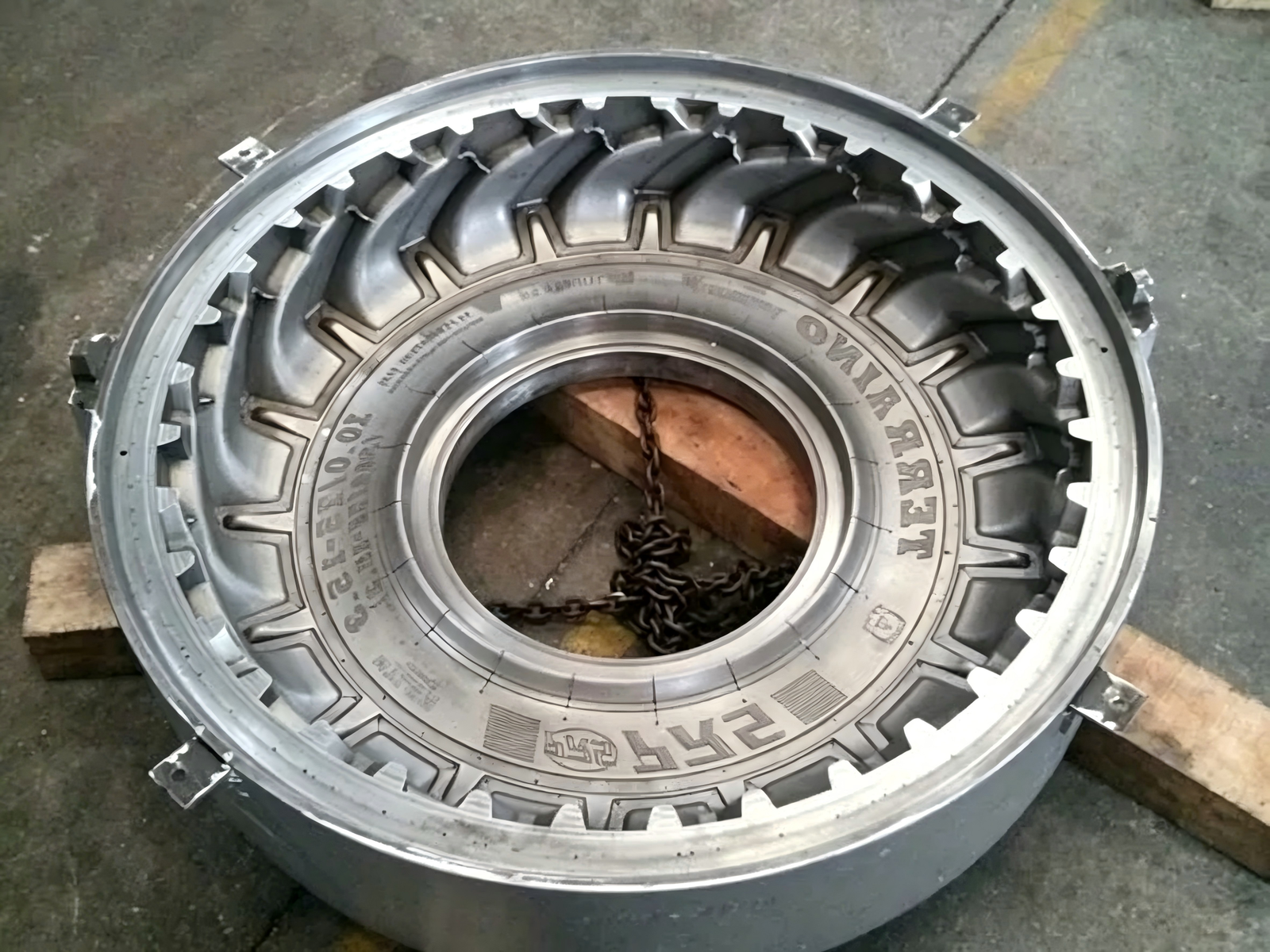
Los moldes de dos piezas son moldes tradicionales para neumáticos que constan de mitades superior e inferior separadas por una única línea de separación..
Características clave
Diseño estructural sencillo
Menor costo de fabricación
Mantenimiento más fácil en comparación con los moldes segmentados.
Ventajas
Rentable
Construcción duradera
Operación y mantenimiento simples
Limitaciones
Capacidad limitada para patrones de banda de rodadura altamente complejos
Mayor riesgo de destellos en las líneas de separación
Aplicaciones
Estos moldes se utilizan comúnmente para:
Neumáticos agrícolas
Neumáticos industriales básicos
neumáticos todoterreno
Pequeñas tiradas de producción
Los moldes de dos piezas siguen siendo populares entre los fabricantes que requieren soluciones de herramientas económicas..
Moldes de rompecabezas
Los moldes de rompecabezas son moldes de neumáticos avanzados diseñados con tecnología de ventilación de microespacios en lugar de los orificios de ventilación tradicionales..
Características clave
El aire se escapa a través de espacios microscópicos entre los segmentos.
Produce superficies de neumáticos más limpias.
Reduce los defectos de aire atrapado
Ventajas
Aspecto mejorado de los neumáticos
Mejor calidad de la superficie de la banda de rodadura
Reducción del chorro de ventilación de goma.
Consistencia de curado mejorada
Limitaciones
Alta complejidad de fabricación
Costos de producción caros
Mantenimiento difícil
Aplicaciones
Los moldes de rompecabezas se utilizan ampliamente para:
Neumáticos premium para pasajeros
neumáticos para autos deportivos
Neumáticos para vehículos de lujo.
Neumáticos de alto rendimiento
Son especialmente valiosos cuando la calidad de la apariencia y la precisión de la banda de rodadura son fundamentales..
Moldes de separación de ondas
Los moldes de separación ondulados utilizan líneas de separación en forma de onda especialmente diseñadas entre los segmentos del molde..
Características clave
Geometría de onda avanzada
Líneas de molde visibles reducidas
Continuidad de la banda de rodadura mejorada
Ventajas
Transferencia superior del patrón de la banda de rodadura
Reducción de la formación de rebabas
Estética mejorada de los neumáticos
Mejor estabilidad del patrón
Tecnología de fabricación
Estos moldes normalmente requieren:
5-mecanizado CNC del eje
Programación CAD/CAM avanzada
Acabado de superficies de alta precisión
Aplicaciones
Los moldes de separación ondulados se utilizan comúnmente para:
neumáticos de carreras
Neumáticos para aviones
Neumáticos de alto rendimiento
Neumáticos premium para vehículos eléctricos
Moldes grabados en acero
Los moldes de acero grabado se fabrican a partir de acero endurecido utilizando tecnologías de grabado CNC..
Características clave
Excelente resistencia al desgaste
Alta estabilidad estructural
Larga vida útil
Ventajas
Durabilidad excepcional
Alta precisión
Excelente resistencia a la deformación térmica.
Adecuado para grandes volúmenes de producción
Limitaciones
Más pesado que los moldes de aluminio.
Mayor tiempo de mecanizado
Aplicaciones
Los moldes grabados en acero son ideales para:
Neumáticos para camiones
Neumáticos de autobús
Neumáticos industriales de servicio pesado
Neumáticos mineros
Muchos fabricantes de neumáticos para cargas pesadas prefieren los moldes de acero debido a su larga vida útil..
Moldes de fundición de aluminio
Los moldes de fundición de aluminio son moldes livianos fabricados con aleaciones de aluminio de alta conductividad..
Características clave
Excelente transferencia de calor
Construcción ligera
Ciclos de curado más rápidos
Ventajas
Tiempos de ciclo de producción reducidos.
Manejo más fácil
Menor consumo de energía
Mejor conductividad térmica
Limitaciones
Menor resistencia al desgaste en comparación con el acero.
Más susceptible a la deformación
Aplicaciones
Los moldes de aluminio se utilizan comúnmente para:
Neumáticos de pasajeros
Neumáticos de moto
neumáticos de bicicleta
Líneas de producción de alto volumen
Sus propiedades livianas ayudan a mejorar la eficiencia operativa en entornos de producción en masa..
Moldes recauchutados
Los moldes de recauchutado están diseñados para operaciones de recauchutado de neumáticos., donde los neumáticos desgastados reciben goma nueva en la banda de rodadura.
Dos métodos principales de recauchutado
Recauchutado de curado de moho
El caucho sin curar se aplica directamente a la carcasa del neumático.
El neumático se cura dentro del molde.
Recauchutado previo al curado
Las tiras de la banda de rodadura prevulcanizadas están adheridas a la carcasa.
Se requieren temperaturas de curado más bajas
Ventajas
Menor costo de reemplazo de llantas
Vida útil extendida de los neumáticos
Solución respetuosa con el medio ambiente
Aplicaciones
Los moldes de recauchutado se utilizan comúnmente para:
camiones comerciales
Autobuses
vehículos todoterreno
Operaciones de gestión de flotas
El recauchutado se ha vuelto cada vez más importante en las industrias del transporte sostenible..
Aplicaciones de moldes para neumáticos por tipo de neumático
Neumáticos para turismos
Los neumáticos para turismos requieren:
Alta precisión de la banda de rodadura
Baja resistencia a la rodadura
Niveles de ruido reducidos
Cómodo rendimiento de conducción
Tipos de moldes comunes:
Moldes segmentados
Moldes de rompecabezas
moldes de fundición de aluminio
Neumáticos para camiones y autobuses
Demanda de neumáticos para camiones y autobuses:
Alta capacidad de carga
Larga vida útil de la banda de rodadura
Excelente resistencia al calor
Tipos de moldes comunes:
Moldes grabados en acero.
Moldes segmentados
Fuera de la carretera (OTR) Llantas
Los neumáticos OTR se utilizan en la minería., construcción, y maquinaria agrícola.
Los requisitos incluyen:
Durabilidad extrema
Patrones de banda de rodadura profundos
Grandes dimensiones de neumáticos
Tipos de moldes comunes:
Moldes segmentados grandes
Moldes de acero
moldes de fundición de aluminio
Neumáticos especiales
Los neumáticos especiales incluyen:
neumáticos de carreras
Neumáticos para aviones
neumáticos militares
Neumáticos industriales especiales
Estas aplicaciones requieren una precisión extremadamente alta y estructuras de banda de rodadura especializadas..
Tipos de moldes comunes:
Moldes de separación ondulados
Moldes de rompecabezas
Moldes grabados en acero.
Materiales utilizados en la fabricación de moldes para neumáticos
Acero
Ofertas de acero:
Alta durabilidad
Excelente resistencia al desgaste
Larga vida útil del molde
Sin embargo, Los moldes de acero son más pesados y requieren tiempos de mecanizado más largos..
Aleaciones de aluminio
El aluminio proporciona:
Transferencia de calor más rápida
Tiempo de ciclo de producción reducido
Manejo ligero
Pero los moldes de aluminio suelen tener una vida útil más corta..
Aleaciones especializadas
Los fabricantes de moldes avanzados pueden utilizar sistemas de aleaciones híbridas para:
Conductividad térmica mejorada
Resistencia a la corrosión
Estabilidad dimensional mejorada
Tecnologías de fabricación de moldes para neumáticos
La producción moderna de moldes para neumáticos depende en gran medida de tecnologías de fabricación avanzadas.
Mecanizado CNC
CNC Machinine habilita:
Grabado preciso de la banda de rodadura
Precisión dimensional constante
Geometrías complejas
5-Mecanizado de ejes
5-Las máquinas CNC de eje permiten:
Mecanizado multiángulo
Generación de patrones de alta precisión
Tiempos de configuración reducidos
Sistemas CAD/CAM
Las tecnologías CAD/CAM ayudan a optimizar:
Diseño de la banda de rodadura
Colocación de ventilación
Canales de enfriamiento del molde
Eficiencia de producción
Grabado láser
Los sistemas láser mejoran:
Precisión de las letras en los flancos
Creación de detalles finos en la banda de rodadura
Calidad de acabado superficial
Mantenimiento y vida útil del molde de neumáticos
El mantenimiento adecuado es esencial para prolongar la vida útil del molde y mantener la calidad de los neumáticos..
Prácticas de mantenimiento recomendadas
Limpieza periódica después de los ciclos de producción.
Inspección de orificios de ventilación y líneas de separación.
Pulido de superficies
Prevención de corrosión
Inspecciones dimensionales
Tecnologías de limpieza
Los fabricantes modernos utilizan cada vez más:
Limpieza láser
Limpieza con hielo seco
Limpieza ultrasónica
Estos métodos minimizan el daño a la superficie en comparación con la limpieza abrasiva tradicional..
Vida útil típica del molde
Moldes de aluminio: 50,000–100.000 ciclos
Moldes de acero: 150,000–300.000 ciclos
El mantenimiento adecuado puede prolongar significativamente la vida operativa.
Cómo elegir el molde de neumático adecuado
Al seleccionar un molde para neumáticos, Los fabricantes deberían considerar:
Tipo de neumático
Diferentes neumáticos requieren diferentes tecnologías de moldeo.
Volumen de producción
La producción de gran volumen suele favorecer los moldes segmentados o de aluminio..
Consideraciones de costos
Inversión inicial en molde vs.. costo de mantenimiento a largo plazo.
Requisitos de calidad de la superficie
Los neumáticos premium exigen sistemas de moldeo de mayor precisión.
Requisitos de durabilidad
Los neumáticos de servicio pesado requieren materiales de molde más resistentes.
Tendencias futuras en la tecnología de moldes de neumáticos
La industria de los moldes para neumáticos está evolucionando rápidamente.
Moldes de neumáticos inteligentes
Sensores integrados para:
Monitoreo de temperatura
Monitoreo de presión
Mantenimiento predictivo
Automatización
Mejora la manipulación automatizada del molde:
Eficiencia de producción
Seguridad
Consistencia
Fabricación sostenible
Los fabricantes están desarrollando:
Sistemas de moldes energéticamente eficientes
Materiales de molde reciclables.
Reducción de la producción de residuos
Innovación en moldes para neumáticos para vehículos eléctricos
Los neumáticos de vehículos eléctricos requieren:
Patrones de banda de rodadura silenciosos
Curado de alta precisión
Optimización mejorada de la resistencia a la rodadura
Esto está impulsando una importante innovación en las tecnologías de diseño de moldes..
Conclusión
Los moldes de neumáticos desempeñan un papel vital a la hora de determinar la calidad de los neumáticos., durabilidad, y eficiencia de fabricación. Desde moldes tradicionales de dos piezas hasta moldes avanzados de rompecabezas y de separación de ondas., Cada tipo de molde ofrece ventajas únicas para aplicaciones de neumáticos específicas..
A medida que la tecnología de los neumáticos continúa avanzando, Los fabricantes exigen cada vez más alta precisión., durable, y soluciones de moldes eficientes para satisfacer las crecientes demandas del mercado. Elegir la tecnología de moldeo de neumáticos adecuada puede mejorar significativamente la consistencia de la producción, rendimiento del neumático, y rentabilidad operativa.
Para fabricantes de neumáticos que buscan mejorar la calidad de la producción y reducir los costos a largo plazo., La inversión en tecnologías avanzadas de moldes de neumáticos sigue siendo una ventaja competitiva fundamental..
Preguntas frecuentes
1.¿Cuál es el material de molde de neumáticos más duradero??
Los moldes de acero son generalmente los más duraderos debido a su excelente resistencia al desgaste y estabilidad térmica..
2.¿Qué molde de neumáticos es mejor para neumáticos de alto rendimiento??
Los moldes de rompecabezas y los moldes de separación de ondas se utilizan comúnmente para neumáticos de carreras y de alto rendimiento..
3.¿Cuánto dura normalmente un molde de neumático??
Dependiendo del material y mantenimiento, Los moldes de neumáticos pueden durar desde 50,000 a más 300,000 ciclos de producción.
4.¿Por qué son populares los moldes segmentados??
Los moldes segmentados proporcionan una excelente precisión de la banda de rodadura., fácil desmoldar, y compatibilidad con diseños de neumáticos complejos.
5.¿Qué tecnologías de fabricación se utilizan para los moldes de neumáticos??
Los moldes de neumáticos modernos se producen habitualmente mediante mecanizado CNC., 5-mecanizado del eje, Sistemas CAD/CAM, y tecnologías de grabado láser.


