Parmi les différentes technologies de mouvement linéaire disponibles aujourd'hui, les vis-mères restent l'une des solutions les plus utilisées et les plus rentables. Leur conception simple, haute précision de positionnement, capacité d'auto-verrouillage, et leur facilité d'entretien en font un choix privilégié dans de nombreux secteurs.
Dans ce guide complet, nous explorerons tout ce que vous devez savoir sur les vis à plomb, y compris leurs principes de travail, types de fils, matériaux, avantages, limites, candidatures, et critères de sélection.
Qu'est-ce qu'une vis mère?
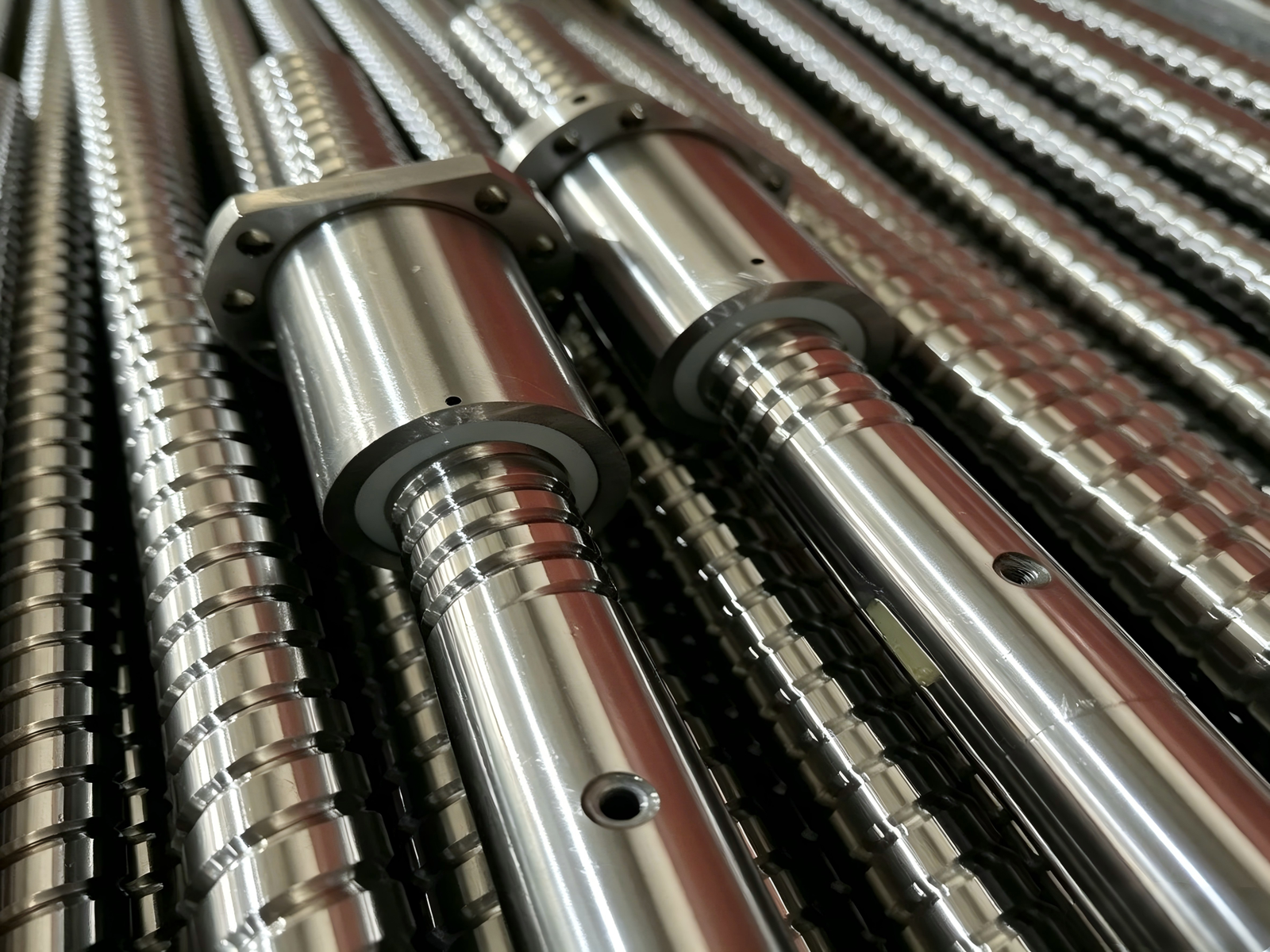
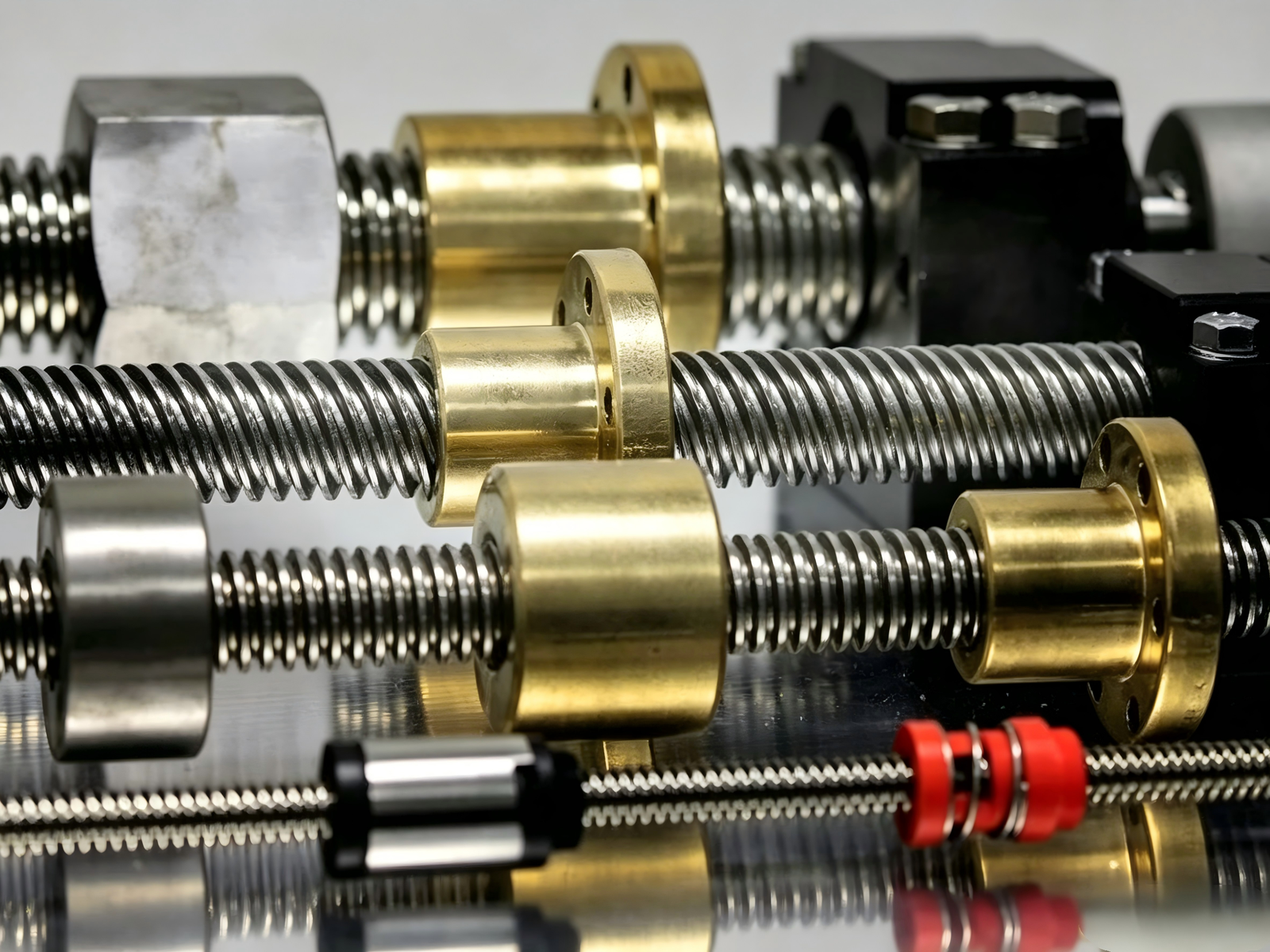
Une vis mère est un composant de transmission de puissance mécanique qui convertit le mouvement de rotation en mouvement linéaire. Il se compose d'un arbre fileté et d'un écrou correspondant qui se déplace le long de l'arbre lorsque l'un ou l'autre des composants tourne..
Contrairement aux vis à billes, les vis-mères reposent sur un frottement coulissant entre la vis et l'écrou plutôt que sur des roulements à billes.
Cette conception offre plusieurs avantages:
- Coût de fabrication inférieur
- Structure plus simple
- Fonctionnement silencieux
- Capacité d'auto-verrouillage
- Entretien facile
En raison de ces caractéristiques, les vis-mères sont couramment utilisées dans les applications où une vitesse modérée et une haute précision sont requises.
Principaux composants d'un assemblage de vis mère
Un système de vis mère complet comprend généralement les composants suivants:
Arbre à vis
La tige de la vis contient des filetages externes qui guident le mouvement de l'écrou. Il est généralement fabriqué à partir de:
- Acier inoxydable
- Acier au carbone
- Acier allié
- Aluminium
- Titane
Écrou de plomb
L'écrou contient des filetages internes qui correspondent au profil de la vis.
Les matériaux courants à base de noix comprennent:
- Bronze
- Laiton
- Plastiques techniques
- Composites PTFE
- Polymères autolubrifiants
Roulements
Les roulements soutiennent l'arbre de la vis et réduisent les mouvements indésirables.
Accouplements
Les accouplements relient la vis mère aux moteurs ou aux systèmes d'entraînement.
Supports d'extrémité
Ces composants assurent la stabilité et l'alignement pendant le fonctionnement.
Comment fonctionne une vis mère?
Le principe de fonctionnement d'une vis mère est relativement simple.
Lorsqu'une force de rotation est appliquée à la vis ou à l'écrou, l'interaction filetée convertit le mouvement rotatif en mouvement linéaire.
Ce mouvement se produit parce que l'écrou suit le chemin hélicoïdal créé par les filetages..
Vis rotative, Noix de voyage
C'est la configuration la plus courante.
La vis tourne tandis que l'écrou se déplace linéairement le long de l'arbre.
Les applications incluent:
- Équipement CNC
- Machines d'emballage
- Systèmes d'automatisation
Écrou rotatif, Vis fixe
Dans cette configuration, la vis reste immobile pendant que l'écrou tourne et se déplace.
Les applications incluent:
- Systèmes de positionnement à grande vitesse
- Machines à espace limité
Comprendre le plomb, Pas, et géométrie du fil
Avant de sélectionner une vis mère, il est important de comprendre plusieurs paramètres clés.
Pas
Le pas est la distance entre les fils adjacents.
Par exemple:
Si la distance entre les fils est 5 mm, le pas est égal 5 mm.
Plomb
L'avance fait référence à la distance linéaire parcourue pendant un tour complet.
Pour vis à un seul pas:
Lead = Emplacement
Pour vis multi-brins:
Lead = Pas × Nombre de démarrages
Angle d'hélice
L'angle d'hélice affecte:
- Efficacité
- Capacité de charge
- Vitesse
Des angles d'hélice plus grands offrent généralement une vitesse plus élevée mais une capacité d'auto-verrouillage inférieure.
Types de filetages de vis mère
La géométrie du filetage a un impact significatif sur les performances.
Les types de filetage de vis mère les plus courants comprennent:
1. Fil carré
Les filetages carrés sont considérés comme la conception de filetage la plus efficace car ils minimisent la friction.
Avantages
- Efficacité la plus élevée
- Usure réduite
- Moins de pertes par frottement
- Excellente transmission de puissance
Désavantages
- Difficile à fabriquer
- Coût de production plus élevé
- Résistance des racines inférieure
Applications typiques
- Systèmes de levage pour charges lourdes
- Machines de précision
- Presses industrielles
2. Fil acme
Les filetages Acme présentent un profil trapézoïdal avec un angle de filetage de 29°.
Ils font partie des types de fils les plus utilisés dans le monde..
Avantages
- Profil de filetage solide
- Fabrication facile
- Bonne capacité de charge
- Coût de production inférieur
Désavantages
- Efficacité légèrement inférieure à celle des filetages carrés
- Frottement accru
Applications typiques
- Machines CNC
- Automatisation industrielle
- Machines-outils
3. Filetage trapézoïdal
Les filetages trapézoïdaux sont l'équivalent métrique des filetages Acme et sont conformes aux normes internationales.
Avantages
- Structure solide
- Durabilité élevée
- Dimensions standardisées
- Production rentable
Applications
- Machines européennes
- Équipement d'automatisation
- Actionneurs industriels
4. Fil de contrefort
Les fils de contrefort sont conçus pour supporter des charges extrêmement élevées dans une direction.
Avantages
- Capacité de charge très élevée
- Racine de fil solide
- Excellente transmission de la force axiale
Désavantages
- Ne convient pas au chargement bidirectionnel
Applications
- Crics
- Presses
- Systèmes de levage lourds
Matériaux de vis mère
La sélection des matériaux affecte directement les performances, durabilité, et durée de vie.
Matériaux de vis courants
Acier inoxydable
Avantages:
- Résistance à la corrosion
- Longue durée de vie
- Convient aux industries alimentaires et médicales
Acier au carbone
Avantages:
- Rentable
- Haute résistance
- Usinage facile
Acier allié
Avantages:
- Dureté supérieure
- Résistance à l'usure élevée
- Performances robustes
Titane
Avantages:
- Poids léger
- Excellente résistance à la corrosion
- Applications aérospatiales
Matériaux de noix courants
Bronze
Le choix traditionnel pour les écrous de vis.
Avantages:
- Excellente résistance à l'usure
- Capacité de charge élevée
- Longue durée de vie
Plastiques d'ingénierie
Avantages:
- Autolubrifiant
- Faible bruit
- Résistant à la corrosion
Matériaux composites
Avantages:
- Faible frottement
- Fonctionnement sans entretien
- Durée de vie prolongée
Avantages des vis mères
Les vis-mères continuent d'être populaires en raison de plusieurs avantages significatifs.
Haute précision de positionnement
Les vis mères fournissent un mouvement linéaire précis et reproductible.
Capacité d'auto-verrouillage
De nombreuses conceptions de vis mères empêchent le retour en arrière.
Cette fonctionnalité améliore la sécurité dans les applications de levage vertical.
Moindre coût
Par rapport aux vis à billes, les vis-mères sont nettement plus abordables.
Conception compacte
Les systèmes à vis mère nécessitent moins de composants.
Fonctionnement silencieux
L'absence de billes de recirculation entraîne une réduction du niveau sonore.
Entretien facile
Les vis mères sont simples à inspecter, lubrifier, et remplacer.
Limites des vis mères
Bien que polyvalent, les vis-mères ont également certaines limitations.
Efficacité inférieure
L'efficacité typique varie de:
- 20% à 80%
Les vis à billes dépassent souvent 90%.
Frottement et usure
Le contact glissant continu crée une usure au fil du temps.
Production de chaleur
Une friction plus élevée peut générer de la chaleur pendant le fonctionnement.
Vitesse limitée
Les vis-mères fonctionnent généralement à des vitesses inférieures à celles des vis à billes.
Vis mère vs vis à billes
Le choix entre une vis mère et une vis à billes dépend de l'application.
| Fonctionnalité | Vis mère | Vis à billes |
| Coût | Faible | Haut |
| Efficacité | 20–80% | 90–98% |
| Entretien | Simple | Modéré |
| Vitesse | Modéré | Haut |
| Autobloquant | Oui | Non |
| Bruit | Faible | Modéré |
| Précision | Haut | Très élevé |
Choisissez les vis mères quand:
- Le coût est important
- Les exigences de vitesse sont modérées
- Un autoverrouillage est nécessaire
- La simplicité de maintenance est privilégiée
Choisissez des vis à billes quand:
- Une efficacité maximale est requise
- Un fonctionnement à grande vitesse est essentiel
- Une précision extrêmement élevée est nécessaire
Applications industrielles courantes
Les vis mères sont utilisées dans de nombreuses industries.
Machines CNC
Assurer un positionnement précis des axes de la machine.
3Imprimantes D
Permettre un mouvement contrôlé des têtes d'impression et des plates-formes de construction.
Équipement médical
Utilisé dans:
- Systèmes d'imagerie
- Appareils de diagnostic
- Matériel chirurgical
Systèmes d'automatisation
Soutien:
- Machines de transfert
- Positionnement robotique
- Matériel de manutention
Machines d'emballage
Fournir un mouvement reproductible et fiable.
Équipement aérospatial
Utilisé dans les mécanismes de contrôle de précision.
Fabrication de semi-conducteurs
Fournit des capacités de positionnement ultra-précises.
Comment sélectionner la bonne vis mère
La sélection de la vis mère appropriée nécessite l'évaluation de plusieurs facteurs.
1. Capacité de charge
Considérez les deux:
Charge statique
Charger à l'arrêt.
Charge dynamique
Charge pendant le fonctionnement.
2. Exigences de vitesse
Les applications à plus grande vitesse nécessitent des pas plus gros et des conceptions de filetage optimisées.
3. Précision de positionnement
Déterminez les niveaux de tolérance requis avant de sélectionner la géométrie du filetage.
4. Exigences de jeu
Le jeu a un impact direct sur la précision du positionnement.
Les écrous anti-jeu peuvent minimiser ce problème.
5. Environnement opérationnel
Évaluer:
- Température
- Humidité
- Produits chimiques
- Exposition à la poussière
6. Compatibilité des matériaux
Choisissez des matériaux qui équilibrent:
- Force
- Résistance à l'usure
- Résistance à la corrosion
- Coût
7. Facteur PV
Pression-Vitesse (PV) les calculs aident à déterminer les conditions de fonctionnement sûres et la durée de vie prévue.
8. Analyse de vitesse critique
Le dépassement de la vitesse critique peut provoquer des vibrations et une défaillance des vis.
Vérifiez toujours les limites de vitesse lors de la conception du système.
Meilleures pratiques en matière de maintenance des vis mères
Un entretien approprié prolonge la durée de vie et améliore les performances.
Inspection régulière
Vérifiez:
- Porter
- Corrosion
- Dommages au fil
- Désalignement
Lubrification adéquate
La lubrification réduit la friction et la génération de chaleur.
Gardez les composants propres
Empêcher la contamination de:
- Poussière
- Copeaux de métal
- Débris
Surveiller le jeu
Un jeu excessif indique souvent une usure et la nécessité d'un remplacement.
Tendances émergentes dans la technologie des vis mères
L'industrie des vis-mères continue d'évoluer.
Écrous autolubrifiants
Réduire les besoins de maintenance.
Polymères d'ingénierie avancés
Améliorer la résistance à l’usure et l’efficacité.
Vis à plomb rectifiées avec précision
Offre une plus grande précision pour les applications exigeantes.
Systèmes de mouvement intelligents
Intégrez des capteurs et des capacités de surveillance en temps réel.
Industrie 4.0 Compatibilité
Les systèmes à vis modernes soutiennent de plus en plus les initiatives de maintenance prédictive et de fabrication numérique.
FAQ
1.Quelle est la différence entre pitch et lead?
Le pas est la distance entre les fils adjacents, tandis que le plomb est la distance parcourue pendant un tour.
2.Les vis-mères sont-elles autobloquantes?
De nombreuses vis-mères sont autobloquantes en raison du frottement entre la vis et l'écrou..
3.Quel type de thread est le plus efficace?
Les filetages carrés offrent généralement la plus grande efficacité.
4.Les vis-mères peuvent-elles remplacer les vis à billes?
Dans de nombreuses applications, Oui. Cependant, les systèmes à grande vitesse et à haut rendement peuvent nécessiter des vis à billes.
5.Combien de temps durent les vis mères?
La durée de vie dépend de:
- Charger
- Vitesse
- Lubrification
- Sélection des matériaux
- Environnement opérationnel
Conclusion
Lors de la sélection d'une vis mère, les ingénieurs et les professionnels des achats doivent évaluer soigneusement la capacité de charge, vitesse, précision, type de filetage, sélection des matériaux, et les conditions environnementales. Une vis mère correctement choisie peut améliorer considérablement la fiabilité de l'équipement, efficacité, et durée de vie.
Si vous développez une nouvelle machine, mise à niveau d'un système d'automatisation, ou l'approvisionnement en composants mécaniques de précision, en partenariat avec Précision au sommet peut vous aider à garantir la solution de vis mère optimale pour votre application et votre budget.