



La rigidité en torsion est un concept crucial en science des matériaux, ingénierie, et fabrication. Si vous avez déjà essayé de tordre une tige ou un fil et vous êtes demandé pourquoi certains matériaux résistent plus à la torsion que d’autres, vous avez découvert l'application pratique de la rigidité en torsion. En termes simples, la rigidité en torsion est la résistance d'un matériau à la torsion lorsqu'il est soumis à un couple. Cette résistance joue un rôle essentiel dans la performance, sécurité, et la longévité de nombreux matériaux et structures dans diverses industries.
Dans cet article, nous allons explorer ce qu'est la rigidité en torsion, comment c'est calculé, les facteurs qui l'affectent, et son importance dans différents domaines de l'ingénierie. Nous discuterons également de la manière d'améliorer la rigidité en torsion des matériaux et des inconvénients potentiels d'une rigidité en torsion élevée..
1. Qu'est-ce que la rigidité en torsion?
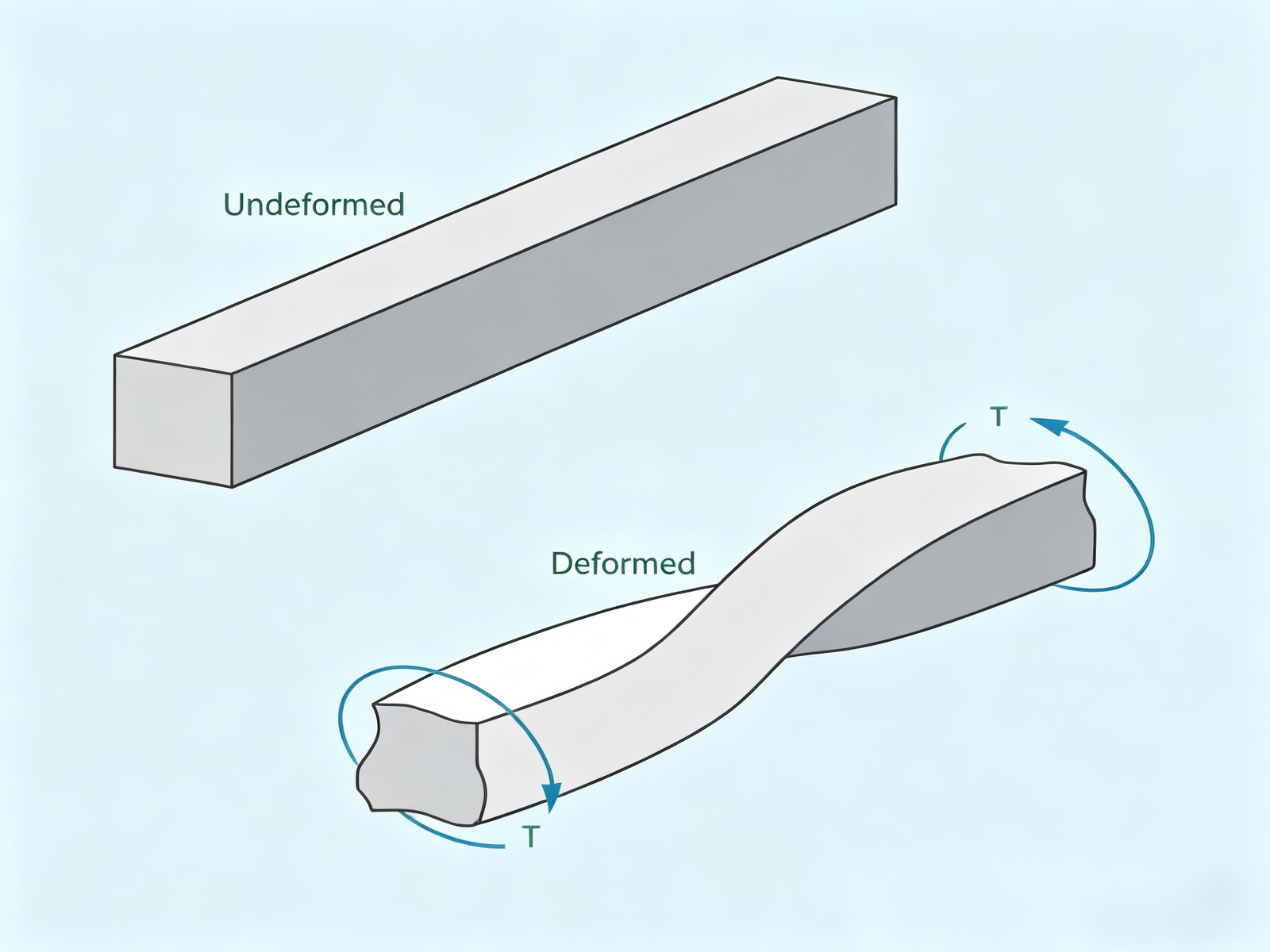
La torsion fait référence à l'acte de tordre un objet, comme faire tourner une tige ou un arbre le long de son axe. Le rigidité en torsion d'un matériau, également connu sous le nom rigidité en torsion, est la capacité de ce matériau à résister à la torsion ou à la rotation lorsqu'il est soumis à un couple appliqué. Essentiellement, c'est une mesure de la résistance d'un matériau à la déformation due aux forces de torsion.
Mathématiquement, la rigidité en torsion est définie comme:
Où:
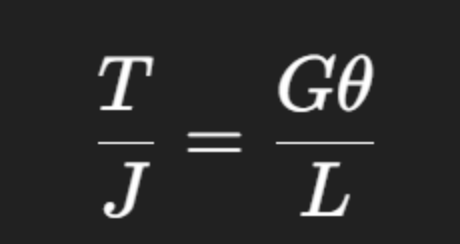
T = Couple (la force de torsion appliquée)
G = Module de cisaillement (une propriété matérielle représentant la rigidité du matériau sous contrainte de cisaillement)
J = moment d'inertie polaire (une mesure de la répartition de la masse du matériau par rapport à l’axe de rotation)
je = Angle de torsion (le déplacement de rotation en radians)
L = Longueur de l'objet à tordre
L'unité de rigidité en torsion est généralement Newton mètres par radian (Nm/rad), qui mesure la résistance du matériau à la force de torsion.
2. Facteurs qui affectent la rigidité en torsion
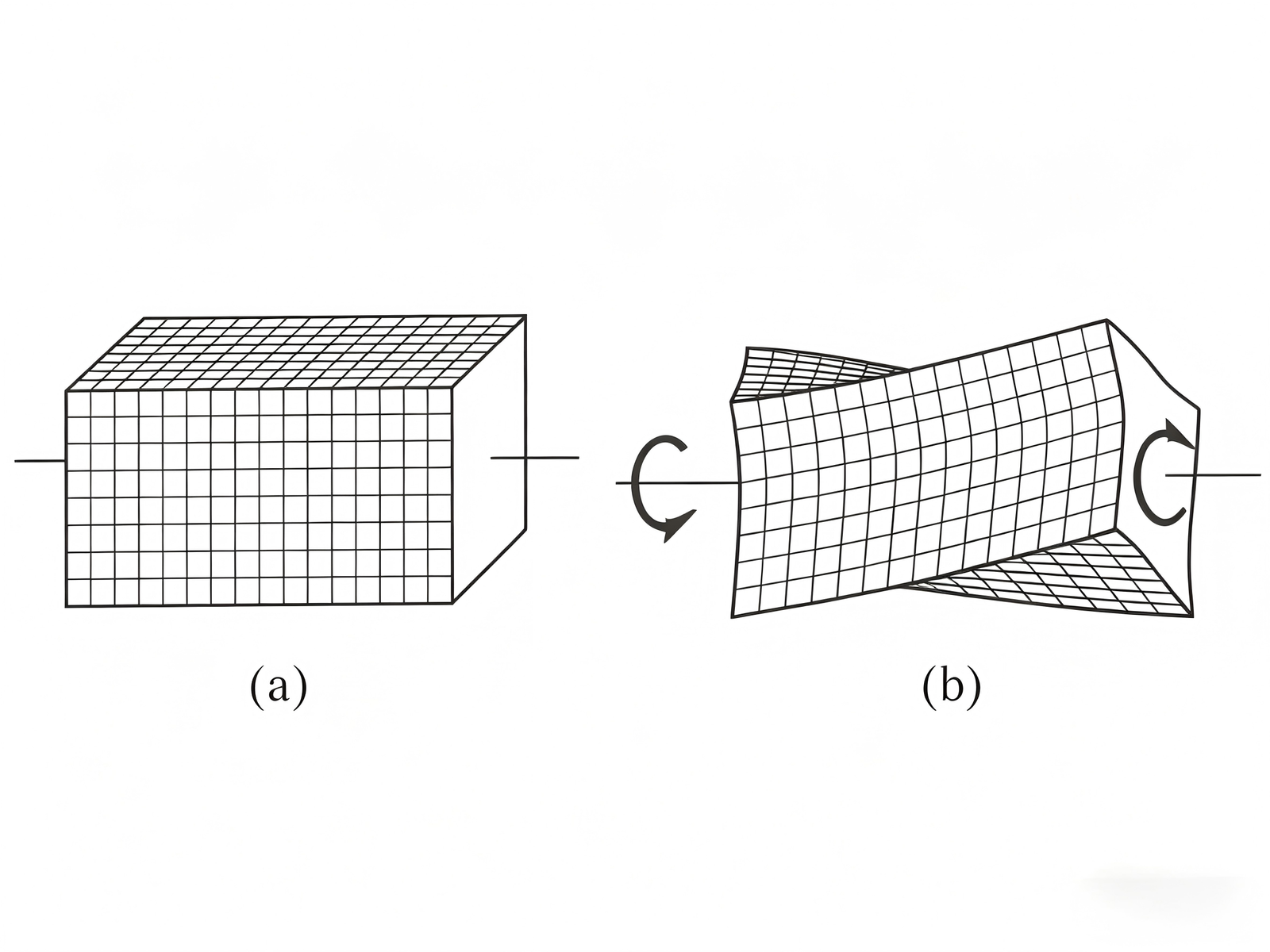
Plusieurs facteurs influencent la rigidité en torsion d'un matériau, y compris son module de cisaillement, la géométrie de l'objet, et la répartition de la masse. Explorons ces facteurs plus en détail:
2.1 Module de cisaillement
Le module de cisaillement (G) fait référence à la résistance du matériau aux contraintes de cisaillement, qui est la force qui fait glisser les couches d'un matériau les unes sur les autres. Les matériaux ayant un module de cisaillement plus élevé peuvent résister plus efficacement à la torsion. Par exemple, les métaux comme l'acier et l'aluminium, qui ont un module de cisaillement élevé, présentent une rigidité en torsion plus élevée que celle des matériaux comme le caoutchouc ou le plastique, qui ont un module de cisaillement inférieur.
2.2 Moment d'inertie polaire (J)
Le moment d'inertie polaire est une mesure de la façon dont la masse du matériau est répartie autour de l’axe de rotation. Il prend en compte la forme et la taille du matériau. Un moment d'inertie polaire plus grand signifie une plus grande résistance à la torsion. Par exemple, un arbre cylindrique épais avec un matériau réparti plus loin du centre aura un moment d'inertie polaire plus élevé qu'un arbre mince, le rendant plus résistant à la torsion.
Le moment d'inertie polaire est affecté par:
Le forme de la section transversale (par exemple., rond, carré, creux)
Le taille de l'objet (les objets plus gros résistent généralement mieux à la torsion)
Le répartition de la masse (dans quelle mesure le matériau est étalé par rapport à l'axe)
2.3 Longueur de l'objet
Le longueur (L) de l'objet tordu joue également un rôle. Plus l'objet est long, plus il va se tordre sous un couple donné. Ainsi, les objets plus longs présentent généralement une rigidité en torsion plus faible à moins que leur géométrie ne soit modifiée pour compenser cela.
3. Importance de la rigidité en torsion
La rigidité en torsion est essentielle pour la stabilité et la performance des matériaux et des structures, en particulier dans les applications d'ingénierie. Vous trouverez ci-dessous quelques principales raisons pour lesquelles la rigidité en torsion est importante:
3.1 Sécurité structurelle
Pour les grands ouvrages d'art, la rigidité en torsion garantit que le matériau ou la structure peut résister aux forces de torsion sans perdre son intégrité. Dans les applications critiques telles que les ponts, grues, et les gratte-ciel, la rigidité en torsion aide à maintenir la sécurité de la structure sous des charges variables.
3.2 Composants de fabrication
Dans la fabrication, en particulier dans des secteurs comme l'aérospatiale, automobile, et génie mécanique, comprendre la rigidité en torsion est crucial pour concevoir des pièces capables de conserver leur forme et leur fonction même lorsqu'elles sont soumises à des forces de torsion. Il aide les fabricants à optimiser les composants pour gérer des contraintes élevées sans défaillance..
3.3 Ingénierie automobile
La rigidité en torsion est un facteur clé dans ingénierie automobile, surtout lors de la conception du châssis d’une voiture. Un châssis rigide rend la voiture plus stable, ce qui est essentiel pour les performances de conduite, surtout lorsque vous naviguez sur des routes accidentées ou dans des virages serrés. Une voiture plus rigide minimise également les vibrations, menant à un, conduite plus silencieuse et amélioration du confort général des passagers.
3.4 Performance et durabilité
Les matériaux et les structures à haute rigidité en torsion peuvent mieux résister aux forces externes et conserver leur forme et leurs performances d'origine au fil du temps.. Ceci est crucial dans les applications où la durabilité et la stabilité à long terme sont requises, comme dans les machines hautes performances, équipement lourd, et véhicules.
4. Comment améliorer la rigidité en torsion d'un matériau
Il existe plusieurs façons d'améliorer la rigidité en torsion d'un matériau ou d'un objet. Les deux méthodes principales consistent à modifier la forme ou la taille du matériau:
4.1 Modifier la forme de la coupe transversale
Un moyen efficace d'améliorer la rigidité en torsion consiste à changer la forme de la section. Objets creux, comme les arbres creux, présentent généralement une rigidité en torsion plus élevée que les objets solides. En rendant la section transversale plus profilée ou creuse, le matériau peut résister plus efficacement à la torsion.
4.2 Augmenter la taille de l'objet
Augmenter la taille de l'objet, notamment son diamètre ou son épaisseur, peut augmenter considérablement sa rigidité en torsion. Un objet plus gros a plus de masse répartie plus loin de l'axe, ce qui augmente son moment d'inertie polaire. Cependant, augmenter la taille d'un objet peut également augmenter son poids, ce qui peut être indésirable dans certaines applications.
5. Inconvénients d’une rigidité à la torsion élevée
Même si une rigidité en torsion élevée est souvent bénéfique, il y a un inconvénient majeur: augmentation du poids. Lorsque vous augmentez la rigidité en torsion d'un matériau, ça devient généralement plus lourd. Cela peut constituer un inconvénient dans les applications où le poids est un facteur critique., comme dans les industries aérospatiale ou automobile. Trouver un équilibre entre rigidité en torsion et poids est la clé pour obtenir des performances optimales.
6. Conclusion
La rigidité en torsion joue un rôle fondamental dans la performance, sécurité, et la durabilité des matériaux utilisés dans diverses applications d'ingénierie et de fabrication. En comprenant les facteurs qui affectent la rigidité en torsion et comment l'améliorer, les ingénieurs et les concepteurs peuvent créer des structures et des composants qui fonctionnent de manière optimale sous contrainte.
Que vous conceviez un châssis automobile, fabriquer des machines lourdes, ou optimisation de l'intégrité structurelle, la rigidité en torsion est un facteur clé à considérer. Comprendre comment améliorer la rigidité en torsion tout en équilibrant le poids et la fonctionnalité est essentiel pour garantir la sécurité et les performances..
Si vous avez besoin d'aide avec des matériaux ou des conceptions structurelles qui nécessitent une rigidité en torsion précise, Précision au sommet propose des solutions d’ingénierie expertes adaptées à vos besoins. Contactez-nous maintenant pour des matériaux et des solutions personnalisés répondant à vos spécifications.
7. FAQ
7.1 Quelle est la différence entre la rigidité en torsion et la rigidité latérale?
La rigidité en torsion mesure la résistance d'un objet aux forces de torsion, tandis que la rigidité latérale mesure la résistance à la flexion le long de l'axe latéral. La principale différence réside dans le type de force appliquée.: torsionnel pour la torsion et latéral pour la flexion.
7.2 La rigidité en torsion est-elle la même que la rigidité en torsion?
Bien qu'ils soient parfois utilisés de manière interchangeable, la rigidité en torsion et la rigidité en torsion sont légèrement différentes. La rigidité en torsion fait référence à la résistance d'une unité de longueur de matériau à la torsion., alors que la rigidité en torsion s'applique à l'objet entier et prend en compte sa géométrie, propriétés matérielles, et la grande distribution.


