



3Le parti stampate D non hanno automaticamente una finitura superficiale liscia. La qualità della superficie finale dipende da diverse variabili, including the 3D printing technology, materiale, layer thickness, printing parameters, geometria in parte, and post-processing method.
For some applications, a slightly textured surface is acceptable. Per gli altri, the part may need a smooth, uniforme, paint-ready, or even glossy surface.
COSÌ, how do you get a smooth surface finish with 3D printing?
The most effective approach is to select the right combination of printing technology, materiale, Parametri di processo, e post-elaborazione based on the part’s functional and cosmetic requirements.
This guide explains the main ways to achieve smooth 3D printed surfaces, compares different finishing methods, and provides practical guidance for selecting the right process.
What Determines the Surface Finish of 3D Printed Parts?
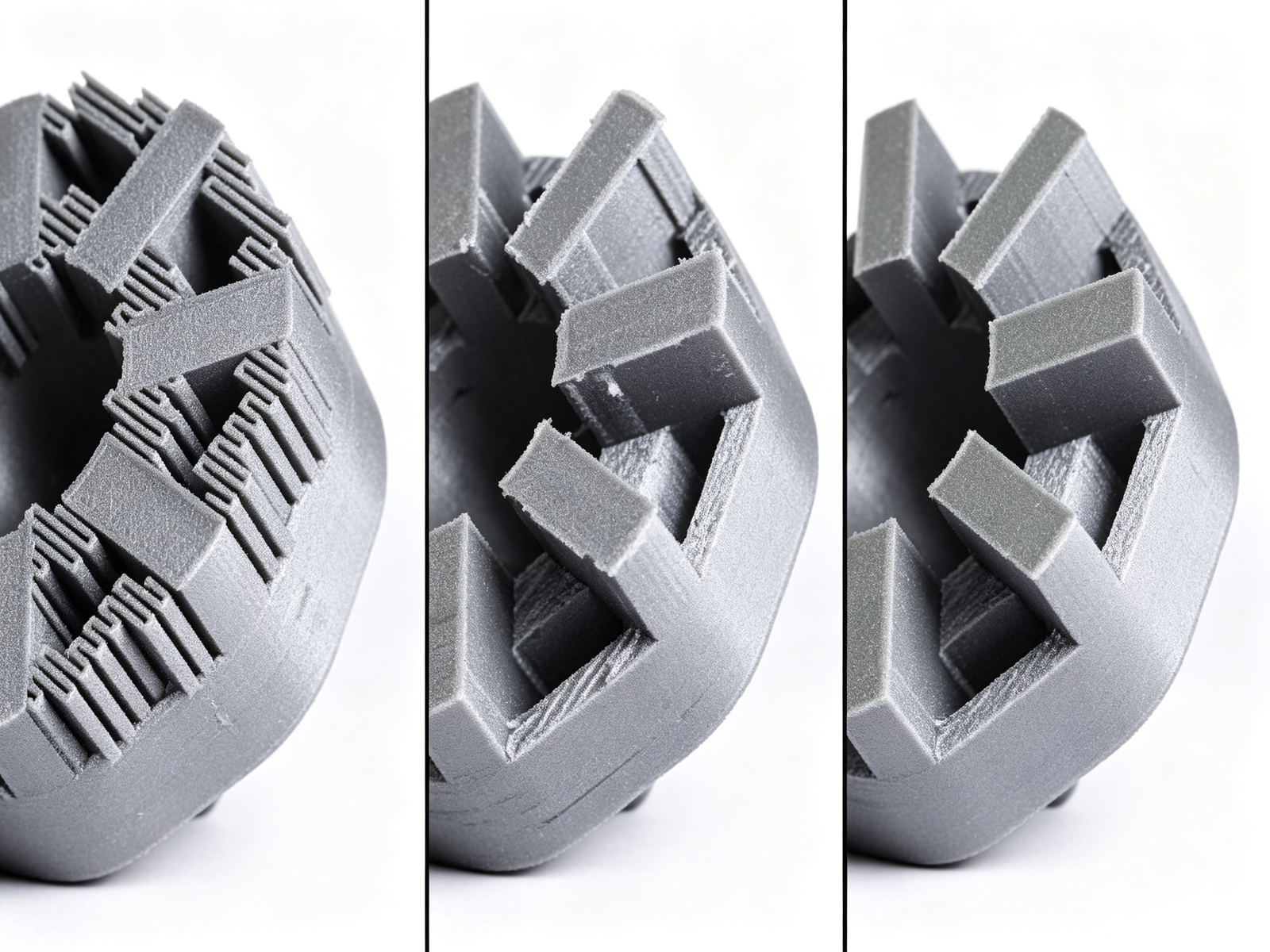
Before choosing a finishing method, it is important to understand what creates surface roughness in the first place.
A differenza della lavorazione convenzionale, 3D printing generally builds components layer by layer. The geometry of these layers can create visible steps, linee, or textures on the finished surface.
The main factors affecting 3D printed surface finish include:
· 3D printing technology
· Printing material
· Layer height
· Nozzle diameter or printing resolution
· Printing speed
· Extrusion rate
· Printing temperature
· Tasso di raffreddamento
· Part orientation
· Geometria della parte
· Support structures
· Post-processing method
Different manufacturing processes naturally produce different surface characteristics.
Per esempio, FDM parts often show visible layer lines, while SLA parts can have a much smoother surface directly from the printer. Powder-based technologies such as SLS and MJF may produce a slightly grainy texture because of the characteristics of the powder material.
Questo significa questo surface finish should be considered during the design and manufacturing process rather than treated as an afterthought.
Which 3D Printing Technologies Produce the Smoothest Surfaces?
Not all 3D printing technologies produce the same surface quality. If a smooth as-printed surface is a high priority, the printing technology itself becomes one of the most important decisions.
FDM 3D Printing
Modellazione della deposizione fusa (FDM) is one of the most widely used 3D printing technologies.
FDM works by extruding thermoplastic material through a heated nozzle and depositing it layer by layer.
One of the main disadvantages of FDM is the presence of visible layer lines. The nozzle diameter, layer height, extrusion settings, and printing orientation can all affect the final surface quality.
Tuttavia, industrial FDM systems can produce significantly better surfaces than basic desktop printers.
FDM can be a good option when:
· Il costo è una considerazione importante
· Larger parts are required
· Engineering thermoplastics are needed
· Functional prototypes are being developed
· Surface appearance is important but does not require an extremely smooth as-printed finish
For applications requiring a very smooth FDM surface, post-processing such as sanding, sabbiatura, vapor smoothing, or painting may be necessary.
SLA 3D Printing
Stereolitmicromografia (SLA) is generally one of the strongest choices when a smooth and highly detailed surface is required directly from the printing process.
SLA uses liquid photopolymer resin that is selectively cured using light. Because the process can produce very fine layers and detailed features, SLA parts can have a smoother surface compared with many other additive manufacturing technologies.
SLA is particularly suitable for:
· Appearance prototypes
· Detailed prototypes
· Small components
· Product design verification
· Components with fine features
· Parts where surface quality is important
Tuttavia, material properties must also be considered. A smooth surface alone does not necessarily make SLA the best choice for a functional production component.
PolyJet 3D Printing
PolyJet technology also uses photopolymer materials and is capable of producing highly detailed components with smooth surfaces.
Its ability to deposit very thin layers makes it suitable for applications where both fine detail and surface appearance matter.
PolyJet can be useful for:
· Prototipi altamente dettagliati
· Visual models
· Sviluppo del prodotto
· Geometrie complesse
· Components requiring a high-quality appearance
Many PolyJet parts can be used with minimal finishing when the primary objective is appearance and dimensional detail.
Carbon DLS
Carbon Digital Light Synthesis (DLS) uses resin-based materials to produce parts with highly detailed geometries and smooth surfaces.
The technology can produce excellent external surfaces and detailed internal features, making it suitable for advanced prototyping and certain functional applications.
When surface quality is a key requirement, Carbon DLS may provide a strong alternative to conventional powder-based additive manufacturing technologies.
3D Printing Surface Finish Comparison
A simplified comparison can help when selecting a technology:
|
Technology |
Typical As-Printed Surface |
Detail Capability |
Post produzione |
|
FDM |
Visible layer lines |
Medio |
Often recommended |
|
SLA |
Liscio |
Alto |
Sometimes required |
|
PolyJet |
Very smooth |
Molto alto |
Often minimal |
|
mjf |
Slightly textured |
Alto |
Commonly used |
|
SLS |
Grainy/textured |
Alto |
Commonly used |
|
DMLS |
Textured/metallic |
Alto |
Often required |
|
Carbon DLS |
Very smooth |
Alto |
Application dependent |
The most important point is that there is no single “best” 3D printing technology for every application.
The ideal process depends on the required surface finish, materiale, dimensional tolerance, proprietà meccaniche, volume di produzione, geometria, and final application.
What 3D Printing Materials Provide a Smooth Surface Finish?
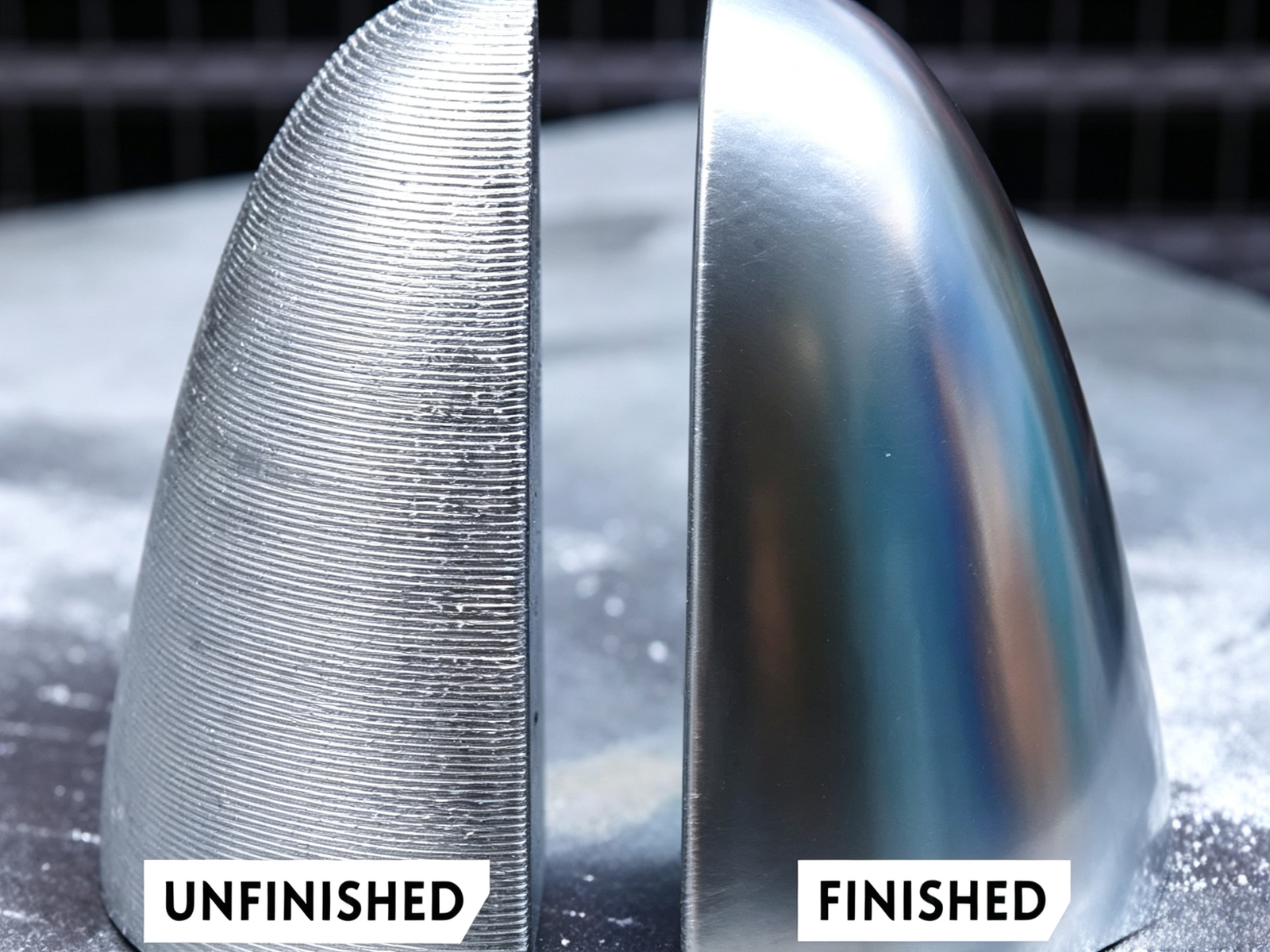
Material selection also affects surface quality, but the printing technology often has a greater influence on the initial surface finish.
Common material categories used for smooth 3D printed parts include:
· Termoplastici
· Fotopolimeri
· Thermosetting resins
· Polyurethane-based materials
· Nylon and other engineering polymers
· Metal powders for metal additive manufacturing
Tuttavia, surface finish should never be the only factor used to select a material.
For functional components, you may also need to evaluate:
Resistenza meccanica
If the component will carry loads or experience mechanical stress, the material must provide sufficient strength and stiffness.
Resistenza al calore
Components used near motors, motori, electrical systems, or high-temperature environments may require materials with higher heat resistance.
Resistenza chimica
Some applications expose components to oils, combustibili, cleaning chemicals, solventi, o altri ambienti aggressivi.
Stabilità dimensionale
If the part interfaces with other components, dimensional stability can be more important than achieving an extremely smooth cosmetic finish.
Requisiti di finitura superficiale
Finalmente, determine whether the requirement is:
· As-printed
· Liscio
· Opaco
· Raso
· Lucido
· Paint-ready
· Machined-like
· Highly polished
A good manufacturing partner should evaluate all these requirements together rather than recommending a material based solely on appearance.
How to Smooth 3D Printed Parts With Post-Processing
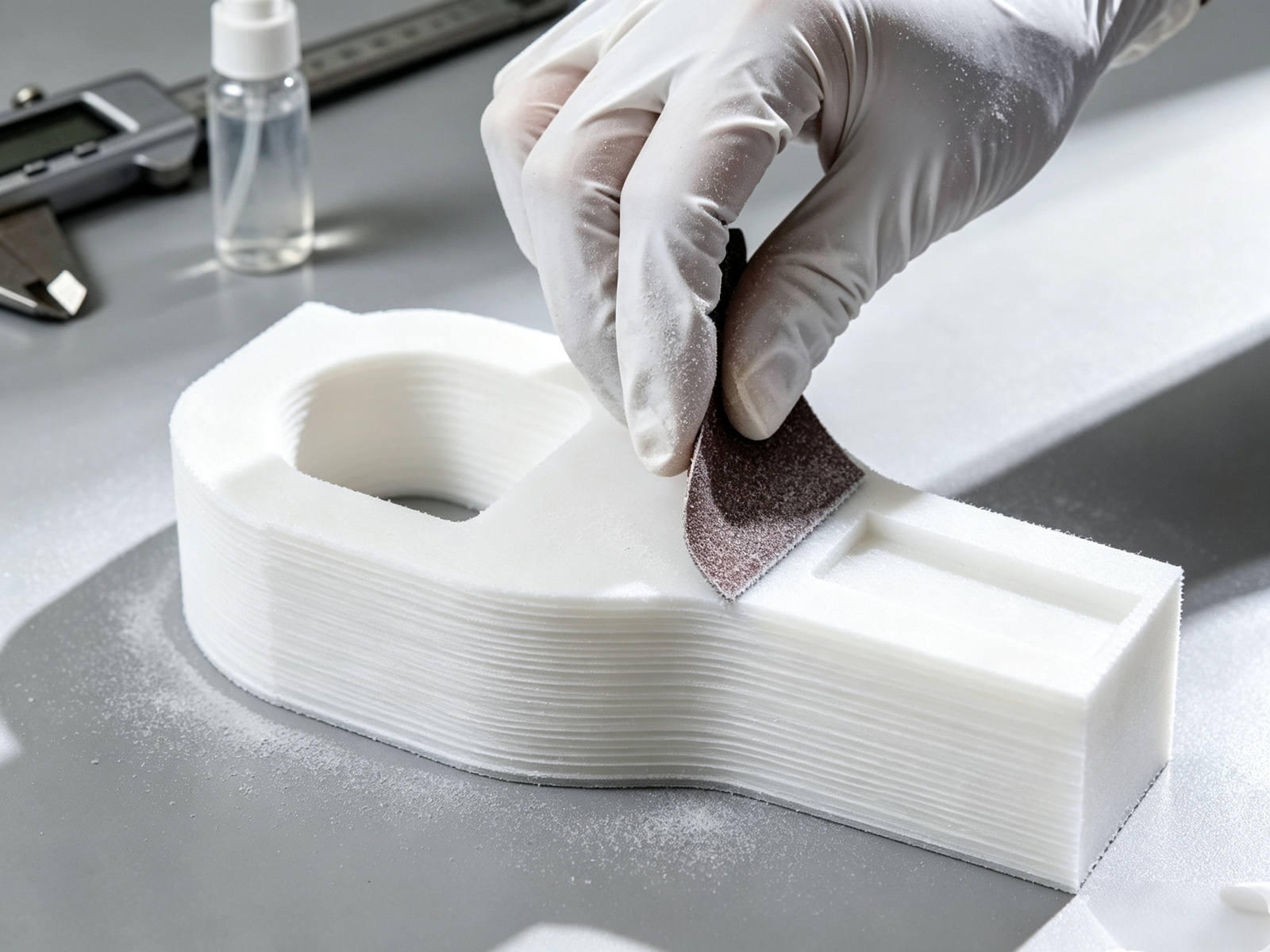
For many 3D printed parts, post-processing is the most practical way to achieve the required surface finish.
The appropriate finishing process depends heavily on the printing technology, materiale, geometria, dimensional tolerance, and required appearance.
The most common methods include:
1. Basella perle
2. Vapor smoothing
3. Tumble finishing
4. Levigatura e lucidatura
Let’s examine each method in more detail.
1. Sabbiatura delle perle
Bead blasting uses a pressurized stream of small media to treat the surface of a 3D printed component.
The media impacts the surface and helps remove visible layer lines or surface irregularities.
Plastic or glass media can be selected depending on the required result.
Advantages of Bead Blasting
· Fast processing
· Uniform surface appearance
· Can reduce visible layer lines
· Can produce a consistent matte finish
· Can help preserve part dimensions
Bead blasting is particularly useful for parts produced using technologies such as SLS and MJF.
One of its major advantages compared with aggressive sanding is that it can provide a more consistent surface treatment across the component.
When Should You Use Bead Blasting?
Bead blasting is a good choice when you need a:
· Uniform matte appearance
· Consistent surface texture
· Relatively fast finishing process
· Surface treatment with limited dimensional change
Tuttavia, the selection of blasting media and pressure must be controlled carefully because excessive blasting can damage thin walls or delicate features.
2. Vapor Smoothing
Vapor smoothing is a chemical-based surface finishing process that can produce a smooth, sometimes glossy appearance.
The process uses a controlled solvent vapor to soften the outermost layer of compatible polymer materials.
The softened surface then flows slightly, reducing microscopic irregularities and creating a smoother appearance.
Advantages of Vapor Smoothing
· Can significantly reduce surface roughness
· Can create a smooth or glossy appearance
· Can improve the feel of the part
· Can be suitable for complex geometries
· Can produce relatively consistent results
Materials compatible with vapor smoothing can include certain grades of ABS, ASA, and other solvent-sensitive polymers.
Limitations of Vapor Smoothing
The major limitation is compatibilità materiale.
Unlike sanding or bead blasting, vapor smoothing cannot be applied universally to every 3D printing material.
Other considerations include:
· Solvent compatibility
· Process safety
· Spessore del muro
· Feature definition
· Dimensional requirements
· Required surface appearance
Vapor smoothing can be particularly attractive for consumer products and functional housings where appearance and tactile quality are important.
3. Finitura a tamburo
Tumble finishing, also known as tumbling or vibratory finishing, is commonly used for relatively small components.
Parts are placed inside a finishing machine together with media. The movement of the machine causes the media to repeatedly contact the parts, gradually smoothing and polishing the surfaces.
Tumble finishing can be especially effective for certain metal 3D printed parts and batch-processing applications.
Vantaggi
· Suitable for batch production
· Can process multiple small components
· Effective for improving surface texture
· Can provide relatively consistent finishing
Limitazioni
Tumbling is not appropriate for every geometry.
It may be unsuitable for:
· Very large components
· Extremely delicate parts
· Parts with thin walls
· Components with fragile features
· Parts requiring highly localized surface treatment
Part size and geometry should therefore be evaluated before selecting tumbling.
4. Sanding and Polishing
Sanding is one of the most accessible ways to smooth a 3D printed component.
The process progressively removes small amounts of material from the surface, reducing peaks and irregularities.
Sanding can be performed manually or using tools such as belt sanders and other mechanical equipment.
A typical process may involve moving from a relatively coarse abrasive to progressively finer abrasives before polishing.
Advantages of Sanding and Polishing
· Suitable for many materials
· Effective on rough surfaces
· Can remove visible layer lines
· Can produce a smooth appearance
· Polishing can produce a glossy finish
· Does not require specialized chemical processing
Limitazioni
The main issue with sanding is that it physically removes material.
Perciò, it can affect:
· Part dimensions
· Bordi affilati
· Small features
· Tolleranze strette
· Surface geometry
Sanding can also be difficult when working with highly intricate geometries.
For parts requiring tight dimensional tolerances, the amount of material removed during finishing must be considered during the design and manufacturing process.
Bead Blasting vs. Vapor Smoothing vs. Tumbling vs. Levigatura
Choosing a finishing method should be based on the actual requirements of the component.
|
Metodo |
Meglio per |
Vantaggio principale |
Main Limitation |
|
Sabbiatura delle perle |
mjf, SLS and selected FDM parts |
Uniform matte surface |
Requires blasting equipment/media |
|
Vapor Smoothing |
Compatible polymer parts |
Smooth and potentially glossy finish |
Limited material compatibility |
|
Finitura a tamburo |
Small metal/polymer parts |
Efficient batch finishing |
Geometry and size limitations |
|
Levigatura & Lucidatura |
FDM and selected metal parts |
Flexible and effective |
May affect dimensions |
|
Pittura |
Appearance-focused parts |
Ampia gamma di colori e finiture |
Adds coating thickness |
|
Lavorazione |
High-precision surfaces |
Excellent dimensional control |
Only suitable for accessible surfaces |
There is no universally superior finishing method.
Per esempio, a part requiring a uniform matte finish may benefit from bead blasting, while a compatible polymer housing requiring a smooth glossy appearance may be better suited to vapor smoothing.
A precision component with tight dimensional requirements may require a completely different approach.
What Causes Rough Surfaces in 3D Printing?
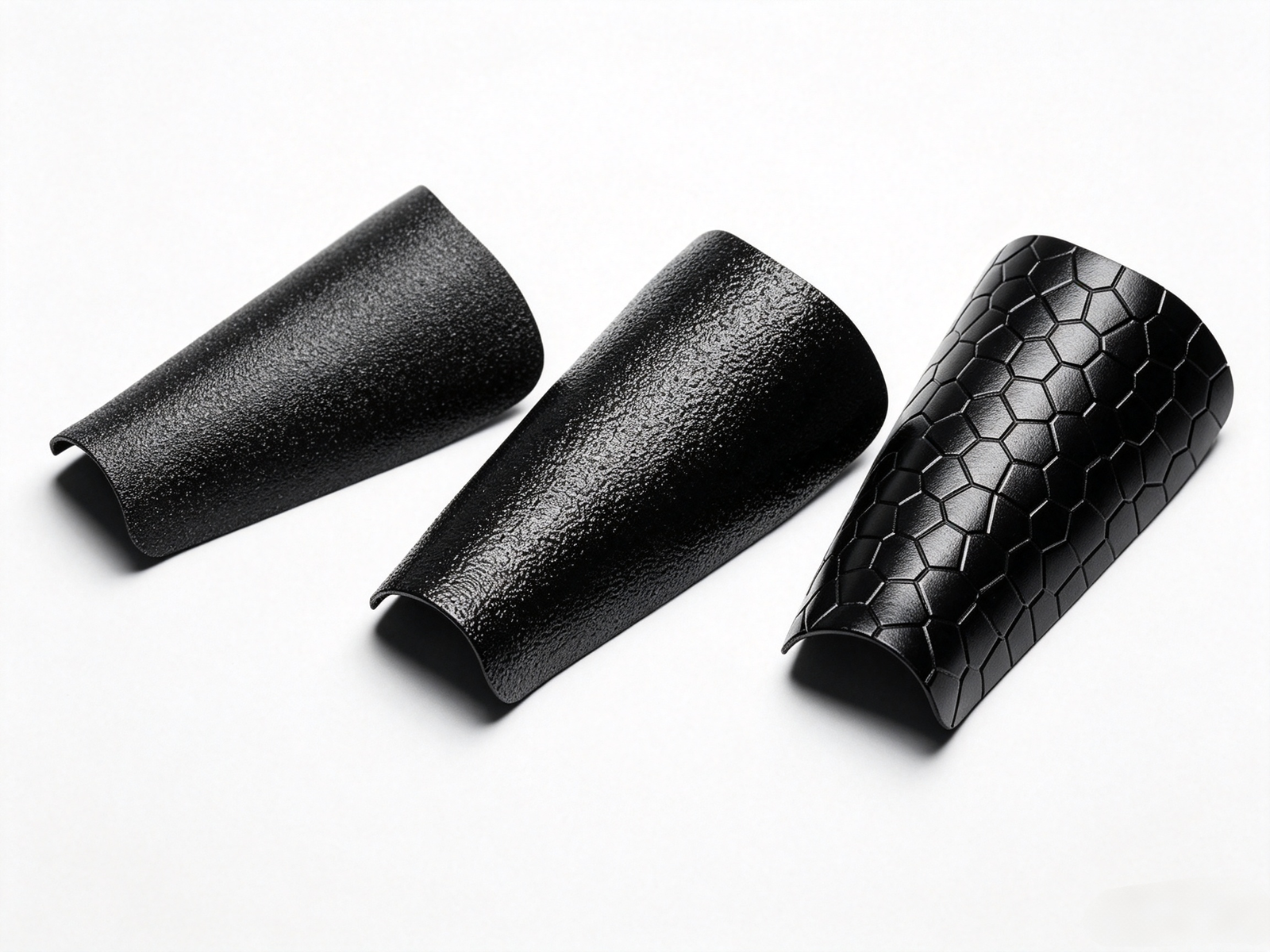
Post-processing is not the only solution.
Improving the printing process itself can reduce surface defects and minimize the amount of finishing required.
1. Incorrect Extrusion Rate
Extrusion rate is particularly important for FDM printing.
If too much material is extruded, the additional material can create irregularities on the surface.
Under-extrusion can also create gaps and inconsistent layers.
Correct extrusion calibration is therefore essential for achieving consistent layer deposition.
2. Incorrect Printing Temperature
Temperature has a major effect on FDM surface quality.
If the material is overheated, it may remain soft for too long and deform before cooling.
If the temperature is too low, the material may not flow or bond properly.
The correct temperature depends on the specific material and printer.
Perciò, printing parameters should be optimized according to the manufacturer’s material recommendations rather than using one temperature for every polymer.
3. Insufficient or Excessive Cooling
Cooling affects how quickly the deposited material solidifies.
Incorrect cooling can contribute to:
· Deformazione
· Poor layer bonding
· Deformazione
· Surface irregularities
· Dimensional inconsistencies
The correct balance between heating and cooling is particularly important for FDM printing.
4. Ghosting and Rippling
Ghosting or rippling appears as wave-like patterns on the surface.
It is commonly associated with machine vibration, especially when the printer moves at a speed that exceeds its mechanical stability.
Potential solutions include:
· Reducing printing speed
· Checking machine rigidity
· Maintaining moving components
· Ensuring proper mechanical alignment
· Reducing vibration
· Optimizing acceleration settings
Good machine maintenance can therefore contribute directly to better surface quality.
5. Part Orientation
Part orientation is another important design consideration.
The same component can have different surface quality depending on how it is positioned during printing.
Orientation affects:
· Layer visibility
· Support placement
· Surface texture
· Precisione dimensionale
· Printing time
· Post-processing requirements
For appearance-critical parts, the visible surfaces should be considered carefully during print setup.
What Is the Best 3D Printing Process for a Smooth Surface?
There is no single answer because the best process depends on the application.
If you need a very smooth as-printed polymer surface, SLA, PolyJet, or Carbon DLS may be appropriate.
If you need a functional thermoplastic component with a smooth final appearance, FDM, SLS, or MJF combined with suitable post-processing may provide a better balance between cost, prestazioni meccaniche, e aspetto.
For metal 3D printed parts, additional finishing such as tumbling, esplosione, lavorazione, or polishing may be required depending on the surface requirements.
The correct decision should consider:
Printing technology + materiale + geometria + tolleranza + finitura superficiale + volume di produzione + applicazione.
This combination is more important than simply selecting the printing technology with the smoothest as-printed surface.
3D Printing Surface Finish: Domande frequenti
Can 3D printed parts be completely smooth?
SÌ. 3D printed parts can achieve very smooth surfaces through a combination of appropriate printing technology and post-processing.
The final achievable finish depends on the material, printing process, geometria, and finishing method.
Which 3D printing technology has the smoothest surface finish?
SLA, PolyJet, and Carbon DLS are among the technologies capable of producing very smooth as-printed surfaces.
Tuttavia, the best technology depends on the required mechanical properties, precisione dimensionale, materiale, e applicazione.
How do you make FDM prints smooth?
Common approaches include:
· Optimizing layer height
· Calibrating extrusion
· Optimizing temperature and cooling
· Selecting an appropriate print orientation
· Levigatura e lucidatura
· Basella perle
· Vapor smoothing for compatible materials
· Painting or coating
Does sanding affect 3D printed dimensions?
SÌ. Sanding removes material from the surface and can therefore change dimensions.
Per parti di precisione, the amount of material removed should be considered during design and manufacturing.
Is vapor smoothing suitable for every 3D printed material?
NO. Vapor smoothing depends on chemical compatibility between the solvent and the printed material.
It is therefore more limited than mechanical processes such as sanding or bead blasting.
What is the best finish for a functional 3D printed part?
It depends on the function.
For a moving or mating component, dimensional accuracy and surface roughness may be more important than cosmetic appearance.
For a product housing, appearance and tactile quality may be more important.
The appropriate finishing method should therefore be selected according to the actual application.
How can I get a smooth 3D printed prototype?
Start by identifying the required appearance and dimensional tolerance.
Then select the appropriate printing technology and material. If the as-printed surface is not sufficient, use a suitable post-processing method such as sanding, sabbiatura, vapor smoothing, tumbling, lucidatura, o rivestimento.
For engineering prototypes, it is often more efficient to discuss the required finish with the manufacturer before printing rather than trying to correct the surface after production.
Conclusione: How to Achieve a Smooth Surface Finish With 3D Printing
The final result is influenced by the printing technology, materiale, layer settings, printing parameters, part orientation, geometria, and post-processing method.
For the smoothest as-printed surfaces, technologies such as SLA, PolyJet, and Carbon DLS can be strong options. FDM, SLS, mjf, and metal additive manufacturing processes can also produce high-quality finished components when the appropriate post-processing method is selected.
The most common finishing techniques include:
· Basella perle for uniform matte surfaces
· Vapor smoothing for compatible polymer parts requiring smoother surfaces
· Tumble finishing for suitable small components and batch processing
· Levigatura e lucidatura for flexible surface refinement
· Additional machining or coating when tighter dimensional or cosmetic requirements apply
In definitiva, the best solution is determined by the complete set of requirements—not surface smoothness alone.
If you are developing a 3D printed prototype, functional component, product housing, or low-volume production part, providing your 3D CAD file, Requisiti materiali, quantità, tolleranze dimensionali, and desired surface finish allows Massima precisione to recommend the most appropriate printing and finishing process.


