



CNC machining works with two broad material families: metals and plastics. Your material choice sets strength, weight, corrosion resistance, machinability, surface finish, and cost. The right choice always depends on the part’s loads, environment, and tolerances—never on a single property. This guide covers the common metals and plastics, how to choose, and when each one earns its cost.
How To Choose A CNC Machining Material
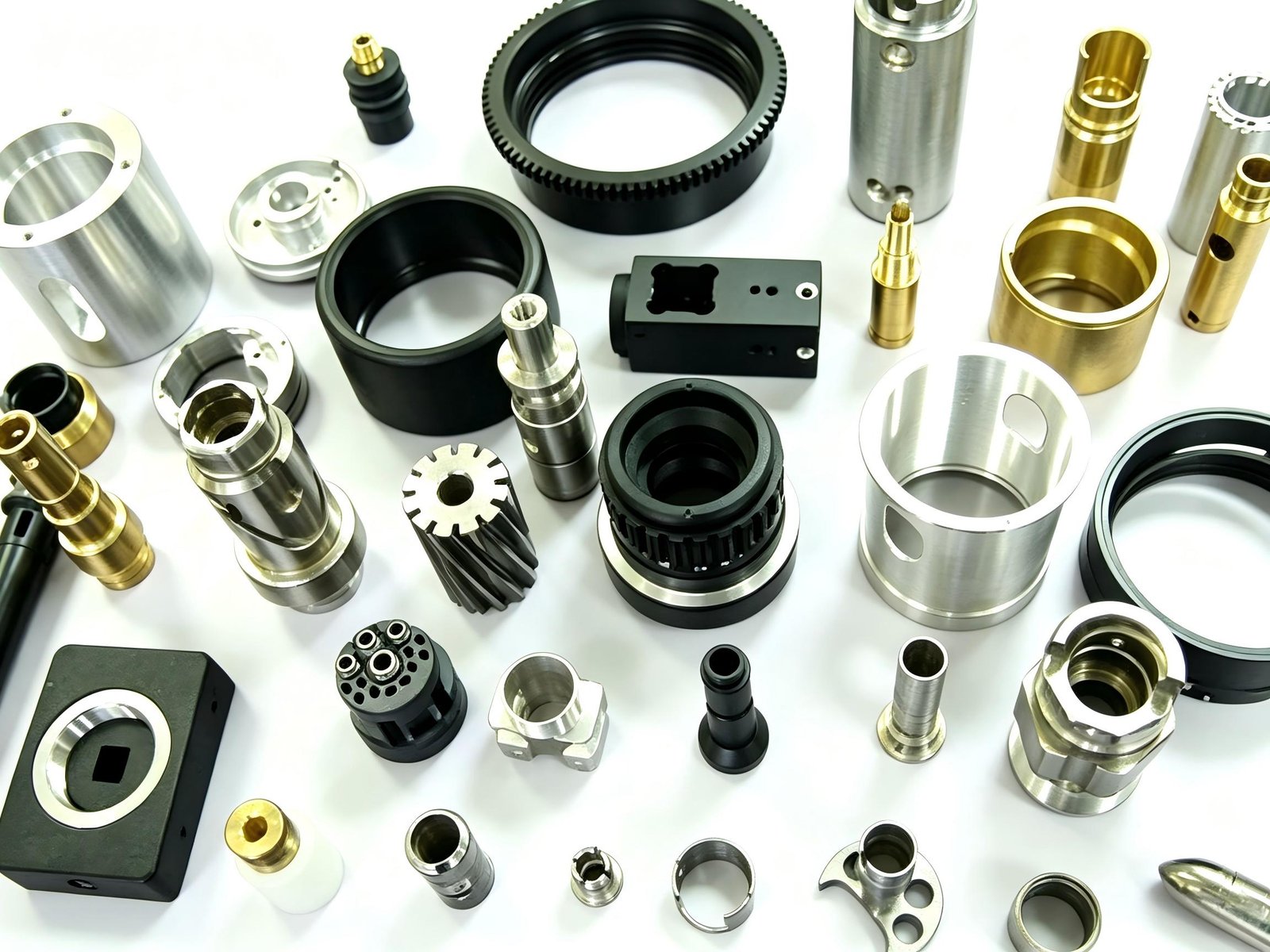
Start by evaluating these five key factors:
- Service conditions.Confirm temperature, chemicals, moisture, UV, and food or medical contact.
- Mechanical properties.Define required strength, hardness, stiffness, and impact resistance.
- Machinability.Estimate how fast and cleanly the material cuts.
- Surface finish.Decide on as-machined roughness, anodizing, plating, or coating.
- Cost.Compare raw material price, cycle time, and tool wear.
Material Grade And Condition Matter
The alloy name alone is not always enough when you specify a CNC machining material. Temper, heat treatment, hardness, and material condition can significantly affect strength, machinability, dimensional stability, and cost.
- Aluminum 6061 is not the same as 6061-T6. The “-T6” temper means the material was solution heat-treated and artificially aged, which changes both strength and machinability.
- Stainless steel 17-4 PH is not a generic stainless. Its strength and hardness change with the aging condition, such as H900 versus H1150.
- 4140 steel changes with heat treatment. Annealed 4140 machines easily. Hardened 4140 is stronger but slower and more expensive to cut.
Specify the full grade, temper, and condition on your drawing. That one line removes ambiguity in quoting, machining, and inspection, and it lets the shop match the correct material certificate.
CNC Machining Metals
Metals dominate CNC work because they deliver strength, tight tolerances, and repeatable finishes.
| Material | Common Grades | Key Advantages | Typical Applications |
| Aluminum | 6061-T6, 7075-T6 | Lightweight, machinable, corrosion-resistant | Aerospace, electronics, automotive |
| Steel | 1018, 4140, 4340, tool steel | High strength, hardenable, tough | Shafts, tooling, structural parts |
| Stainless Steel | 303, 304, 316, 17-4 PH | Corrosion-resistant, hygienic, strong | Medical, food, marine |
| Titanium | Grade 5 (Ti-6Al-4V) | Excellent strength-to-weight ratio, biocompatible | Aerospace, medical |
| Copper | C110 | Excellent conductivity | Electrical components |
| Brass | C360 | Free-machining, conductive | Fittings, connectors |
| Bronze | C932 | Wear-resistant, low friction | Bushings, bearings |
| Magnesium | AZ31B | Very low density and excellent strength-to-weight potential | Lightweight housings |
| Zinc | Zamak 3 | Low-cost, dimensionally stable | Small parts |
| Cast Iron | Gray, ductile | Vibration damping, wear-resistant | Machine bases, tooling |
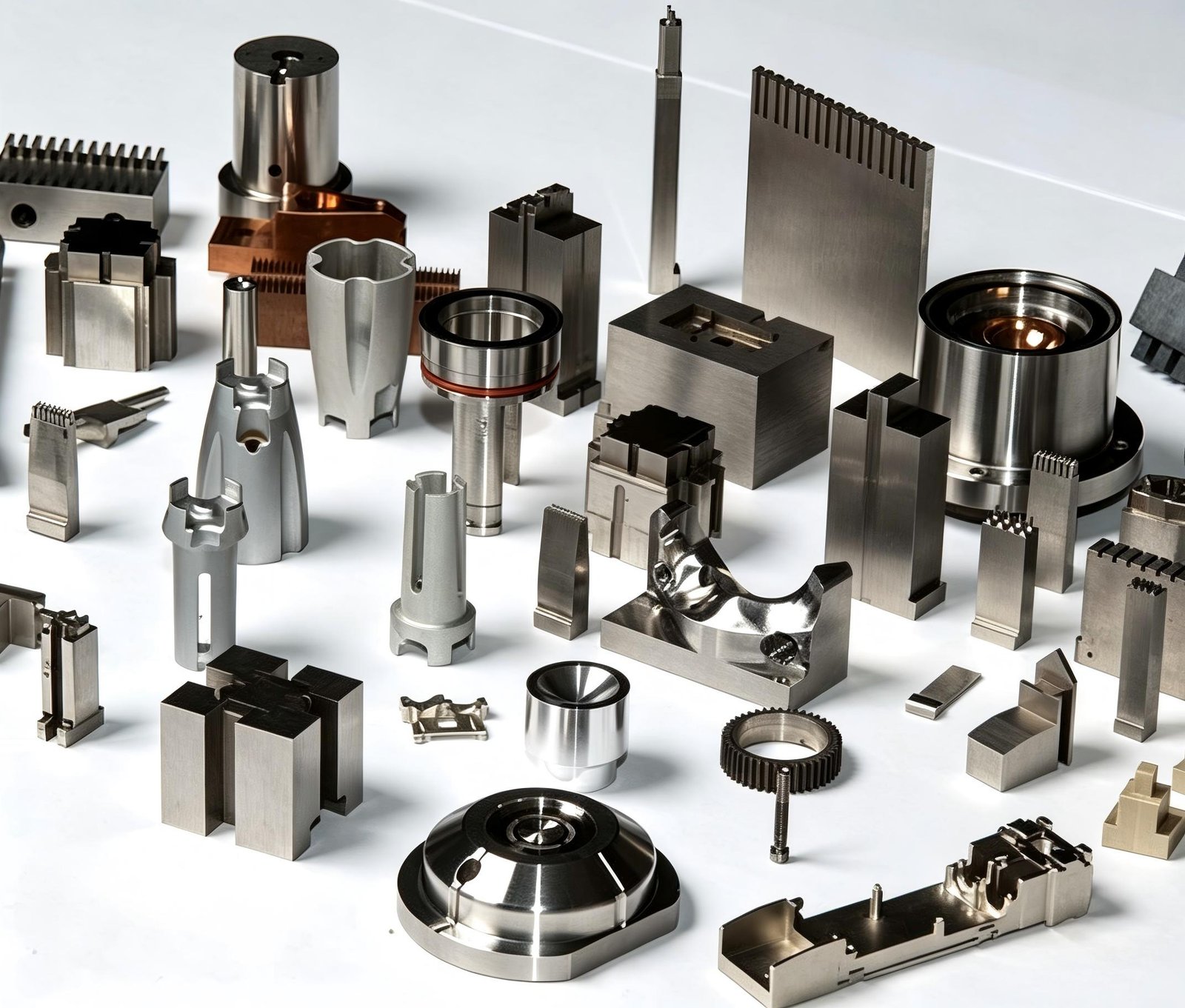
6061-T6 aluminum is one of the most widely used CNC machining materials for general-purpose structural and mechanical parts. Use 7075 aluminum when you need higher strength. Choose 304 or 316 stainless steel for corrosion and hygiene. Choose titanium when its strength-to-weight ratio, corrosion resistance, biocompatibility, or temperature performance justifies the higher material and machining cost. Alloy steel and tool steel suit high-strength and wear applications.
CNC Machining Plastics
Plastics are chosen for light weight, electrical insulation, chemical resistance, or lower cost.
| Plastic | Why Engineers Choose It |
| ABS | Tough, low-cost, easy to machine |
| Acrylic (PMMA) | Clear, rigid, polishes well |
| Nylon (PA) | Strong, wear-resistant |
| Delrin / Acetal (POM) | Stiff, low friction, excellent machinability |
| PEEK | High strength and heat resistance |
| PTFE | Low friction, chemical resistance, suitable for many food-contact applications |
| Polycarbonate (PC) | Tough, transparent, impact-resistant |
| HDPE / UHMW-PE | Low friction, chemical-resistant |
| PPS | High heat and chemical resistance |
| Ultem (PEI) | Flame-resistant, high strength |
| Torlon (PAI) | Very high strength at temperature |
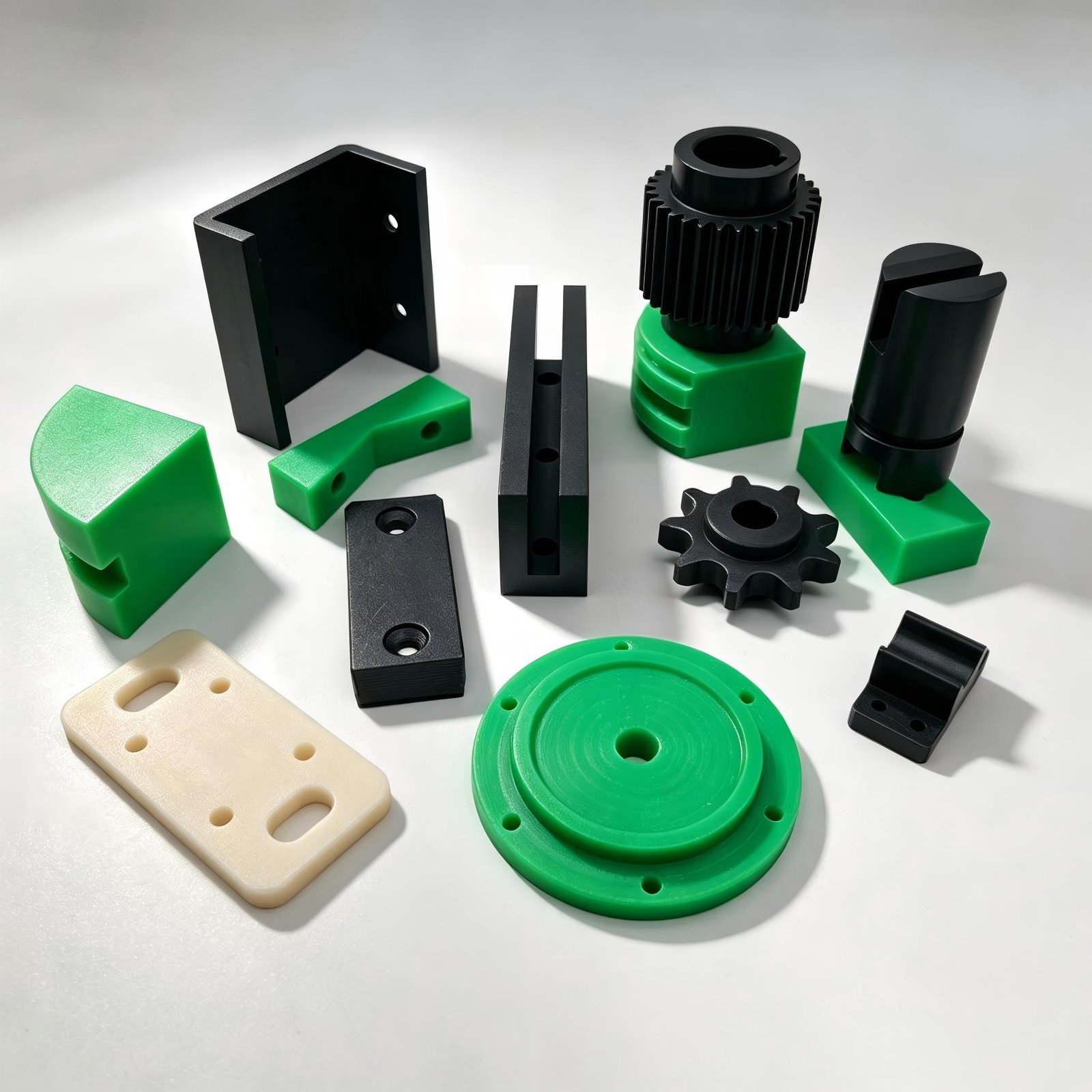
Delrin and nylon cover most general-purpose plastic parts. Use PEEK or Ultem for high-temperature or medical work. PTFE and HDPE suit chemical and food-contact service. Acrylic gives you transparent, polished parts.
Quick CNC Material Selection Guide
| If you need… | Consider… |
| Low cost and easy machining | 6061 aluminum, brass, Delrin |
| High strength-to-weight ratio | 7075 aluminum, titanium |
| Corrosion resistance | 316 stainless steel, titanium |
| Electrical conductivity | Copper, brass, aluminum |
| High temperature resistance | PEEK, PEI, PPS |
| Low friction | POM, PTFE, UHMW-PE |
| Wear resistance | Tool steel, POM, UHMW-PE |
| Transparency | Acrylic, polycarbonate |
| Medical applications | 316L stainless steel, titanium, PEEK |
CNC Machining Materials By Application
| Application | Material To Consider | Why |
| Aerospace | 7075 aluminum, titanium, PEEK, Ultem | Strength-to-weight and heat resistance |
| Medical | 316L stainless, titanium, PEEK | Biocompatibility and cleanability |
| Food Contact | 304/316 stainless, Delrin, PTFE, HDPE | Cleanable, non-toxic surfaces |
| Electrical | Copper, brass, aluminum | Conductivity |
| High Temperature | Titanium, tool steel, PEEK, Torlon | Heat resistance |
| Chemical Service | 316 stainless, PTFE, HDPE, PPS | Chemical resistance |
| Prototyping | 6061 aluminum, ABS, Delrin | Fast and low cost |
| Wear Parts | Hardened tool steel, Delrin, UHMW-PE | Wear resistance |
Machinability And Surface Finish
Machinability describes how easily a material cuts. It drives cycle time, tool wear, finish, and cost.
- Free-machining materials.Brass C360, 303 stainless, 6061 aluminum, and Delrin cut fast and finish well.
- Difficult materials.Titanium, hardened steel, and superalloys need slow feeds and more tool wear.
- Metal finishes.Aluminum can be anodized; stainless can be passivated or electropolished; steel can be plated.
- Plastic finishes.Plastics usually need polishing or vapor polishing to remove tool marks.
Learn more in our guides on machinability of materials and surface finishes for CNC machining.
What CNC Machining Materials Cost
Material cost comes from raw material price, grade, availability, and machining waste. Machinability then adds labor and tooling cost.
- Aluminum and free-machining brass are usually the most cost-effective metals.
- Stainless steel costs more to buy and cuts slower than aluminum.
- Titanium costs more again, in both material and cycle time.
- PEEK, Torlon, and Ultem cost more than ABS or Delrin and machine more slowly.
Exact prices depend on your geometry, grade, finish, and volume. A quote gives you the real number.
DFM Tips For Choosing A Machinable Material
Select the material before you finalize thin walls, threads, and tolerances. Each material machines differently.
- Specify the grade and standard. Do not write only “aluminum” or “stainless steel”.
- Avoid deep pockets and thin walls in soft, gummy plastics.
- Match tight tolerances to machinability. Tight tolerances in titanium cost more.
- Decide on surface finish or coating before quoting. They change the material choice.
- Confirm temperature and chemical exposure before you pick a plastic.
When Not To Use Certain Materials
Some materials machine easily but fail in service. Others perform well but cost too much to machine.
- 6061 aluminum struggles in strong chloride or seawater environments.
- 304 stainless can gall and work-harden. Choose 303 stainless steel when machinability is a higher priority; choose 304 or 316 when corrosion resistance is more important.
- Titanium is expensive and slow to machine. Use it only when weight or biocompatibility justifies it.
- PTFE and UHMW creep under load and are hard to hold to tight tolerances.
- Acrylic is brittle and cracks at sharp corners.
- Magnesium swarf is flammable and needs controlled machining.
- Plain carbon steel rusts. It needs coating or plating unless hardened or passivated.
Frequently Asked Questions
What materials can be CNC machined?
Metals such as aluminum, steel, stainless steel, titanium, copper, brass, and magnesium, plus plastics such as ABS, acrylic, nylon, Delrin, PEEK, and PTFE.
What is the best material for CNC machining?
It depends on the part. For most general-purpose parts, 6061-T6 aluminum is a strong default. Match the material to the load, environment, and finish.
What is the most common CNC machining material?
6061-T6 aluminum. It combines strength, corrosion resistance, and fast machinability.
What is the easiest material to CNC machine?
Brass C360 and free-machining aluminum among metals. Delrin or acetal among plastics.
What is the strongest CNC machining material?
There is no single strongest CNC machining material. High-strength alloy steels, tool steels, and titanium alloys are commonly selected for demanding metal applications, while PEEK and Torlon are options for high-performance plastic parts. The right choice depends on tensile strength, hardness, temperature, wear, and load requirements.
Is aluminum cheaper to machine than stainless steel?
Generally, yes. Aluminum machines faster and wears tools less, so it costs less per part for most geometries.
Can hardened steel be CNC machined?
Yes. It needs rigid machines, carbide tooling, and slower feeds.
Do you provide material certificates?
Yes. Request a certificate for your specified grade when you contact us.
Get A Material Recommendation For Your Part
We machine 100+ metals and plastics under an ISO 9001:2015 quality system. Our shop covers 3-axis, 4-axis, and 5-axis milling, turning, and EDM. We finish prototypes in 1–3 days and return quotes in 24 hours. Achievable tolerances depend on geometry, material, machine, and inspection method.
Send your CAD, PDF, or sample drawing for a free DFM review and material recommendation.


1 thought on “CNC Machining Materials: How To Choose The Right Material”