

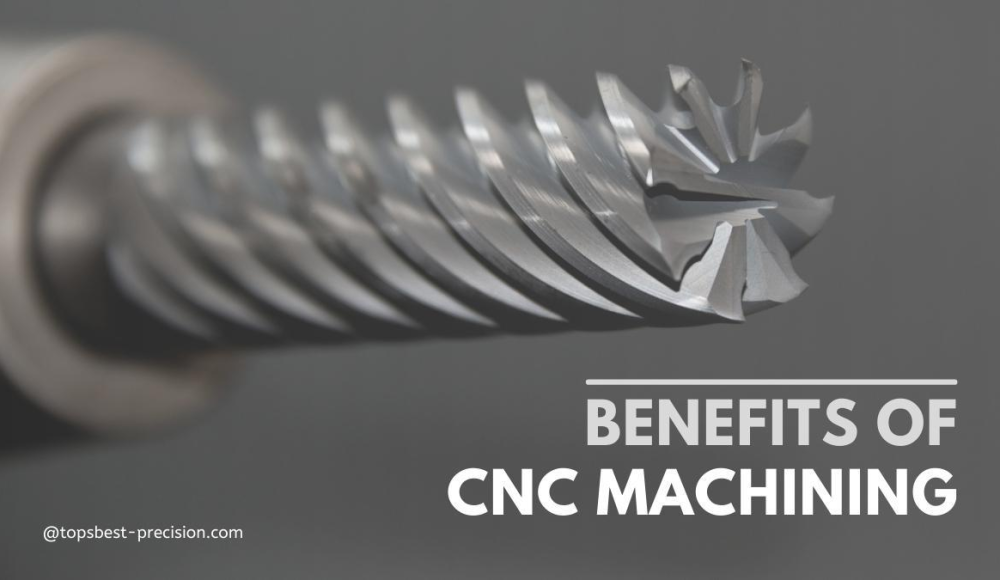
El mecanizado CNC convierte un diseño digital en un diseño preciso, parte física repetible. Obtienes tolerancias estrictas, calidad consistente, Prototipos rápidos, y acceso a casi cualquier material mecanizable. Funciona desde prototipos únicos hasta series de producción sin herramientas duras dedicadas.. Aquí están los 10 Principales beneficios y lo que significan para sus piezas.
10 Beneficios de un vistazo
| Beneficio | Lo que significa para ti |
| Tolerancias apretadas | Piezas encajadas, sello, y moverse según lo diseñado |
| Repetibilidad | Geometría idéntica desde la primera parte hasta la última |
| Geometría compleja | Características y contornos en ángulo en menos configuraciones |
| Amplia gama de materiales | Metales y plásticos técnicos. |
| creación rápida de prototipos | CAD para pieza en días |
| Bajo costo de herramientas | Sin molde duro ni matriz dedicados |
| Flexibilidad de diseño | Cambios sencillos sin nuevas herramientas |
| Escalabilidad | Prototipo a producción., con automatización |
| Acabado superficial | Mecanizado o acabado con revestimiento |
| Integridad de la pieza | Fuerza total de stock sólido |
1. Tolerancias estrictas y alta precisión
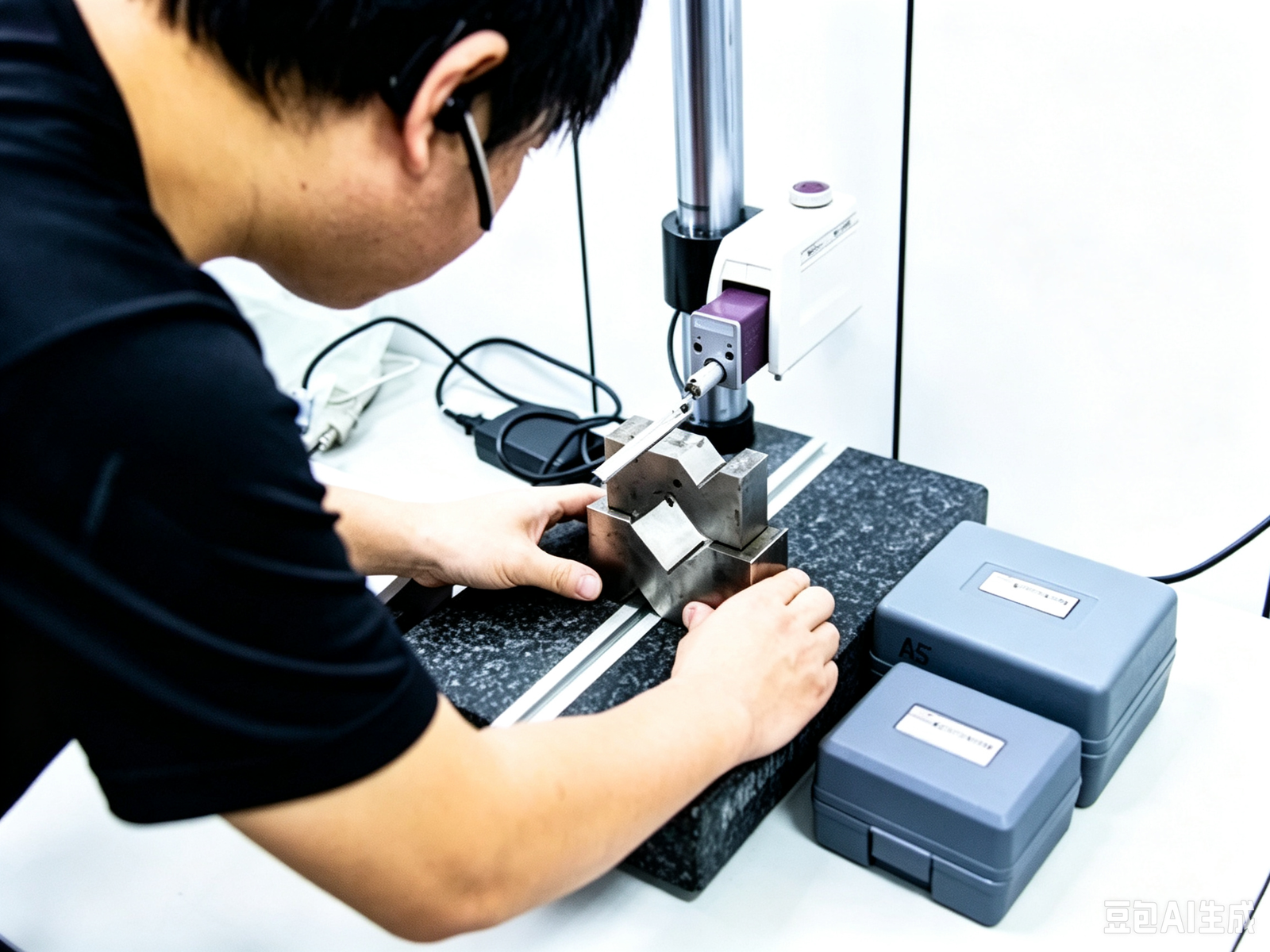
El mecanizado CNC puede lograr tolerancias estrictas y repetibles. Los valores alcanzables dependen de la máquina, material, geometría, estampación, y método de inspección.
Esto hace que el mecanizado CNC sea muy adecuado para piezas que deben encajar, sello, alinear, o moverse con precisión. Obtenga más información en nuestra guía para Tolerancias de mecanizado CNC.
2. Repetibilidad y consistencia
El mecanizado CNC produce una consistencia pieza a pieza que los métodos manuales no pueden igualar.
Una vez que se prueba un programa, La máquina repite las mismas trayectorias en cada pieza.. Obtienes una geometría idéntica en tiradas pequeñas o grandes. Esa repetibilidad simplifica el montaje., inspección, y calificación de proveedores.
3. Geometría compleja y capacidad multieje
3-eje, 4-eje, y las máquinas de 5 ejes pueden acceder a funciones en ángulo, contornos complejos, y algunos recortes con menos configuraciones, dependiendo de la geometría y la configuración de la máquina.
Menos configuraciones significan menos manejo y menos posibilidades de error.
4. Selección de material amplio
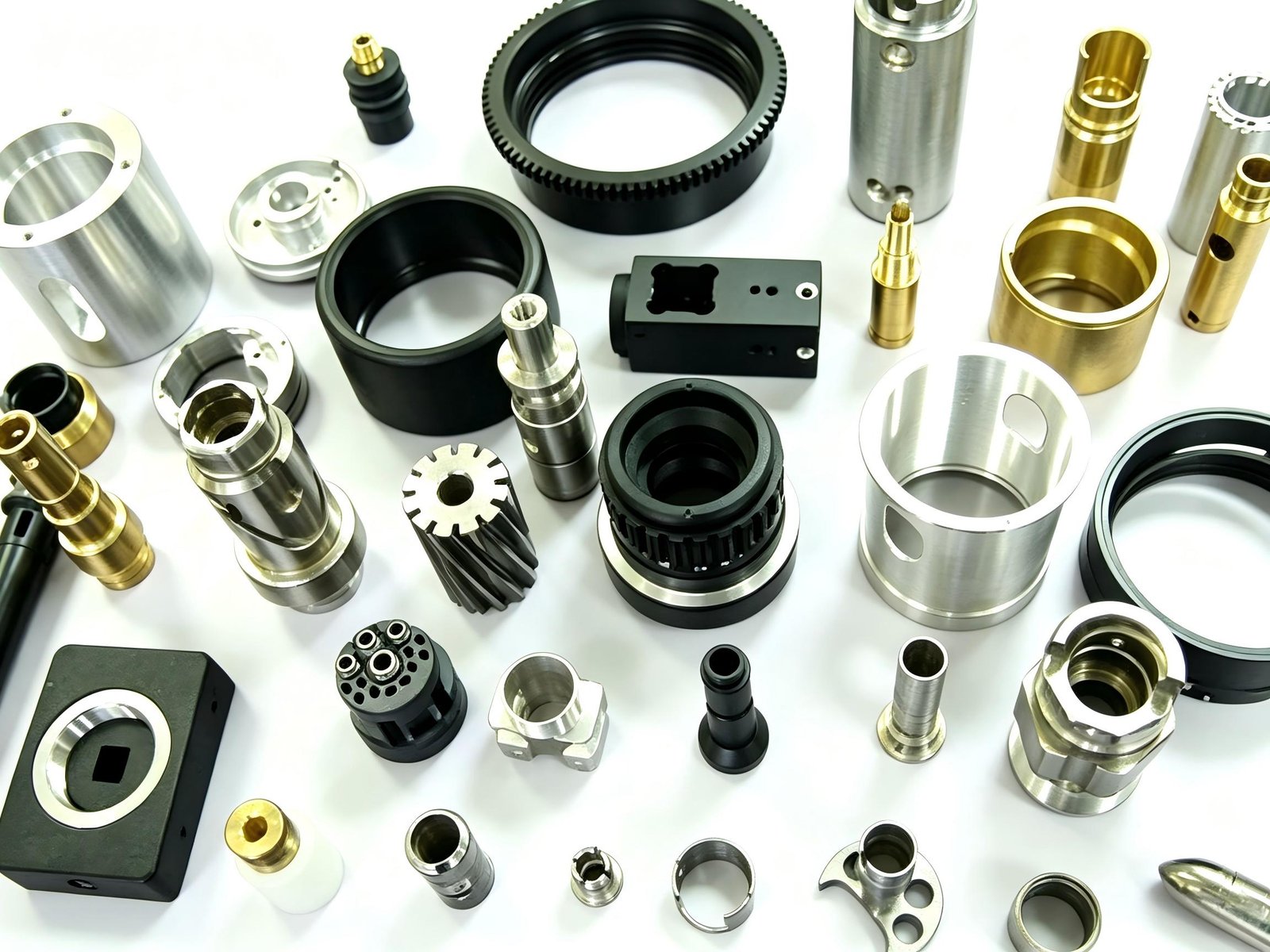
El mecanizado CNC funciona con una amplia gama de metales y plásticos..
El aluminio se utiliza ampliamente para piezas estructurales ligeras., acero inoxidable para resistencia a la corrosión, titanio para requisitos de alta resistencia-peso, y plásticos de ingeniería como PEEK y Delrin cuando son de bajo peso, aislamiento, resistencia química, o la baja fricción es importante. Vea nuestro Guía de materiales de mecanizado CNC. para hacer coincidir el material con su aplicación.
5. Creación rápida de prototipos y plazos de entrega rápidos
El mecanizado CNC convierte archivos CAD en piezas prototipo rápidamente, a menudo en días.
Puedes validar el ajuste, función, y material antes de comprometerse con herramientas costosas. Lea nuestro Guía de mecanizado de prototipos CNC. para el flujo de trabajo completo.
6. Bajo costo inicial de herramientas
El mecanizado CNC generalmente no requiere un molde duro dedicado ni un troquel de producción..
Todavía usa herramientas de corte., sujeción de piezas, y a veces mandíbulas suaves, pero no construyes un molde. Eso hace que el CNC sea rentable para volúmenes bajos a medianos y para piezas que cambiarán. compararlo con Mecanizado CNC versus moldeo por inyección y fundición a presión versus mecanizado CNC.
7. Flexibilidad de diseño y cambios de diseño sencillos
El mecanizado CNC le permite cambiar las dimensiones, agujeros, bolsillos, y características sin rediseñar un molde de producción.
Esto lo hace útil para prototipos., cambios de ingenieria, componentes personalizados, y producción de bajo volumen.
8. Escalabilidad y producción eficiente
El mecanizado CNC escala desde un único prototipo hasta repetir series de producción.
En volúmenes más altos, puede agregar accesorios dedicados o ajustar el proceso, pero la misma parte de los datos se transmite. Una vez que se prueba un programa, Las máquinas pueden funcionar sin supervisión para una producción eficiente.. Nuestro servicio de fabricación de precisión soporta ambos extremos de ese rango.
9. Excelentes opciones de acabado superficial
El mecanizado CNC deja un aspecto limpio, Superficie mecanizada que se puede terminar aún más..
Anodizado, enchapado, pasivación, o pulir añaden función y apariencia. Ver Acabados superficiales para mecanizado CNC. para elegir el acabado correcto.
10. Alta resistencia e integridad de las piezas
El mecanizado CNC corta piezas a partir de material sólido, para que las piezas eviten la porosidad relacionada con el moho y las debilidades de las capas.
La resistencia exacta aún depende del grado del material y del diseño de la pieza.. Para aplicaciones exigentes, especificar el grado, temperamento, y tratamiento térmico en tu dibujo..
Mecanizado CNC frente a otros métodos de fabricación
| Factor | Mecanizado CNC | Moldeo por inyección | fundición a presión | 3Impresión D |
| Herramientas iniciales | Bajo | Alto | Alto | muy bajo |
| Producción de bajo volumen | Excelente | Generalmente pobre | Generalmente pobre | Excelente |
| Gama de materiales | muy amplio | Plásticos principalmente | Aleaciones metálicas | Polímero o metal, dependiente del proceso |
| Precisión | Alto | Moderado-alto | Moderado-alto | Dependiente del proceso |
| Cambios de diseño | Fácil | Se requiere modificación del molde | Se requiere modificación del troquel | Fácil |
| Volumen de producción | Bajo-alto | Medio-muy alto | Medio-muy alto | Bajo-medio |
El mecanizado CNC no es la única opción. Gana en gama de materiales., precisión, y flexibilidad de diseño. El moldeado y la fundición ganan con un volumen muy alto.
Cuando el mecanizado CNC no es la mejor opción
El mecanizado CNC no siempre es la opción más barata ni la más rápida.
- Las piezas de plástico de gran volumen pueden costar menos con moldeo por inyección.
- Las formas metálicas casi netas de gran volumen pueden costar menos con fundición a presión.
- Delgado, hueco, o los canales profundamente internos pueden adaptarse mejor a los métodos de fundición o aditivos.
- Las piezas mecanizadas a partir de material sólido generan más desperdicio de material.
- A un volumen muy alto, El costo unitario puede exceder las piezas moldeadas o fundidas..
Preguntas frecuentes
¿Cuáles son los principales beneficios del mecanizado CNC??
Tolerancias apretadas, repetibilidad, geometría compleja, elección de material amplio, creación rápida de prototipos, y sin molde duro dedicado.
¿Cuál es la mayor ventaja del mecanizado CNC??
Combina precisión y repetibilidad con flexibilidad de materiales y producción sin herramientas.. El mismo proceso maneja prototipos y piezas de producción..
¿Es preciso el mecanizado CNC??
Sí. Mantiene tolerancias estrictas, pero los valores alcanzables dependen de la geometría, material, y maquina.
¿El mecanizado CNC es bueno para la producción de bajo volumen??
Sí. No hay molde ni matriz para construir., por lo que el costo de instalación se mantiene bajo. Eso lo hace ideal para lotes pequeños..
¿El mecanizado CNC es adecuado para la producción en masa??
Sí, hasta cierto punto. Para volúmenes muy altos, comparar la economía unitaria con el moldeo por inyección o la fundición a presión.
¿Es el mecanizado CNC más barato que el moldeo por inyección??
Depende del volumen. El CNC suele ganar a bajo volumen. El moldeo por inyección gana con un gran volumen.
¿Qué materiales se pueden mecanizar con CNC??
Metales como el aluminio., acero, acero inoxidable, y titanio, además de plásticos como PEEK, Delrín, y nailon.
¿Cuáles son las desventajas del mecanizado CNC??
Desperdicio de materiales, tiempo de la máquina, desgaste de herramientas, mayor costo unitario en un volumen muy alto, y límites a ciertas características profundamente internas.
Obtenga una cotización para su próximo proyecto CNC
Nosotros 100+ metales y plásticos bajo norma ISO 9001:2015 sistema de calidad. Nuestra tienda cubre fresado CNC, torneado CNC, 5-mecanizado del eje, y Mecanizado por electroerosión. Para proyectos prototipo adecuados, Podemos completar el mecanizado en tan solo 1 a 3 días..
Envíe su archivo CAD 3D, 2dibujo, muestra, cantidad, requisitos materiales, y especificaciones de acabado. Nuestros ingenieros pueden revisar el diseño para determinar la capacidad de fabricación y recomendar el proceso de mecanizado CNC adecuado antes de cotizar..
Contáctenos para una cotización