



Las herramientas de fresado CNC eliminan material para crear ranuras, bolsillos, contornos, agujeros, y caras terminadas. El cortador adecuado controla la calidad, Tiempo de ciclo, y costo. Esta guía cubre los principales tipos de herramientas., materiales, revestimientos, y como elegir cada uno.
¿Qué son las herramientas de fresado CNC??
Las herramientas de fresado CNC son cortadores giratorios que mecanizan el material de una pieza de trabajo..
Cada herramienta tiene una forma específica para una característica específica.. Elegir correctamente evita retrabajos, charla, y herramientas rotas. La elección de la herramienta depende de la operación., material, geometría, y maquina.
Herramientas de corte comunes utilizadas en fresadoras CNC
Un almacén de herramientas de fresado CNC contiene más que fresas. También lleva taladros., escariadores, y herramientas de hilo.
| Herramienta | Uso principal |
| Molino de extremo | Tragamonedas, bolsillos, perfilando |
| Fresa de punta esférica | 3Contornos D y superficies curvas. |
| nariz de toro / fresa de extremo de radio de esquina | Suelos planos con esquinas redondeadas |
| fresa frontal | Grandes superficies planas |
| Perforar | Agujeros |
| Escariador | Agujeros acabados con precisión |
| Molino de hilo | Trapos |
| molino de chaflán | Bordes en ángulo |
| Cortador de cola | Socavados y diapositivas |
| Cortador de ranura T | Ranuras de sujeción en forma de T |
| Cortador de teclado | Cajas lacas |
| cortador de ángulo | Ranuras en V y dentados |
| cortador de formularios | Perfiles especiales repetidos |
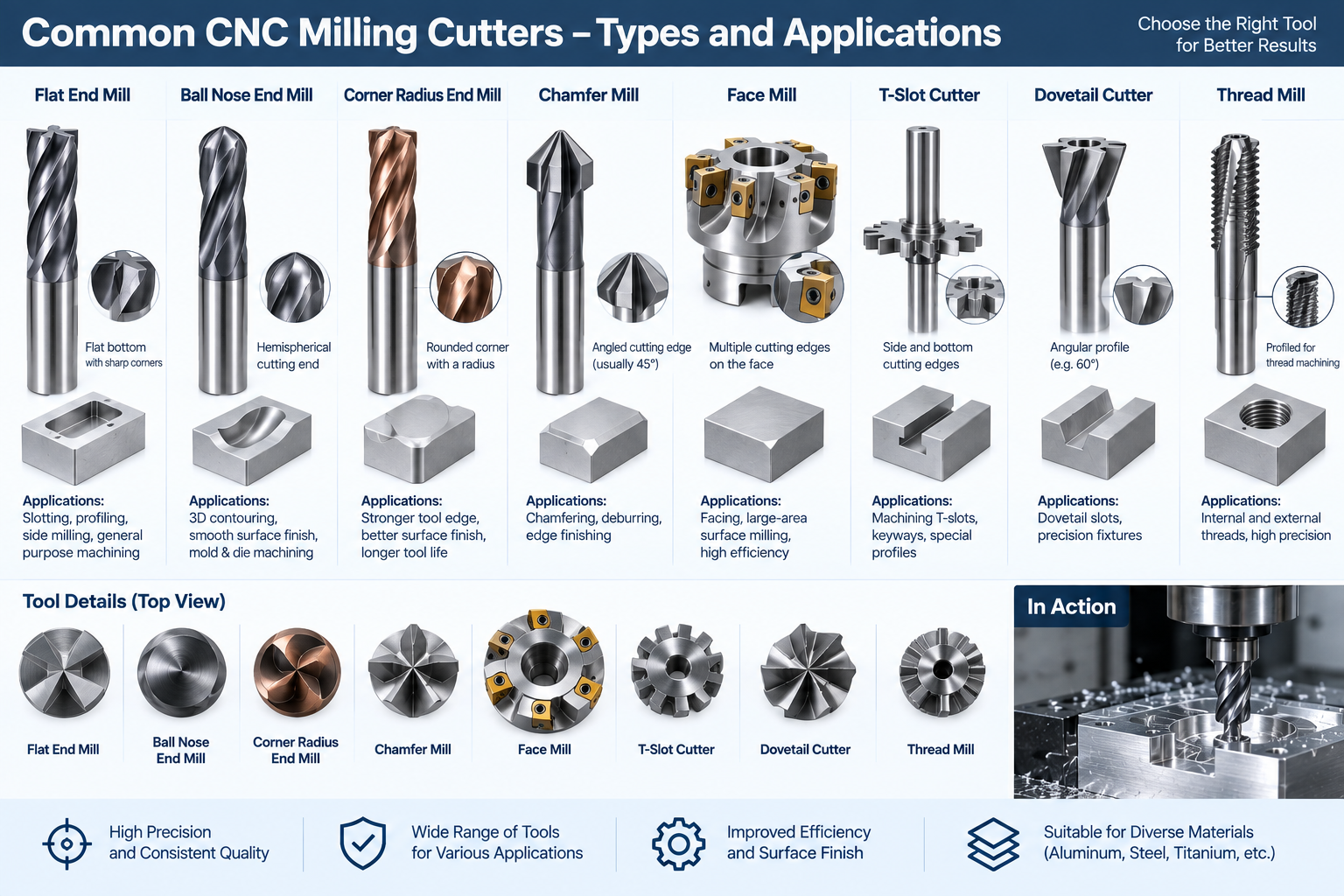
Fresas finales y sus usos
Las fresas finales son las herramientas de fresado más comunes.. Cortan en la periferia y, para tipos de corte central, al final.
- Las fresas de extremo plano cortan ranuras y cavidades de fondo cuadrado.
- Las fresas de punta esférica cortan contornos 3D y superficies curvas. En superficies 3D, El diámetro del cortador y el paso a paso determinan la altura del festón.. Un paso más pequeño mejora el acabado pero aumenta el tiempo del ciclo..
- nariz de toro / Las fresas con radio de esquina dan pisos planos con una esquina redondeada.
- Las fresas de desbaste eliminan el material rápidamente con un borde dentado.
- Fresas de extremo de corte central por inmersión; los tipos sin corte central no.
Ver todo sobre el fresado final para más detalles.
Fresas frontales
Las fresas frontales mecanizan grandes superficies planas con múltiples filos de corte.
Dan un buen acabado y eliminan material rápidamente en una amplia zona.. Muchas fresas planeadoras se construyen alrededor de insertos reemplazables.. Son comunes para escuadrar material y terminar caras planas.. Leer una descripción completa del planeado.
Herramientas para taladrar y hacer agujeros
Los taladros crean agujeros. Escariadores y otras herramientas los refinan.
- Las brocas helicoidales hacen agujeros estándar.
- Los microtaladros hacen agujeros muy pequeños y necesitan un descentramiento controlado.
- Los escariadores llevan un agujero a un tamaño y acabado precisos..
- Los taladros puntuales inician un agujero con precisión.
Profundidad del agujero, diámetro, y el material deciden la herramienta y el método. Ver perforación de agujeros profundos cuando la profundidad es grande.
Herramientas de roscado
Los hilos se pueden cortar con machos o fresas de roscar..
El roscado es rápido y eficiente para un tamaño de rosca específico, pero un grifo roto puede ser difícil de quitar, especialmente en agujeros ciegos o materiales difíciles. Las fresadoras de roscas pueden producir roscas internas o externas., Ofrecer un buen control del tamaño de la rosca., y son útiles para hilos más grandes, materiales difíciles, o aplicaciones donde es importante reducir el riesgo de un grifo roto. Comparar fresado de roscas vs roscado.
Fresas especiales
Las herramientas especiales cortan formas que las fresas estándar no pueden alcanzar.
- Las fresas de chaflán hacen biseles y desbarban bordes.
- Los cortadores de cola de milano cortan socavaduras para guías y accesorios.
- Los cortadores de ranuras en T hacen ranuras de sujeción.
- Los cortadores de chavetero y Woodruff cortan chaveteros de eje.
- Los cortadores angulares hacen ranuras en V y dentados..
- Las cortadoras de formas reproducen un perfil en una sola pasada.
- Los cortadores de moscas utilizan un solo borde para superficies planas amplias en configuraciones adecuadas, aunque las fresas frontales indexables son más comunes en la producción.
Para copiar perfiles, ver Formulario esencial de fresado.
Herramientas de fresado de carburo sólido versus herramientas de fresado indexables
Las herramientas de fresado son sólidas o están construidas alrededor de insertos reemplazables..
| Tipo de herramienta | Mejor para | Ventaja principal | Limitación |
| Carburo sólido | Diámetros más pequeños, características detalladas, refinamiento | Rigidez y precisión | Herramienta completa reemplazada cuando está desgastada. |
| cortador indexable | Diámetros mayores, fresado frontal, desbaste pesado | Bordes de corte reemplazables | Tamaño mínimo de herramienta más grande |
| Herramienta soldada o con punta | Aplicaciones especializadas | Combina sustrato y material de corte. | Menos común para fresado CNC general |
Cortadores de desbaste versus cortadores de acabado
El desbaste y el acabado imponen diferentes exigencias a la herramienta.
- Toscante: alta remoción de material, bordes más fuertes, gran espacio libre de virutas, y acabado superficial secundario.
- Refinamiento: asignación de stock baja, bordes afilados y estables, agotamiento controlado, y acabado y precisión priorizados.
Una pasada de desbaste elimina material. Una pasada de acabado controla el tamaño y la superficie..
Materiales de herramientas de fresado
El material de la herramienta establece la dureza., tenacidad, y velocidad de corte.
| Material de la herramienta | Uso típico |
| Acero de alta velocidad (HSS) | Trabajo a menor velocidad, condiciones interrumpidas o menos rígidas, tenacidad, bajo costo de herramientas |
| Carburo sólido | Velocidades más altas, producción, rigidez, resistencia al desgaste |
| cermet | Acabado de alta velocidad de aceros y materiales de fundición seleccionados. |
| CBN | Acero endurecido, a menudo como inserciones o bordes inclinados |
| PCD | Materiales no ferrosos y abrasivos, a menudo como inserciones o bordes inclinados |
CBN y PCD son materiales superduros de primera calidad que se utilizan para aplicaciones especializadas, a menudo como insertos o filos de corte con punta en lugar de fresas de extremo de uso general. El PCD se utiliza generalmente para materiales no ferrosos y abrasivos., no aceros.
Recubrimientos para herramientas de fresado
Los recubrimientos reducen el desgaste y el calor en el filo.
| Revestimiento | Aplicación típica |
| Estaño | Mecanizado de uso general |
| TiCN | Resistencia a la abrasión a temperaturas de corte moderadas. |
| Tialn / Oro | Acero, inoxidable, titanio, corte a alta temperatura |
| AlCrN | Materiales difíciles y condiciones de alta temperatura o desgaste. |
| CrN | Aplicaciones no ferrosas, resistencia al borde edificado |
| DLC | Corte con baja fricción de materiales no ferrosos seleccionados |
La selección del recubrimiento depende del sustrato de la herramienta., material de la pieza de trabajo, velocidad de corte, estrategia de refrigerante, y geometría de corte. Los recubrimientos avanzados solo brindan sus beneficios cuando los parámetros de corte son apropiados.
Para aluminio, herramientas de carburo pulidas afiladas, a menudo sin recubrimiento o revestidos para trabajos no ferrosos, Son comunes porque reducen el filo reconstruido y mejoran la evacuación de viruta..
Geometría de la herramienta de fresado
La geometría controla la acción de corte., finalizar, y vida de herramientas.
- recuento de flautas: Menos canales dan como resultado gargantas de viruta más grandes y se adaptan a una evacuación de viruta difícil.. Más canales aumentan el compromiso de los bordes y la rigidez del núcleo y pueden soportar velocidades de avance más altas, pero deja menos espacio en el chip. El acabado depende de la geometría., alimentación por diente, sin, rigidez, material, y condiciones, no contar solo la flauta.
- ángulo de hélice: afecta la fuerza axial, evacuación de chips, compromiso de borde, y terminar. Las herramientas con hélices más altas pueden cortar más suavemente en muchas aplicaciones de acabado y no ferrosas.. Las geometrías de hélice más bajas o especializadas pueden adaptarse a materiales rígidos o difíciles..
- Diámetro de herramienta: use el cortador más grande que pueda acceder a la característica mientras cumple con el radio de esquina requerido.
- Longitud de la flauta y voladizo: Mantenga la longitud de la flauta suficiente pero no excesiva.. Un voladizo más corto mejora la rigidez y reduce la deflexión..
- Relación longitud-diámetro: Las herramientas largas y delgadas se desvían más y generalmente necesitan un corte más ligero..
- Profundidad de corte axial (AP) controla el compromiso a lo largo del eje de la herramienta. Ancho radial de corte (ae) controla el compromiso lateral. Ambos afectan la fuerza, calor, espesor de viruta, desviación, y vida de herramientas.
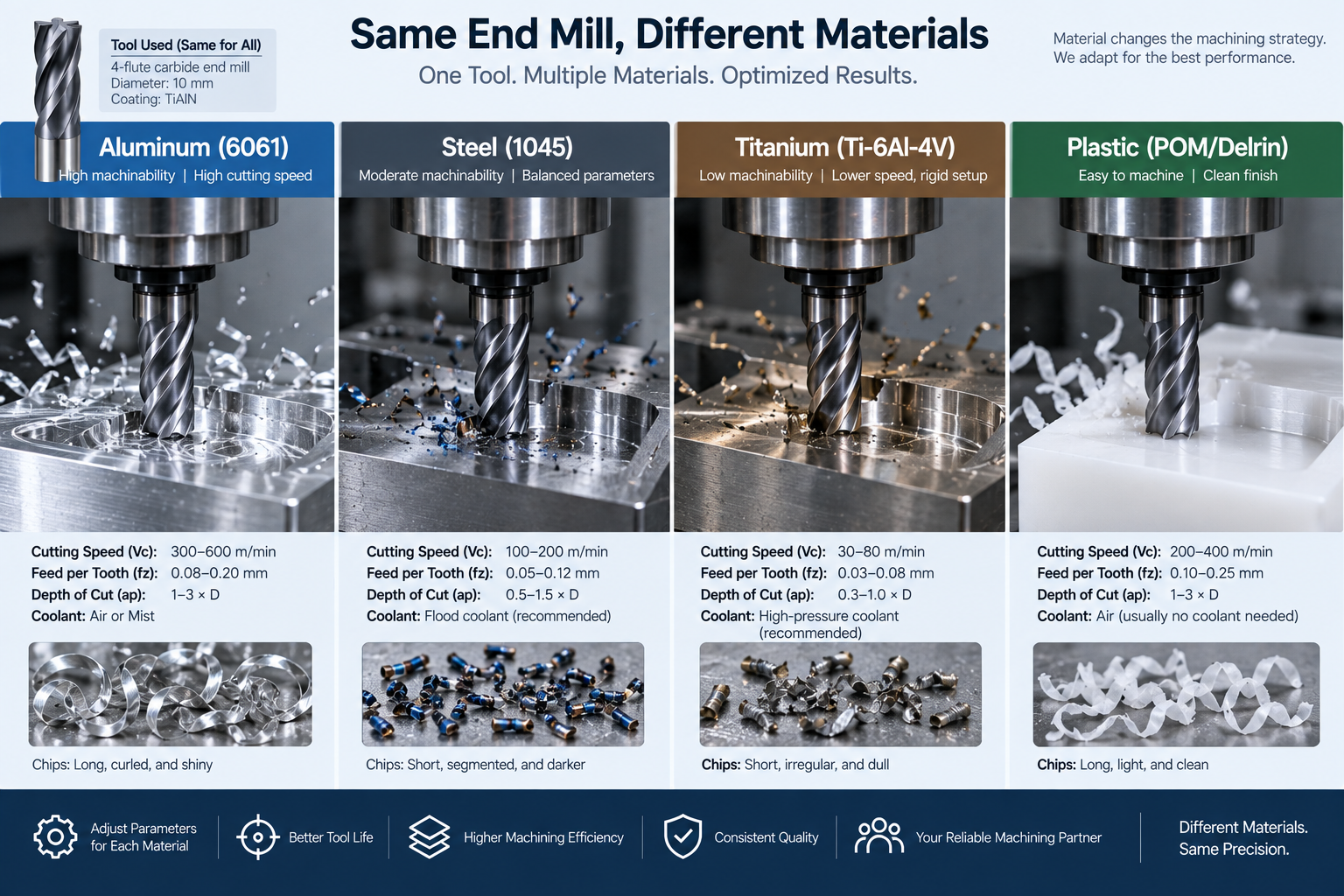
¿Qué herramientas de fresado funcionan mejor para diferentes materiales??
| Pieza de trabajo | Enfoque inicial típico |
| Aluminio | Carburo afilado, gran espacio para chips, geometría pulida o no ferrosa |
| Acero dulce o aleado | Carburo con revestimiento adecuado al material. |
| Acero inoxidable | Geometría de carburo resistente, carga de chip controlada, revestimiento resistente al calor |
| Titanio | Carburo rígido, compromiso controlado, fuerte gestión del calor |
| Acero endurecido | Carburo especializado o CBN según dureza y aplicación. |
| Plástica | Bordes afilados y geometría que limita el calor y las rebabas. |
Cómo elegir una herramienta de fresado
| Característica u operación | Herramienta recomendada |
| Ranura plana o bolsillo | Fresa de extremo plano |
| 3contorno D | Fresa de punta esférica |
| Piso plano con esquina redondeada | nariz de toro / fresa de extremo de radio de esquina |
| cara plana grande | fresa frontal |
| Orificio estándar | taladro helicoidal |
| Agujero preciso | Taladrar y luego escariar |
| Hilo | Molino de hilo o grifo |
| Chaflán | molino de chaflán |
| Corte de cola de milano | Cortador de cola |
| chavetero | Cortador de teclado |
| perfil repetido | cortador de formularios |
Después de elegir el tipo de cortador, confirmar el diámetro del cortador, radio de esquina, longitud de la flauta, alcance de la herramienta, autorización del titular, y voladizo requerido. La forma correcta no es suficiente si el portador no puede acceder a la característica o la herramienta se vuelve demasiado flexible al alcance requerido..
Portaherramientas, Sin, y alcance de la herramienta
Una buena herramienta necesita un buen soporte..
- Los portapinzas generales brindan flexibilidad para muchos tamaños de herramientas.
- Los soportes hidráulicos y de ajuste por contracción pueden proporcionar una alta concentricidad y adaptarse a un bajo descentramiento., corte estable de alta velocidad.
- A altas velocidades del husillo, El equilibrio y la desviación del portaherramientas se vuelven cada vez más importantes para la vida útil de la herramienta., exactitud, y terminar.
- Mantenga el saliente corto para reducir la deflexión y la vibración..
Velocidades, Alimentos, y vida útil de la herramienta
Las velocidades y los avances dependen de la herramienta., material, máquina, revestimiento, y condiciones.
- Alimentación por diente, o carga de chip, asuntos. Alimentarlo demasiado ligeramente causa roce. Una carga excesiva de viruta sobrecarga el filo.
- Utilice los datos iniciales recomendados por el fabricante de la herramienta., luego ajuste para su máquina y configuración.
- La evacuación de refrigerante y virutas evita daños por calor.
- La dirección de corte afecta el compromiso, finalizar, y sensibilidad al contragolpe. Ver fresado ascendente versus fresado convencional.
- Controle el desgaste y reemplace las herramientas antes de que se rompan.
Preguntas frecuentes
¿Cuál es la mejor herramienta para un bolsillo de fondo plano??
Una fresa de extremo plano o cuadrado.
¿Cuál es la diferencia entre una fresa de punta esférica y una fresa de extremo plano??
Una punta esférica corta contornos curvos en 3D. Una fresa de extremo plano corta ranuras cuadradas y suelos planos.
¿Puede una fresadora CNC cortar hilos??
Sí. Las fresadoras CNC pueden producir roscas utilizando una fresadora de roscas., y las roscas internas también se pueden cortar con grifos cuando sea necesario. El fresado de roscas utiliza un cortador dedicado que sigue una trayectoria helicoidal.
¿Cuál es la diferencia entre herramientas de fresado indexables y de carburo sólido??
Las herramientas de carburo sólido son precisas pero se reemplazan enteras cuando se desgastan.. Las herramientas indexables utilizan inserciones reemplazables y se adaptan a cortes más grandes o más pesados..
¿Por qué se rompen las fresas??
Las causas comunes son el agotamiento., feeds incorrectos, cortes profundos, mala evacuación de virutas, recorte de viruta, y una herramienta frágil para el trabajo.
¿Cómo reduzco la vibración en el fresado??
Utilice una configuración rígida, acortar el voladizo, ajustar la velocidad y el avance, comprobar el descentramiento, reducir el compromiso radial, o cambiar la velocidad del husillo para alejarse de una condición inestable.
¿Qué es el alimento por diente??
Es la carga de viruta eliminada por cada filo por revolución.. Debe coincidir con la herramienta y el material..
Obtenga orientación sobre mecanizado CNC
Envía tu modelo 3D, 2dibujo, material, cantidad, tolerancias, y requisitos de acabado superficial. Nuestros ingenieros seleccionarán la estrategia de mecanizado., tipo de cortador, estampación, y enfoque de inspección basado en la pieza.
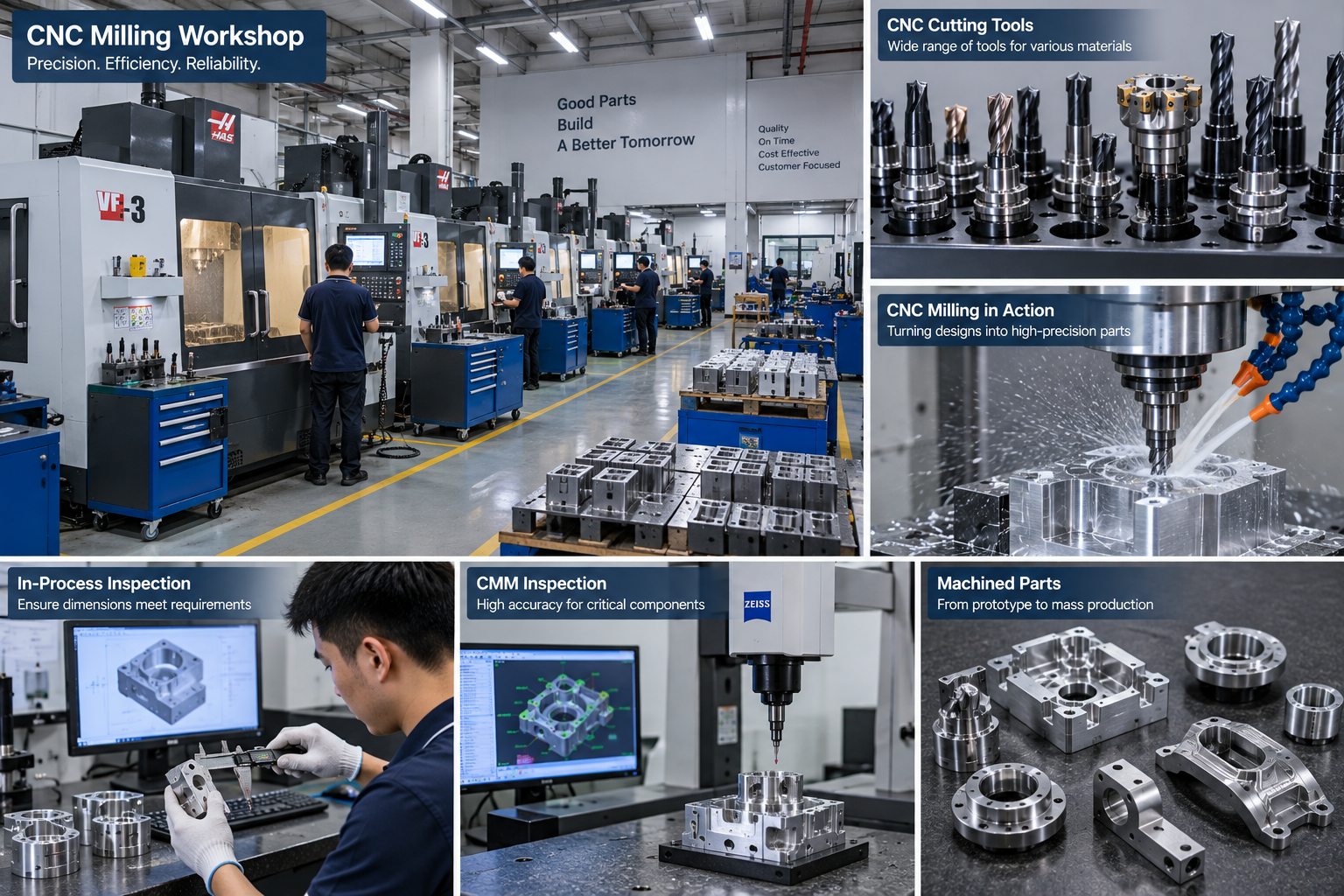
Contáctenos para una cotización


