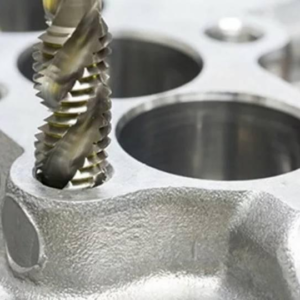



La prueba de dureza proporciona una rápida, confiable, forma rentable y rentable de evaluar la resistencia de un material a las indentaciones, rascarse, y deformación de la superficie. Los fabricantes utilizan pruebas de dureza durante todo el ciclo de producción, desde la inspección del material entrante y la verificación del tratamiento térmico hasta el control de calidad final..
En esta guía, Exploraremos todo lo que necesita saber sobre las pruebas de dureza de metales., incluyendo métodos de prueba comunes, estándares internacionales, procedimientos de prueba, aplicaciones industriales, y mejores prácticas para lograr resultados precisos.
¿Qué es la dureza del metal??
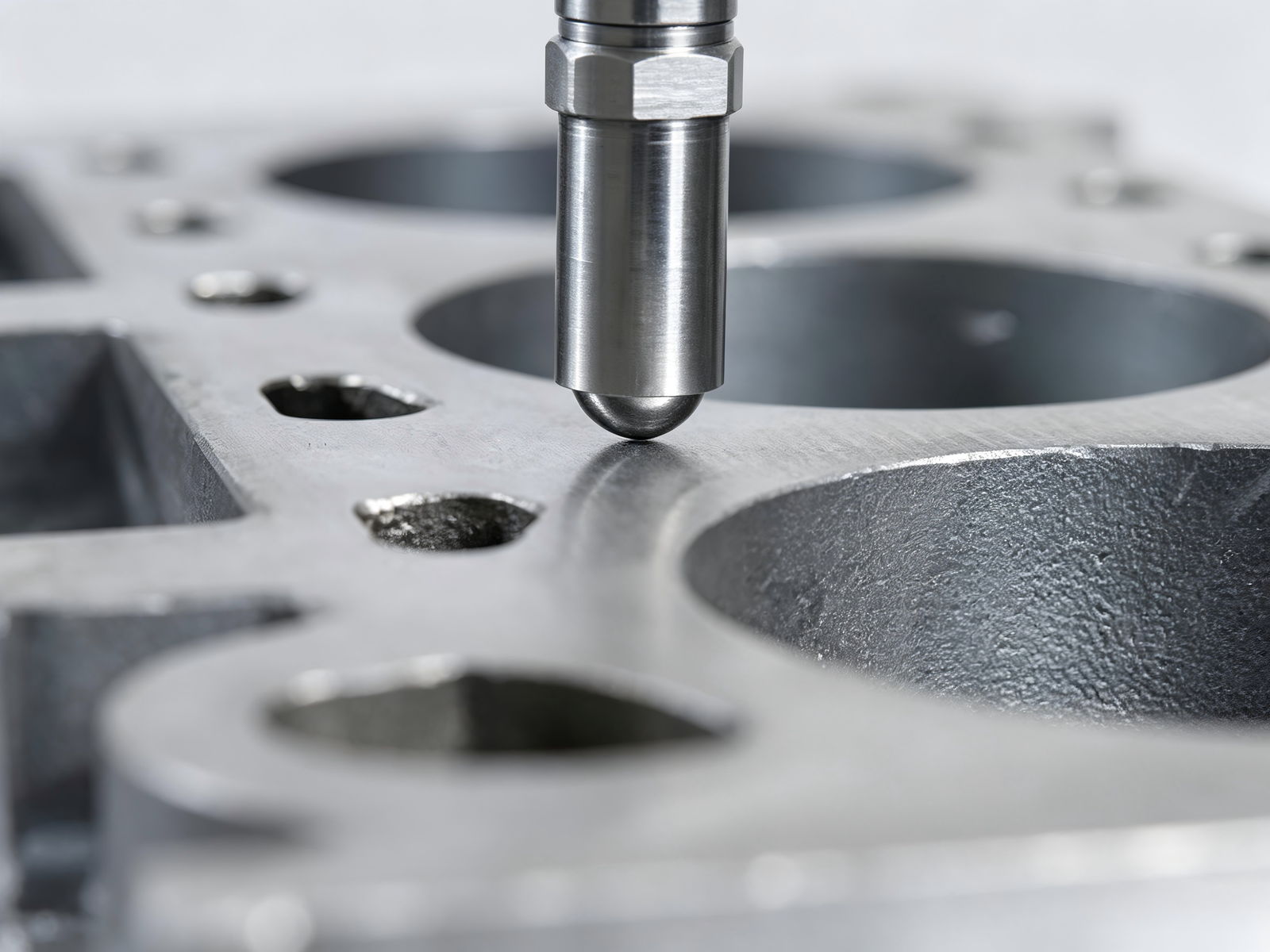
La dureza del metal se refiere a la capacidad de un material para resistir la deformación permanente cuando se somete a una fuerza externa..
En términos prácticos, La dureza mide qué tan resistente es un metal a:
- Sangría
- Rascarse
- Abrasión
- Tener puesto
- Deformación de la superficie
Cuanto más duro es un material, más resistente será a los daños mecánicos durante el funcionamiento.
Por qué es importante la dureza
La dureza influye directamente:
- Resistencia al desgaste
- Vida útil
- Capacidad de carga
- Rendimiento de fatiga
- maquinabilidad
- Resistencia a la corrosión (en algunas aplicaciones)
Por ejemplo, Un engranaje de acero endurecido utilizado en un sistema de transmisión debe mantener suficiente dureza para resistir el desgaste durante millones de ciclos operativos.. Similarmente, Los sujetadores aeroespaciales requieren niveles de dureza cuidadosamente controlados para garantizar la integridad estructural..
Dureza vs Fuerza vs Dureza
Estos términos suelen confundirse, pero representan diferentes propiedades materiales.
| Propiedad | Definición |
| Dureza | Resistencia a las indentaciones y deformaciones de la superficie. |
| Fortaleza | Capacidad para soportar la tensión aplicada sin fallar. |
| Tenacidad | Capacidad de absorber energía antes de fracturarse. |
Un material puede ser extremadamente duro pero quebradizo.. En cambio, Un material puede ser muy resistente y al mismo tiempo tener una dureza relativamente baja..
Comprender estas diferencias es fundamental a la hora de seleccionar materiales para aplicaciones de ingeniería..
Por qué las pruebas de dureza son esenciales en la fabricación
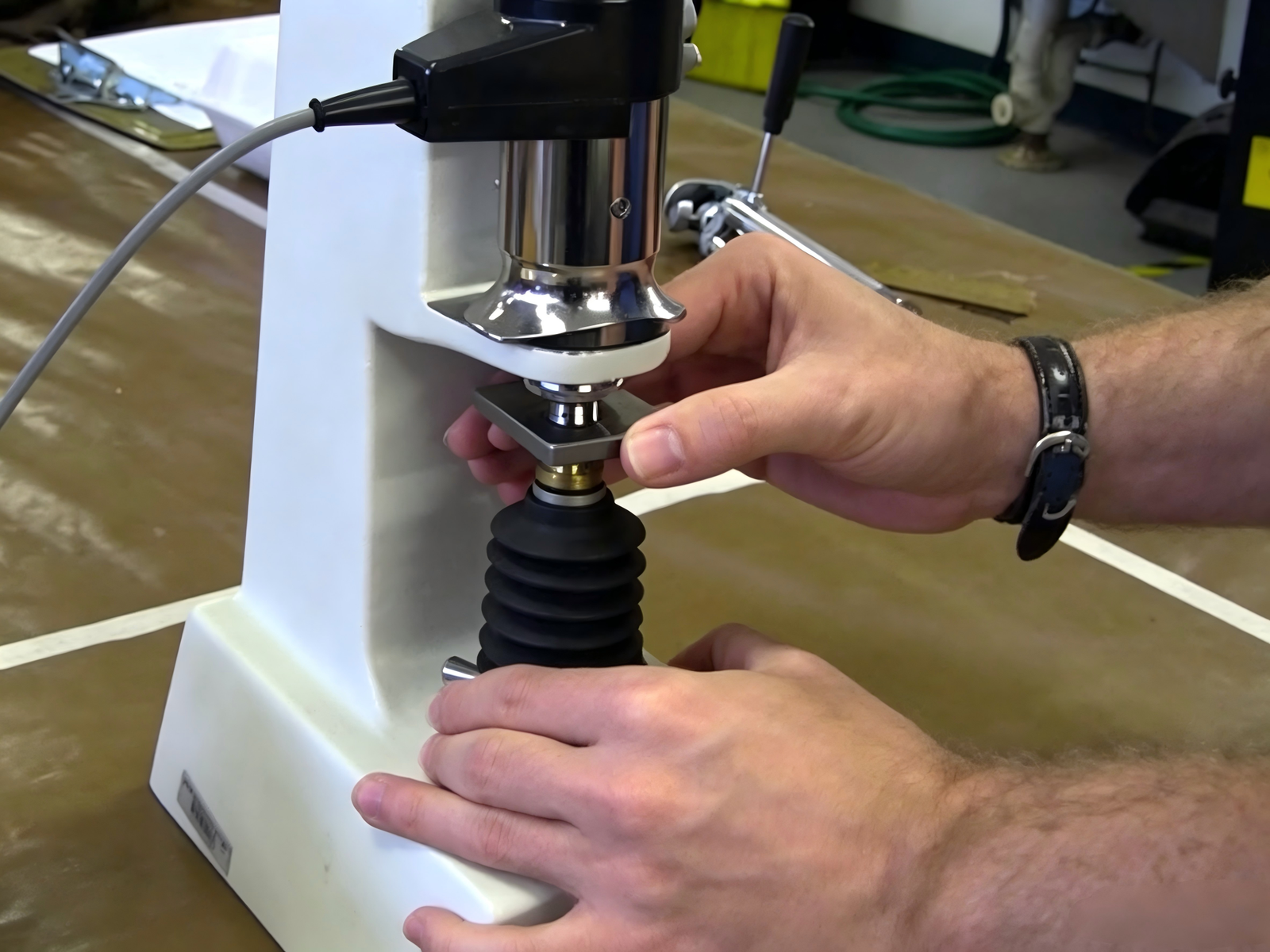
Control de calidad
Los fabricantes utilizan pruebas de dureza para verificar que las materias primas cumplan con las especificaciones antes de que comience la producción..
Las pruebas ayudan a identificar:
- Grados de material incorrectos
- Tratamiento térmico inadecuado
- Inconsistencias de proveedores
- Defectos materiales
Verificación del tratamiento térmico
La prueba de dureza es uno de los métodos más eficaces para confirmar el éxito de los procesos de tratamiento térmico., incluido:
- Recocido
- Normalizando
- Temple
- Templado
- Endurecimiento
- nitruración
Por ejemplo, si un componente de acero endurecido no alcanza su rango de dureza objetivo, el proceso de tratamiento térmico puede necesitar ajustes.
Evaluación del desempeño del producto
La dureza afecta directamente:
- Resistencia al desgaste
- Resistencia a la abrasión
- vida de fatiga
- Durabilidad estructural
Los fabricantes utilizan valores de dureza para predecir cómo funcionarán los componentes en condiciones operativas del mundo real..
Cumplimiento regulatorio
Industrias como aeroespacial, automotor, defensa, energía, y la fabricación médica a menudo requieren pruebas de dureza para cumplir con estrictos estándares de calidad..
Métodos comunes de prueba de dureza
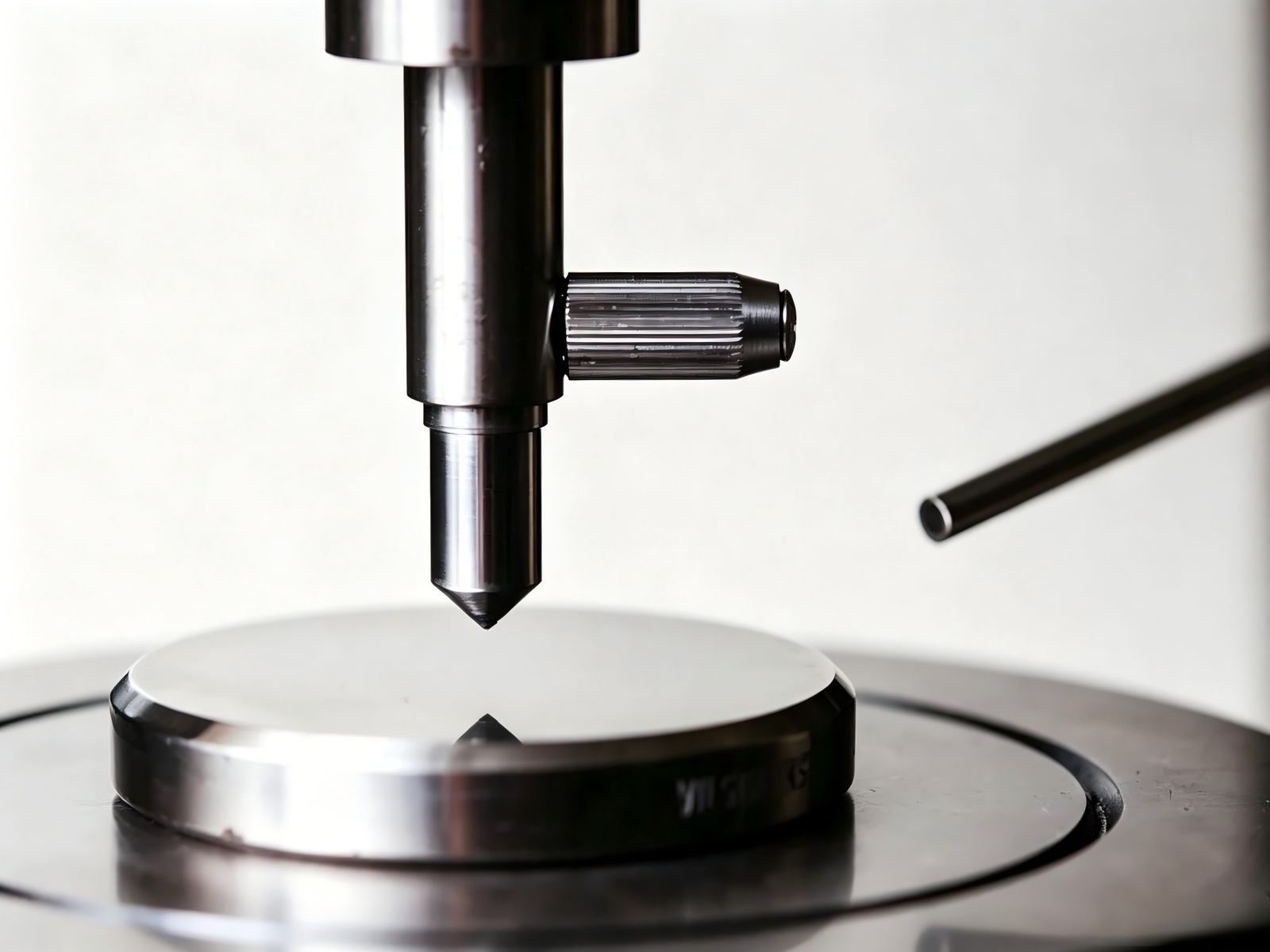
Se utilizan varios métodos de prueba de dureza en todo el mundo.. Cada uno tiene ventajas según el tipo de material., espesor, y requisitos de aplicación.
Prueba de dureza Rockwell
La prueba de Rockwell es el método de prueba de dureza más utilizado en la fabricación..
Cómo funciona
Se presiona un cono de diamante o una bola de acero endurecido en el material bajo una carga específica..
La máquina mide la profundidad de penetración y calcula automáticamente el valor de dureza..
Las escalas comunes incluyen:
- CDH (Rockwell C.)
- HRB (Rockwell B.)
- HRA (Rockwell A.)
Ventajas
- Pruebas rápidas
- Lectura directa de dureza
- Influencia mínima del operador
- Adecuado para entornos de producción
Aplicaciones
- Acero endurecido
- Acero para herramientas
- Acero inoxidable
- Componentes tratados térmicamente
Prueba de dureza Brinell
El método Brinell utiliza una bola de carburo de tungsteno para crear una hendidura en la superficie del material..
Ventajas
- Excelente para componentes grandes
- Adecuado para piezas fundidas y forjadas
- Efectivo para materiales de grano grueso
Limitaciones
- Tamaño de sangría más grande
- No apto para materiales finos.
Aplicaciones
- Hierro fundido
- Fundición de aluminio
- Acero estructural
- Componentes de maquinaria pesada
Prueba de dureza Vickers
La prueba Vickers utiliza un penetrador piramidal de diamante..
Ventajas
- Extremadamente preciso
- Amplio rango de pruebas
- Adecuado tanto para materiales duros como blandos.
Aplicaciones
- Componentes aeroespaciales
- Implantes medicos
- Piezas de ingeniería de precisión
- Laboratorios de investigación
Por su versatilidad, El método Vickers a menudo se considera la técnica de prueba de dureza más precisa..
Prueba de dureza Knoop
El método Knoop está diseñado específicamente para pruebas de microdureza..
Mejores aplicaciones
- Revestimiento delgado
- Componentes electrónicos
- Materiales cerámicos
- Tratamientos superficiales
Su penetrador de diamante alargado minimiza el daño material y proporciona mediciones de alta precisión..
Prueba de dureza Leeb
La prueba de dureza Leeb es un método de prueba portátil.
Cómo funciona
Un cuerpo de impacto accionado por un resorte golpea la superficie de prueba..
La velocidad de rebote se mide y se convierte en un valor de dureza..
Ventajas
- Portátil
- Rápido
- Ideal para inspecciones de campo.
Usos comunes
- Maquinaria grande
- Tuberías
- Recipientes a presión
- Equipo pesado
Comparación de métodos de prueba de dureza
| Método | Exactitud | Velocidad | Mejor para |
| rockwell | Alto | muy rapido | Pruebas de producción |
| Brinell | Alto | Moderado | Piezas fundidas & Forjas |
| Vickers | muy alto | Moderado | Componentes de precisión |
| Botón | muy alto | Lento | Materiales finos |
| Sotavento | Moderado | muy rapido | Pruebas de campo |
Estándares de prueba de dureza
Seguir estándares reconocidos internacionalmente garantiza consistencia y confiabilidad.
Normas ASTM
ASTM E18
Prueba de dureza Rockwell.
ASTM E10
Prueba de dureza Brinell.
ASTM E92
Prueba de dureza Vickers.
ASTM E384
Procedimientos de prueba de microdureza..
Normas ISO
YO ASI 6508
Pruebas de Rockwell.
YO ASI 6506
Prueba Brinell.
YO ASI 6507
pruebas de Vickers.
YO ASI 4545
Prueba de botones.
El cumplimiento de estos estándares ayuda a los fabricantes a cumplir con los requisitos regulatorios y de los clientes en todo el mundo..
Factores que afectan la precisión de la prueba de dureza
Varios factores pueden influir en los resultados..
Acabado de la superficie
Las superficies rugosas pueden producir lecturas inexactas.
El esmerilado y pulido adecuados mejoran la confiabilidad de la medición.
Espesor de la muestra
Los materiales delgados pueden deformarse excesivamente durante las pruebas..
Asegúrese siempre de que el espesor sea adecuado en relación con la profundidad de la sangría..
Selección de carga
Seleccionar la carga de prueba incorrecta puede distorsionar los resultados.
Las cargas de prueba deben cumplir con las normas ASTM o ISO aplicables..
Espaciado de sangría
Las muescas colocadas demasiado juntas pueden interferir entre sí..
El espaciado adecuado garantiza lecturas precisas.
Calibración de equipos
La calibración regular es esencial para mantener la precisión de las pruebas.
Procedimiento de prueba de dureza paso a paso
Paso 1: Seleccione el método de prueba apropiado
Elige Rockwell, Brinell, Vickers, Botón, o Leeb según el material y la aplicación.
Paso 2: preparar la muestra
Asegúrese de que la superficie esté:
- Limpio
- Departamento
- Libre de escala
- Libre de contaminación
Paso 3: Aplicar la carga de prueba
Aplique la fuerza requerida utilizando una máquina de prueba de dureza calibrada..
Paso 4: Medir la sangría
Dependiendo del método, medida:
- Profundidad de sangría
- Diámetro de sangría
- Longitud diagonal de sangría
Paso 5: Calcular la dureza
Convierta las mediciones en valores de dureza utilizando el estándar aplicable..
Paso 6: Resultados récord
Documento:
- Identificación de materiales
- Método de prueba
- Carga aplicada
- Valor de dureza
- Ubicación de la prueba
Pruebas de dureza para diferentes materiales metálicos
Acero carbono
Comúnmente probado utilizando los métodos Rockwell y Brinell..
Los rangos de dureza típicos varían significativamente según el tratamiento térmico..
Acero inoxidable
Los métodos de Rockwell y Vickers se utilizan con frecuencia..
Aleaciones de aluminio
Generalmente se prefieren las pruebas de Brinell y Vickers..
Aleaciones de titanio
Las pruebas Vickers proporcionan resultados muy precisos.
Hierro fundido
Las pruebas Brinell siguen siendo el estándar de la industria.
Pruebas de dureza en mecanizado CNC y fabricación de precisión
Las pruebas de dureza desempeñan un papel fundamental en la fabricación de precisión.
Antes de que comience el mecanizado, Los fabricantes verifican las propiedades del material para garantizar el cumplimiento de las especificaciones del cliente..
Después del tratamiento térmico, Las pruebas de dureza confirman que los componentes han alcanzado las características mecánicas requeridas..
Empresas que proporcionan mecanizado CNC personalizado Los servicios a menudo integran pruebas de dureza en sus sistemas de gestión de calidad para garantizar la precisión dimensional., resistencia al desgaste, y confiabilidad del producto a largo plazo.
Para industrias como la aeroespacial, médico, automotor, y automatización industrial, La verificación de la dureza es a menudo un requisito de inspección obligatorio..
Desafíos comunes de las pruebas de dureza
Lecturas inconsistentes
Causado por:
- Mala preparación de la superficie
- error del operador
- Problemas de calibración del equipo
Superficies curvas
Muchas pruebas de dureza están diseñadas para superficies planas..
Es posible que se requieran accesorios especiales o factores de corrección..
Materiales finos
Seleccionar una carga inapropiada puede causar distorsión.
Los métodos de prueba de microdureza suelen proporcionar mejores resultados..
Tendencias futuras en pruebas de dureza
El futuro de las pruebas de dureza está cada vez más automatizado.
Las tecnologías emergentes incluyen:
- Mapeo de dureza automatizado
- Análisis de imágenes impulsado por IA
- Medición de sangría digital
- Industria 4.0 integración
- Sistemas inteligentes de control de calidad
Estas tecnologías mejoran la precisión, reducir la dependencia del operador, y aumentar la eficiencia de la inspección.
Preguntas frecuentes
1.¿Cuál es la prueba de dureza más común??
La prueba de dureza Rockwell es la más utilizada por su rapidez y sencillez..
2.¿Qué prueba de dureza es la más precisa??
La prueba de dureza Vickers generalmente se considera la más precisa y versátil..
3.¿Puede la dureza indicar la resistencia del material??
En muchos metales, La dureza y la resistencia a la tracción están estrechamente relacionadas., aunque no son propiedades idénticas.
4.¿Con qué frecuencia se deben calibrar los durómetros??
Los intervalos de calibración deben seguir las recomendaciones del fabricante y las normas ASTM o ISO aplicables..
5.¿Qué prueba de dureza es mejor para materiales delgados??
Los métodos de Knoop y Vickers suelen preferirse para secciones y revestimientos delgados..
Conclusión
Seleccionando el método de prueba correcto, siguiendo las normas ASTM e ISO, e implementar procedimientos de prueba adecuados, Los fabricantes pueden mejorar la calidad del producto., verificar la efectividad del tratamiento térmico, reducir fallas, y garantizar el cumplimiento de los requisitos del cliente.
Para empresas dedicadas al mecanizado de precisión., fabricación, y fabricación avanzada, La prueba de dureza no es simplemente un proceso de inspección, es un elemento clave para brindar confiabilidad., Productos de alto rendimiento que satisfacen las demandas de los mercados industriales actuales..