



El rendimiento mecánico de un componente impreso en 3D depende de la interacción entre propiedades de los materiales, Parte de geometría, espesor de la pared, relleno, orientación de impresión, adhesión de capas, Parámetros de proceso, y cargas de aplicaciones. Para piezas FDM en particular, La orientación de la construcción y la unión entre capas pueden tener un efecto significativo en las propiedades mecánicas..
Entonces, ¿Cómo se pueden fortalecer las piezas impresas en 3D sin aumentar innecesariamente el consumo de material?, peso, costo, y tiempo de producción?
Esta guía explica los factores más importantes que los fabricantes y los ingenieros de productos deben considerar al diseñar y producir piezas impresas en 3D más resistentes..
¿Qué determina la resistencia de una pieza impresa en 3D??
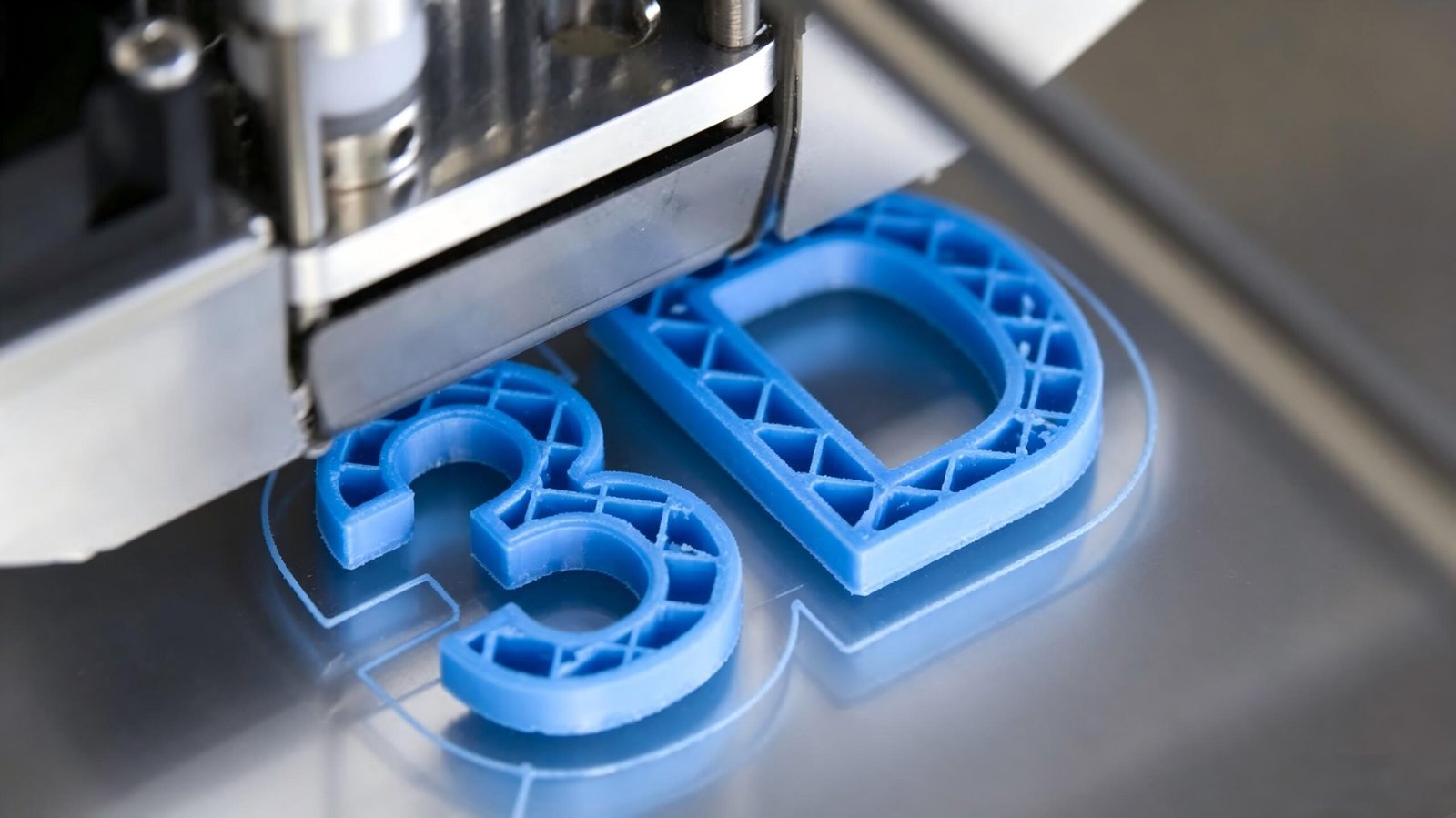
No existe una configuración única que determine si un componente impreso en 3D será fuerte o débil..
Una mejor manera de pensar en la fuerza de la pieza es:
Material + Geometría + Orientación + Paredes + Relleno + Parámetros del proceso + Control de calidad
Comprender cómo interactúan estos factores es esencial a la hora de producir piezas funcionales en lugar de modelos decorativos..
Selección de materiales: Comience con el material de impresión 3D adecuado
La selección del material debería ser una de las primeras decisiones al diseñar un componente funcional impreso en 3D..
Diferentes materiales proporcionan diferentes combinaciones de:
Resistencia a la tracción
Rigidez
Resistencia al impacto
Flexibilidad
Resistencia al calor
Resistencia química
Resistencia al desgaste
Resistencia a la fatiga
Estabilidad dimensional
Por ejemplo, El nailon se selecciona comúnmente para componentes que requieren dureza., resistencia al desgaste, y carga mecánica repetida, mientras que los polímeros reforzados con fibra de carbono a menudo se seleccionan cuando es importante una alta relación rigidez-peso..
Estampado: Bueno para prototipos y piezas de uso general
El PLA es uno de los materiales más fáciles de imprimir y se utiliza ampliamente para:
Modelos conceptuales
Prototipos visuales
Accesorios
Componentes de baja tensión
Piezas de demostración
Entre sus ventajas destaca una buena rigidez., facilidad de impresión, y estabilidad dimensional relativamente buena.
Sin embargo, El PLA no siempre es la mejor opción para piezas expuestas a altas temperaturas, impacto, o carga mecánica continua.
PETG: Resistente y versátil
PETG proporciona una combinación útil de:
Tenacidad
Flexibilidad moderada
Resistencia química
Facilidad de impresión
Puede ser adecuado para prototipos funcionales., carcasas, soportes, cubiertas protectoras, y muchos componentes industriales generales.
abdominales: Bueno para la resistencia al calor y al impacto
El ABS se usa comúnmente cuando un componente necesita un mejor rendimiento de impacto y temperatura que el PLA..
Sin embargo, El ABS es más sensible a la contracción térmica y a la deformación., por lo que el gabinete de la impresora y la gestión térmica pueden volverse importantes.
Nylon: Dureza y durabilidad mecánica
El nailon es particularmente útil para piezas que experimentan:
Impacto repetido
Fricción
Estrés mecánico
Tener puesto
Flexionar
Se considera comúnmente para engranajes., bisagras, soportes, componentes móviles, y otras partes funcionales.
Una consideración importante es la humedad.. El nailon es higroscópico., por lo que el control de la humedad es esencial para una calidad de impresión y un rendimiento mecánico constantes.
Materiales reforzados con fibra de carbono
Los materiales rellenos de fibra de carbono pueden aumentar significativamente la rigidez y reducir la deformación.
El punto importante es que El material más fuerte no es necesariamente el mejor material.. La elección correcta depende del entorno operativo real y de los requisitos mecánicos..
Cómo aumentar la resistencia de las piezas impresas en 3D mediante el diseño
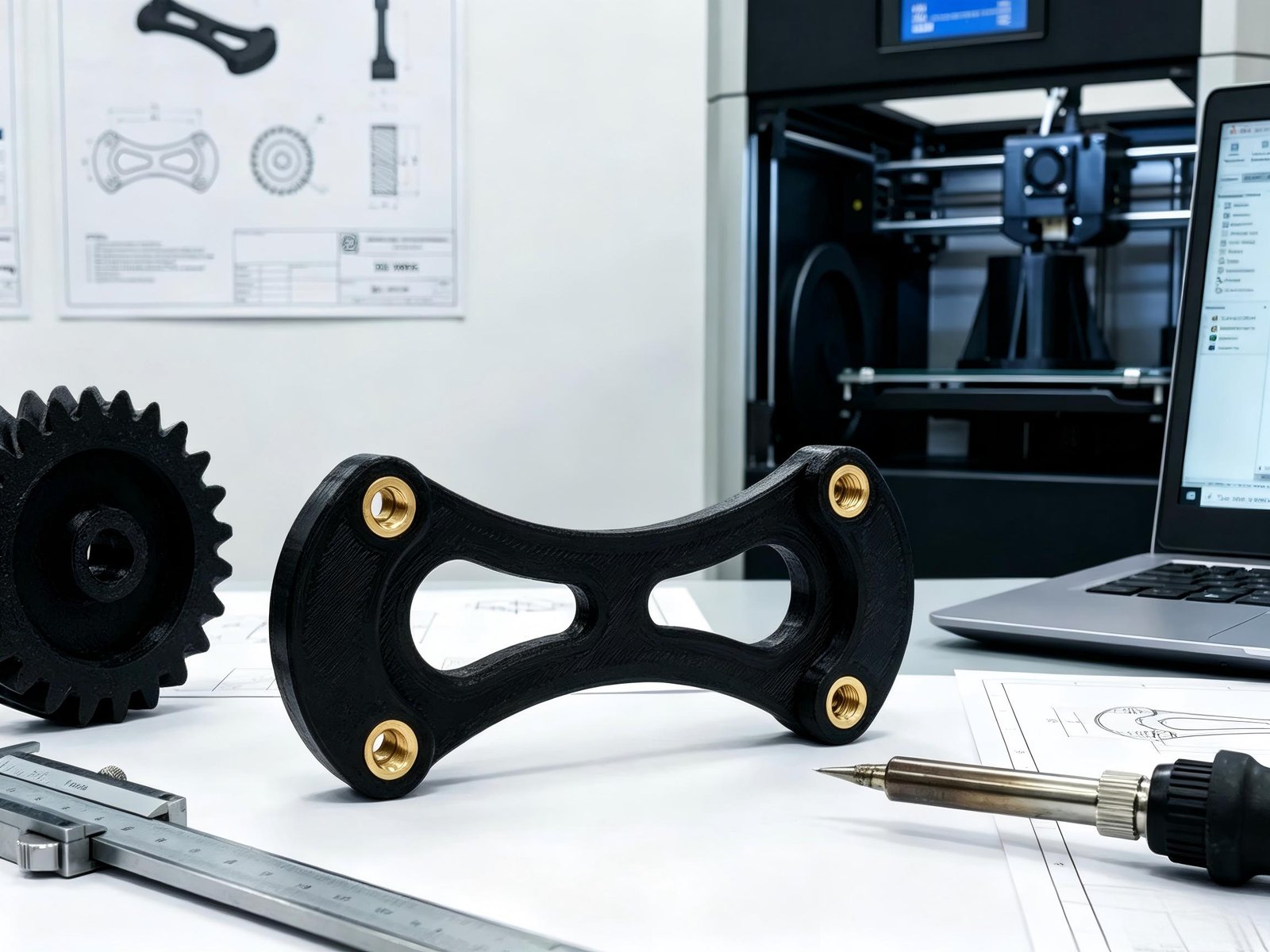
La selección de materiales es sólo una parte de la solución.
Una pieza bien diseñada a menudo puede lograr un mejor rendimiento sin simplemente aumentar la cantidad de material utilizado..
Aumentar el espesor de la pared
Las paredes externas de un componente FDM pueden tener una influencia importante en su rendimiento mecánico..
El aumento del espesor de la pared puede mejorar la resistencia a:
Doblar
Agrietamiento
Impacto
Deformación local
Carga de tracción
Para muchas partes, aumentar el número de perímetros puede ser más eficiente que simplemente aumentar el relleno.
Esta es la razón por la que un componente impreso en 3D resistente no debe diseñarse únicamente en función del porcentaje de relleno..
Aumentar el número de perímetros
Los perímetros son las líneas de extrusión exteriores que forman la carcasa del componente..
El aumento del recuento del perímetro puede fortalecer:
Corchetes
Puntos de montaje
Alojamiento
Muros estructurales
Bordes
Agujeros
El número óptimo depende de la geometría y la carga., pero el principio de ingeniería es sencillo:
Utilice el armazón estratégicamente para transportar cargas externas., en lugar de llenar todo el volumen interno innecesariamente.
Esta es también la razón 100% el relleno no debe considerarse automáticamente la solución más fuerte. En muchos diseños FDM, Las paredes exteriores tienen una gran influencia en la flexión., de tensión, y rendimiento torsional.
Agregue filetes para reducir la concentración de estrés
Las esquinas internas afiladas pueden crear concentraciones de tensión..
Cuando un componente está sujeto a flexión o carga cíclica., Estas áreas pueden convertirse en puntos de inicio de grietas..
Para componentes mecánicos, Esto suele ser una mejora de diseño más efectiva que simplemente aumentar el relleno..
Reforzar las áreas de alto estrés
No todas las regiones de una pieza necesitan la misma cantidad de material.
Más material donde se produce la carga. + menos material donde no.
Ese principio es especialmente valioso cuando el objetivo es reducir el peso y el coste de fabricación..
¿Un mayor relleno hace que una pieza impresa en 3D sea más resistente??
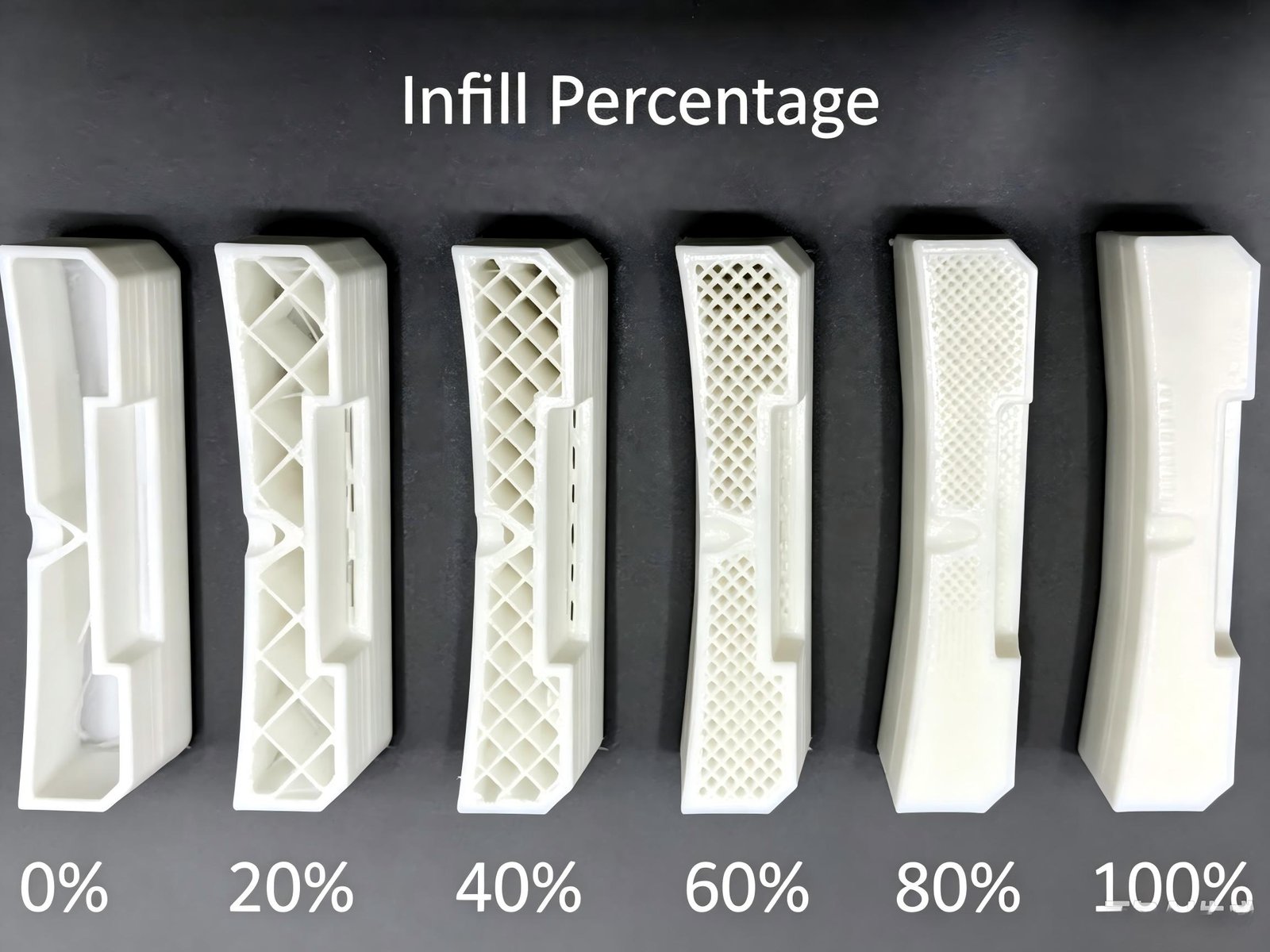
Generalmente, aumentar el relleno puede aumentar el soporte estructural y la resistencia a la compresión, pero Un relleno más alto no produce automáticamente una resistencia proporcionalmente mayor..
Por ejemplo, aumentar un componente de 20% a 40% El relleno puede producir una mejora útil en el rendimiento., mientras lo aumenta de 70% a 90% puede proporcionar mucho menos beneficio adicional en relación con el material adicional y el tiempo de impresión.
Las orientaciones prácticas actuales también enfatizan que más relleno no siempre significa una parte más fuerte., especialmente cuando el espesor de la pared y las trayectorias de carga no se han optimizado.
¿Qué densidad de relleno debería utilizar para piezas resistentes impresas en 3D??
No existe un porcentaje de relleno universal.
Como marco de partida:
| Solicitud | Rango de relleno inicial | Prioridad típica |
| Modelos decorativos | 0–15% | Rapidez y ahorro de material |
| Prototipos visuales | 10–20% | Apariencia y velocidad |
| Prototipos generales | 15–30% | Rendimiento equilibrado |
| Partes funcionales | 20–40% | Fuerza y eficiencia |
| Componentes de servicio pesado | 40–60%+ | Rendimiento estructural |
| Componentes altamente comprimidos | 60–100% | Resistencia a la compresión |
Estos son puntos de partida en lugar de especificaciones de ingeniería garantizadas..
Para un componente crítico, La densidad correcta debe establecerse mediante análisis de diseño., prueba de prototipo, o validación específica de la aplicación.
Elegir el patrón de relleno adecuado
La densidad es sólo una parte de la ecuación..
La geometría interna también puede influir en cómo se distribuyen las cargas en todo el componente..
giroide
Gyroid proporciona una estructura tridimensional continua y a menudo se considera para componentes funcionales que requieren soporte multidireccional..
Cúbico
Cubic crea una red tridimensional y puede ser útil para componentes mecánicos sujetos a cargas complejas..
Red
La cuadrícula es relativamente simple y puede proporcionar un equilibrio efectivo entre resistencia y eficiencia de impresión..
Rectilíneo
Rectilíneo utiliza trayectorias lineales relativamente simples y puede resultar útil cuando la velocidad de impresión y la eficiencia del material son importantes..
Concéntrico
Concéntrico sigue la forma de las paredes externas y puede ser útil para geometrías específicas y aplicaciones flexibles..
El principio importante es:
No seleccione un patrón de relleno simplemente porque se comercializa como "fuerte". Selecciónelo según el caso de carga real..
Las investigaciones también han demostrado que tanto el patrón de relleno como la orientación de la construcción influyen en las propiedades mecánicas de las piezas FDM., Reforzando la importancia de evaluar toda la estrategia de impresión en lugar de un solo parámetro de corte..
Espesor de pared vs.. Relleno: ¿Cuál debería aumentar primero??
Esta es una de las preguntas más comunes al intentar reforzar una pieza FDM.
En muchos casos, aumentar el espesor de la pared o el recuento del perímetro es un mejor primer paso que aumentar drásticamente el relleno.
Considere un soporte que falla porque la pared externa se agrieta alrededor de un orificio de montaje..
Aumentar el relleno de 20% a 60% puede agregar una cantidad significativa de material dentro del soporte sin abordar adecuadamente la ubicación de la grieta.
La orientación de la impresión tiene un efecto importante sobre la resistencia
Las piezas FDM son inherentemente anisotrópicas porque se construyen capa por capa..
Esto significa que el comportamiento mecánico puede diferir dependiendo de la dirección de la carga aplicada en relación con las capas impresas..
Si la carga se aplica en una dirección que tiende a separar capas, el componente puede ser significativamente más débil que si la carga se lleva principalmente dentro de las rutas de filamento depositadas.
Por lo tanto, La orientación de la impresión debe considerarse durante el diseño CAD, no después de finalizar el diseño..
Un proceso de diseño práctico es:
Carga esperada → Dirección de carga → Orientación de la pieza → Dirección de capa → Geometría estructural
Por ejemplo, si se espera que un soporte se doble, la orientación debe seleccionarse de manera que la carga crítica sea soportada de la manera más efectiva posible por la estructura impresa.
La orientación de la construcción es un factor reconocido en el rendimiento mecánico del FDM, junto con el patrón de relleno y los parámetros del proceso.
Cómo la temperatura de impresión afecta la resistencia de la pieza
La temperatura afecta directamente el flujo de material y la unión entre capas en la impresión termoplástica.
Si la temperatura de la boquilla es demasiado baja:
Es posible que el material no fluya correctamente
La unión de capas puede ser deficiente
Puede producirse una subextrusión
Pueden aparecer huecos
Si la temperatura es demasiado alta:
Puede producirse una sobreextrusión
La geometría puede volverse menos precisa
El encordado puede aumentar
La degradación del material puede convertirse en una preocupación
Por lo tanto, La temperatura correcta debe establecerse según el material específico., impresora, boquilla, y condiciones del proceso.
Cómo la velocidad de impresión afecta la resistencia
La alta velocidad de impresión puede mejorar la productividad, pero una velocidad excesiva puede comprometer la consistencia de la deposición y la unión de las capas..
Para partes más fuertes, considerar:
Reducir la velocidad en zonas críticas
Mantener un flujo de fusión adecuado
Garantizar una unión térmica suficiente
Adaptación de la velocidad al diámetro de la boquilla y al material
Un proceso de producción debe equilibrar:
Fortaleza + Tiempo de ciclo + Precisión dimensional + Costo
El objetivo no es necesariamente la impresión más lenta.
es el Proceso más rápido que cumple consistentemente con las especificaciones requeridas..
Enfriamiento y adhesión de capas
El enfriamiento tiene un papel particularmente importante en la impresión termoplástica..
Demasiado enfriamiento puede reducir la unión entre capas en algunos materiales, mientras que una refrigeración insuficiente puede crear:
Deformación
pobre puente
Calentamiento excesivo
Problemas dimensionales
Por lo tanto, los perfiles de refrigeración específicos del material son importantes.
Por ejemplo, Materiales como ABS y nailon generalmente requieren estrategias de gestión térmica diferentes a las del PLA..
Problemas comunes que debilitan las piezas impresas en 3D
Pandeo
La deformación ocurre cuando la contracción térmica hace que partes de la pieza se levanten o deformen..
Las posibles soluciones incluyen:
Placa de construcción calentada
Recinto
Mejor adherencia a la cama
Orientación de impresión adecuada
Control térmico específico del material
Adhesión al lecho débil
Si la primera capa no se adhiere correctamente, toda la parte puede verse comprometida.
Subextrusión
La subextrusión significa que no se deposita material suficiente.
El resultado puede ser:
vacíos
Paredes débiles
Mala unión de capas
Relleno incompleto
Mala unión de capas
Si las capas adyacentes no se unen correctamente, el componente puede dividirse a lo largo de líneas de capa.
Cuando la falla sigue la interfaz de capa., simplemente aumentar el relleno puede no resolver el problema. El proceso en sí necesita ser corregido..
Cómo fortalecer las piezas impresas en 3D sin aumentar el costo
Una parte fuerte no necesariamente tiene que contener más material..
En cambio, optimizar el material donde proporciona el mayor beneficio estructural.
1. Optimizar la orientación de la impresión
Cambiar la orientación puede mejorar la resistencia sin aumentar el consumo de material.
2. Aumentar perímetros
Agregar uno o dos perímetros adicionales a veces puede proporcionar un refuerzo más útil que un gran aumento en el relleno..
3. Agregar costillas y filetes
Mejore la ruta de carga a través de la geometría en lugar de simplemente agregar volumen.
4. Utilice refuerzo local
Concentre el material alrededor de los orificios de montaje., esquinas, y zonas de carga.
5. Seleccione un material más adecuado
Un material más resistente o rígido puede proporcionar un mejor rendimiento que simplemente aumentar la cantidad de un material más débil..
6. Utilice relleno variable o adaptable
El relleno de alta densidad se puede concentrar en áreas críticas mientras que las áreas menos importantes siguen siendo livianas.
Este enfoque puede reducir:
Consumo de materiales
Peso
tiempo de impresión
Costo de producción
manteniendo el rendimiento requerido.
¿Qué proceso de impresión 3D es mejor para piezas funcionales resistentes??
FDM no es la única tecnología de fabricación aditiva disponible.
El mejor proceso depende de la combinación requerida de:
Fortaleza
Exactitud
Acabado superficial
Material
Volumen de producción
Tamaño de la pieza
Geometría
Costo
Impresión 3D FDM
FDM es atractivo debido a su:
Amplia selección de materiales termoplásticos
Costo relativamente bajo
Flujo de trabajo digital sencillo
Idoneidad para prototipos y componentes funcionales.
SLA / Impresión 3D de resina
SLA puede proporcionar excelente:
Acabado superficial
Finos detalles
Resolución dimensional
Sin embargo, Las propiedades mecánicas de la resina varían significativamente según la formulación y la aplicación..
SLSS
SLS es particularmente útil para piezas funcionales de polímeros con geometrías complejas..
Los materiales SLS a base de nailon pueden proporcionar resistencia, Componentes duraderos sin estructuras de soporte convencionales..
MJF
Multi Jet Fusion es otra opción para piezas de polímero funcionales. La guía de fabricación actual comúnmente posiciona al MJF a base de nailon como adecuado para aplicaciones funcionales exigentes donde se desean propiedades más uniformes..
Por lo tanto, si el rendimiento mecánico es crítico, la pregunta no debería ser simplemente:
“¿Qué relleno debo usar??"
debería ser:
“¿Qué material y proceso de fabricación aditiva se adaptan mejor al rendimiento requerido??"
3D Piezas impresas para creación de prototipos vs.. Aplicaciones de uso final
La estrategia de optimización cambia según el propósito de la pieza..
Prototipos rápidos
Principales prioridades:
Velocidad → Costo → Funcionalidad básica
Los parámetros de relleno bajo a medio y de impresión rápida pueden ser apropiados.
Prototipos funcionales
Principales prioridades:
Rendimiento mecánico → Precisión dimensional → Costo → Velocidad
El material, orientación, paredes, y el relleno necesita una optimización más cuidadosa.
Piezas de uso final
Principales prioridades:
Fiabilidad → Rendimiento mecánico → Repetibilidad → Resistencia ambiental
Para estas aplicaciones, La validación de ingeniería se vuelve mucho más importante..
Ejemplos de aplicaciones impresas en 3D funcionales del mundo real incluyen soportes para automóviles, componentes de drones, plantillas, accesorios, recintos electrónicos, bisagras, y componentes de repuesto de la máquina.
Preguntas frecuentes sobre piezas resistentes impresas en 3D
¿Cuál es el material más resistente para la impresión 3D??
No existe un único material más resistente para cada aplicación. Los polímeros reforzados con nailon y fibra de carbono se consideran frecuentemente para componentes funcionales exigentes., mientras que materiales como PETG y ABS pueden ser mejores opciones para combinaciones específicas de dureza, resistencia a la temperatura, costo, y capacidad de impresión.
¿Un mayor relleno fortalece la impresión 3D??
Generalmente, Un mayor relleno puede mejorar ciertos aspectos del rendimiento mecánico., pero la relación no es lineal. Espesor de la pared, orientación de impresión, material, y la adherencia de las capas puede ser igual o más importante dependiendo del caso de carga.
¿Cuál es la mejor densidad de relleno para piezas resistentes impresas en 3D??
No existe un valor universal.. Un punto de partida práctico para muchas partes funcionales es alrededor del 20-40%, pero los componentes exigentes pueden requerir sustancialmente más o pueden beneficiarse más de perímetros adicionales y una mejor geometría..
¿Es el espesor de la pared más importante que el relleno??
Para muchos componentes FDM, aumentar el espesor de la pared o el recuento del perímetro puede ser una forma muy eficaz de mejorar la resistencia, particularmente para doblar, tensión, y cargas concentradas cerca de superficies externas.
¿Cuál es el patrón de relleno de impresión 3D más fuerte??
No existe un patrón universal más fuerte. giroide, cúbico, red, y otros patrones tienen diferentes características estructurales. La elección correcta depende de la geometría., dirección de carga, material, y orientación de impresión.
¿La orientación de la impresión afecta la resistencia de la pieza impresa en 3D??
Sí. Las piezas FDM se construyen capa por capa, por lo que las propiedades mecánicas pueden variar con la orientación de construcción y la dirección de la capa.
¿Cómo puedo mejorar la adherencia de la capa??
Comience comprobando la temperatura de la boquilla., extrusión, enfriamiento, velocidad de impresión, y humedad del material. Los materiales sensibles a la humedad, como el nailon, requieren especial atención en el secado y almacenamiento..
¿Por qué mis piezas impresas en 3D son quebradizas??
Las causas potenciales incluyen:
Material inadecuado
Enfriamiento excesivo
Mala unión de capas
Subextrusión
Temperatura incorrecta
Humedad
Mala orientación de impresión
Concentraciones de tensiones en el diseño CAD.
La solución correcta depende de dónde y cómo falla la pieza..
¿Cómo puedo hacer que una pieza impresa en 3D sea más fuerte sin hacerla más pesada??
Concentrarse en eficiencia estructural en lugar de simplemente agregar material.
Los posibles enfoques incluyen:
Mejor orientación de impresión
Perímetros adicionales
Filetes
Costillas
Refuerzo local
Materiales más fuertes
Relleno optimizado
Estructuras de densidad variable
¿Se pueden utilizar piezas impresas en 3D como componentes de uso final??
Sí. Con la selección adecuada de materiales., tecnología de fabricación, optimización del diseño, control de procesos, y validación, 3Los componentes impresos D se pueden utilizar para aplicaciones funcionales y de uso final.. Las aplicaciones industriales actuales incluyen soportes, accesorios, carcasas, bisagras, estampación, y componentes de repuesto de la máquina.
Conclusión: Las piezas resistentes impresas en 3D requieren más que un mayor relleno
Producir piezas impresas en 3D más resistentes no es simplemente una cuestión de aumentar el relleno para 50%, 80%, o 100%.
Los mejores resultados se obtienen al optimizar todo el sistema de fabricación.:
Material + Diseño CAD + Espesor de la pared + Relleno + Orientación de impresión + Temperatura + Velocidad + Adhesión de capas + Control de calidad
Por lo tanto, el enfoque más eficaz no es:
“¿Cuánto más material puedo poner en esta parte??"
Es:
“¿Dónde necesita fuerza esta parte?, ¿Qué causa que falle?, y cual es la forma más eficiente de reforzarlo?"
Para una evaluación de ingeniería, proporcione su 2Dibujo D o archivo CAD 3D, requisito material, cantidad estimada, tolerancias críticas, y requisitos de aplicación/carga. Esto permite Tapas de precisión recomendar el proceso de impresión 3D adecuado y optimizar el diseño para fortaleza, precisión dimensional, costo, y repetibilidad de la producción.


