


Your sheet metal spot welding specification should define the material stack, joint access, weld locations, and acceptance evidence. Agree these requirements before quoting. A visible electrode mark alone cannot establish joint strength. Your application loads and appearance requirements determine the approval plan.
Define The Material Stack Before Choosing Settings
Your welding procedure must match the actual grades, thicknesses, revestimientos, and sheet arrangement.
Resistance spot welding uses electrode pressure and electrical resistance heating to join overlapping sheets. The fused region forms at their interface. You normally need access from both sides for conventional opposed electrodes.
Start with a separate material callout for each sheet. Include coating type and condition, not simply “galvanized steel.” Tell your supplier which surfaces arrive painted, chapado, oiled, or cleaned.
TWI explains the spot welding process, including material differences. You should not transfer a steel welding schedule directly to aluminum.
Check Electrode Access And Joint Fit
Your assembled geometry must allow electrode contact and pressure at every specified weld location.
Review the assembly model with the proposed welding sequence. Return flanges, deep channels, and adjacent hardware can block the electrode body. Access to the tip alone does not establish usable clearance.
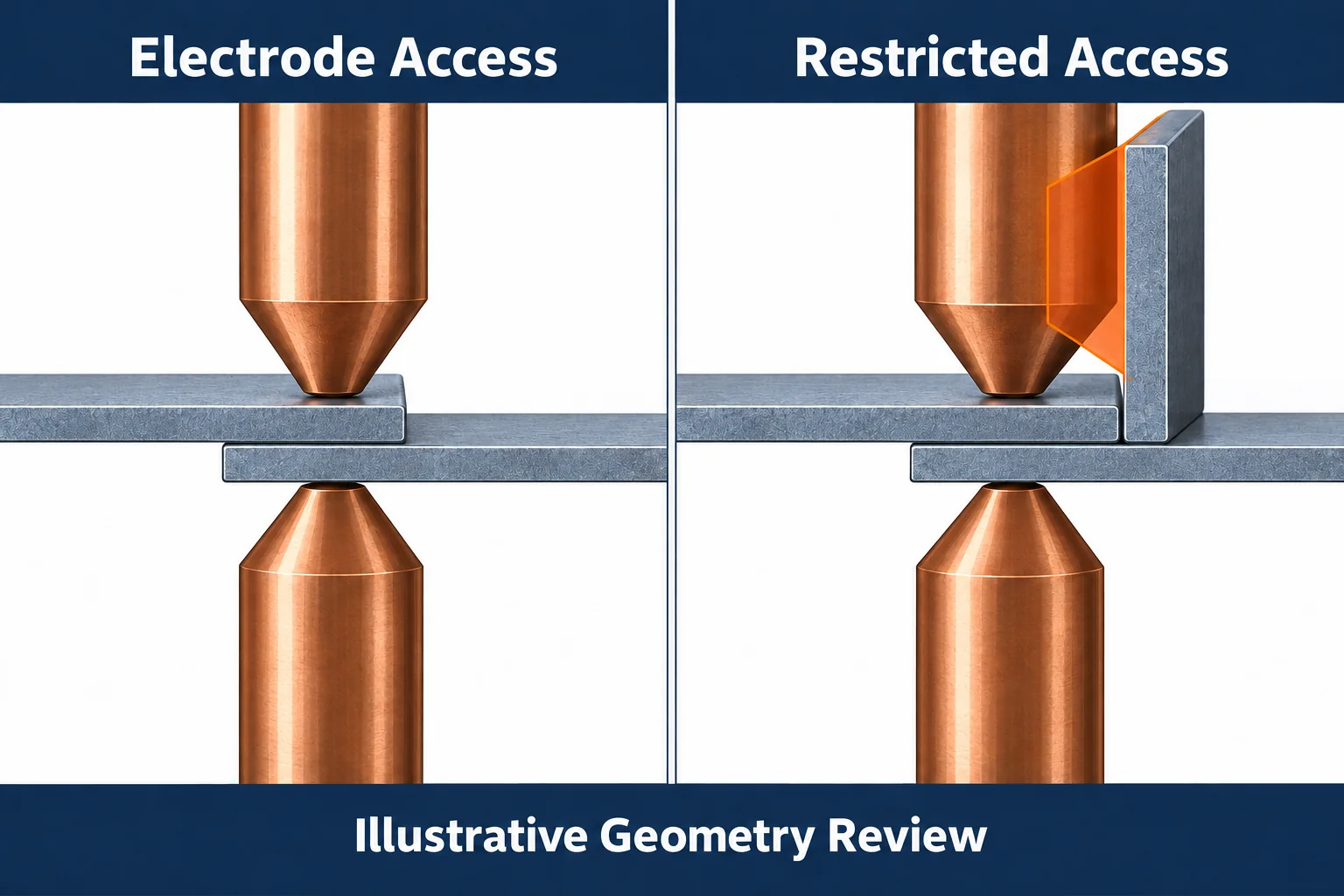
Specify overlap, weld position, edge distance, and permitted part gaps on your drawing. Ask your supplier to flag restricted locations before releasing tooling. Avoid choosing universal spacing values without reviewing the stack and joint design.
Closely spaced welds can divert current through existing joints. Your supplier should evaluate weld sequence and spacing during process development.
For a sealed enclosure, separate leak performance from structural joining. Discrete spot welds do not create a continuous sealed seam. Define a separate sealing solution when necessary.
Put Acceptance Requirements On The Order
Your order should identify what passes, how it is checked, and which records accompany each production lot.
| Requisito | Define Before Approval | Procurement Consequence |
|---|---|---|
| Sheet Stack | Calificación, espesor, revestimiento, layer order | A changed stack needs technical review |
| Weld Layout | Locations, count, acceso, tolerancias | Prevents missing or relocated welds |
| Apariencia | Visible faces and permitted indentation | Cosmetic requirements can affect tooling |
| Joint Performance | Relevant loads and agreed test method | Distinguishes visual checks from strength evidence |
| Acceptance Plan | Criterios, muestreo, records, reaction rules | Makes inspection scope comparable between quotes |
Choose the applicable standard and edition with your responsible engineer. The public scope of AWS D8.1M 2021 addresses automotive steel resistance spot weld quality. Its criteria should not be applied indiscriminately to unrelated materials or applications.
Where a standard does not cover your joint, agree application-specific acceptance requirements. Define test coupon geometry and loading direction. Avoid treating a weld diameter rule as proof of complete assembly performance.
Validate The Process Before Production
Your approval trial should represent the production material stack, estampación, adaptar, and surface condition.
Ask your supplier to document the proposed procedure and its controlled variables. These include electrode force, actual, momento, tip condition, y enfriamiento. A single attractive sample does not establish a repeatable process.
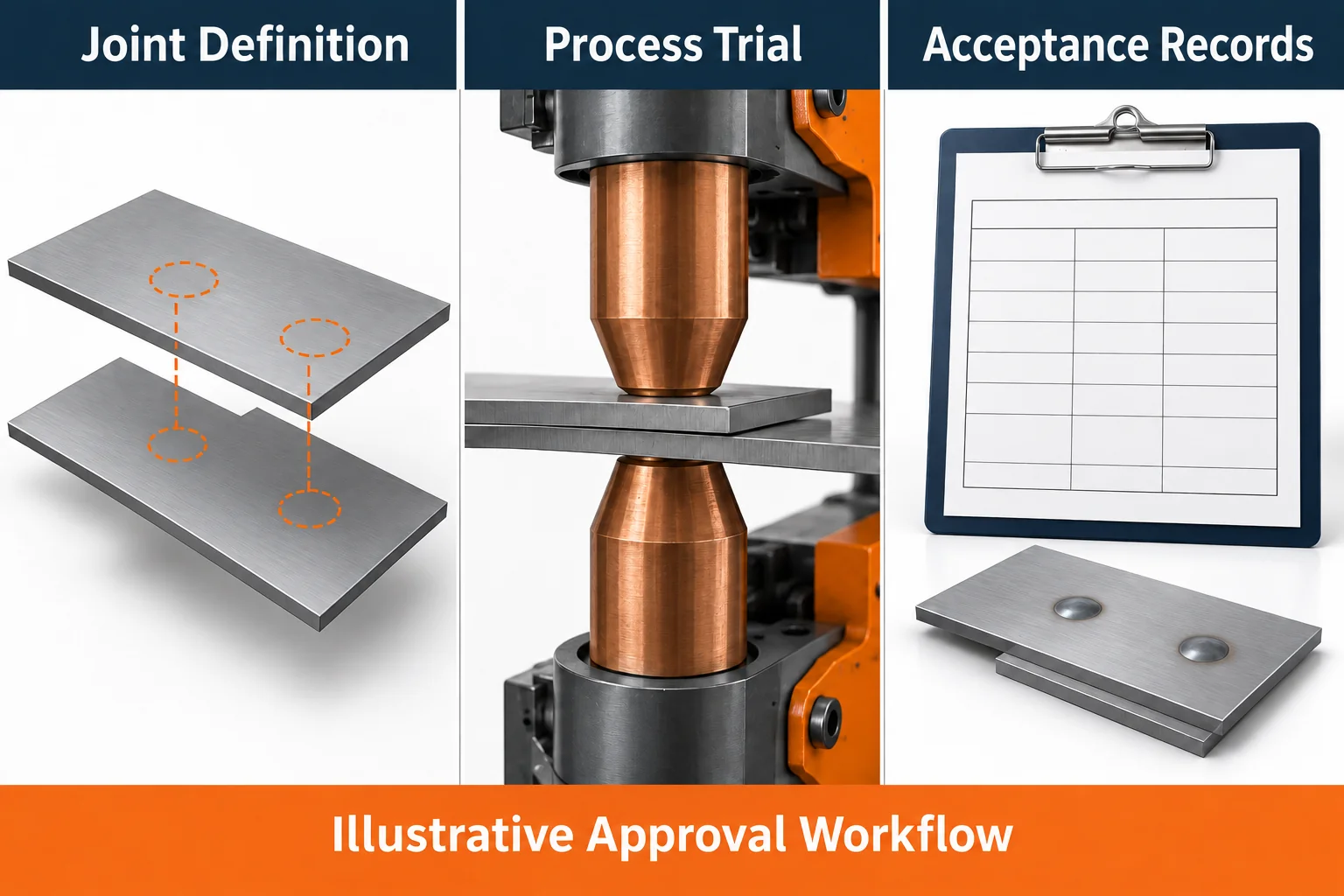
Use agreed destructive tests where joint integrity requires them. Depending on your specification, these may include peel, tensile shear, or section examination. State the required results before testing. Electrode indentation and internal nugget dimensions describe different features.
TWI identifies key process controls, including material condition, adaptar, electrode alignment, y mantenimiento. Build those controls into your production agreement.
Define when approval must be repeated. Material, revestimiento, stack, electrode, equipo, or procedure changes may require review. Specify who authorizes changes and how affected lots remain traceable.
Compare Quotes With The Same Inspection Scope
Your quote comparison should separate joining costs from tooling, validación, requisitos cosméticos, and recurring inspection.
Fixture complexity rises when several welds require different access directions. Destructive testing consumes samples and preparation time. Demanding appearance limits can require additional development. Ask suppliers to identify these costs explicitly.
Para TOPS de precisión fabricación de chapa, submit the complete assembly for feasibility review. Confirm the proposed joining route, equipment suitability, and inspection scope for your specific project.
Preguntas frecuentes
Can You Inspect Spot Weld Strength By Appearance
You cannot establish strength from surface appearance alone. Use the agreed joint tests and acceptance criteria alongside visual inspection.
Does Spot Welding Make A Watertight Joint
Individual spot welds leave unwelded regions between locations. Specify sealing separately if your assembly must retain fluids.
Should You Specify Welding Current On The Drawing
Generalmente, specify the joint and acceptance requirements first. Agree procedure settings through development for the actual material stack and equipment.
Solicite una revisión del ensamblaje de chapa metálica
Contáctenos with your assembly CAD, dibujos, material stack, cantidades, weld layout, y requisitos de aceptación. Identify visible surfaces and service loads. You can then compare a defined joining proposal instead of an unexplained price per weld.