



A diferencia de los métodos convencionales de producción en masa, El mecanizado CNC ofrece a los fabricantes de bicicletas un mayor control sobre la selección de materiales, precisión dimensional, optimización del peso, y personalización. Esto lo hace especialmente adecuado para bicicletas premium., bicicletas de carreras, bicicletas de montaña, bicicletas eléctricas, construcciones de bicicletas personalizadas, y bajo- a la producción de mediano volumen.
Pero, ¿qué piezas de bicicleta se fabrican realmente con mecanizado CNC?? ¿Por qué se prefiere el mecanizado CNC para estos componentes?? ¿Qué materiales se utilizan comúnmente?? ¿Y cuándo debería un fabricante de bicicletas elegir el mecanizado CNC en lugar de la fundición o la forja??
Esta guía explica los más comunes. Piezas de bicicleta mecanizadas por CNC, las ventajas y limitaciones del mecanizado CNC, opciones de material, consideraciones de fabricación, y cómo elegir el socio de mecanizado CNC adecuado.
1. ¿Qué es el mecanizado CNC y por qué es importante para las piezas de bicicletas??
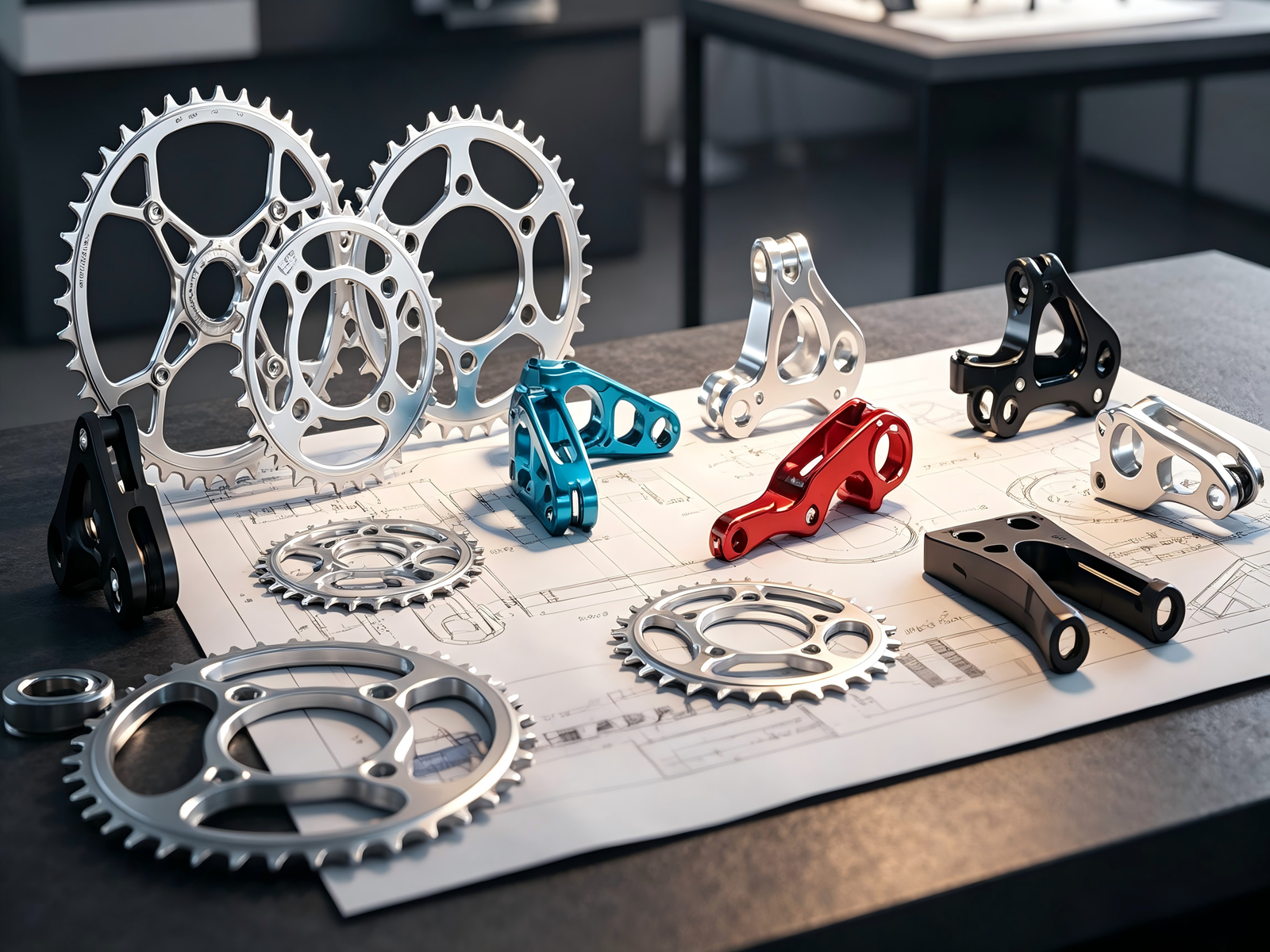
1.1 ¿Qué es el mecanizado CNC??
CNC significa Control numérico por computadora. Mecanizado CNC Es un proceso de fabricación sustractivo en el que máquinas controladas por computadora eliminan material de una pieza de trabajo sólida para crear un componente terminado..
El proceso de fabricación suele comenzar con un modelo CAD digital.. Los ingenieros convierten el diseño en instrucciones de máquina utilizando el software CAM. Luego, la máquina CNC controla el movimiento de las herramientas de corte a lo largo de múltiples ejes para eliminar el material con precisión de acuerdo con la geometría programada..
Dependiendo del componente y los requisitos de diseño., los fabricantes pueden utilizar:
- 3-fresado CNC del eje
- 4-mecanizado CNC del eje
- 5-mecanizado CNC del eje
- torneado CNC
- Torneado y fresado CNC
- Mecanizado CNC tipo suizo
Para componentes de bicicleta, fresado CNC Es especialmente común porque muchas piezas requieren bolsillos complejos., superficies curvas, aburre, agujeros roscados, y estructuras ligeras.
El proceso puede producir componentes directamente a partir de materiales como el aluminio., titanio, acero inoxidable, acero, latón, y plásticos de ingeniería.
1.2 ¿Por qué el mecanizado CNC es adecuado para componentes de bicicletas??
Los componentes de las bicicletas funcionan bajo una amplia gama de cargas mecánicas.. Los brazos de manivela experimentan torsión repetida, Los bujes soportan cargas en las ruedas., Los vástagos deben resistir las fuerzas de dirección., y los componentes del freno deben mantener una alineación precisa bajo estrés mecánico y térmico.
Para estas aplicaciones, pequeños errores dimensionales pueden afectar:
- Ajuste de componentes
- Rendimiento mecánico
- Seguridad del ciclista
- Peso
- Durabilidad
- Ruido y vibración
- Eficiencia de montaje
El mecanizado CNC se adapta bien a estos requisitos porque ofrece un excelente control dimensional y repetibilidad..
Por ejemplo, Se puede fabricar un cubo mecanizado por CNC con asientos de rodamiento precisos y orificios concéntricos.. Un vástago mecanizado por CNC puede mantener superficies de sujeción precisas. Se puede producir una patilla de cambio con orificios de montaje y características de alineación precisos.
Este nivel de precisión es particularmente valioso cuando varios componentes deben trabajar juntos como un sistema de bicicleta completo..
2. ¿Qué piezas de bicicleta se fabrican habitualmente con mecanizado CNC??
No todos los componentes de las bicicletas requieren mecanizado CNC. Sin embargo, piezas que requieren alta precisión, geometría compleja, construcción ligera, o la personalización suelen ser excelentes candidatos.
Estas son algunas de las piezas de bicicleta mecanizadas por CNC más comunes..
2.1 Juegos de bielas y brazos de biela mecanizados por CNC
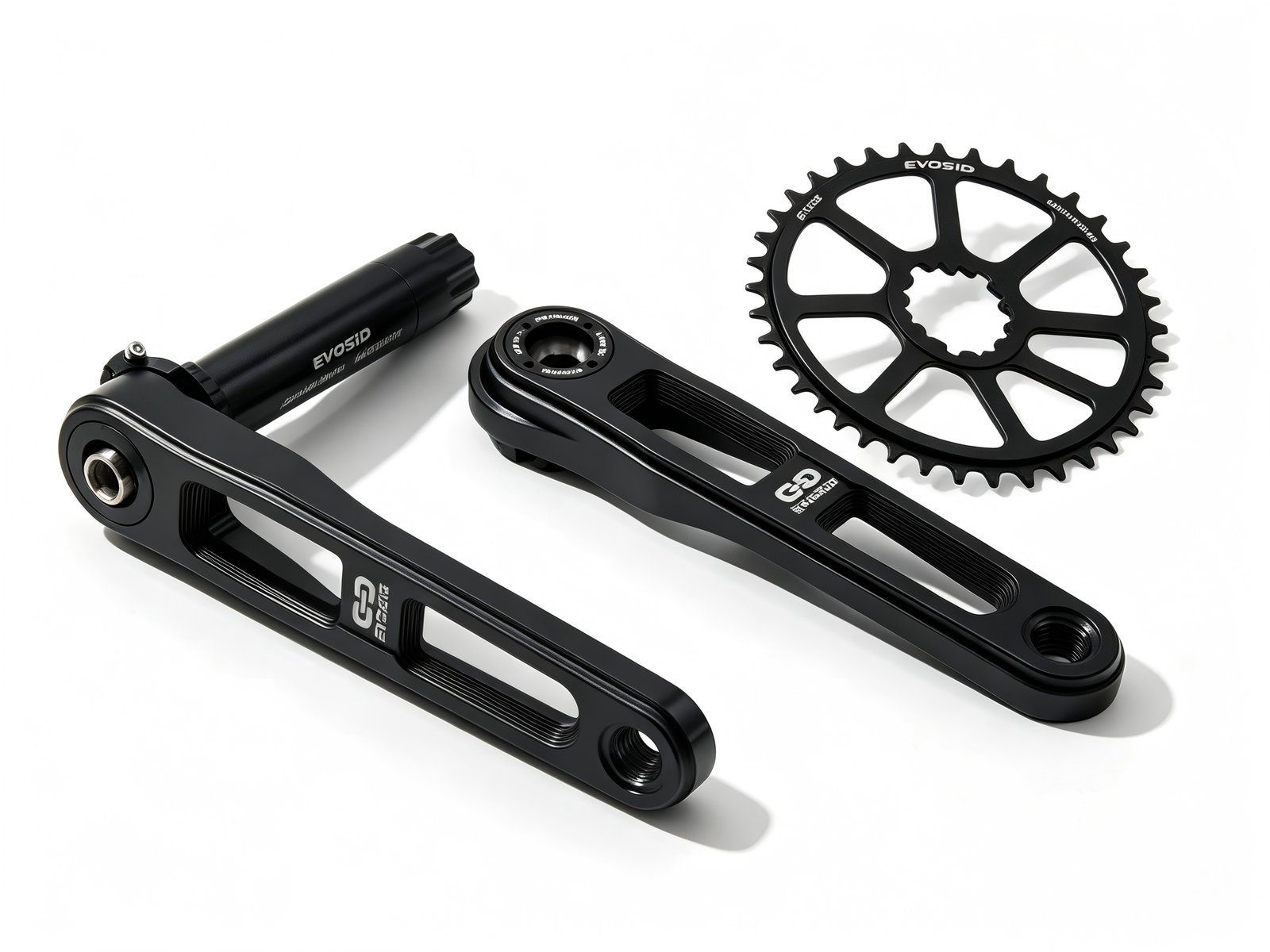
Las bielas se encuentran entre los componentes de la bicicleta más exigentes porque transfieren la fuerza del pedaleo del ciclista directamente a la transmisión..
Durante el funcionamiento normal, Los brazos de manivela experimentan torsión repetida y carga cíclica.. Por lo tanto, requieren una combinación de:
- Alta resistencia
- Bajo peso
- Precisión dimensional
- Rigidez estructural
- Resistencia a la fatiga
El mecanizado CNC permite a los fabricantes optimizar la geometría del brazo del cigüeñal eliminando material de áreas de baja tensión y manteniendo suficiente material alrededor de las zonas críticas de carga..
Las aleaciones de aluminio como 6061-T6 y 7075-T6 se consideran comúnmente para componentes de manivela de bicicleta mecanizados por CNC..
El mecanizado CNC también puede crear precisión:
- Hilos de pedal
- Interfaces de pedalier
- Orificios de montaje del plato
- Bolsillos reductores de peso
- Características decorativas
Para fabricantes de bicicletas premium, El mecanizado CNC puede proporcionar una mayor libertad de diseño que los procesos de fabricación convencionales.
Sin embargo, porque los brazos de manivela son componentes críticos para la seguridad, El diseño final debe diseñarse y validarse adecuadamente para las cargas y aplicaciones previstas..
2.2 Platos mecanizados por CNC
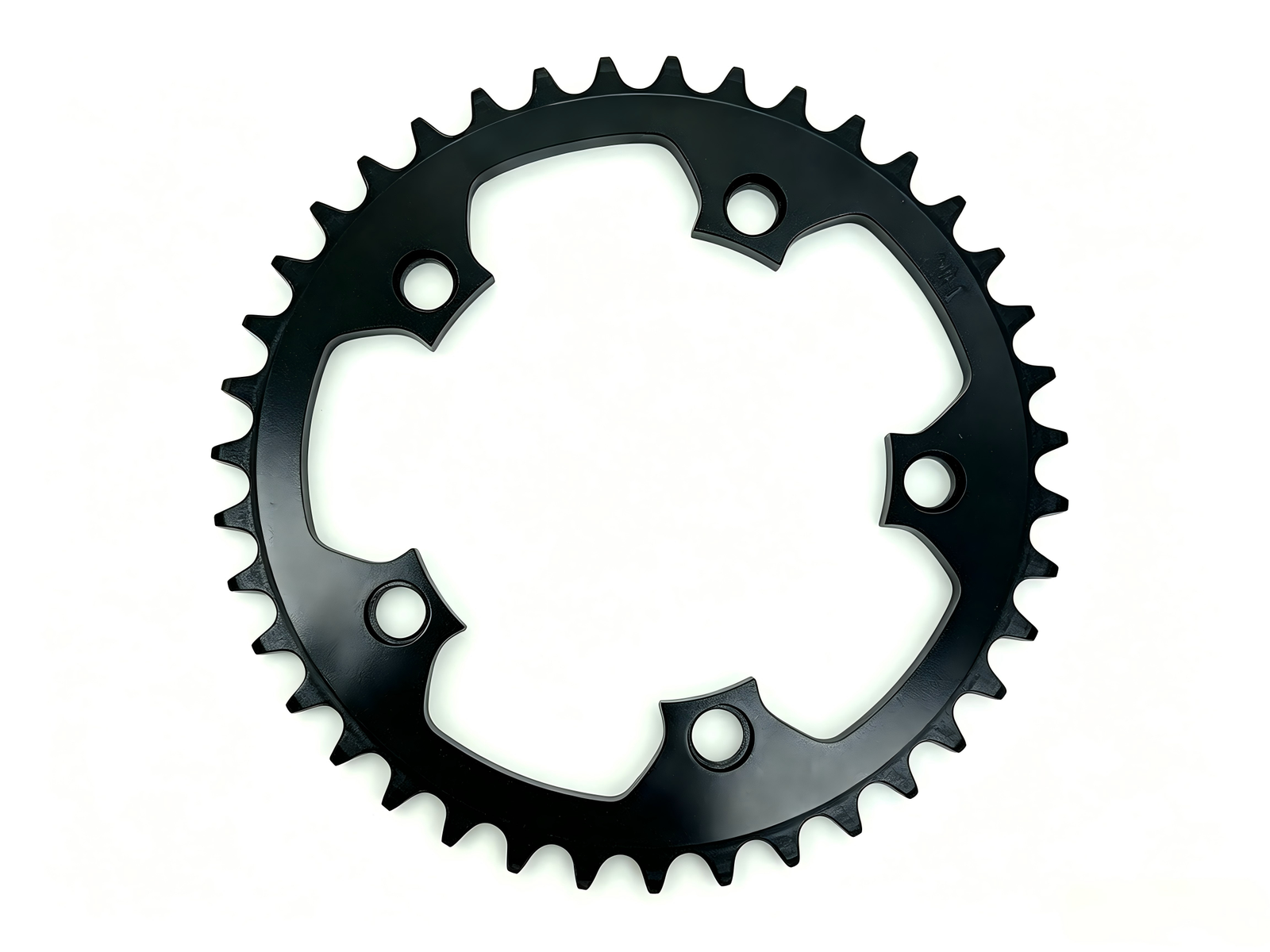
Los platos son otra aplicación común para el mecanizado de precisión..
La forma y el espaciado de los dientes del plato influyen directamente en el rendimiento de la transmisión.. Pequeñas variaciones en la geometría de los dientes pueden afectar:
- Compromiso en cadena
- Rendimiento cambiante
- Ruido
- Tener puesto
- Transmisión de potencia
El mecanizado CNC puede producir perfiles de dientes e interfaces de montaje de alta precisión.
También es adecuado para diseños especializados como:
- Platos redondos estándar
- Platos ovalados
- Platos estrechos y anchos
- Platos ligeros personalizados
- Platos de rendimiento de producción limitada
El mecanizado CNC permite a los fabricantes optimizar la estructura del plato eliminando el exceso de material manteniendo la resistencia suficiente..
Después de mecanizado, Los fabricantes pueden aplicar acabados como anodizado., voladura de cuentas, cepillado, o marcado láser para mejorar la resistencia a la corrosión y la apariencia visual.
2.3 Bujes y ejes mecanizados por CNC
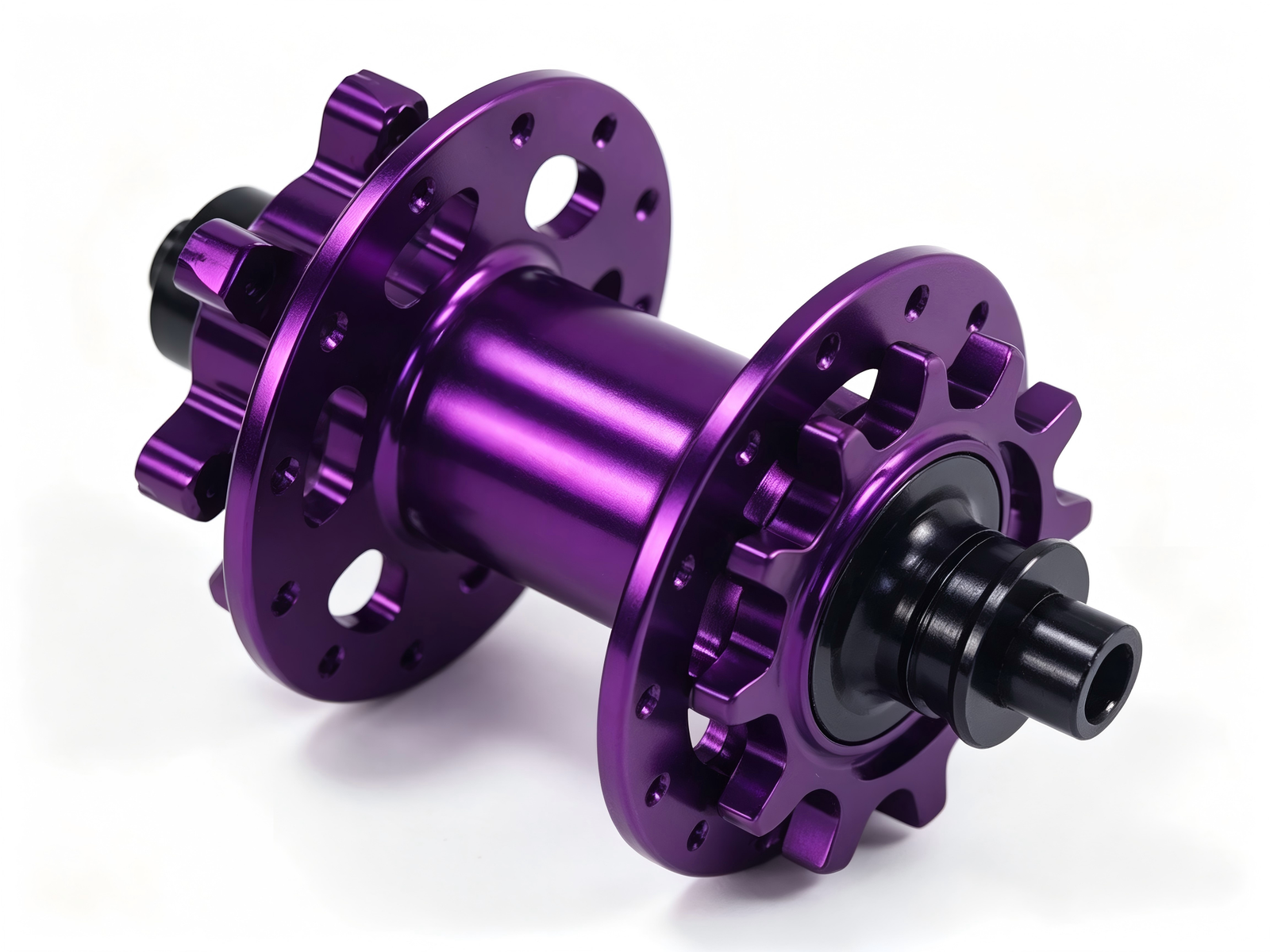
Los cubos de las ruedas son componentes giratorios críticos. Su rendimiento depende en gran medida de la precisión dimensional y la alineación..
Un cubo mecanizado por CNC puede incluir:
- Orificios de rodamientos
- Interfaces de eje
- Agujeros de radios
- Bridas
- Características de montaje del rotor
- Interfaces de núcleo libre
Los asientos de los rodamientos y los orificios centrales requieren una atención especial.. Una mala concentricidad o dimensiones inexactas pueden provocar:
- Mayor fricción
- Desgaste de rodamientos
- Vibración
- Mala alineación de las ruedas
- Vida útil reducida
El mecanizado CNC permite a los fabricantes mantener relaciones precisas entre estas características.
El proceso también admite diseños de bridas complejos que pueden ayudar a optimizar la geometría de los radios y reducir el peso innecesario..
Los ejes mecanizados por CNC también pueden beneficiarse de operaciones precisas de torneado y fresado., especialmente cuando se requieren ajustes ajustados y roscas precisas.
2.4 Pinzas de freno y palancas de freno mecanizadas por CNC
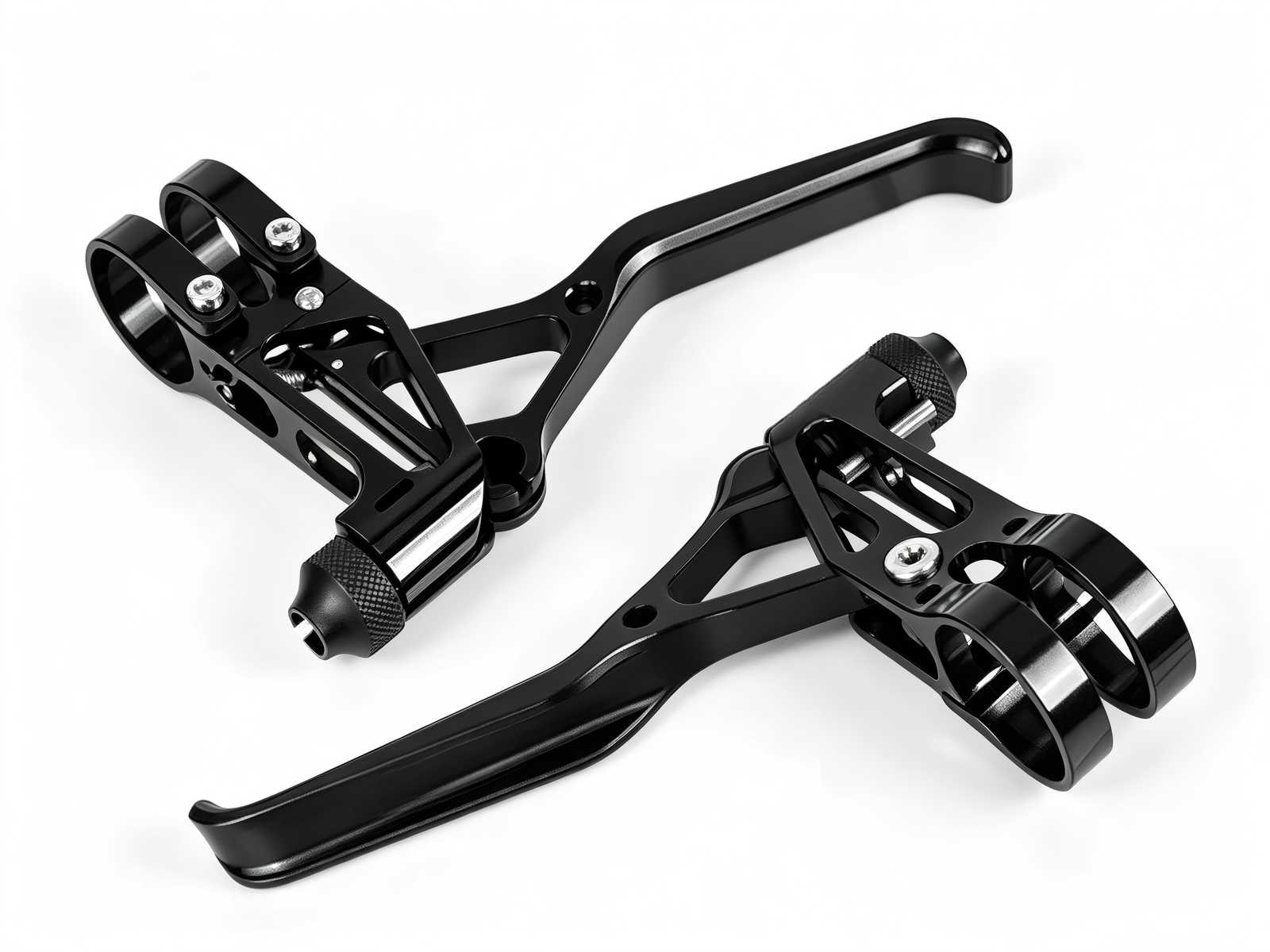
Los componentes de los frenos son piezas críticas para la seguridad que requieren una alineación precisa y un rendimiento mecánico confiable..
El mecanizado CNC puede producir pinzas y palancas de freno con:
- Superficies de montaje precisas
- Orificios de pivote precisos
- Estructuras ligeras
- Geometría interna compleja
- Perfiles ergonómicos suaves
Para bicicletas de alto rendimiento, Los diseñadores a menudo quieren reducir el peso manteniendo suficiente rigidez..
El mecanizado CNC permite eliminar estratégicamente el material de áreas de baja tensión y al mismo tiempo preservar el material estructural alrededor de las interfaces críticas..
Para palancas de freno, El mecanizado CNC también permite a los fabricantes desarrollar formas ergonómicas personalizadas y diseños específicos de marca..
Para sistemas hidráulicos, Es posible que se requieran procesos de fabricación adicionales para crear conductos de fluido internos e interfaces de sellado..
Porque los sistemas de frenado afectan directamente a la seguridad del ciclista, Los componentes deben estar diseñados., fabricado, y probado de acuerdo con los requisitos de aplicación relevantes.
2.5 Vástagos de bicicleta mecanizados por CNC
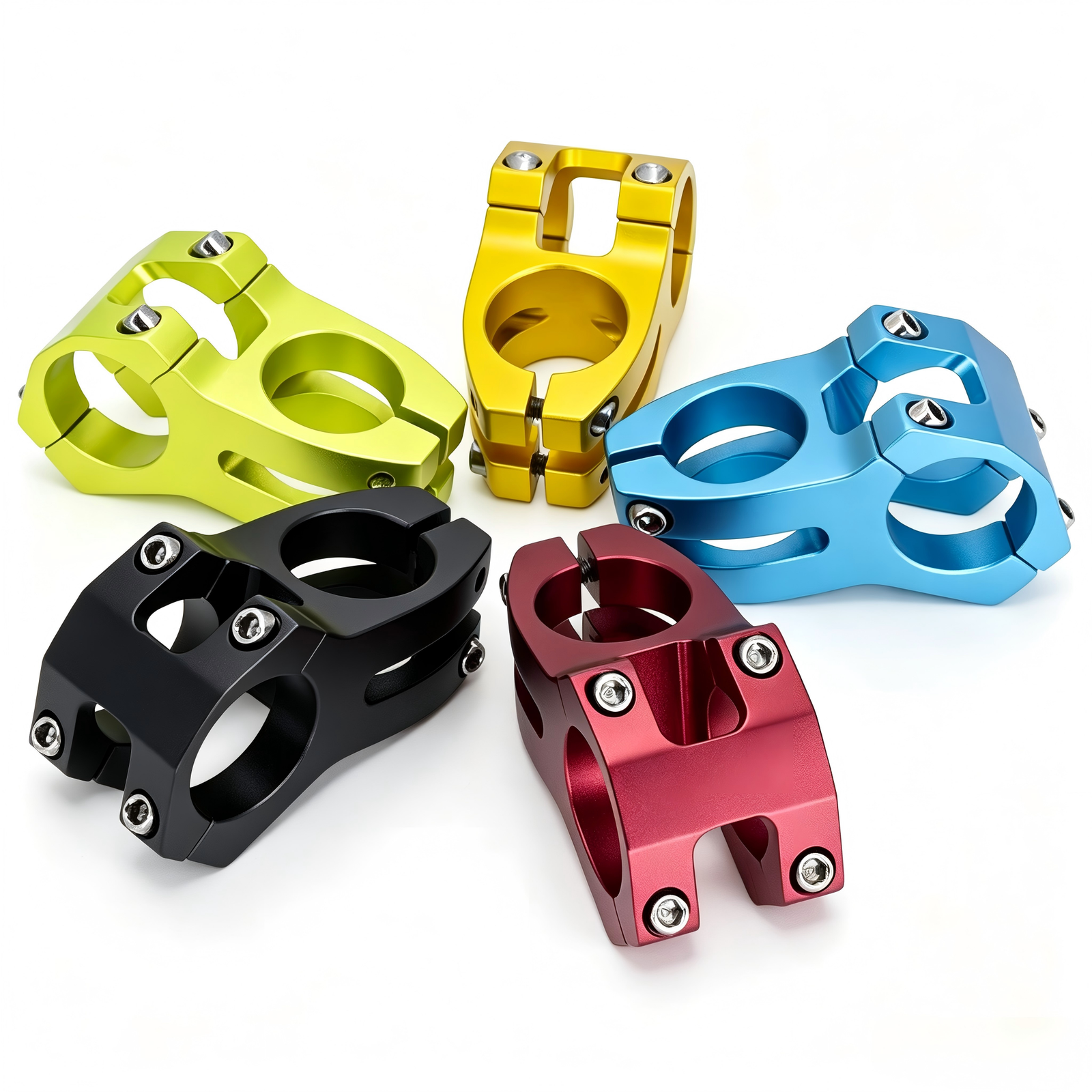
Una potencia de bicicleta conecta el manillar al sistema de dirección y juega un papel importante en el manejo y control del ciclista..
Un vástago mecanizado por CNC normalmente requiere precisión:
- Superficies de sujeción del manillar
- Interfaces del tubo de dirección
- Orificios para pernos
- Agujeros roscados
- Funciones de alineación
Los fabricantes pueden utilizar el mecanizado CNC para crear diseños livianos con bolsillos y recortes cuidadosamente ubicados..
Las principales ventajas incluyen:
- Alta precisión dimensional
- Sujeción consistente
- Optimización del peso
- Geometría personalizada
- Acabados superficiales de primera calidad
El mecanizado CNC también permite a las marcas de bicicletas incorporar logotipos, detalles decorativos, y elementos de diseño distintivos.
Para carretera de alta gama, montaña, grava, y bicicletas de carrera, la combinación de precisión y construcción liviana hace que el mecanizado CNC sea una opción atractiva.
2.6 Pedales de bicicleta mecanizados por CNC
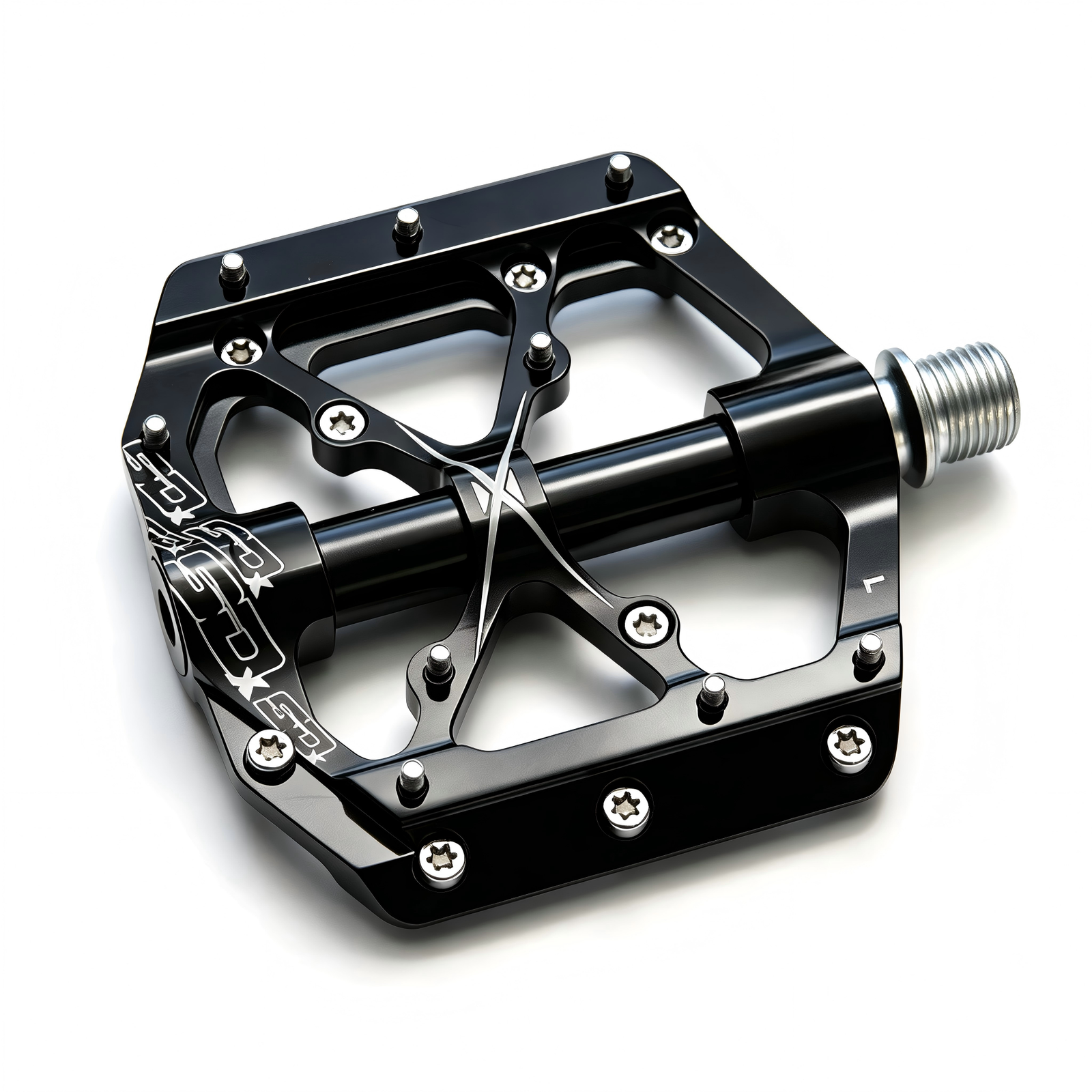
Los pedales deben soportar impactos repetidos., fuerzas rotacionales, y peso del ciclista.
El mecanizado CNC se puede utilizar para fabricar cuerpos de pedales y otros componentes de pedales con características personalizadas como:
- Superficies de agarre
- Agujeros
- Cavidades de rodamientos
- Bolsillos ligeros
- Contornos personalizados
Las aleaciones de aluminio se consideran comúnmente para cuerpos de pedales orientados al rendimiento..
El mecanizado CNC permite a los fabricantes equilibrar la resistencia y el peso mientras crean diseños únicos para diferentes estilos de conducción..
Por ejemplo, Los pedales de bicicleta de montaña pueden priorizar la resistencia al impacto y el agarre., mientras que los componentes de las bicicletas de carretera pueden centrarse más en el bajo peso y el diseño aerodinámico.
2.7 Abrazaderas de tija de sillín mecanizadas por CNC
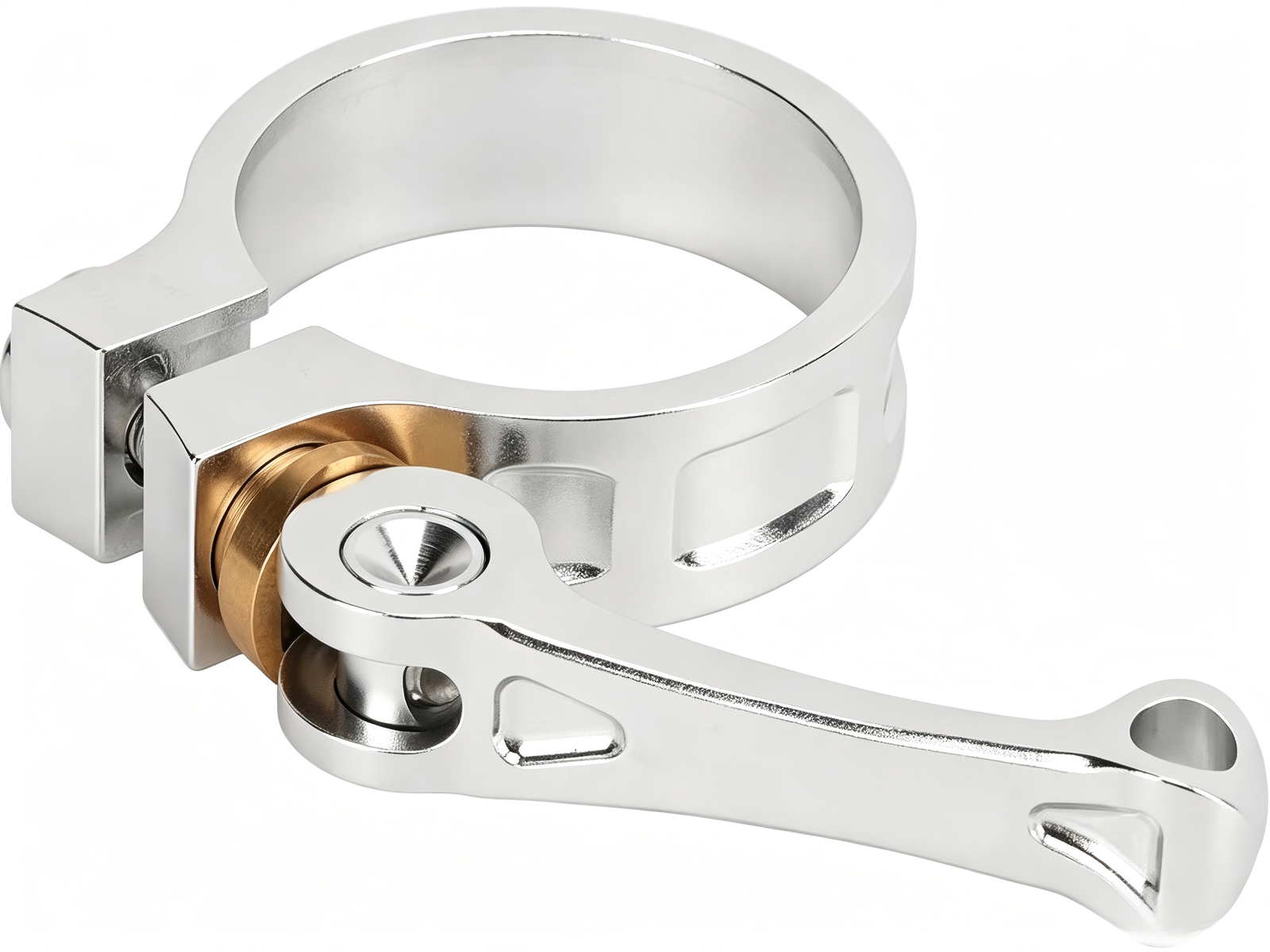
Aunque relativamente pequeño, Las abrazaderas de la tija del sillín son componentes importantes que requieren una fuerza de sujeción constante..
El mecanizado CNC puede producir interfaces precisas que ayudan a distribuir la presión de sujeción de manera uniforme alrededor de la tija del sillín..
Los beneficios incluyen:
- Dimensiones precisas
- Sujeción consistente
- Construcción ligera
- Diseños personalizados
- Acabados de alta calidad
Los fabricantes también pueden agregar logotipos grabados con láser u otros elementos de marca para crear una apariencia premium..
2.8 Otras piezas de bicicleta comúnmente mecanizadas por CNC
Más allá de los componentes principales anteriores, El mecanizado CNC también se utiliza para muchas piezas especializadas de bicicletas..
Estos pueden incluir:
- Patillas de cambio
- Desaprobación
- Componentes del pedalier
- Componentes de los auriculares
- Tapas de manivela
- Componentes de suspensión
- Adaptadores de freno
- Guías de cables
- Soportes de montaje
- Soportes para motores de bicicletas eléctricas
- Componentes de montaje de la batería
- Accesorios de marco personalizados
Para bicicletas eléctricas, El mecanizado CNC es cada vez más útil para componentes mecánicos personalizados que conectan sistemas eléctricos, baterias, motores, y cuadros de bicicletas.
La idoneidad del mecanizado CNC depende de la geometría de la pieza., material, cantidad, requisitos de tolerancia, y presupuesto de producción.
3. ¿Por qué los fabricantes de bicicletas prefieren el mecanizado CNC??
El mecanizado CNC no siempre es el proceso de fabricación más barato. Sin embargo, Proporciona una combinación única de precisión., flexibilidad, libertad de diseño, y calidad.
3.1 Alta precisión y tolerancias estrechas
La precisión es fundamental cuando los componentes de la bicicleta deben encajar con precisión.
Los ejemplos incluyen:
- Asientos de rodamientos
- Interfaces de eje
- Agujeros roscados
- Superficies de sujeción
- Orificios de montaje
- Componentes de la transmisión
El mecanizado CNC permite a los fabricantes controlar estas características de forma consistente.
Sin embargo, Es importante comprender que no todas las características necesitan una tolerancia extremadamente estricta..
La especificación excesiva de tolerancias puede aumentar el tiempo de mecanizado y los requisitos de inspección sin mejorar el rendimiento real..
Un proveedor de CNC profesional debe revisar los dibujos y recomendar las tolerancias adecuadas según la función de cada característica..
3.2 Excelente optimización de la relación fuerza-peso
Una de las mayores ventajas del mecanizado CNC para bicicletas de alto rendimiento es la capacidad de optimizar la distribución del material..
En lugar de fabricar un bloque sólido con masa innecesaria, Los ingenieros pueden crear bolsillos y contornos en áreas donde el material no es estructuralmente esencial..
Esto puede ayudar a lograr un equilibrio entre:
Fortaleza + rigidez + peso + funcionalidad
Este enfoque es particularmente valioso para:
- brazos de manivela
- Tallos
- Pedales
- Concentración
- Componentes de freno
El diseño final siempre debe validarse para las cargas mecánicas previstas., especialmente para componentes críticos para la seguridad.
3.3 Acabado y apariencia superficial superiores
El mecanizado CNC puede producir bordes limpios, superficies suaves, y detalles precisos.
Los procesos de acabado adicionales pueden incluir:
- Anodizado
- Explosión de cuentas
- Cepillado
- Pulido
- Revestimiento de polvo
- Grabado láser
Para marcas de bicicletas, La apariencia puede ser casi tan importante como el rendimiento..
Un acabado superficial de alta calidad puede ayudar a crear una identidad visual premium y mejorar la resistencia a la corrosión., dependiendo del proceso de acabado seleccionado.
3.4 Flexibilidad de diseño y personalización
El mecanizado CNC es particularmente valioso para las marcas que quieren diferenciar sus productos..
Los fabricantes pueden crear:
- Logotipos personalizados
- Recortes únicos
- Geometrías específicas de la marca
- Dimensiones personalizadas
- Diseños de edición limitada
- Estructuras específicas de rendimiento
A diferencia de los procesos que requieren moldes o matrices dedicados, El mecanizado CNC a menudo puede adaptarse a cambios de diseño modificando el programa CAD/CAM..
Esto lo hace atractivo para el desarrollo de productos y componentes personalizados para bicicletas..
3.5 Ideal para creación de prototipos y producción de lotes pequeños
El mecanizado CNC suele ser una excelente opción cuando las cantidades de producción son relativamente bajas..
Se puede utilizar para:
- 1-10 piezas prototipo
- Validación de ingeniería
- 10-100 producción piloto de piezas
- Producción comercial en pequeños lotes
- Revisiones de productos
La ausencia de costosos moldes de inyección o troqueles de forja puede hacer que el mecanizado CNC sea económicamente atractivo para el desarrollo de productos en las primeras etapas..
Una vez validado el diseño y los volúmenes de producción aumentan significativamente, Los fabricantes pueden evaluar si otro proceso proporcionaría un costo unitario más bajo..
3.6 Calidad y repetibilidad consistentes
Para marcas de bicicletas, la consistencia es crítica.
Un proceso de mecanizado CNC confiable puede ayudar a mantener constante:
- Dimensiones
- Acabados superficiales
- Ubicaciones de los agujeros
- Trapos
- Interfaces de montaje
Un proveedor profesional también debe tener un sistema de control de calidad documentado y un equipo de inspección adecuado..
Dependiendo del componente, la inspección puede incluir:
- Calibrador
- Micrómetros
- Medidores de altura
- Inspección CMM
- Calibres de hilo
- Medición de rugosidad superficial
4. CNC Machinine VS. Otros procesos de fabricación de piezas de bicicletas
La elección del proceso de fabricación correcto depende del volumen de producción., complejidad del diseño, material, tolerancia, y costo objetivo.
4.1 CNC Machinine VS. Fundición
La fundición es generalmente más adecuada para la producción de gran volumen porque el costo de las herramientas se puede distribuir entre una gran cantidad de piezas..
Las ventajas del casting incluyen:
- Menor costo unitario en grandes volúmenes
- Producción compleja casi en forma neta
- Producción en masa eficiente
Sin embargo, La fundición puede requerir mecanizado adicional para lograr tolerancias estrictas..
Generalmente se prefiere el mecanizado CNC cuando:
- Las cantidades son bajas o moderadas.
- Se requieren tolerancias estrictas
- El acabado superficial es importante
- Se necesita personalización
- La inversión en herramientas debe minimizarse
4.2 CNC Machinine VS. Forja
La forja puede proporcionar excelentes propiedades mecánicas porque el proceso de fabricación puede mejorar el flujo de grano del material..
Suele resultar atractivo para componentes estructurales de gran volumen..
Sin embargo, La forja generalmente requiere herramientas dedicadas y puede ser menos flexible para diseños altamente personalizados..
El mecanizado CNC suele ser el preferido para:
- Prototipos
- Componentes personalizados
- Geometrías complejas
- Producción de bajo volumen
- Cambios frecuentes de diseño.
Para algunos componentes de bicicleta., una combinación de forjado y mecanizado CNC puede proporcionar el mejor equilibrio entre resistencia, costo, y precisión.
4.3 CNC Machinine VS. Moldeo por inyección
El moldeo por inyección se utiliza principalmente para componentes de plástico..
Es muy eficiente para la producción en masa pero requiere una inversión inicial en molde..
El mecanizado CNC es más adecuado cuando:
- El componente es metálico.
- Las cantidades son relativamente bajas.
- El diseño aún está evolucionando.
- Se requieren tolerancias estrictas
Para componentes de bicicleta de plástico., El mecanizado CNC puede ser útil para prototipos, mientras que el moldeo por inyección puede resultar más económico para la producción de gran volumen.
4.4 ¿Cuándo debería elegir el mecanizado CNC??
El mecanizado CNC es generalmente una buena opción cuando se necesita:
- Alta precisión dimensional
- Tolerancias funcionales estrictas
- Geometría compleja
- Diseños ligeros
- Acabados superficiales de primera calidad
- Componentes de bicicleta personalizados
- Prototipos rápidos
- Bajo- a la producción de mediano volumen
Si su proyecto requiere millones de piezas idénticas al menor coste unitario posible, otros procesos pueden ser más apropiados.
El mejor proceso de fabricación siempre debe seleccionarse basándose en el ciclo de vida completo del producto y no únicamente en el precio unitario..
4.5 CNC Machinine VS. Otros procesos de fabricación: Comparación rápida
| Proceso de manufactura | Exactitud | Costo de herramientas | Flexibilidad de diseño | Mejor volumen de producción | Aplicaciones típicas de bicicletas |
| Mecanizado CNC | Alto | Bajo a moderado | Excelente | Bajo a medio | Piezas personalizadas y de precisión. |
| Fundición | Moderado a alto | Moderado a alto | Alto | Medio a alto | Piezas complejas producidas en masa |
| Forja | Alto | Alto | Moderado | Medio a alto | Piezas estructurales de alta resistencia |
| Moldeo por inyección | Alto para plásticos | Alto | Moderado | Alto | Componentes de plástico |
La elección correcta depende del diseño de la pieza., material, cantidad, tolerancia, y costo objetivo.
5. ¿Qué materiales se utilizan comúnmente para las piezas de bicicletas CNC??
La selección del material afecta directamente el peso del componente., fortaleza, durabilidad, maquinabilidad, y costo.
5.1 Aleaciones de aluminio
El aluminio es uno de los materiales más comunes para los componentes de bicicletas mecanizados por CNC..
Las opciones populares incluyen:
- 6061 aluminio
- 7075 aluminio
6061 Aluminio
6061 es ampliamente utilizado porque ofrece:
- Buena maquinabilidad
- Buena resistencia a la corrosión
- Fuerza equilibrada
- Costo competitivo
- Excelente disponibilidad
Es adecuado para muchos componentes de bicicletas de uso general..
7075 Aluminio
7075 El aluminio ofrece mayor resistencia que 6061 en muchas condiciones y a menudo se selecciona para aplicaciones orientadas al rendimiento donde la relación resistencia-peso es crítica.
Las aplicaciones potenciales incluyen:
- Tallos
- Componentes de manivela
- Concentración
- Soportes de alto rendimiento
- Componentes estructurales de bicicleta.
La elección final del material debe basarse en las condiciones de carga reales y las propiedades mecánicas requeridas..
5.2 Titanio
El titanio es valorado por:
- Alta relación resistencia-peso
- Excelente resistencia a la corrosión
- Durabilidad a largo plazo
- Aspecto premium
Sin embargo, El titanio es generalmente más caro y más difícil de mecanizar que el aluminio..
Puede usarse para componentes de bicicletas de primera calidad donde el rendimiento y la durabilidad justifican el mayor costo de fabricación..
5.3 Acero inoxidable
Ofertas de acero inoxidable:
- Alta durabilidad
- Resistencia a la corrosión
- Buena resistencia al desgaste
Puede ser adecuado para componentes que requieren mayor resistencia o resistencia al desgaste que la que el aluminio puede proporcionar..
La desventaja es su mayor densidad., lo que lo hace menos atractivo para aplicaciones donde minimizar el peso es el objetivo principal.
5.4 Ingeniería de plásticos
Ciertos plásticos de ingeniería también se pueden mecanizar mediante CNC para aplicaciones de bicicletas..
Los materiales potenciales incluyen:
- POM
- Nylon
- OJEADA
Estos materiales pueden ser seleccionados para:
- Componentes livianos
- Bujes
- Espaciadores
- Guías
- Componentes aislantes
- Piezas prototipo
El material específico debe seleccionarse en función de la temperatura., tener puesto, fricción, fortaleza, y requisitos ambientales.
5.5 Cómo elegir el material adecuado
Al seleccionar un material para piezas de bicicleta CNC, considerar:
- Cargas mecánicas
- Fuerza requerida
- objetivo de peso
- Ambiente de corrosión
- Resistencia al desgaste
- maquinabilidad
- Requisitos de acabado de superficies
- Cantidad de producción
- Presupuesto
Un proveedor de mecanizado CNC calificado debería poder brindar recomendaciones de materiales durante la revisión del DFM..
6. ¿Cuánto cuesta mecanizar piezas de bicicleta con CNC??
No existe un precio universal para las piezas de bicicleta CNC porque el costo depende de los requisitos específicos de diseño y producción..
Los principales factores de costo incluyen:
Material
El titanio generalmente cuesta más mecanizar que el aluminio..
Complejidad de la pieza
Las geometrías más complejas requieren programación adicional, estampación, y tiempo de mecanizado.
Tolerancias
Las tolerancias extremadamente estrictas pueden requerir operaciones de mecanizado e inspección adicionales..
Tiempo de mecanizado
Cuanto más tiempo funcione una máquina CNC, cuanto mayor sea el costo de fabricación.
Acabado superficial
Anodizado, pulido, cepillado, y otros procesos se suman al costo total.
Cantidad
Mayores cantidades de producción pueden reducir el costo promedio por pieza.
Fijación
Los componentes complejos pueden requerir accesorios personalizados para garantizar un mecanizado estable y preciso..
Inspección
Los componentes críticos pueden requerir una inspección dimensional detallada o una medición CMM.
Para reducir los costos de mecanizado CNC, considerar:
- Usando materiales estándar
- Evitar tolerancias estrictas innecesarias
- Simplificando funciones complejas
- Optimización de la orientación de la pieza
- Diseño para herramientas de corte estándar
- Aumentar la cantidad del pedido cuando sea apropiado
- Combinando operaciones compatibles
La forma más eficaz de obtener un precio exacto es enviar al proveedor un 2Dibujo D y modelo CAD 3D., junto con el material requerido, acabado superficial, cantidad, y requisitos de entrega.
7. Preguntas frecuentes sobre piezas de bicicleta CNC
1. ¿Qué piezas de bicicleta se suelen mecanizar con CNC??
Las piezas de bicicleta CNC más comunes incluyen brazos de manivela., platos, centros, ejes, tallos, componentes de freno, pedales, abrazaderas de tija de sillín, patillas de cambio, abandonos, y componentes de marco personalizados.
2. ¿Cuál es el mejor material para piezas de bicicleta CNC??
No existe un mejor material. 6061 El aluminio es una opción versátil para muchas aplicaciones., mientras 7075 El aluminio se selecciona a menudo para requisitos de mayor resistencia.. El titanio y el acero inoxidable también son adecuados para aplicaciones especializadas..
3. ¿Es mejor el mecanizado CNC que la forja de componentes de bicicletas??
No necesariamente. El mecanizado CNC proporciona una mayor flexibilidad de diseño y es excelente para prototipos y producción de bajo volumen.. La forja puede ofrecer excelentes propiedades mecánicas y menores costos unitarios para una producción de gran volumen..
4. ¿Puede el mecanizado CNC producir piezas de bicicleta ligeras??
Sí. El mecanizado CNC permite a los ingenieros eliminar material estratégicamente a través de las cavidades, caries, y geometrías optimizadas manteniendo el material estructural en áreas críticas.
5. ¿Qué aleación de aluminio es mejor para los componentes de bicicletas CNC??
6061 y 7075 ambos son ampliamente utilizados. 6061 Ofrece una excelente maquinabilidad y un rendimiento equilibrado., mientras 7075 Generalmente proporciona mayor resistencia y a menudo se elige para componentes orientados al rendimiento..
6. ¿Qué tan precisas son las piezas de bicicleta mecanizadas por CNC??
La precisión depende de la máquina., material, geometría, requisitos de tolerancia, estampación, y proceso de inspección. Un proveedor de CNC calificado puede establecer tolerancias realistas basadas en la función de cada componente..
7. ¿Se puede utilizar el mecanizado CNC para piezas de bicicleta personalizadas??
Sí. El mecanizado CNC es particularmente adecuado para componentes personalizados porque los diseños se pueden fabricar directamente a partir de archivos CAD sin requerir moldes o matrices costosos..
8. ¿El mecanizado CNC es adecuado para prototipos de bicicletas??
Sí. El mecanizado CNC se utiliza ampliamente para prototipos porque permite a los ingenieros probar materiales de producción reales y geometrías funcionales antes de comprometerse con la fabricación en gran volumen..
9. ¿Cómo puedo reducir el coste de las piezas de bicicleta mecanizadas por CNC??
Puede reducir costos optimizando el diseño para la capacidad de fabricación., evitando tolerancias estrictas innecesarias, utilizando materiales y herramientas estándar, simplificar las operaciones de mecanizado, y seleccionar cantidades de producción apropiadas.
10. ¿Cómo elijo un fabricante confiable de piezas de bicicleta CNC??
Busque un proveedor con equipos CNC adecuados, experiencia con componentes de bicicleta, fuerte control de calidad, Soporte DFM, experiencia en materiales, capacidades de acabado de superficies, y un historial comprobado de entrega de piezas consistentes.
8. Conclusión: Elegir el proceso de fabricación CNC adecuado para piezas de bicicletas
De brazos de manivela, platos, centros, y ejes a tallos, pedales, componentes de freno, y patillas de cambio, El mecanizado CNC proporciona la precisión y flexibilidad necesarias para aplicaciones exigentes de bicicletas..
Sus ventajas clave incluyen:
- Alta precisión dimensional
- Repetibilidad consistente
- Capacidad de geometría compleja
- Optimización del diseño ligero
- Amplia compatibilidad de materiales
- Personalización
- Excelentes acabados superficiales
- Creación de prototipos eficiente y producción de bajo volumen
Sin embargo, El mecanizado CNC no es automáticamente la mejor solución para cada pieza de bicicleta. El proceso correcto depende del material del componente., geometría, tolerancia, cantidad, requisitos de rendimiento, y costo objetivo.
Para fabricantes de bicicletas y desarrolladores de productos, El mejor enfoque es evaluar todo el proceso de fabricación antes de que comience la producción.. Un socio profesional de mecanizado CNC puede proporcionar comentarios sobre DFM, recomendar materiales y tolerancias adecuados, optimizar el diseño, y ayudar a determinar si el mecanizado CNC, fundición, forja, u otro proceso es la elección correcta.
Buscando un socio confiable de mecanizado CNC para componentes de bicicletas personalizados?
Envía tu 2D Dibujos o archivos CAD 3D para una revisión y cotización profesional de DFM. Si necesita un solo prototipo, un pequeño lote de producción, o soporte de fabricación continuo, trabajando con Tapas de precisión-Un proveedor experimentado de CNC puede ayudarle a lograr el equilibrio adecuado de precisión, actuación, costo, y confiabilidad de la producción.


