



Aujourd'hui, les fabricants ont accès à une large gamme de tarauds, chacun étant conçu pour des matériaux spécifiques, types de trous, environnements de production, et normes de filetage. Des tarauds manuels utilisés dans les travaux de réparation aux tarauds machines en carbure haute performance pour l'usinage CNC, chaque robinet offre des avantages uniques pour différentes applications.
Dans ce guide complet, tu apprendras:
Que sont les tarauds et comment ils fonctionnent
Les différents types de tarauds et leurs applications
Comment lire les marquages des tarauds
Comment choisir le bon taraud en fonction du matériau et du type de trou
Problèmes de taraudage courants et solutions professionnelles
Meilleures pratiques pour obtenir des threads internes de haute qualité
Que vous soyez ingénieur de fabrication, Machiniste CNC, responsable des achats, ou concepteur de produits, ce guide vous aidera à sélectionner la solution de taraudage la plus adaptée à votre prochain projet.
Qu'est-ce qu'un taraud?
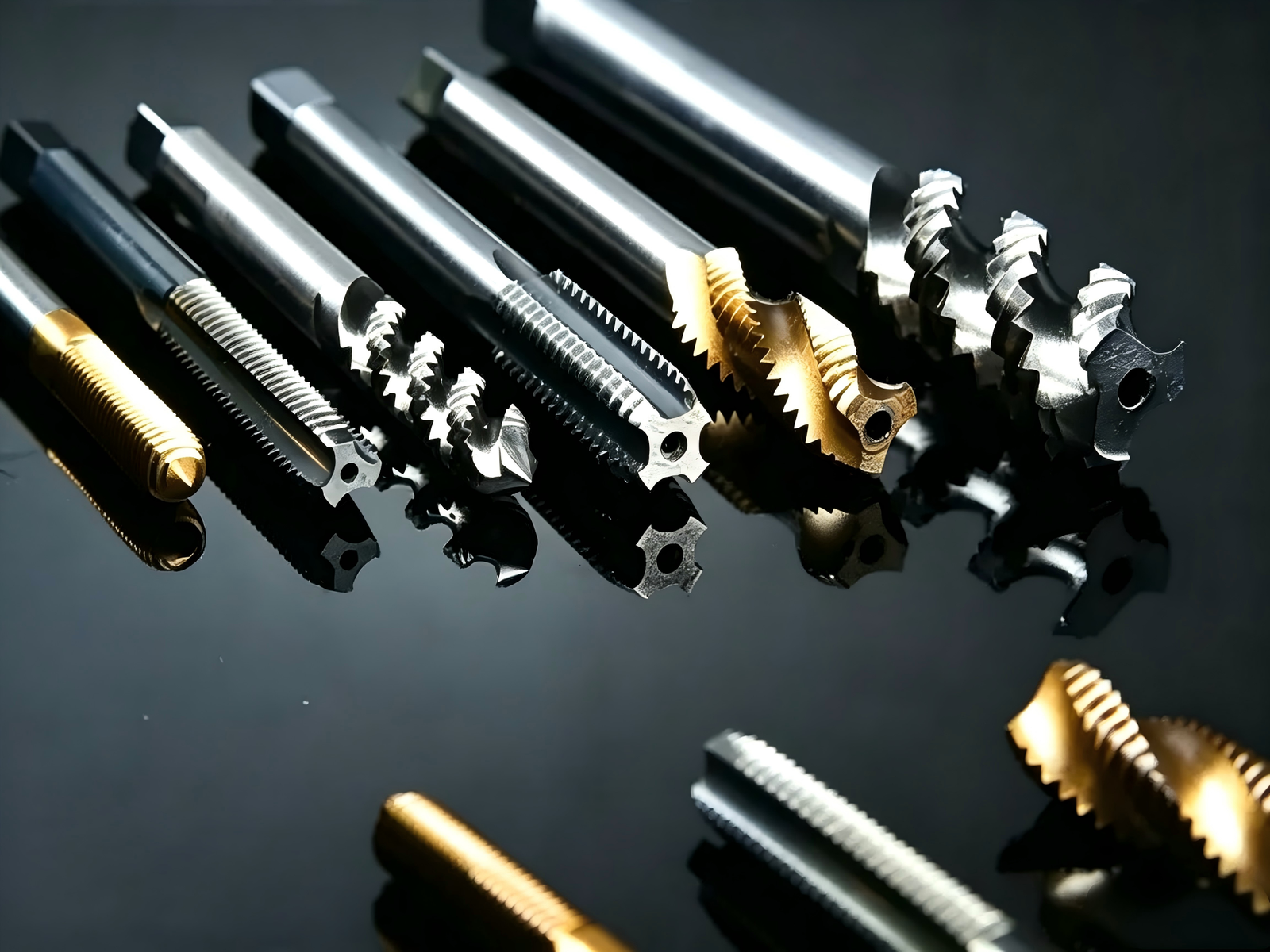
UN taraud est un outil de coupe ou de formage de précision utilisé pour créer des filetages internes à l'intérieur d'un trou percé. Les filetages finis permettent d'installer en toute sécurité les fixations correspondantes telles que les boulons et les vis., assurer un bon assemblage mécanique.
Contrairement au filetage externe, qui est produit à l'aide de matrices ou d'opérations de tournage, le filetage interne nécessite des tarauds spécialement conçus qui créent progressivement le profil du filetage le long de la paroi intérieure du trou.
Les tarauds sont largement utilisés dans:
Opérations de fraisage
Centres de forage
Usinage manuel
Fabrication automobile
Production aérospatiale
Fabrication de matériel médical
Assemblage électronique
Fabrication d'équipement lourd
Parce que les trous filetés sont souvent des éléments porteurs critiques, un taraudage approprié influence directement les performances du produit, précision d'assemblage, et fiabilité à long terme.
Comment les tarauds créent des fils internes
Les tarauds fonctionnent en entrant dans un trou pré-percé tout en tournant dans des conditions de vitesse et d'avance contrôlées..
Selon la conception du robinet, ils créent des fils de discussion de deux manières:
Enlèvement de matière (Tarauds de coupe)
Les tarauds de coupe traditionnels enlèvent la matière à l'aide d'arêtes de coupe tranchantes situées le long des cannelures.
Pendant la rotation:
Matériau de cisaillement des arêtes de coupe
Les cannelures évacuent les copeaux
Le profil du fil se forme progressivement
Les filetages internes sont finis au pas requis
Les tarauds coupants sont le type le plus couramment utilisé pour les aciers, acier inoxydable, fonte, et de nombreux plastiques techniques.
Déformation matérielle (Tarauds de formage)
Tarauds filetés, également connu sous le nom de robinets à rouleau, ne coupez pas le matériau.
Plutôt, ils déforment plastiquement le matériau sous haute pression, produire des fils sans générer de copeaux.
Les avantages incluent:
Des fils plus solides
Meilleure finition de surface
Durée de vie de l'outil plus longue
Aucun problème d'évacuation des copeaux
Cependant, les tarauds de formage fonctionnent uniquement avec des matériaux ductiles tels que:
Aluminium
Cuivre
Laiton
Acier doux
Certains aciers inoxydables
Principaux composants d'un taraud
Bien que les tarauds existent dans de nombreux styles, la plupart partagent les mêmes composants fondamentaux.
Chanfreiner
Le chanfrein est la section de coupe conique à l'avant du taraud.
Il introduit progressivement l'action de coupe dans la pièce tout en réduisant la force de coupe..
Différents types de tarauds ont des longueurs de chanfrein différentes:
Chanfrein long — tarauds coniques
Chanfrein moyen — tarauds
Chanfrein court — tarauds de fond
Couper les dents
Les dents coupantes enlèvent de la matière ou la déforment pour générer le profil du filetage.
Leur géométrie affecte directement:
Précision du filetage
Durée de vie de l'outil
Finition de surface
Couple de coupe
Flûtes
Les cannelures sont des rainures qui longent le corps du robinet.
Ils remplissent plusieurs fonctions:
Fluide de coupe de guidage
Supprimer les jetons
Réduisez les forces de coupe
Améliorer le refroidissement
La conception de la flûte est l'une des plus grandes différences entre les types de robinets.
Jarret
La tige relie la partie coupante au support de la machine ou au porte-taraud.
Les robinets industriels peuvent inclure:
Queue droite
Appartement Weldon
Tige renforcée
Tige allongée
Lecteur carré
Les tarauds manuels comprennent un carré à l'extrémité.
Cela permet à un porte-taraud de saisir et de faire pivoter l'outil manuellement..
Les tarauds machines omettent généralement cette fonctionnalité car ils sont maintenus par des porte-outils CNC.
Comment fonctionne le processus de taraudage
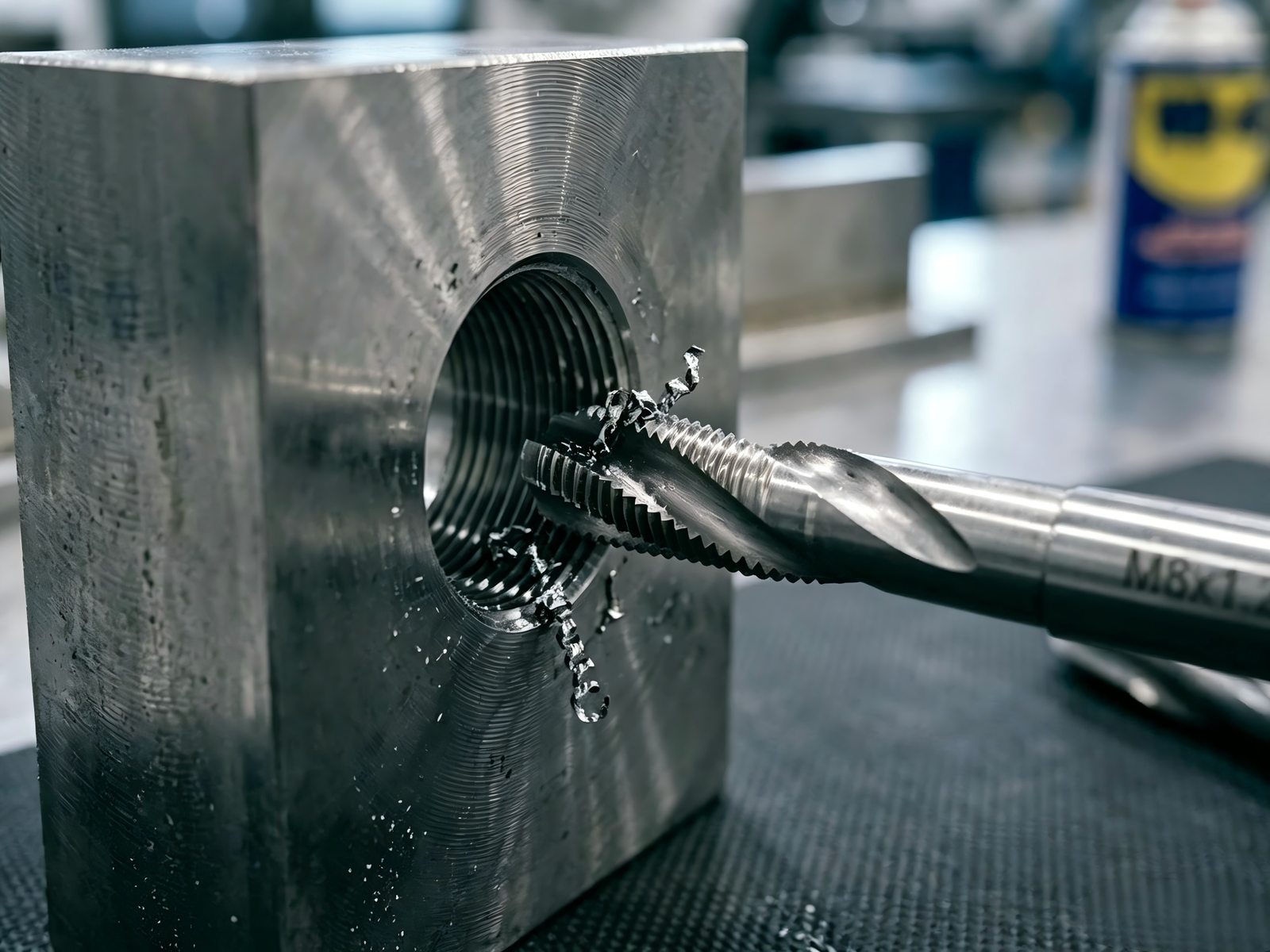
Bien que le taraudage soit souvent considéré comme un processus d'usinage secondaire, obtenir des fils de haute qualité nécessite une planification minutieuse.
Le flux de travail général comprend:
Étape 1: Percez le trou
Un foret correctement dimensionné crée le trou pilote.
Le diamètre du foret doit correspondre à la taille et au pas de filetage souhaités.
Un trou surdimensionné produit des fils lâches.
Un trou sous-dimensionné augmente considérablement le couple de taraudage.
Étape 2: Alignez le robinet
Un bon alignement est essentiel.
Causes du désalignement:
Robinets cassés
Fils tordus
Mauvais assemblage
Usure excessive des outils
Les machines CNC maintiennent automatiquement l'alignement, tandis que le taraudage manuel nécessite souvent des guides ou des accessoires.
Étape 3: Couper ou former le fil
Le robinet tourne dans le trou.
Selon sa conception, ça non plus:
Enlève du matériel
Matériel de formulaires
L'évacuation des copeaux devient particulièrement importante pour les trous borgnes.
Étape 4: Retirez le robinet
Après avoir atteint la profondeur requise, le robinet s'inverse hors du trou.
Les machines CNC modernes effectuent un taraudage rigide synchronisé pour une précision maximale.
Étape 5: Inspectez les fils
L'inspection de la qualité comprend généralement:
Jauges Go/No-Go
Jauges à bouchon fileté
Coordonner les machines de mesure (MMT)
Systèmes d'inspection optique
L'inspection garantit la précision dimensionnelle avant l'assemblage.
Comprendre les marquages des tarauds standard
Chaque taraud de qualité contient des marquages laser ou des informations gravées qui aident les machinistes à identifier ses spécifications..
Comprendre ces marquages garantit que le taraud correct est sélectionné pour le travail.
Taille nominale
La taille nominale indique le grand diamètre du filetage.
Les exemples incluent:
M3
M6
M10
M16
Par exemple:
M8 × 1.25
moyens:
Grand diamètre: 8 mm
Pas de filetage: 1.25 mm
Norme de filetage
Différentes industries suivent différents systèmes de filetage.
Les normes communes comprennent:
| Standard | Application |
| Métrique (OIN) | Fabrication mondiale |
| UNC | Fixations à usage général |
| Uf | Fils fins |
| UNEF | Applications de précision |
| TNP | Étanchéité des tuyaux |
| BSP | Systèmes hydrauliques |
| ACMÉ | Transmission de puissance |
Choisir la mauvaise norme de filetage rend l'assemblage impossible.
Matériau du robinet
Différents matériaux offrent différents niveaux de résistance à l'usure.
Acier à haute vitesse (HSS)
Avantages:
Abordable
Difficile
Facile à aiguiser
Bon pour l'aluminium et l'acier doux
Mieux pour:
Usinage général
Production à faible volume
HSS Cobalt (HSS-Co)
Contient du cobalt supplémentaire pour:
Résistance thermique plus élevée
Meilleure dureté
Résistance à l’usure améliorée
Adapté à:
Acier inoxydable
Acier allié
Alliages de titane
Carbure solide
Les tarauds en carbure fournissent:
Rigidité exceptionnelle
Résistance à l'usure exceptionnelle
Longue durée de vie
Excellente stabilité dimensionnelle
Mieux pour:
Acier trempé
Fonte
Production CNC en grand volume
Métal en poudre
Les tarauds pour la métallurgie des poudres se combinent:
Dureté
Résistance à l'usure
Résistance améliorée à la fracture
Couramment utilisé dans les lignes de production automatisées.
Tarauds avec revêtement TiN
Le revêtement en nitrure de titane offre:
Frottement réduit
Lubrification améliorée
Meilleure résistance à la chaleur
Durée de vie de l'outil plus longue
Idéal pour:
Acier au carbone
Acier allié
Usinage de moyens volumes
Diamètre de pas
Le diamètre primitif détermine l'étanchéité du filetage interne avec la fixation correspondante..
Un diamètre de pas approprié affecte:
Qualité d'assemblage
Résistance du fil
Engagement des fixations
Résistance aux vibrations
Les industries de précision telles que l'aérospatiale et la fabrication médicale nécessitent souvent des tolérances de diamètre primitif très serrées..
Classes de tolérance de filetage
Les normes internationales définissent les variations dimensionnelles acceptables.
Les classes de tolérance de taraudage courantes incluent:
| Appuyez sur Classe | Filetage interne typique |
| H1 | 4H–5H |
| H2 | 5G-6H |
| H3 | 6G-7H |
| H4 | 6H-7H |
La sélection de la tolérance appropriée garantit l'ajustement souhaité entre les filetages internes et externes tout en conservant l'interchangeabilité.
Types de tarauds
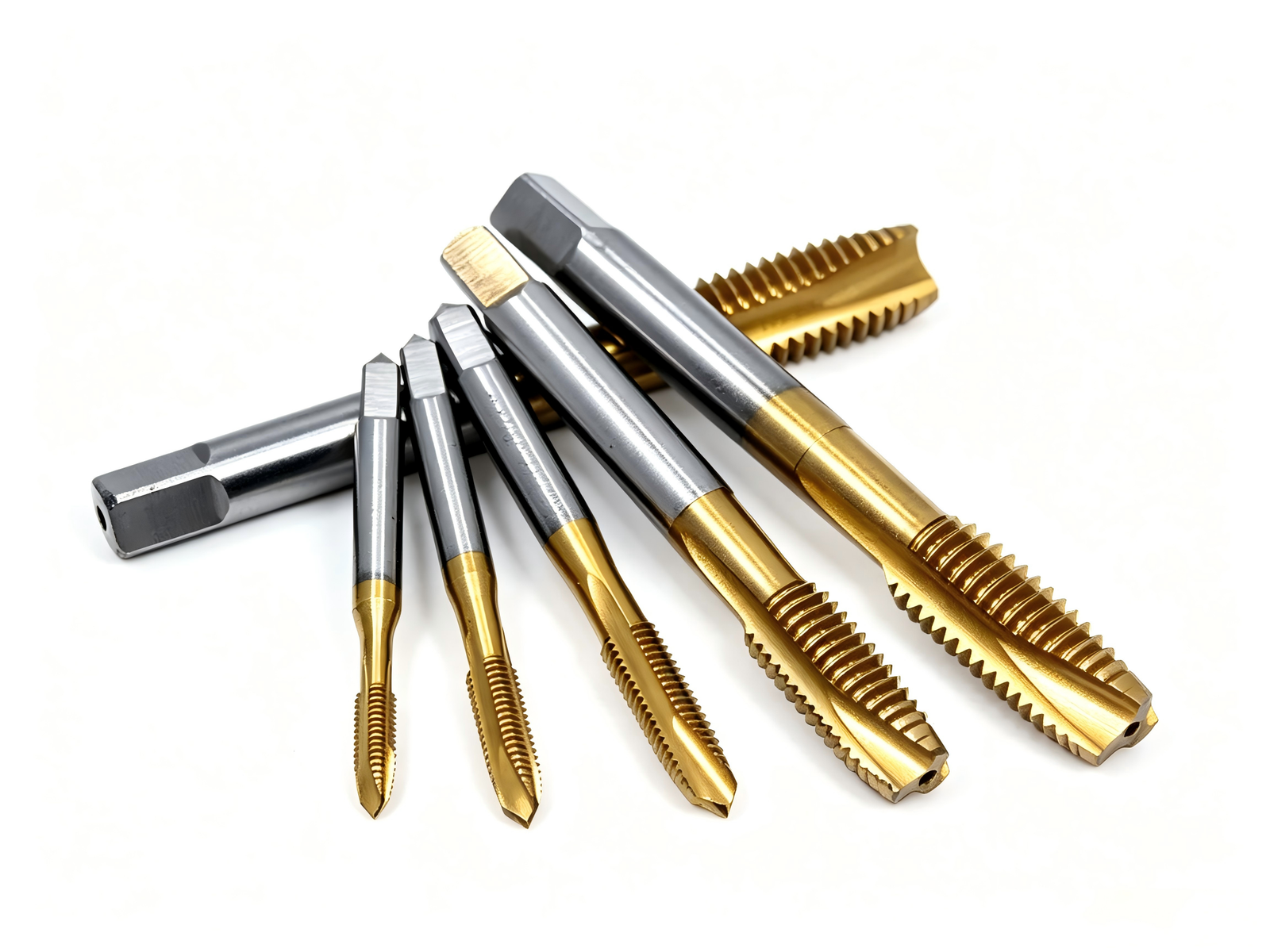
La sélection du taraud approprié est essentielle pour produire des, durable, et filetages internes de haute qualité. Chaque taraud est conçu avec une géométrie de coupe spécifique, conception de flûte, longueur du chanfrein, et caractéristiques d'évacuation des copeaux pour fonctionner efficacement dans certaines conditions d'usinage.
Facteurs tels que le matériau de la pièce à usiner, type de trou, volume de production, capacité de la machine, et la norme de filetage influencent le taraud à utiliser. Comprendre ces différences permet aux fabricants d'améliorer l'efficacité de l'usinage, réduire l'usure des outils, minimiser les temps d'arrêt, et obtenez une qualité de filetage constante.
Vous trouverez ci-dessous les types de tarauds les plus courants et leurs applications idéales..
Tarauds à main
Les tarauds manuels sont les outils traditionnels utilisés pour couper manuellement les filetages internes.. Ils sont largement utilisés en maintenance, travaux de réparation, prototypage, et fabrication en faible volume où l'usinage CNC n'est pas nécessaire.
Contrairement aux tarauds mécaniques, les tarauds à main sont généralement fournis sous forme d'un ensemble de trois tarauds qui travaillent ensemble pour produire progressivement le filetage fini.
Taraud conique
Le taraud conique est conçu pour démarrer le processus de filetage.
Il comporte un long chanfrein d'environ 8–10 filetages progressivement effilés, permettant à la charge de coupe d'être répartie uniformément sur plusieurs arêtes de coupe.
Avantages
Alignement facile du filetage
Force de coupe réduite
Moins de risque de casse du robinet
Idéal pour les débutants
Entrée de fil fluide
Limites
Impossible de couper les fils jusqu'au fond des trous borgnes
Nécessite des tarauds supplémentaires pour terminer le filetage
Meilleures applications
Démarrage de threads manuels
Trous traversants
Entretien général
Travaux de réparation
Branchez le robinet
Le robinet à fiche est considéré comme le robinet manuel le plus polyvalent.
Il contient environ 3–5 fils chanfreinés, lui permettant de continuer à enfiler après un taraud conique ou, dans de nombreux cas, commencer à enfiler directement.
Grâce à sa géométrie équilibrée, le robinet à fiche est couramment utilisé dans les ateliers et les ateliers d'usinage.
Avantages
Polyvalent
Convient à la plupart des matériaux
Plus rapide que les tarauds coniques
Excellent pour les trous traversants
Meilleures applications
Filetage à usage général
Réparation de production
Opérations d'entretien
Trous de profondeur moyenne
Robinet de fond
Les tarauds de fond sont spécialement conçus pour les trous borgnes.
Contrairement aux robinets coniques, ils contiennent seulement 1–2 fils chanfreinés, permettant aux arêtes de coupe de continuer presque jusqu'à la pointe de l'outil.
Cela permet au taraud de créer des filetages presque jusqu'au fond du trou.
Avantages
Profondeur de filetage maximale
Idéal pour les trous borgnes
Produit des fils sur toute la longueur
Limites
Impossible de démarrer des discussions tout seul
Nécessite d'abord un robinet conique ou à bouchon
Meilleures applications
Trous borgnes
Assemblages de précision
Composants aérospatiaux
Collecteurs hydrauliques
Tarauds pour machines
Les tarauds machine sont conçus pour les opérations de filetage automatiques à l'aide de centres d'usinage CNC, presses à perceuses, et taraudeuses.
Contrairement aux robinets manuels, ils sont conçus pour réaliser l'opération de filetage en un seul cycle tout en conservant une précision et une productivité élevées.
Les tarauds machines modernes sont fabriqués à partir de matériaux d'outils de première qualité tels que:
Acier à haute vitesse (HSS)
Métal en poudre
HSS-Co (Cobalt)
Carbure solide
Beaucoup sont encore améliorés par des revêtements avancés tels que:
Étain
TiCN
Tialn
AlCrN
Ces revêtements améliorent considérablement la résistance à l'usure et la dissipation thermique.
Avantages
Efficacité de production élevée
Excellente répétabilité
Compatible avec taraudage rigide
Convient pour l'automatisation
Durée de vie de l'outil plus longue
Meilleures applications
Usinage CNC
Production de masse
Fabrication automobile
Usinage aérospatial
Production de composants médicaux
Tarauds à flûte hélicoïdale
Les tarauds à cannelure hélicoïdale sont l'un des tarauds les plus couramment utilisés pour trous aveugles.
Leur conception à cannelure hélicoïdale soulève les copeaux vers le haut et hors du trou pendant l'usinage..
Cela réduit considérablement l'emballage des copeaux, qui est l'une des principales causes de robinetterie cassée.
Comment ils fonctionnent
Pendant que le robinet tourne:
Les arêtes de coupe enlèvent de la matière.
Les cannelures hélicoïdales tirent les copeaux vers le haut.
Le liquide de refroidissement atteint efficacement la zone de coupe.
La qualité du fil s'améliore.
Sélection de l'angle de spirale
L'angle d'hélice affecte les performances de coupe.
| Angle d'hélice | Mieux pour |
| 15° | Matériaux durs |
| 25° | Usinage général |
| 35° | Acier inoxydable |
| 45° | Aluminium et matériaux souples |
Avantages
Excellente évacuation des copeaux
Bris de robinet réduit
Finition de surface améliorée
Idéal pour les trous borgnes profonds
Meilleures applications
Acier inoxydable
Aluminium
Titane
Trous borgnes
Trous filetés profonds
Tarauds à pointe spirale (Robinets pour armes à feu)
Bien que souvent confondu avec les tarauds à flûte hélicoïdale, les robinets à pointe en spirale fonctionnent différemment.
Au lieu de tirer les jetons vers le haut, ils pousser les jetons vers l'avant à travers le trou.
Pour cette raison, les robinets à pointe en spirale sont les mieux adaptés pour à travers des trous.
Comment ils fonctionnent
Pendant la coupe:
Les jetons avancent devant le robinet.
La zone de coupe reste dégagée.
Un couple de coupe inférieur est généré.
Un usinage plus rapide devient possible.
Avantages
Vitesse de production élevée
Excellente évacuation des copeaux
Durée de vie de l'outil plus longue
Résistance à la coupe réduite
Meilleures applications
Trous traversants
Usinage CNC
Usinage de production
Acier au carbone
Acier allié
Robinets pour tuyaux
Les robinets de tuyauterie produisent des filetages internes utilisés pour sceller les fluides et les gaz..
Contrairement aux filetages de fixation standards, les filetages de tuyaux sont conçus pour créer des joints étanches à la pression.
Les normes les plus courantes comprennent:
TNP
NPTF
BSPT
BSPP
Les robinets de tuyauterie sont largement utilisés dans:
Systèmes hydrauliques
Systèmes pneumatiques
Équipements pétroliers et gaziers
Conduites d'eau
Vannes industrielles
Avantages
Connexions résistantes aux fuites
Formes de filetage standardisées
Performances d'étanchéité fiables
Tarauds filetés (Robinets à rouleaux)
Les tarauds formant des filetages créent des filetages sans enlever de matière.
Au lieu de couper, ils déforment plastiquement le matériau de la pièce.
Parce qu'aucun jeton n'est généré, Les tarauds autotaraudeurs éliminent entièrement les problèmes d'évacuation des copeaux.
Avantages
Pas de jetons
Des fils plus solides
Meilleure résistance à la fatigue
Finition de surface améliorée
Durée de vie de l'outil plus longue
Limites
Ils nécessitent des matériaux ductiles.
Les matériaux appropriés comprennent:
Aluminium
Cuivre
Laiton
Acier doux
Acier à faible teneur en carbone
Certains aciers inoxydables
Ils ne doivent pas être utilisés sur des matériaux fragiles comme la fonte.
Applications typiques
Pièces automobiles
Électronique
Boîtiers en aluminium
Production à volume élevé
Foret et taraud combinés
Un foret et un taraud combinés intègrent deux opérations d'usinage en un seul outil.
La pointe du foret crée d'abord le trou.
Immédiatement après, la section de filetage coupe les filetages internes.
Cela élimine les changements d’outils et réduit le temps de cycle.
Avantages
Production plus rapide
Temps de configuration réduit
Coûts d’usinage réduits
Précision de positionnement améliorée
Limites
Idéal pour:
Matériaux fins
Aluminium
Laiton
Plastiques
Production moyenne
Tarauds en carbure monobloc
Les tarauds en carbure monobloc sont des outils haut de gamme conçus pour les environnements d'usinage exigeants.
Par rapport aux tarauds HSS, offre de tarauds en carbure:
Dureté plus élevée
Résistance à l'usure supérieure
Une plus grande stabilité dimensionnelle
Excellentes performances à grande vitesse
Parce que le carbure est moins flexible, ces tarauds nécessitent des machines rigides et un alignement précis.
Meilleures applications
Acier trempé
Fonte
Alliages haute température
Alliages de titane
Usinage CNC en grand volume
Rallonges
Les tarauds d'extension comportent une tige allongée qui permet d'usiner dans des endroits où les tarauds standard ne peuvent pas atteindre.
Ces robinets sont couramment utilisés pour:
Cavités profondes
Longs trous borgnes
Fabrication de moules
Structures aérospatiales
Gros composants fabriqués
Avantages
Longue portée
Accessibilité améliorée
Filetage stable dans les zones confinées
Tarauds interrompus
Les tarauds à filetage interrompu ont des dents de coupe alternées retirées du profil du filetage.
Cette géométrie unique crée des espaces plus grands pour l'évacuation des copeaux.
Par conséquent:
Le couple de coupe diminue.
La génération de chaleur est réduite.
Le colmatage des copeaux devient moins probable.
Ces tarauds fonctionnent particulièrement bien dans les matériaux gommeux et les alliages à copeaux longs.
Meilleures applications
Acier inoxydable
Alliages de nickel
Usinage de trous profonds
Production lourde
Tarauds à boulons de séjour
Les tarauds à boulon de maintien sont des outils spécialisés conçus pour l'usinage de boulons de maintien de grand diamètre utilisés dans les chaudières., récipients sous pression, et équipements de production d'électricité.
Ces robinets comportent généralement:
Grands diamètres
Flûtes profondes
Construction robuste
Applications
Fabrication de chaudières
Systèmes à vapeur
Centrales électriques
Équipement industriel lourd
Robinets de gaz
Les robinets de gaz sont spécialement conçus pour les raccordements de gazoducs.
Ils produisent des filetages internes précis qui garantissent une étanchéité sans fuite sous pression.
Les applications courantes incluent:
Systèmes de gaz naturel
Équipement GPL
Conduites de gaz industriels
Fabrication de vannes
Robinets principaux
Contrairement aux robinets de production standards, les tarauds principaux sont principalement utilisés pour la vérification et l'étalonnage des filetages.
Ils aident les fabricants:
Inspecter la qualité du fil
Vérifier les dimensions du filetage
Restaurer les fils légèrement endommagés
Maintenir la précision de l'usinage
Les tarauds principaux se trouvent couramment dans les laboratoires de contrôle qualité et les installations d'usinage de précision..
Comparaison des différents types de tarauds
Choisir le bon robinet devient beaucoup plus facile en comparant leurs caractéristiques côte à côte.
| Type de robinet | Meilleur type de trou | Évacuation des copeaux | Meilleurs matériaux | Volume de production | Principal avantage |
| Taraud conique | À travers | Modéré | Métaux généraux | Faible | Démarrage facile du fil |
| Branchez le robinet | À travers | Modéré | Usinage général | À faible médium | Le plus polyvalent |
| Robinet de fond | Aveugle | Limité | Métaux généraux | Faible | Profondeur de filetage maximale |
| Taraud machine | Les deux | Cela dépend de la conception | La plupart des métaux | Haut | Production automatisée |
| Taraud à flûte hélicoïdale | Aveugle | Vers le haut | Acier inoxydable, aluminium | Haut | Excellente élimination des copeaux |
| Spiral Point Tap | À travers | Avant | Acier, acier allié | Haut | Filetage à grande vitesse |
| Robinet de tuyau | Trous de tuyaux | Modéré | Acier, laiton | Moyen | Filetages de tuyaux étanches |
| Taraud Formant | Les deux | Pas de jetons | Aluminium, cuivre | Haut | Des fils plus solides |
| Foret combiné & Robinet | À travers | Modéré | Métaux doux | Haut | Usinage en une seule étape |
| Taraud en carbure monobloc | Les deux | Excellent | Matériaux durcis | Haut | Durée de vie de l'outil la plus longue |
| Robinet d'extension | Trous profonds | Cela dépend | Divers | Moyen | Longue portée |
| Taraud interrompu | Trous profonds | Excellent | Acier inoxydable | Haut | Couple réduit |
| Restez le boulon du robinet | Gros trous | Excellent | Acier lourd | Faible | Gros fils industriels |
| Robinet principal | Inspection | N / A | Divers | QC | Vérification du fil de discussion |
Pourquoi comprendre les types de robinets est important
Utiliser le bon taraud ne se résume pas à la simple création de fils.. Cela a un impact direct sur l’efficacité de l’usinage, vie de l'outil, précision dimensionnelle, qualité d'assemblage, et les coûts de production. Adaptation du design du robinet au matériau, type de trou, et le processus d'usinage permet de réduire les temps d'arrêt, améliorer la cohérence, et obtenez des résultats fiables dans la fabrication de prototypes et de gros volumes.
Partie suivante: Tableau des tailles des tarauds, Guide de tolérance de filetage, Comment choisir le bon taraud, et conseils de sélection d'experts pour différents matériaux et applications.
Tableau des tailles des tarauds
La sélection de la bonne taille de foret de taraud est l'une des étapes les plus critiques de toute opération de filetage.. Même les tarauds de la plus haute qualité ne peuvent pas produire des filetages précis si le trou pilote est trop grand ou trop petit..
Un trou sous-dimensionné augmente le couple de coupe, génère une chaleur excessive, et augmente considérablement le risque de casse du robinet. inversement, un trou surdimensionné produit des filetages peu profonds avec une force de maintien réduite, pouvant conduire à une défaillance de l'assemblage.
La taille appropriée du foret à taraud dépend de plusieurs facteurs:
Taille du fil
Pas de filetage
Norme de filetage (Métrique, UNC, Uf, TNP, etc.)
Matériau de la pièce
Pourcentage de fil requis
Type de robinet (découpe ou formage)
Pour la plupart des applications d'usinage générales, un engagement de fil de 65%–75% offre un excellent équilibre entre la résistance du filetage et le couple de taraudage.
Tableau des forets à filetage métrique standard
Le tableau suivant répertorie les tailles de filetage métriques couramment utilisées ainsi que leurs diamètres de forage recommandés..
| Taille de filetage | Pas (mm) | Taille de foret recommandée |
| M2× 0.4 | 0.40 | 1.60 mm |
| M2,5× 0.45 | 0.45 | 2.05 mm |
| M3× 0.5 | 0.50 | 2.50 mm |
| M4 × 0.7 | 0.70 | 3.30 mm |
| M5× 0.8 | 0.80 | 4.20 mm |
| M6 × 1.0 | 1.00 | 5.00 mm |
| M8 × 1.25 | 1.25 | 6.80 mm |
| M10 × 1.5 | 1.50 | 8.50 mm |
| M12 × 1.75 | 1.75 | 10.20 mm |
| M16× 2.0 | 2.00 | 14.00 mm |
| M20 × 2.5 | 2.50 | 17.50 mm |
| M24 × 3.0 | 3.00 | 21.00 mm |
Conseil: Consultez toujours les recommandations du fabricant en matière de tarauds., surtout lors de l'utilisation de tarauds autotaraudeurs, car ils nécessitent généralement un trou pilote légèrement plus grand que les tarauds coupants.
Comprendre l'engagement des fils de discussion
L'engagement du filetage fait référence au pourcentage du profil du filetage entièrement formé à l'intérieur du trou..
De nombreux ingénieurs supposent à tort qu'un engagement de filetage plus élevé se traduit toujours par des filetages plus solides.. En réalité, augmenter l'engagement du thread au-delà d'environ 75% augmente considérablement le couple de coupe tout en n'offrant que des améliorations marginales de la résistance du filetage.
Les recommandations générales comprennent:
| Engagement dans le fil de discussion | Application typique |
| 55–60% | Matériaux souples, production à grande vitesse |
| 65–70% | Usinage général |
| 70–75% | La plupart des applications industrielles |
| 75–85% | Connexions à haute résistance (lorsque requis) |
La plupart des opérations d'usinage CNC ciblent 70% engagement du fil car il offre un excellent équilibre entre la force, vie de l'outil, et productivité.
Guide de tolérance des tarauds
Les tolérances de filetage déterminent le degré d'ajustement d'un filetage interne avec son filetage externe correspondant.. Une sélection de tolérance appropriée garantit un assemblage fluide tout en conservant une force de maintien et une interchangeabilité suffisantes.
Les tolérances de filetage sont normalisées selon les spécifications internationales telles que OIN, ANSI, et DEPUIS.
Pourquoi les tolérances de filetage sont importantes
Des tolérances incorrectes peuvent entraîner:
Assemblages lâches
Vibrations excessives
Mauvaise répartition de la charge
Difficulté lors du montage
Usure prématurée des fixations
Défaillance d'un composant
Le choix de la classe de tolérance appropriée est particulièrement important dans des secteurs tels que l'aérospatiale, Équipement médical, automobile, et instrumentation de précision.
Classes courantes de tolérance au robinet
| Tolérance du robinet | Filetage interne typique |
| H1 | 4H, 5H |
| H2 | 5G, 6H |
| H3 | 6G, 7H |
| H4 | 6H, 7H |
En général:
H1 produit des fils plus serrés.
H2 est la classe à usage général la plus courante.
H3 permet des ajustements légèrement plus lâches.
H4 est utilisé là où un dégagement supplémentaire est requis.
Types d'ajustement de filetage
Les ingénieurs sélectionnent généralement l'une des trois catégories d'ajustement en fonction des exigences fonctionnelles de l'application..
Coupe ajustée
Conçu pour les assemblages de précision nécessitant un dégagement minimal.
Les applications typiques incluent:
Composants aérospatiaux
Matériel médical
Instruments de précision
Coupe normale
L'ajustement le plus couramment utilisé dans la fabrication industrielle.
Adapté à:
Machines générales
Pièces automobiles
Produits de consommation
Équipement industriel
Coupe ample
Fournit une autorisation supplémentaire pour les applications impliquant:
Saleté ou débris
Montage/démontage fréquent
Extension thermique
Attaches enduites
Conseils d'experts pour choisir le meilleur taraud
Les machinistes expérimentés prennent souvent en compte des facteurs supplémentaires au-delà des spécifications de base pour optimiser les performances de taraudage.:
Utiliser tarauds à flûte hélicoïdale pour trous borgnes pour améliorer l'évacuation des copeaux.
Choisir robinets à pointe en spirale pour trous traversants pour maximiser la productivité.
Sélectionner tarauds formant des filetages pour matériaux ductiles lorsqu'ils sont plus résistants, des fils sans éclats sont souhaités.
Adaptez le matériau et le revêtement du taraud au matériau de la pièce à usiner pour une durée de vie optimale de l'outil.
Assurez-vous que la machine a une rigidité suffisante, surtout lors de l'utilisation de tarauds en carbure.
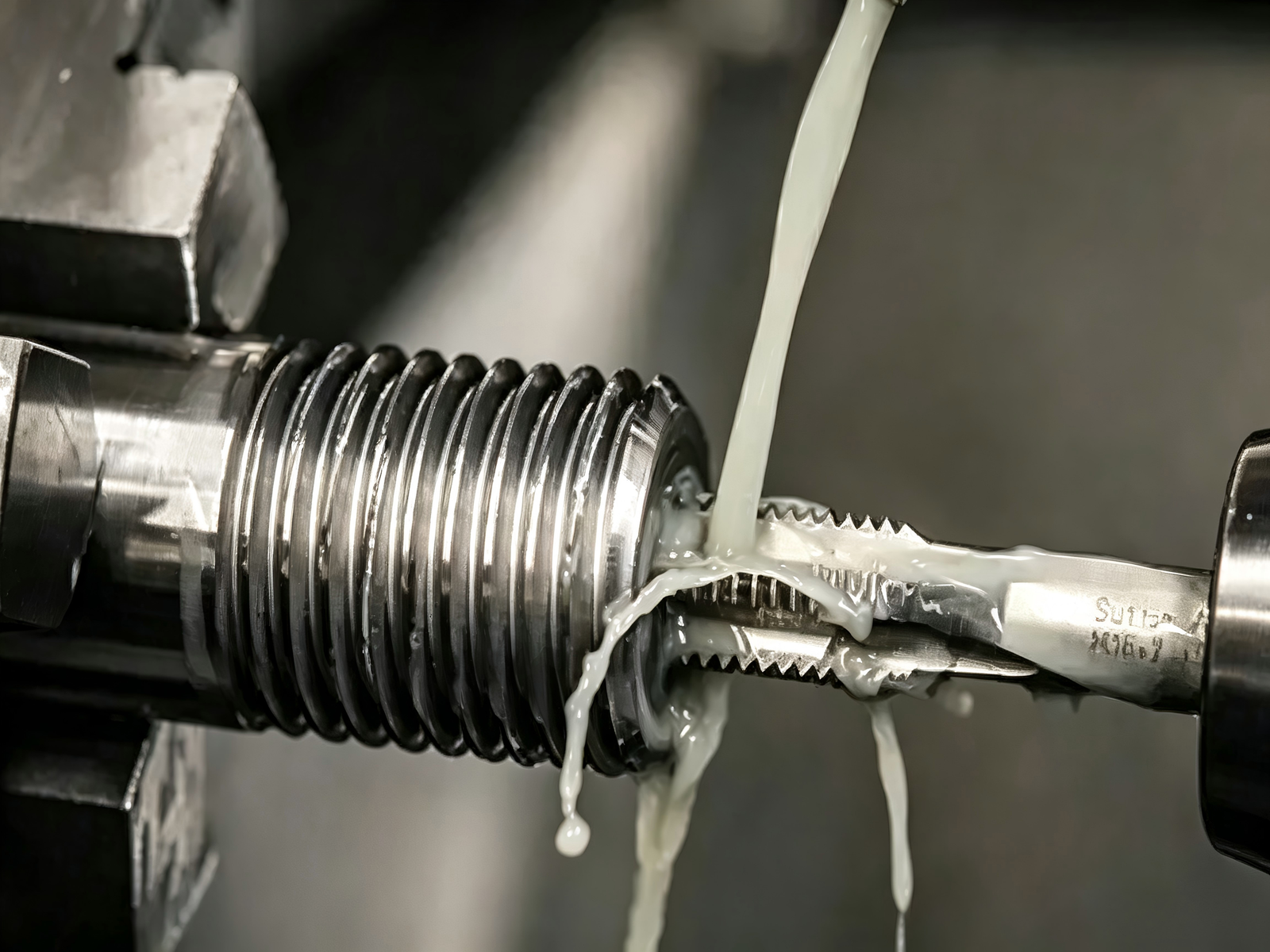
Vérifiez la distribution du liquide de refroidissement pour réduire l'accumulation de chaleur et améliorer l'élimination des copeaux..
Utilisez la vitesse et l'avance de taraudage appropriées en fonction du matériau et des recommandations du fabricant du taraud..
Inspectez régulièrement les tarauds pour vérifier leur usure et remplacez-les avant que la qualité du filetage ne se détériore..
Faire des sélections de tarauds éclairées améliore non seulement la qualité du filetage, mais réduit également les coûts d'usinage, minimise les temps d'arrêt, et augmente l'efficacité globale de la fabrication. Contactez-nous pour plus d'informations.


