



Contrairement aux arbres à clavette traditionnels, les arbres cannelés répartissent les charges sur plusieurs dents, ce qui entraîne une capacité de couple plus élevée, durabilité améliorée, usure réduite, et une efficacité opérationnelle améliorée. Ces avantages en font le choix privilégié pour les applications exigeantes où la précision, force, et une longue durée de vie sont essentielles.
Dans ce guide complet, nous allons explorer ce que sont les arbres cannelés, Comment ils travaillent, les différents types disponibles, méthodes de fabrication, sélection des matériaux, applications industrielles, et considérations clés en matière de conception.
Qu'est-ce qu'un arbre cannelé?
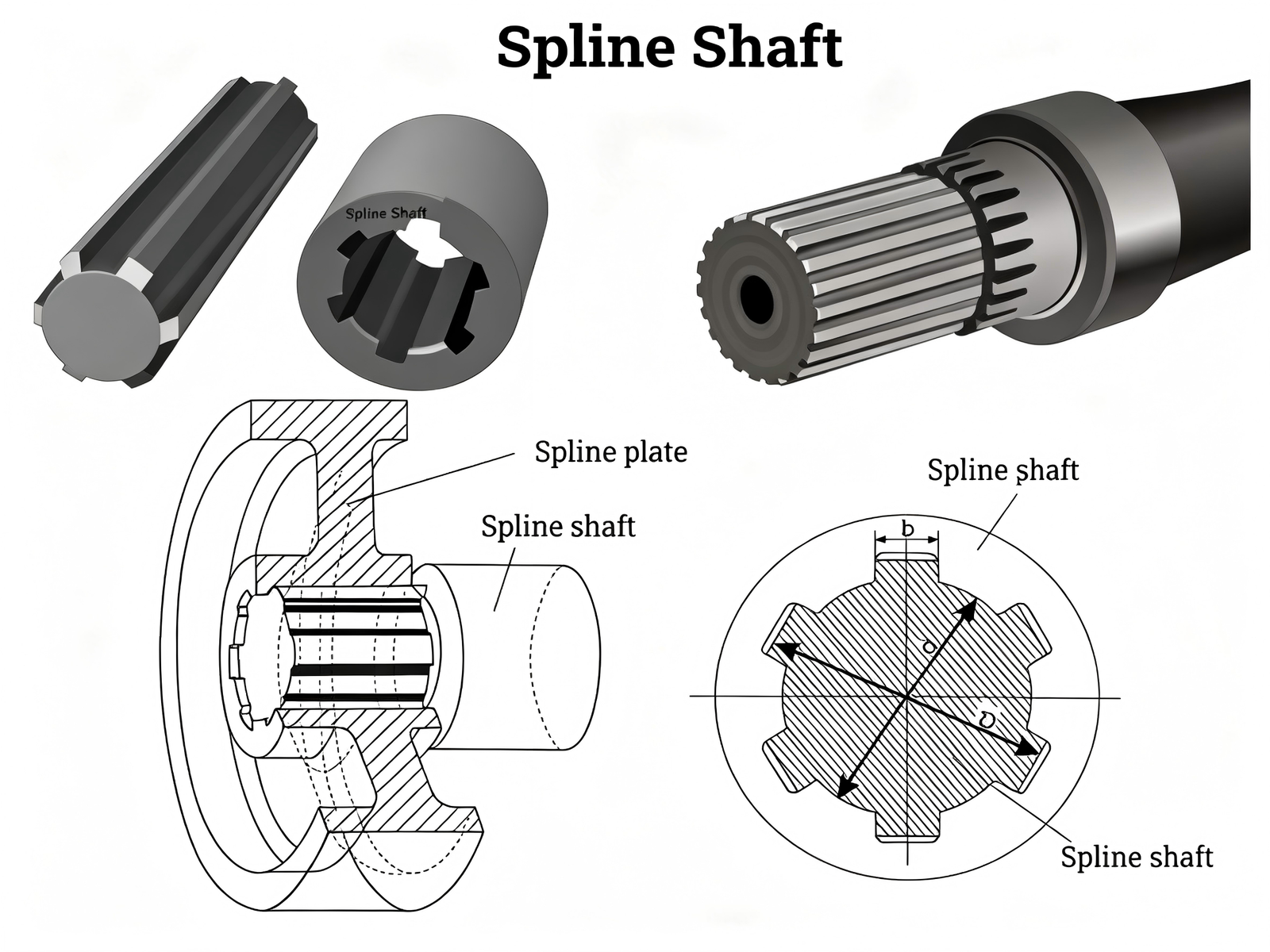
Un arbre cannelé est un composant mécanique cylindrique comportant une série de crêtes ou de dents externes appelées cannelures.. Ces cannelures s'accouplent avec les rainures correspondantes à l'intérieur d'un moyeu, engrenage, couplage, poulie, ou autre composant mécanique.
Les dents imbriquées créent une connexion mécanique positive qui permet une transmission efficace du couple tout en maintenant un alignement de rotation précis.
Les arbres cannelés sont largement utilisés car ils offrent:
- Capacité de transmission de couple élevée
- Alignement précis de l'arbre au moyeu
- Jeu réduit
- Répartition améliorée de la charge
- Durabilité améliorée
- Capacité de mouvement axial dans certaines conceptions
Principaux composants d'un arbre cannelé
Un arbre cannelé typique se compose de:
Corps d'arbre
La section cylindrique centrale qui supporte les cannelures et transfère la force de rotation.
Dents cannelées
Les crêtes surélevées usinées le long de la surface de l'arbre qui s'engagent dans les composants correspondants.
Diamètre majeur
Le diamètre extérieur mesuré à travers les sommets des dents cannelées.
Petit diamètre
Le diamètre mesuré à travers la racine des dents cannelées.
Rayon de racine
La zone de transition incurvée entre les dents cannelées qui aide à réduire la concentration des contraintes.
Angle de pression
L'angle entre les surfaces de cannelure d'accouplement qui affecte la répartition de la charge et les caractéristiques d'engagement.
Comment fonctionne un arbre cannelé?
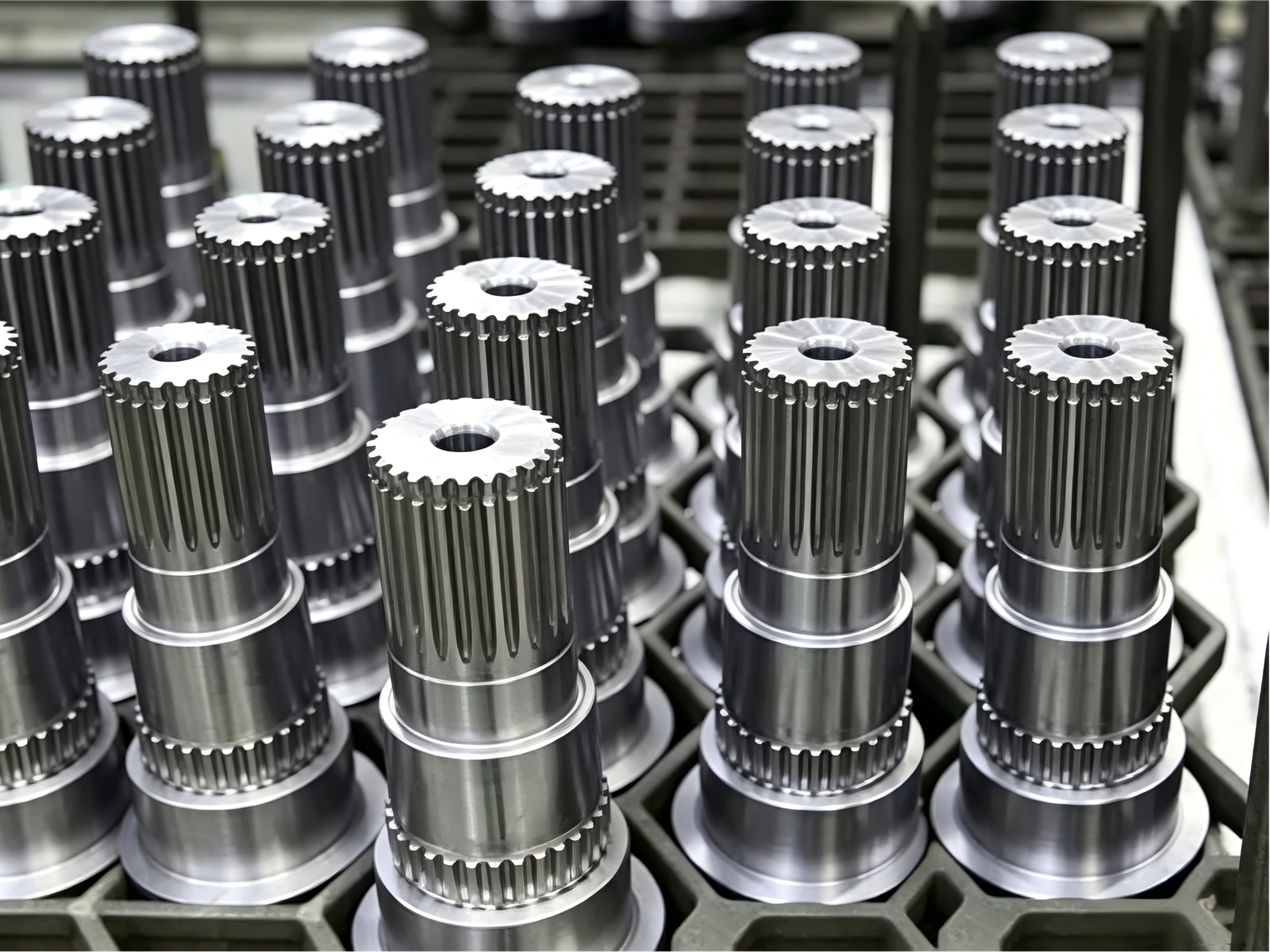
Un arbre cannelé transmet la force de rotation par engagement mécanique direct entre les cannelures externes et internes.
Lorsque le couple est appliqué:
- L'arbre tourne.
- Les dents cannelées engagent le composant d'accouplement.
- La charge est répartie sur plusieurs surfaces splines.
- Le couple est transféré efficacement avec un glissement minimal.
Contrairement aux connexions basées sur la friction, les arbres cannelés fournissent un mécanisme d'entraînement positif, ce qui les rend très fiables dans les applications à forte charge.
Splines fixes
Les cannelures fixes verrouillent l'arbre et le composant d'accouplement ensemble, empêchant le mouvement axial.
Les applications courantes incluent:
- Boîtes de vitesses
- Accouplements
- Systèmes de transmission de puissance
Splines coulissantes
Les cannelures coulissantes permettent aux composants de se déplacer le long de l'arbre tout en transmettant le couple.
On les trouve couramment dans:
- Arbres de transmission automobiles
- Arbres télescopiques
- Systèmes de prise de force
Arbres cannelés vs arbres à clavette
| Fonctionnalité | Arbre cannelé | Arbre à clé |
| Capacité de couple | Haut | Modéré |
| Répartition de la charge | Uniforme | Concentré |
| Résistance à l'usure | Excellent | Bien |
| Précision d'alignement | Haut | Modéré |
| Vie de fatigue | Plus long | Plus court |
| Contrecoup | Inférieur | Plus haut |
| Coût de fabrication | Plus haut | Inférieur |
Pour les applications hautes performances, les arbres cannelés surpassent généralement les arbres à clavette traditionnels.
Pourquoi les arbres cannelés sont-ils importants?
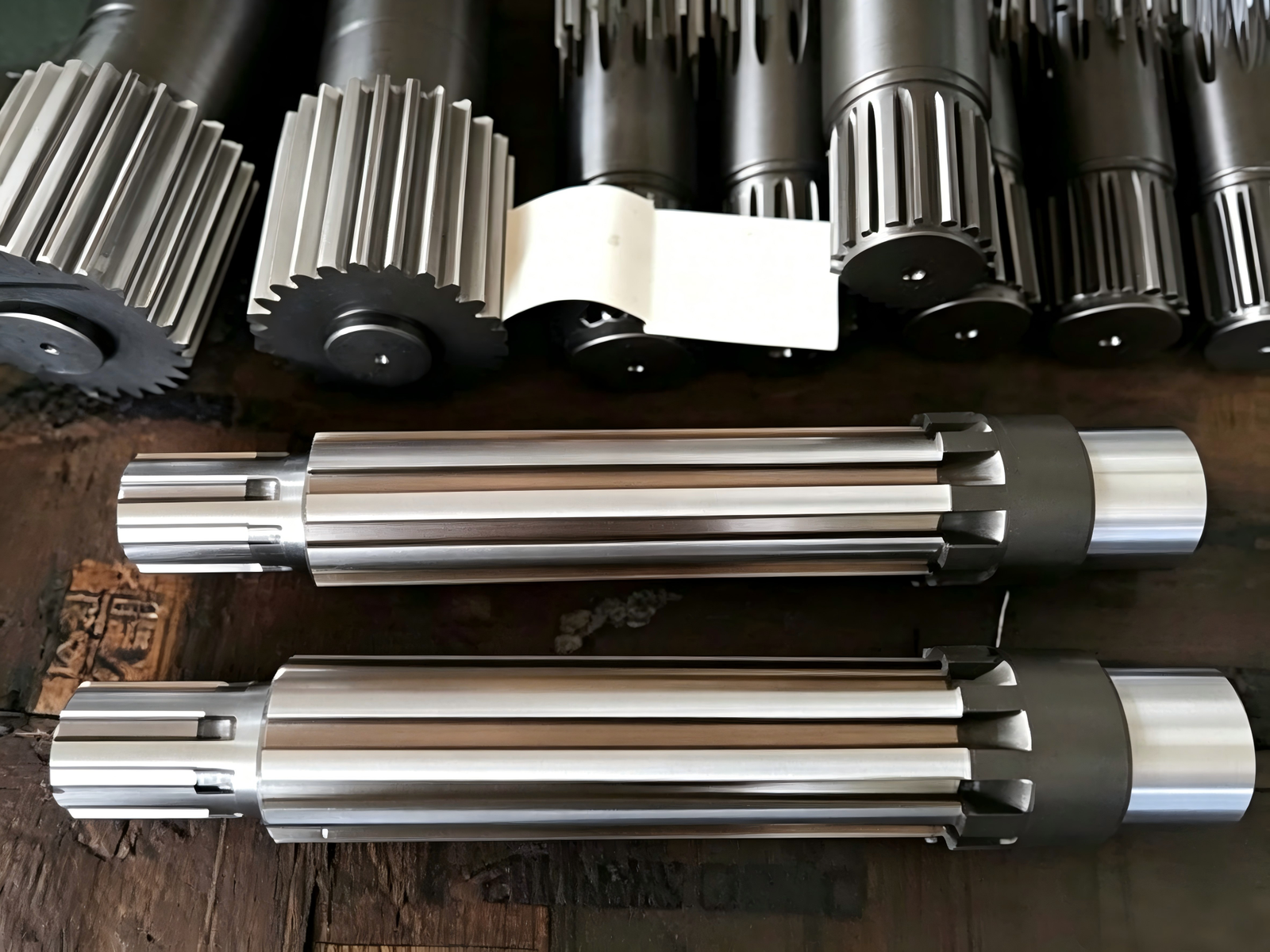
Transmission de couple efficace
Parce que le couple est réparti sur plusieurs dents, les arbres cannelés peuvent supporter des charges nettement plus élevées que les connexions à clavette.
Alignement de précision
La géométrie de verrouillage maintient un positionnement rotatif précis entre les composants connectés.
Répartition améliorée de la charge
Plusieurs points de contact répartissent les forces uniformément, réduire le stress localisé.
Usure réduite
Le partage de charge minimise les dommages de surface et prolonge la durée de vie des composants.
Une plus grande fiabilité
Les arbres cannelés fonctionnent de manière constante, même dans des conditions de fonctionnement difficiles.
Types d'arbres cannelés
Différents profils de cannelures sont disponibles en fonction des exigences de l'application.
Splines à développante
Les cannelures en développante sont la conception de spline la plus couramment utilisée dans le monde.
Caractéristiques
- Profil de dent courbé
- Répartition uniforme de la charge
- Fabrication et inspection faciles
- Excellente capacité d'auto-centrage
Applications
- Transmissions automobiles
- Boîtes de vitesses industrielles
- Systèmes aérospatiaux
- Machinerie lourde
Avantages
- Capacité de couple élevée
- Longue durée de vie
- Dimensions standardisées
Côté droit (Parallèle) Splines
Les cannelures à côtés droits comportent des flancs de dents parallèles.
Caractéristiques
- Géométrie simple
- Usinage facile
- Production rentable
Applications
- Machines agricoles
- Équipement industriel
- Systèmes généraux de transmission de puissance
Avantages
- Coûts de fabrication réduits
- Montage et démontage faciles
Cannelures dentelées
Les cannelures dentelées utilisent des dents en forme de V ou triangulaires.
Caractéristiques
- Haute précision de positionnement
- Forte capacité de verrouillage
- Résistance au frottement accrue
Applications
- Systèmes de direction
- Machines de précision
- Composants aérospatiaux
Avantages
- Excellentes performances antidérapantes
- Positionnement angulaire précis
Splines hélicoïdales
Les cannelures hélicoïdales comportent des dents taillées en biais autour de l'arbre.
Caractéristiques
- Engagement fluide
- Vibrations réduites
- Bruit de fonctionnement réduit
Applications
- Transmissions à grande vitesse
- Machines de précision
- Systèmes d'entraînement aérospatiaux
Avantages
- Fonctionnement silencieux
- Partage de charge amélioré
Cannelures couronnées
Les cannelures couronnées ont des surfaces de dents légèrement incurvées.
Caractéristiques
- Compenser le désalignement
- Réduire la charge sur les bords
Applications
- Systèmes aéronautiques
- Accouplements flexibles
- Matériel lourd
Avantages
- Durée de vie améliorée
- Meilleure tolérance d'alignement
Cannelures à billes
Les cannelures à billes intègrent des roulements à recirculation de billes.
Caractéristiques
- Mouvement rotatif et linéaire simultané
- Frottement extrêmement faible
Applications
- Robotique
- Systèmes d'automatisation
- Machines CNC
Avantages
- Mouvement fluide
- Haute précision
Matériaux utilisés pour les arbres cannelés
La sélection des matériaux a un impact significatif sur les performances et la durée de vie.
Acier au carbone
Les notes courantes incluent:
- AISI 1045
- AISI 1050
Avantages:
- Bonne usinabilité
- Rentable
- Force modérée
Acier allié
Qualités populaires:
- 4140
- 4340
- 8620
Avantages:
- Haute résistance
- Excellente résistance à l'usure
- Propriétés de fatigue supérieures
Acier inoxydable
Notes communes:
- 304
- 316
- 17-4PH
Avantages:
- Résistance à la corrosion
- Convient aux environnements difficiles
- Excellente durabilité
Alliages d'aluminium
Notes communes:
- 6061-T6
- 7075-T6
Avantages:
- Poids léger
- Résistant à la corrosion
- Bon rapport résistance/poids
Alliages de titane
Avantages:
- Résistance exceptionnelle
- Faible poids
- Résistance à la corrosion exceptionnelle
Applications:
- Aérospatial
- Défense
- Matériel médical
Processus de fabrication d'arbres cannelés
La fabrication de précision est essentielle à la performance des cannelures.
Tournage CNC
Le corps de l'arbre est initialement usiné aux dimensions requises.
Fraisage de cannelures
Fraisage CNC les fraises créent des profils de cannelure.
Avantages:
- Production flexible
- Convient aux prototypes
Fraisage de splines
L'une des méthodes les plus efficaces pour la production en grand volume.
Avantages:
- Grande précision
- Excellente productivité
Brochage
Utilisé principalement pour les cannelures internes.
Avantages:
- Haute précision
- Temps de cycle rapides
Façonnage des engrenages
Idéal pour les cannelures internes et externes.
Avantages:
- Polyvalent
- Convient aux profils complexes
Électroérosion à fil
Utilisé pour les géométries de cannelures complexes et les tolérances serrées.
Avantages:
- Précision exceptionnelle
- Capacité de profil complexe
Traitements de surface pour arbres cannelés
Le traitement de surface améliore la durabilité et la résistance à l'usure.
Trempe par induction
Fournit une dureté localisée sur les dents cannelées.
Cémentation
Crée une surface dure et résistante à l'usure tout en conservant un noyau dur.
Nitruration
Améliore la résistance à l’usure sans distorsion significative.
Oxyde noir
Fournit une légère protection contre la corrosion.
Placage de zinc
Améliore la résistance à la corrosion.
Chromage dur
Améliore la résistance à l’usure et la dureté de la surface.
Considérations de conception clés
Une conception appropriée garantit des performances fiables à long terme.
Exigences de couple
Le profil cannelé doit s'adapter au couple de fonctionnement maximum.
Nombre de dents
Un plus grand nombre de dents améliore généralement la répartition de la charge.
Diamètre de l'arbre
Détermine la résistance globale et la rigidité en torsion.
Angle de pression
Affecte les caractéristiques d'engagement et le transfert de charge.
Tolérance de désalignement
Important pour les systèmes soumis à des vibrations ou à des mouvements.
Vie de fatigue
Critique pour les applications de chargement cyclique.
Normes industrielles pour les arbres cannelés
Plusieurs normes régissent les dimensions et tolérances des cannelures.
ANSI B92.1
Largement utilisé en Amérique du Nord.
DEPUIS 5480
Populaire en Europe.
DEPUIS 5482
Commun pour les systèmes de cannelures métriques.
OIN 4156
Norme internationale pour les cannelures à développante.
Normes SAE
Fréquemment utilisé dans les applications automobiles.
Le respect de ces normes garantit la compatibilité et l'interchangeabilité.
Applications courantes des arbres cannelés
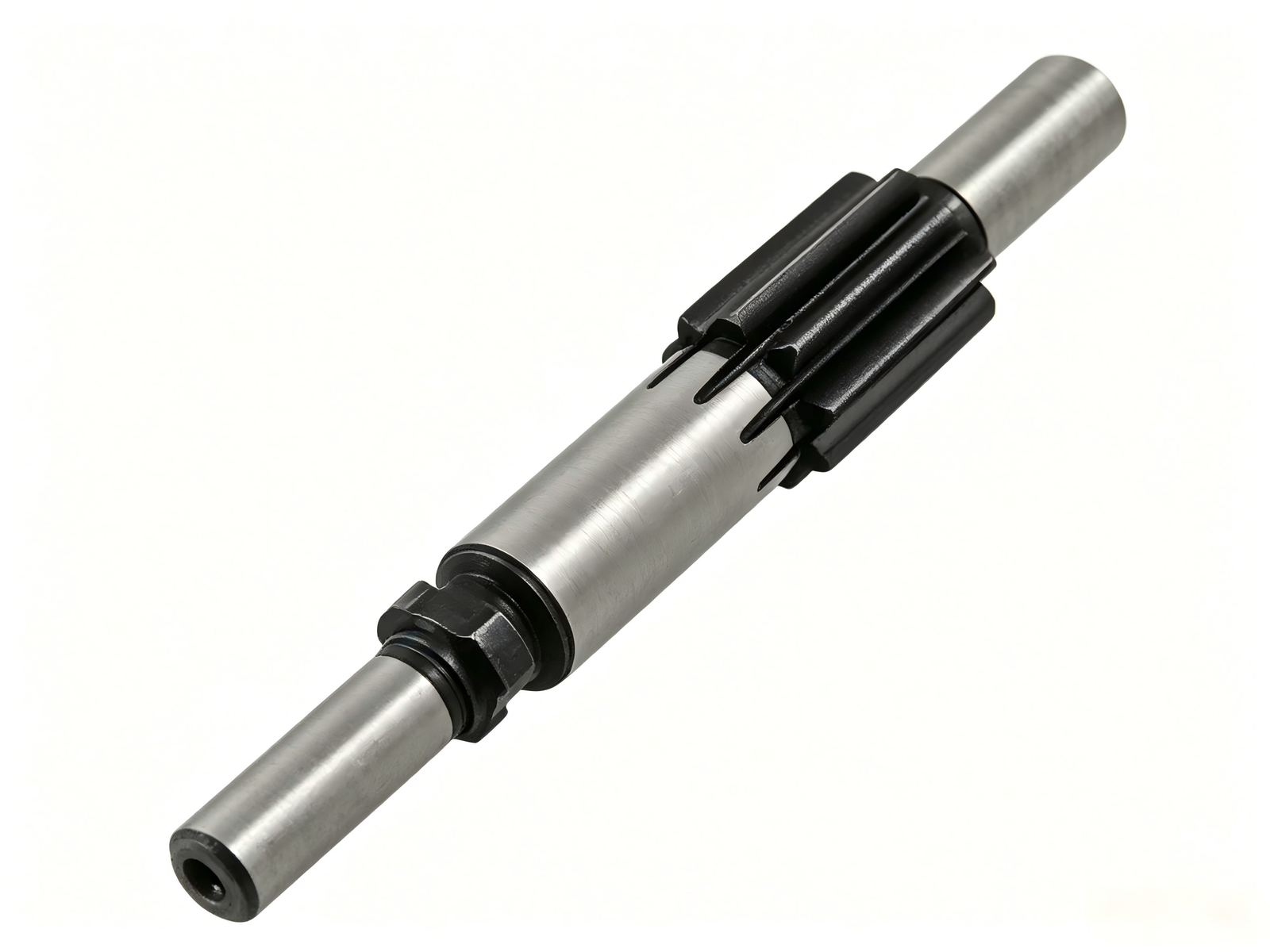
Industrie automobile
Les applications incluent:
- Arbres de transmission
- Arbres d'entraînement
- Colonnes de direction
- Systèmes différentiels
Industrie aérospaciale
Les applications incluent:
- Systèmes de contrôle de vol
- Mécanismes du train d'atterrissage
- Systèmes de transmission de puissance moteur
Machines industrielles
Les applications incluent:
- Boîtes de vitesses
- Pompes
- Compresseurs
- Convoyeurs
Robotique et automatisation
Les applications incluent:
- Servomoteurs
- Actionneurs de précision
- Systèmes de mouvement linéaire
Équipement agricole
Les applications incluent:
- Arbres de prise de force
- Récolteuses
- Tracteurs
Matériel de construction
Les applications incluent:
- Excavatrices
- Chargeuses sur pneus
- Systèmes d'entraînement hydrauliques
Défaillances courantes des arbres cannelés et prévention
Usure des dents
Cause:
- Lubrification insuffisante
Prévention:
- Programmes de lubrification appropriés
Corrosion de contact
Cause:
- Micro-mouvement entre les surfaces de contact
Prévention:
- Ajustement et lubrification corrects
Fissures de fatigue
Cause:
- Chargement cyclique répété
Prévention:
- Sélection appropriée des matériaux
- Durcissement superficiel
Dommages dus au désalignement
Cause:
- Mauvaise installation
Prévention:
- Procédures d'assemblage de précision
Comment choisir le bon arbre cannelé
Considérez les facteurs suivants:
Exigences de couple
Déterminer les charges de fonctionnement et de pointe.
Sélection des matériaux
Adaptez les propriétés des matériaux aux exigences de l'application.
Conditions environnementales
Tenir compte de la température, humidité, produits chimiques, et corrosion.
Tolérances de fabrication
Assurer la précision pour un engagement correct.
Exigences en matière de traitement de surface
Améliorer la résistance à l'usure et la durée de vie.
Normes de l'industrie
Vérifier la conformité aux spécifications du client.
Pourquoi choisir un fournisseur professionnel d'usinage CNC pour les arbres cannelés personnalisés?
Le choix d'un partenaire d'usinage expérimenté peut améliorer considérablement la qualité et la fiabilité du produit..
Un fabricant professionnel devrait offrir:
- Usinage CNC de précision
- Capacités de fraisage et de taillage de cannelures
- Contrôle de tolérance strict
- Traçabilité des matières
- Options de traitement de surface
- Rapports d'inspection complets
- Assistance aux prototypes et à la production
Que vous ayez besoin de splines à développante personnalisées, cannelures à côtés droits, ou arbres cannelés complexes de qualité aérospatiale, travailler avec un fournisseur d'usinage CNC qualifié garantit une qualité et des performances constantes.
Questions fréquemment posées
1.A quoi sert un arbre cannelé?
Un arbre cannelé transmet le couple tout en maintenant un alignement précis entre les composants connectés.
2.Quelle est la différence entre une cannelure et une rainure de clavette?
Une cannelure utilise plusieurs dents pour la répartition de la charge, alors qu'une rainure de clé repose sur une seule clé.
3.Quel type de spline est le plus courant?
Les cannelures en développante sont les plus utilisées en raison de leur résistance et de leur standardisation..
4.Les arbres cannelés peuvent-ils s'adapter à un mouvement axial?
Oui. Les cannelures coulissantes sont spécialement conçues pour le mouvement axial tout en transmettant le couple.
5.Quels matériaux sont couramment utilisés pour les arbres cannelés?
Acier au carbone, acier allié, acier inoxydable, aluminium, et le titane sont les matériaux les plus courants.
6.Comment sont fabriqués les arbres cannelés?
Ils sont généralement produits par tournage CNC, fraisage, s'amuser, aborder, mise en forme, ou usinage EDM.
Conclusion
Comprendre les types de splines, matériaux, méthodes de fabrication, et les considérations de conception permettent aux ingénieurs et aux acheteurs de sélectionner la solution la plus adaptée à leur application. Que vous ayez besoin d'arbres cannelés standard ou de composants de précision hautement personnalisés, en partenariat avec Précision au sommet peut aider à garantir des performances optimales, durabilité, et rentabilité.


