



La galvanización es un método eficaz y económico para proteger el acero de la corrosión.. Recubriendo acero o hierro con una capa de zinc., Los fabricantes pueden extender significativamente la vida útil de los componentes metálicos y al mismo tiempo reducir los costos de mantenimiento.. Hoy, El acero galvanizado se utiliza ampliamente en la construcción., automotor, agricultura, transmisión de potencia, telecomunicaciones, y fabricación industrial debido a su excelente durabilidad y rentabilidad..
Esta guía explica cómo funciona la galvanización., Los diferentes métodos de galvanizado., sus ventajas y limitaciones, Normas de la industria, y cómo elegir el proceso adecuado para su proyecto.
1. ¿Qué es la galvanización??
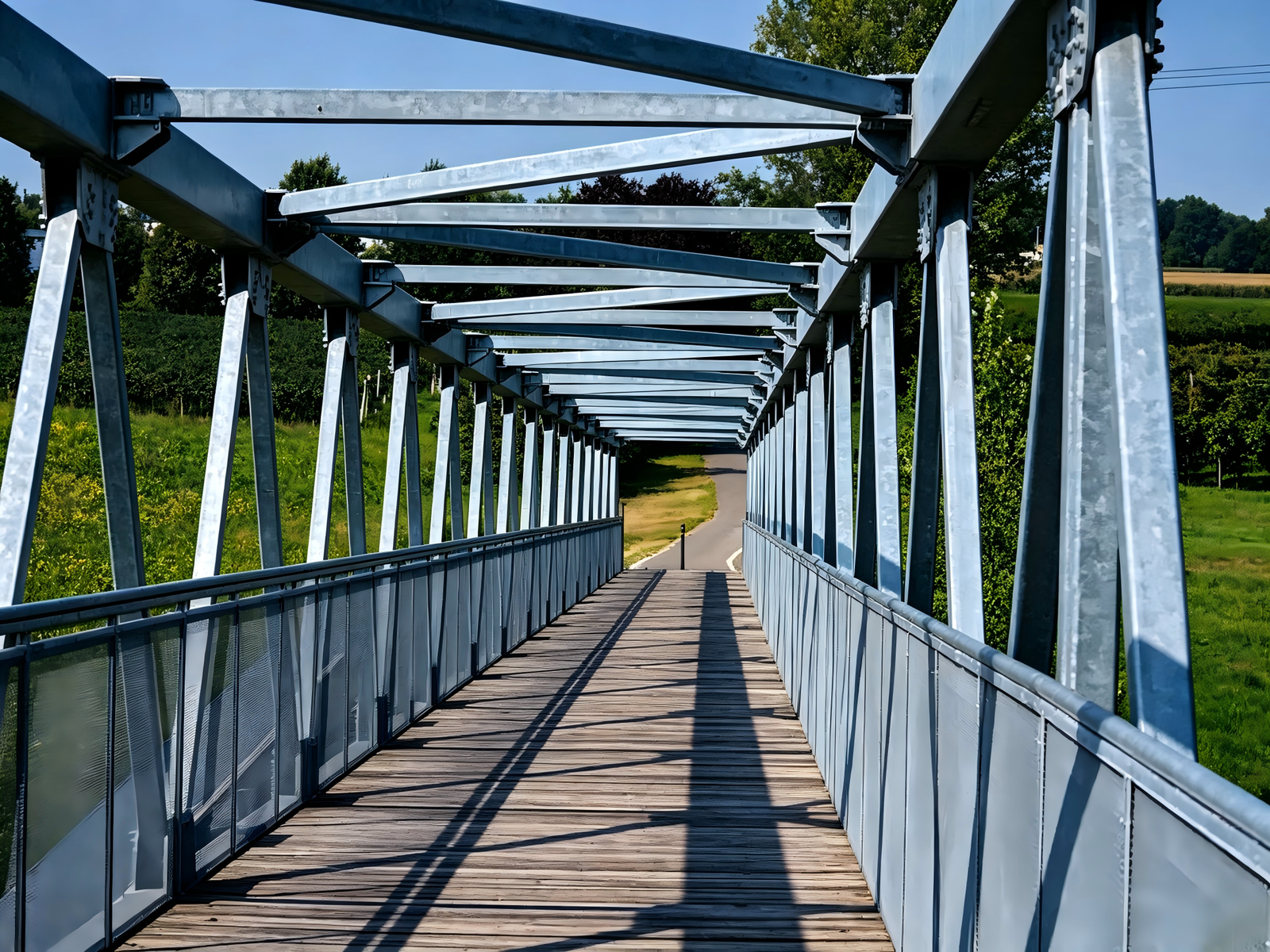
A diferencia de la pintura, que simplemente cubre la superficie, La galvanización forma una unión metalúrgica con el metal base., haciendo que el recubrimiento sea muy duradero y resistente al pelado o astillado.
Los beneficios clave incluyen:
- Excelente resistencia a la corrosión
- Mayor vida útil del producto
- Mantenimiento reducido
- Menores costos del ciclo de vida
- Durabilidad mecánica mejorada
2. ¿Por qué es importante galvanizar??
El acero se oxida naturalmente cuando se expone a la humedad y al oxígeno.. La corrosión puede debilitar las estructuras., aumentar los costos de mantenimiento, y acortar la vida útil del producto.
La galvanización aborda estos problemas proporcionando:
- Protección superior contra la corrosiónen ambientes exteriores e industriales.
- Durabilidad a largo plazo, A menudo duran décadas dependiendo del entorno de servicio..
- Menores costos de mantenimientoporque los componentes galvanizados requieren un mantenimiento mínimo.
- Rendimiento confiableincluso en condiciones climáticas adversas.
- Protección sostenible, reduciendo la necesidad de repintado o reemplazo frecuente.
Para muchas aplicaciones industriales, El galvanizado ofrece uno de los costos totales de propiedad más bajos en comparación con recubrimientos protectores alternativos..
3. ¿Cómo funciona la galvanización??
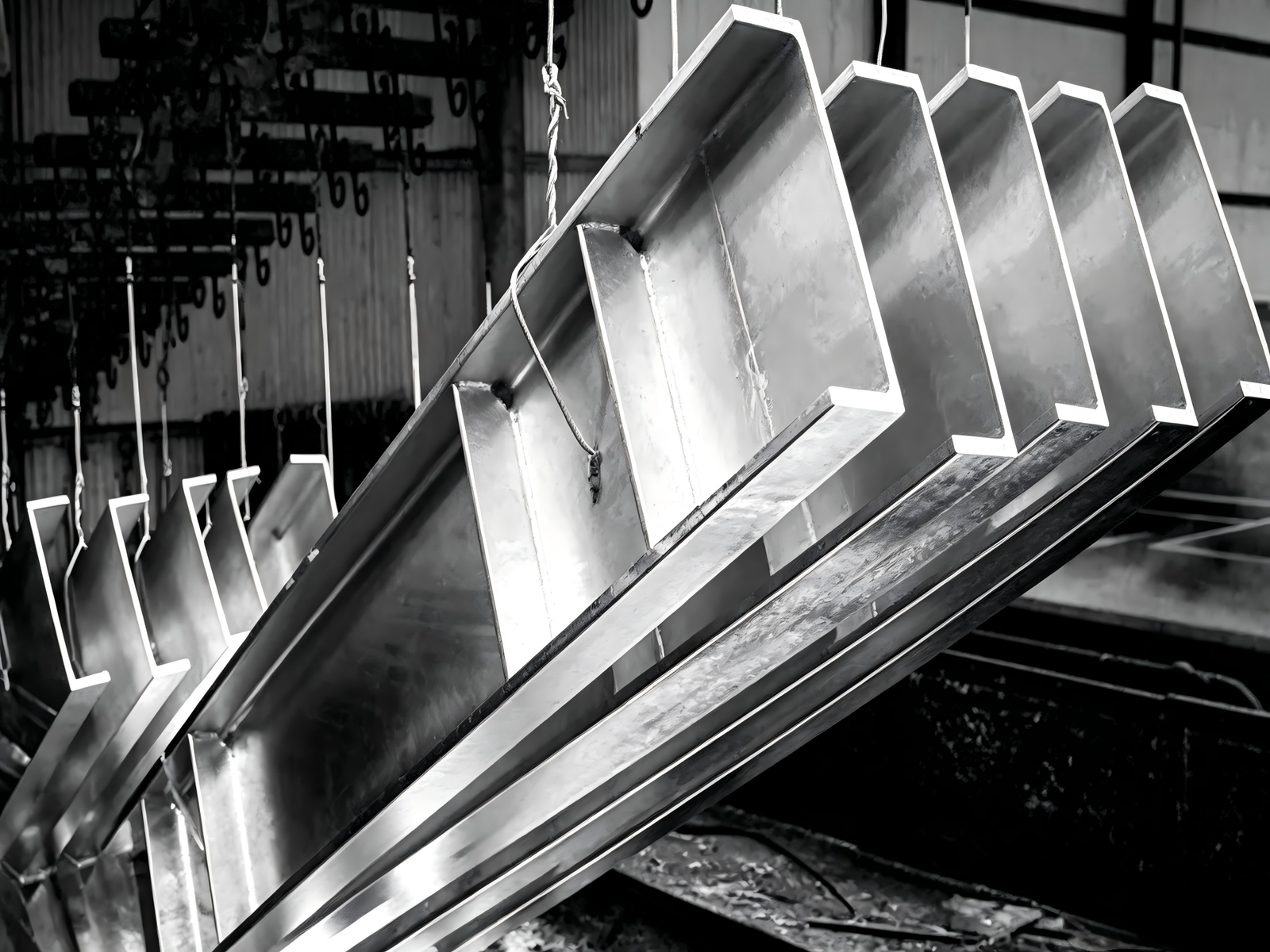
La eficacia del galvanizado proviene de dos mecanismos de protección..
Protección de barrera
El recubrimiento de zinc aísla el acero del aire y la humedad., Previniendo la oxidación y la formación de herrumbre..
Protección sacrificial
El zinc es más activo químicamente que el acero.. Incluso si el revestimiento está rayado, el zinc circundante se corroe primero, protegiendo el acero expuesto mediante acción catódica.
Esta doble protección es una de las principales razones por las que el acero galvanizado funciona excepcionalmente bien en entornos exigentes..
4. Tipos de galvanizado
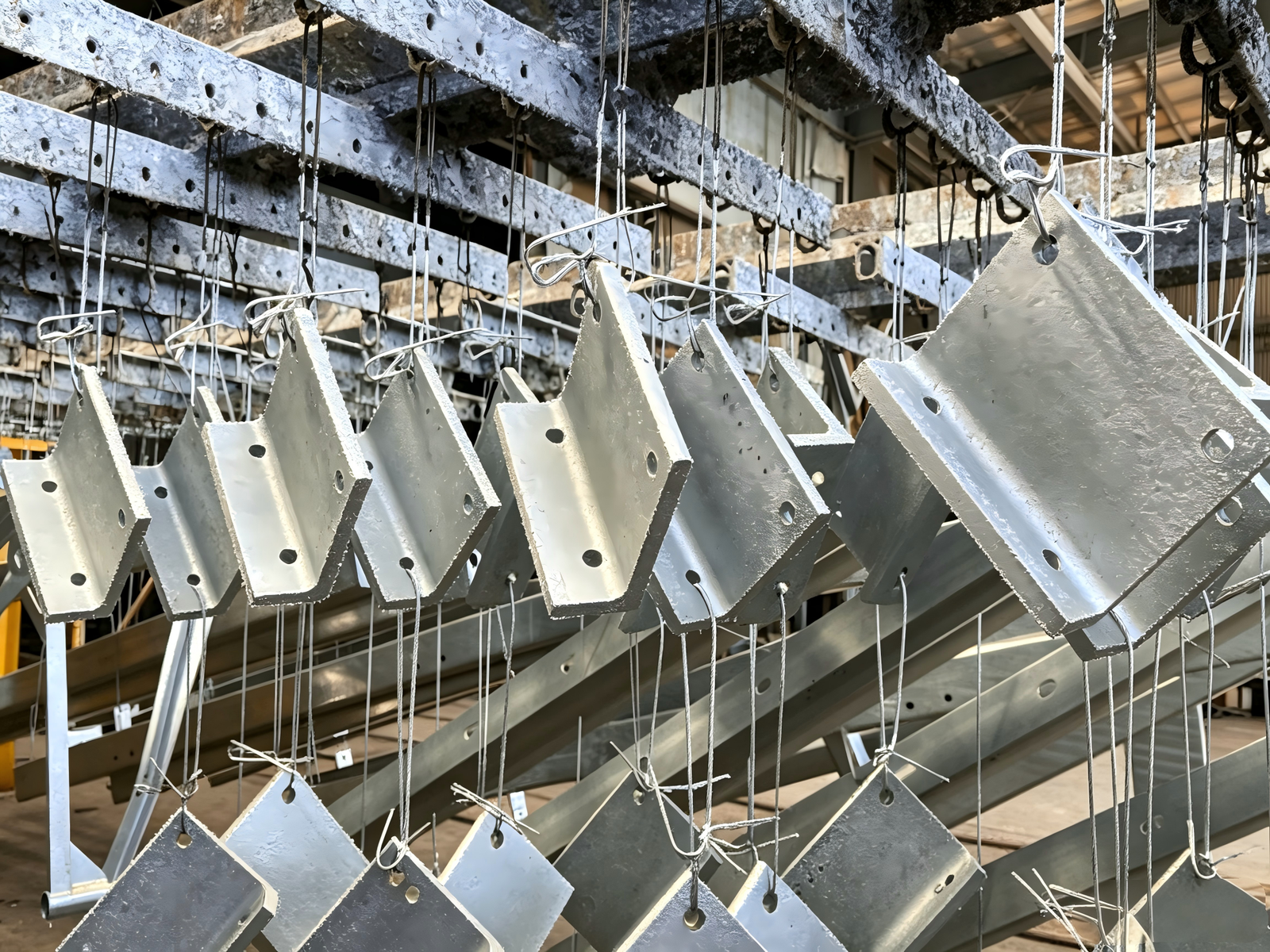
Galvanizado en caliente
Los componentes de acero se sumergen en zinc fundido a aproximadamente 450 °C., produciendo un recubrimiento grueso y duradero.
Ventajas
- Excelente resistencia a la corrosión
- Larga vida útil
- Adecuado para piezas estructurales grandes
Aplicaciones
Puentes, torres de transmisión, acero estructural, esgrima, y barandillas.
Electrogalvanizado
También conocido como galvanoplastia de zinc., este proceso deposita zinc usando corriente eléctrica.
Ventajas
- Acabado superficial liso
- Espesor de recubrimiento preciso
- Ideal para piezas decorativas
Aplicaciones
Componentes automotrices, accesorios, y hardware electrónico.
Sherardizando
Las piezas de acero se calientan con polvo de zinc., permitiendo que el zinc se difunda en la superficie.
Ventajas
- Revestimiento uniforme
- Excelente cobertura del hilo
- Riesgo reducido de fragilización por hidrógeno
Aplicaciones
sujetadores, engranajes, y componentes de precisión.
Pregalvanizado
La lámina de acero pasa por un baño continuo de zinc fundido antes de la fabricación..
Ventajas
- Alta eficiencia de producción
- Revestimiento uniforme
- Rentable para productos en láminas
Aplicaciones
Paneles para techos, Conductos de climatización, y tubos de acero.
Galvanizado Mecánico
El polvo de zinc se une mecánicamente a piezas pequeñas sin calor..
Aplicaciones
Pernos, tornillos, lavadoras, y otros sujetadores.
5. Proceso de galvanizado en caliente paso a paso
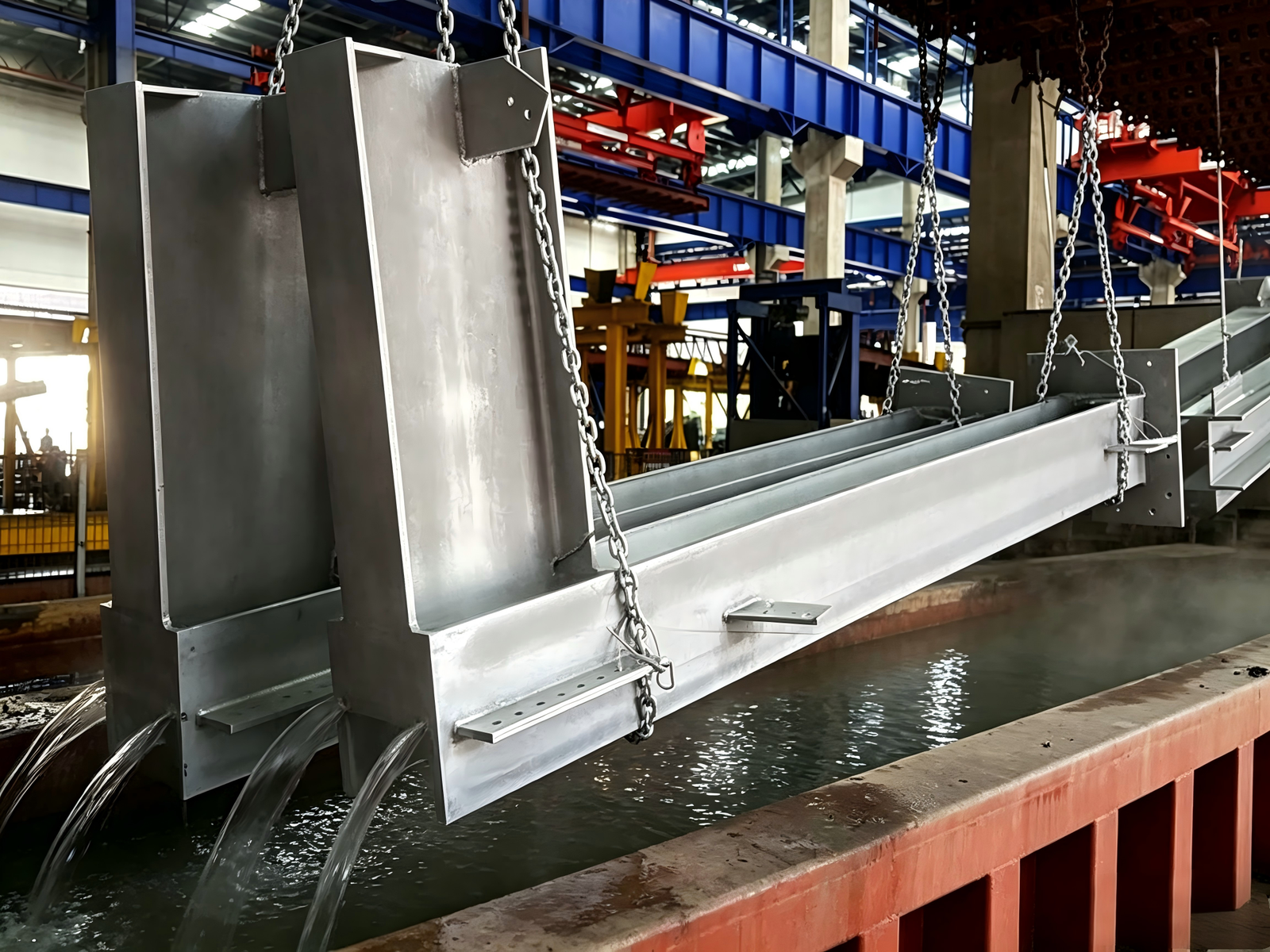
Un proceso típico de galvanizado en caliente consta de las siguientes etapas:
- Inspección– Comprobar si hay defectos en la superficie del acero..
- Desengrasante– Quitar el aceite, grasa, y contaminantes.
- Encurtido– Eliminar el óxido y las incrustaciones de laminación utilizando ácido..
- Enjuague– Limpiar los residuos químicos.
- Flujo– Aplicar fundente para mejorar la adhesión del zinc..
- El secado– Preparar la superficie para la inmersión..
- Baño de zinc– Sumergir la pieza en zinc fundido..
- Enfriamiento– Enfriar o enfriar con aire el componente recubierto..
- Inspección– Verificar el espesor del recubrimiento, adhesión, y apariencia.
6. Estándares de espesor del recubrimiento de zinc
El espesor de recubrimiento requerido depende de la aplicación y de las normas aplicables..
Las normas internacionales comunes incluyen:
- ASTM A123
- ASTM A153
- YO ASI 1461
- EN ISO 14713
Los recubrimientos más gruesos generalmente brindan una protección contra la corrosión más prolongada, pero pueden aumentar los costos de procesamiento.. La selección del estándar adecuado garantiza una calidad y un rendimiento constantes.
7. Galvanizado frente a otros acabados superficiales
| Acabado de la superficie | Resistencia a la corrosión | Costo | Apariencia | Uso típico |
| Galvanizado en caliente | Excelente | Medio | Industrial | Acero estructural |
| Recubrimiento en polvo | Bien | Medio | Decorativo | Productos de consumo |
| Cuadro | Moderado | Bajo | Colores personalizados | Aplicaciones en interiores |
| galvanoplastia | Moderado | Medio | Acabado liso | Piezas de precisión |
| Acero inoxidable | Excelente | Alto | De primera calidad | Alimentos y equipos médicos. |
La elección del acabado adecuado depende de las condiciones ambientales., presupuesto, y requisitos estéticos.
8. Ventajas de galvanizar
Las principales ventajas incluyen:
- Excelente resistencia a la corrosión
- Larga vida útil
- Bajo mantenimiento
- Fuerte unión metalúrgica
- Cobertura de superficie completa
- Excelente resistencia al impacto
- Rendimiento rentable del ciclo de vida
- Protección respetuosa con el medio ambiente
Estos beneficios hacen que la galvanización sea la solución preferida para aplicaciones exteriores a largo plazo..
9. Limitaciones del galvanizado
A pesar de sus ventajas, La galvanización tiene algunas limitaciones.:
- Mayor coste inicial que la pintura.
- Se puede formar óxido blanco bajo exposición prolongada a la humedad.
- La apariencia de la superficie puede variar
- No es ideal para ciertas piezas mecanizadas con precisión.
- Soldar acero galvanizado requiere precauciones adicionales
Comprender estas limitaciones ayuda a los ingenieros a elegir el tratamiento de superficie más adecuado.
10. Industrias que utilizan acero galvanizado
El acero galvanizado se utiliza ampliamente en:
- Construcción
- Automotor
- Agricultura
- Infraestructura eléctrica
- Energía renovable
- Telecomunicaciones
- Transporte
- ingeniería marina
Su combinación de fuerza, durabilidad, y la resistencia a la corrosión lo hacen adecuado para entornos exigentes.
11. Productos galvanizados comunes
Los productos galvanizados típicos incluyen:
- vigas estructurales
- tubos de acero
- sujetadores
- Barandillas
- Bandejas de cables
- Postes de servicios públicos
- Vallas de acero
- malla de alambre
- Chapas para tejados
- Equipos industriales
12. Estándares y certificaciones de galvanizado
El galvanizado de calidad sigue estándares reconocidos internacionalmente., incluyendo ASTM A123, ASTM A153, YO ASI 1461, y ENISO 14713. Estas especificaciones definen el espesor del recubrimiento., métodos de inspección, y requisitos de calidad para garantizar un rendimiento constante.
13. Cómo inspeccionar revestimientos galvanizados
Los métodos de inspección comunes incluyen:
- Inspección visual
- Medición del espesor del recubrimiento
- Prueba de adherencia
- Evaluación de uniformidad
- Evaluación de defectos superficiales.
La inspección periódica garantiza el cumplimiento de las especificaciones del proyecto..
14. Defectos y soluciones comunes de galvanización
Los defectos típicos incluyen:
- Óxido blanco
- Manchas desnudas
- Exceso de zinc
- Superficies rugosas
- Corre y gotea
- Inclusiones de ceniza
La mayoría de los defectos se pueden minimizar mediante una preparación adecuada de la superficie., control de procesos, y post-tratamiento.
15. ¿Cuánto dura el acero galvanizado??
La vida útil del acero galvanizado depende del entorno operativo..
- Zonas rurales: 50–100 años
- Zonas urbanas: 30–50 años
- Ambientes costeros: 20–30 años
- Entornos industriales: Varía según la contaminación y la humedad.
La inspección de rutina extiende aún más la vida útil.
16. ¿Cuánto cuesta galvanizar??
El costo depende de varios factores.:
- Tamaño del componente
- Espesor del acero
- Especificación de recubrimiento
- Volumen de producción
- Preparación de la superficie
- Transporte
- Estándares de calidad requeridos
Aunque la inversión inicial puede ser superior a la pintura, La galvanización a menudo proporciona costos de vida útil más bajos debido a un mantenimiento reducido..
17. Consejos de diseño para galvanizar
Para obtener los mejores resultados, los ingenieros deberían:
- Incluir orificios de ventilación y drenaje adecuados.
- Evite las cavidades cerradas.
- Considere el espesor del recubrimiento durante el diseño..
- Proteja las áreas roscadas cuando sea necesario.
- Siga las pautas de diseño de galvanizado para reducir la distorsión..
El diseño adecuado mejora la calidad del recubrimiento y la eficiencia de fabricación..
Conclusión
Ya sea utilizando galvanizado en caliente, electrogalvanizado, u otros procesos de recubrimiento de zinc, Seleccionar el método apropiado puede mejorar significativamente la durabilidad del producto., reducir el mantenimiento, y menores costos del ciclo de vida.
Si su proyecto requiere componentes de acero galvanizado de alta calidad o fabricación de metal personalizada, trabajando con Tapas de precisión-Un socio de fabricación experimentado garantiza el cumplimiento de las normas internacionales., calidad de recubrimiento constante, y rendimiento confiable a largo plazo.
Preguntas frecuentes
1. ¿Cuál es la diferencia entre galvanizado y cincado??
Aunque ambos procesos aplican un recubrimiento de zinc al acero, La galvanización generalmente crea una capa protectora mucho más gruesa y duradera.. La galvanización en caliente es ideal para aplicaciones estructurales y exteriores., mientras que el zincado (electrogalvanizado) proporciona un adelgazamiento, Acabado más suave adecuado para productos de interior y componentes de precisión..
2. ¿Se puede cortar o perforar el acero galvanizado después de galvanizarlo??
Sí. El acero galvanizado se puede cortar., perforado, o mecanizado después del proceso de recubrimiento. Sin embargo, cualquier acero expuesto creado durante la fabricación debe repararse con un recubrimiento rico en zinc u otro método de reparación aprobado para mantener la protección contra la corrosión..
3. ¿La galvanización en caliente es adecuada para todo tipo de acero??
La mayoría de los aceros al carbono se pueden galvanizar en caliente con éxito.. Sin embargo, La composición química del acero, en particular su contenido de silicio y fósforo, puede afectar el espesor y la apariencia del recubrimiento.. Se recomienda consultar a su proveedor de galvanizado antes de la producción..
4. ¿La galvanización afecta las propiedades mecánicas del acero??
En la mayoría de los casos, La galvanización tiene poco o ningún impacto en la resistencia., dureza, o integridad estructural del acero. Las temperaturas de procesamiento adecuadamente controladas garantizan que el material base conserve sus propiedades mecánicas originales..
5. ¿Se puede soldar acero galvanizado??
Sí, El acero galvanizado se puede soldar.. Sin embargo, La capa de zinc cerca del área de soldadura debe eliminarse de antemano., y se debe utilizar una ventilación adecuada porque los vapores de zinc pueden ser peligrosos.. Después de soldar, el área afectada debe repararse con un recubrimiento rico en zinc para restaurar la resistencia a la corrosión.
6. ¿Cómo se debe almacenar el acero galvanizado antes de la instalación??
Los productos galvanizados deben almacenarse en un lugar seco., ambiente bien ventilado. Evite apilar componentes húmedos juntos durante períodos prolongados., ya que la humedad atrapada puede provocar que se desarrolle óxido blanco en la superficie de zinc..
7. ¿Qué factores influyen en la vida útil del acero galvanizado??
La durabilidad del acero galvanizado depende de varios factores, incluido el espesor del recubrimiento, condición ambiental, humedad, exposición a la sal, contaminantes industriales, y mantenimiento regular. Los recubrimientos de zinc más gruesos generalmente brindan una protección contra la corrosión más prolongada..
8. ¿La galvanización es respetuosa con el medio ambiente??
Sí. El zinc es un material natural y reciclable.. El acero galvanizado tiene una larga vida útil., requiere un mantenimiento mínimo, y es totalmente reciclable al final de su ciclo de vida, convirtiéndolo en una solución sostenible de protección contra la corrosión.
9. ¿Cómo elijo el método de galvanizado adecuado para mi proyecto??
El mejor método de galvanizado depende de su aplicación., tamaño del componente, espesor de recubrimiento requerido, apariencia, entorno operativo, y presupuesto. Generalmente se prefiere la galvanización en caliente para aplicaciones estructurales y exteriores., mientras que el electrogalvanizado es más adecuado para piezas decorativas o de precisión.
10. ¿Cómo puedo garantizar componentes galvanizados de alta calidad??
Trabaje con un fabricante experimentado que siga estándares internacionales como ISO. 1461 o ASTM A123. Un proveedor confiable debe proporcionar una preparación adecuada de la superficie., control de proceso consistente, inspección del espesor del recubrimiento, y garantía de calidad integral para garantizar una protección duradera contra la corrosión.


