



El acero inoxidable resiste la corrosión debido a su contenido de cromo., que forma una capa protectora de óxido. Viene en familias y grados con diferente intensidad., maquinabilidad, y comportamiento a la corrosión. Esta guía cubre las propiedades clave, grados populares, y donde cabe cada uno.
¿Qué es el acero inoxidable??
El acero inoxidable es una aleación de hierro que contiene al menos aproximadamente 10.5% cromo.
El cromo forma una fina, Capa de óxido autorreparable que bloquea la corrosión.. Por eso el acero inoxidable resiste la oxidación. No es inoxidable en todos los entornos., pero el grado correcto resiste la mayoría de las condiciones industriales y cotidianas..
¿Qué le da al acero inoxidable sus propiedades??
Las propiedades provienen de los elementos de aleación añadidos al hierro..
| Elemento | Papel principal |
| Cromo | Forma la película pasiva.; acerca de 10.5% mínimo define el acero inoxidable |
| Níquel | Estabiliza la austenita y añade dureza y formabilidad. |
| Molibdeno | Mejora la resistencia a la corrosión por picaduras y grietas en cloruros. |
| Carbón | Agrega fuerza, pero demasiado puede causar sensibilización cuando se suelda |
| Manganeso y nitrógeno | Fortalecer y ayudar a estabilizar la austenita. |
| Azufre | Mejora la maquinabilidad en grados como 303, pero puede reducir la resistencia a la corrosión |
Estos elementos explican por qué 303, 304, 316, 410, y 2205 comportarse diferente.
Propiedades físicas y mecánicas clave
El cromo proporciona la película pasiva.. El molibdeno puede mejorar la resistencia a la corrosión por picaduras y grietas, mientras que el níquel estabiliza la austenita y contribuye a la tenacidad, formabilidad, y rendimiento contra la corrosión en entornos seleccionados.
La siguiente tabla proporciona valores típicos de temperatura ambiente.. Dependen de la forma y condición del producto., así que verifíquelos con la norma y el certificado de fábrica..
| Propiedad (típico) | 304 | 316 | 303 | 17-4 PH (H900) |
| Densidad (g/cm3) | 7.9 | 8.0 | 7.9 | 7.8 |
| módulo elástico (GPa) | 193 | 193 | 193 | 196 |
| Fuerza de producción (MPa) | 205 | 205 | 205 | 1170 |
| Resistencia a la tracción (MPa) | 515 | 515 | 620 | 1310 |
| Dureza | Acerca de 92 HRB | Acerca de 95 HRB | Acerca de 92 HRB | Acerca de 44 CDH |
| Magnético cuando está recocido | No | No | No | Sí |
Los grados austeníticos también conducen el calor de manera menos efectiva que el aluminio o el acero al carbono., y se expanden más con la temperatura. Esto es importante en el mecanizado y en ensamblajes que ven cambios de temperatura..
Cinco familias de acero inoxidable
| Familia | Grados típicos | Rasgos clave | Usos típicos |
| austenítico | 304, 316, 303, 321 | No magnético cuando está recocido, formable, soldable | Alimento, médico, químico, marina |
| ferrítico | 430, 409 | Generalmente magnético, costo más bajo, resistencia a la corrosión moderada | Recortar, escape automotriz |
| martensítico | 410, 420, 440 | Generalmente magnético, endurecible por tratamiento térmico | Cuchillería, ejes, valvulas |
| Dúplex | 2205 | Alta resistencia, resistente al cloruro | Marina, químico, petróleo y gas |
| Endurecimiento por precipitación | 17-4 PH | Muy alta resistencia con buena resistencia a la corrosión. | Aeroespacial, instrumentos medicos |
Comparación de grados populares de acero inoxidable
| Calificación | Familia | Resistencia a la corrosión | maquinabilidad | Fortaleza | Uso típico |
| 304 | austenítico | Bien | Moderado | Bien | industrias generales, alimento |
| 316 | austenítico | Mejor resistencia al cloruro que 304 | Moderado | Bien | Marina, químico |
| 303 | austenítico | Bien | Excelente | Bien | Piezas mecanizadas de precisión |
| 430 | ferrítico | Moderado | Bien | Moderado | Recortar, accesorios |
| 410 | martensítico | Moderado | Justo | Alto después del endurecimiento | válvulas, ejes |
| 17-4 PH | Endurecimiento por precipitación | Bien | Justo | Muy alto después del envejecimiento. | Aeroespacial, médico |
| 2205 | Dúplex | Mejor resistencia al cloruro que 316 en muchas condiciones | Justo | Alto | Marina, petróleo y gas |
Las calificaciones son relativas. Dependen del tratamiento térmico., condición de la superficie, y medio ambiente.
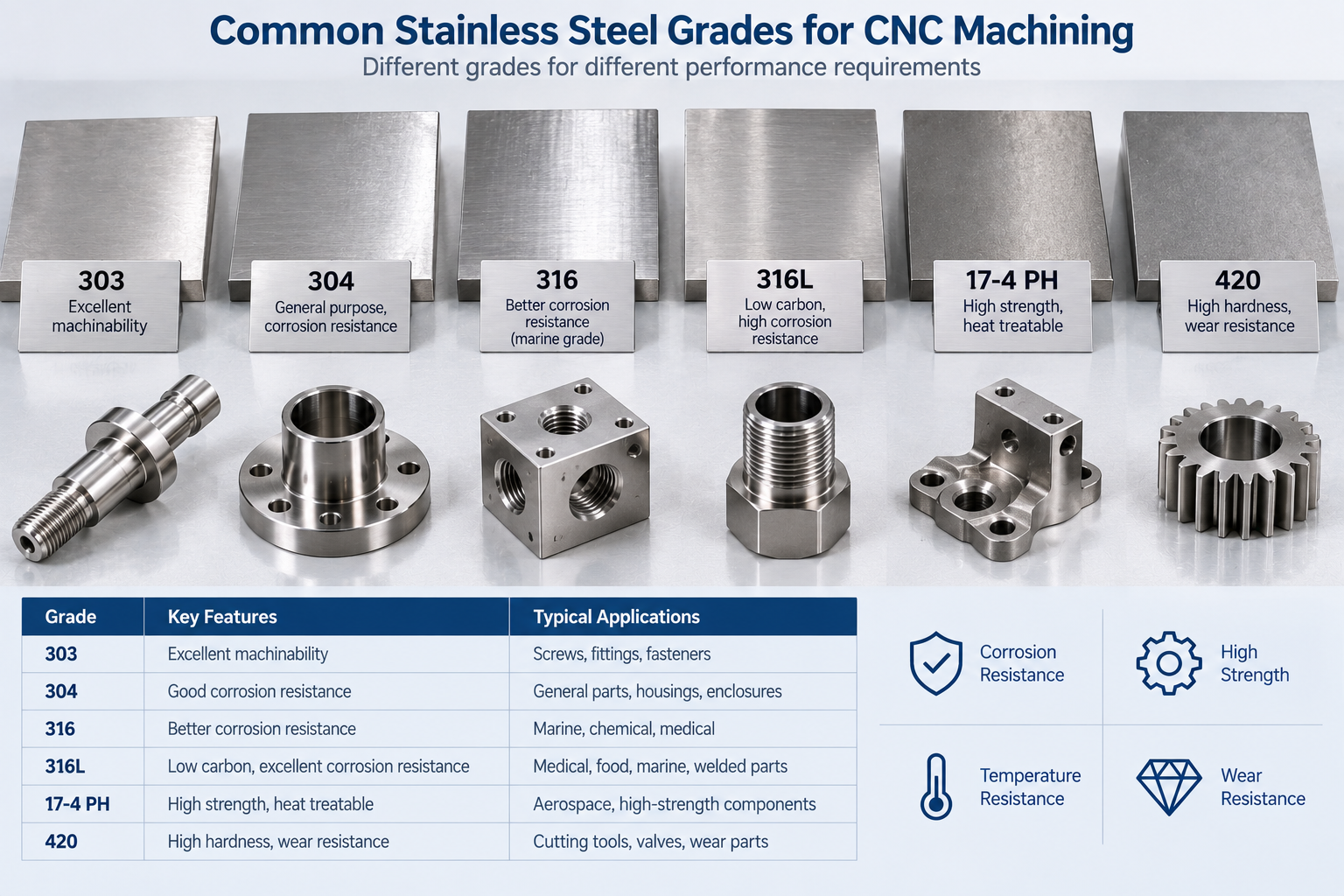
304 contra 316 contra 303 contra 17-4 PH
- 304 Es el grado de uso general para contacto industrial y alimentario..
- 316 agrega molibdeno, dando mejor resistencia a los cloruros que 304.
- 303 está optimizado para el mecanizado y corta más fácilmente, pero con menor resistencia a la corrosión y peor soldabilidad en muchas aplicaciones..
- 17-4 El PH proporciona una resistencia muy alta después del envejecimiento., pero sólo cuando se especifica la condición. 17-4 PH H900 y H1150 no tienen la misma fuerza, dureza, o comportamiento de mecanizado.
Para conjuntos soldados, los grados 304L y 316L con menos carbono son opciones comunes. Reducen la susceptibilidad a la sensibilización y los problemas de corrosión relacionados.. Ver 316 frente a 316L por el detalle.
¿Cómo se puede corroer el acero inoxidable??
El acero inoxidable aún puede corroerse en condiciones inadecuadas.
- picaduras: ataque localizado, a menudo de cloruros.
- Corrosión por grietas: ataque bajo juntas, sujetadores, o depósitos.
- Corrosión galvánica: contacto con un metal diferente en un ambiente conductor.
- Corrosión intergranular: Puede seguir una sensibilización por soldadura si el contenido de carbono es alto..
- Grietas por corrosión bajo tensión: agrietamiento bajo tensión de tracción en ambientes calientes de cloruro.
el grado, acabado superficial, y el medio ambiente deciden el riesgo. Ver diferentes tipos de acero inoxidable para más.
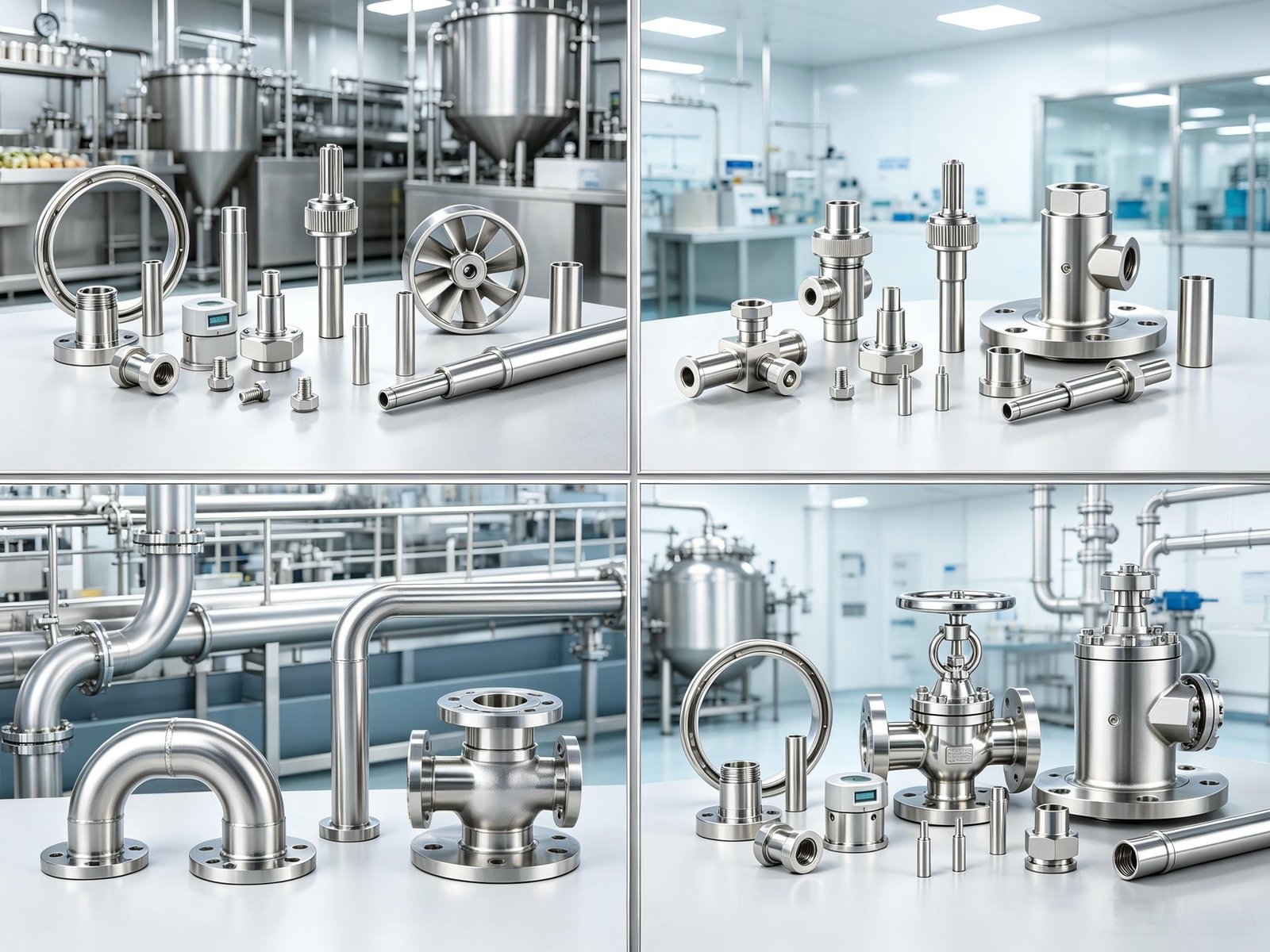
Aplicaciones de acero inoxidable
| Industria | Grados típicos | Por qué |
| Alimentos y bebidas | 304, 316 | Limpiable, superficies resistentes a la corrosión |
| Dispositivos médicos | 316l, 17-4 PH | Resistencia a la corrosión y fuerza. |
| Marina | 316, 2205 | Resistencia al cloruro |
| Procesamiento químico | 316, 2205 | Resistencia química y a la corrosión |
| Aeroespacial | 17-4 PH, 321 | Resistencia a la fuerza y la temperatura |
| Arquitectura | 304, 316 | Apariencia y resistencia a la intemperie. |
| Automotor | 409, 430 | Piezas de escape y molduras |
La idoneidad médica depende del dispositivo., especificación de material aplicable, condición de la superficie, trazabilidad, y requisitos reglamentarios. Una calificación por sí sola no califica una pieza para uso médico..
Cómo elegir un grado de acero inoxidable
Elige por entorno, requisito mecánico, método de fabricación, y costo.
- Identificar el entorno. Cloruros, contacto con alimentos, y químicos cada uno apunta a una familia.
- Establece la fuerza y dureza que necesitas. El endurecimiento después de la fabricación apunta a grados martensíticos o PH.
- Decide cómo se hace la pieza.. El mecanizado de piezas pesadas favorece 303. Los conjuntos soldados prefieren 304L o 316L.
- Compara costos y disponibilidad. Los grados de mayor aleación cuestan más.
- Verificar la calificación, temperamento, y condición contra el estándar y el certificado de material.
Consideraciones sobre el mecanizado de acero inoxidable
El mecanizado de acero inoxidable requiere controlar el calor, work hardening, y patatas fritas.
- El acero inoxidable conduce el calor lejos del corte con menos eficacia que el aluminio..
- Los grados austeníticos producen largos, virutas fibrosas que necesitan un buen control de virutas.
- 303 Es el grado de acero inoxidable más fácil de mecanizar..
- 304 y 316 endurecerse, Por lo tanto, utilice herramientas de carburo afiladas y avances consistentes..
- Evite cortes leves o repetidos por frotamiento, que puede endurecer la superficie.
- Utilice refrigerante para controlar el calor en el filo.
Para detalles prácticos, ver cómo cortar acero inoxidable y nuestro servicio de mecanizado de acero inoxidable.
Tratamiento superficial y pasivación
Después de mecanizado, Limpie la pieza a fondo y especifique pasivación cuando sea necesario para eliminar la contaminación por hierro y mantener una superficie pasiva limpia..
tinte de calor, escala, o capas superficiales empobrecidas en cromo debido al mecanizado, soldadura, o el calentamiento puede requerir decapado u otro tratamiento apropiado. La pasivación por sí sola no elimina necesariamente esas condiciones..
Cuando el acero inoxidable no es la mejor opción
El acero inoxidable aún puede corroerse y no siempre es el mejor material.
- Los cloruros más de grado incorrecto aún pueden picarse o agrietarse.
- El acero al carbono cuesta menos cuando la corrosión no es un riesgo.
- Las roscas y sujetadores pueden irritar. Utilice antiagarrotamiento o grados compatibles..
- Los grados austeníticos no son magnéticos confiables. La respuesta magnética depende de la composición y el procesamiento..
- La conductividad eléctrica y térmica es menor que la del cobre o el aluminio..
Si necesita alta resistencia sin propiedades inoxidables, comparar acero aleado versus acero inoxidable.
Preguntas frecuentes
¿Cuáles son los grados de acero inoxidable más comunes??
304 y 316 son los mas comunes. 303 es común para piezas mecanizadas.
¿Cuál es la diferencia entre 304 y 316 acero inoxidable?
316 agrega molibdeno, que mejora la resistencia a la corrosión por picaduras y grietas en ambientes con cloruro.
¿Cuál es la diferencia entre 303 y 304 acero inoxidable?
303 está optimizado para el mecanizado y generalmente corta más fácilmente que 304, pero tiene una resistencia a la corrosión reducida y una soldabilidad más pobre en muchas aplicaciones.. Usar 304 cuando la resistencia a la corrosión y la fabricación importan más que la velocidad de mecanizado.
¿El acero inoxidable es magnético??
Depende de la familia. Los grados austeníticos son en gran medida no magnéticos cuando están recocidos. ferrítico, martensítico, y los grados dúplex son generalmente magnéticos.
¿Qué acero inoxidable es mejor para el contacto con alimentos??
304 y 316 Son comunes porque se pueden limpiar y son resistentes a la corrosión..
¿Qué acero inoxidable es mejor para uso marino??
316 Se utiliza comúnmente para muchas aplicaciones marinas y costeras.. Grados dúplex como 2205 Puede seleccionarse cuando se requiere mayor resistencia y resistencia al cloruro.. La selección real depende de la temperatura., concentración de cloruro, grietas, y exposición.
¿Cuál es la diferencia entre 304 y 304L, o 316 y 316L?
Los grados L tienen menos carbono.. Reducen el riesgo de sensibilización y son comunes para conjuntos soldados..
¿Se puede mecanizar el acero inoxidable mediante CNC??
Sí. 303 máquinas más fácilmente, mientras 304 y 316 Necesita herramientas más afiladas y corte controlado..
Obtenga ayuda para seleccionar un grado de acero inoxidable
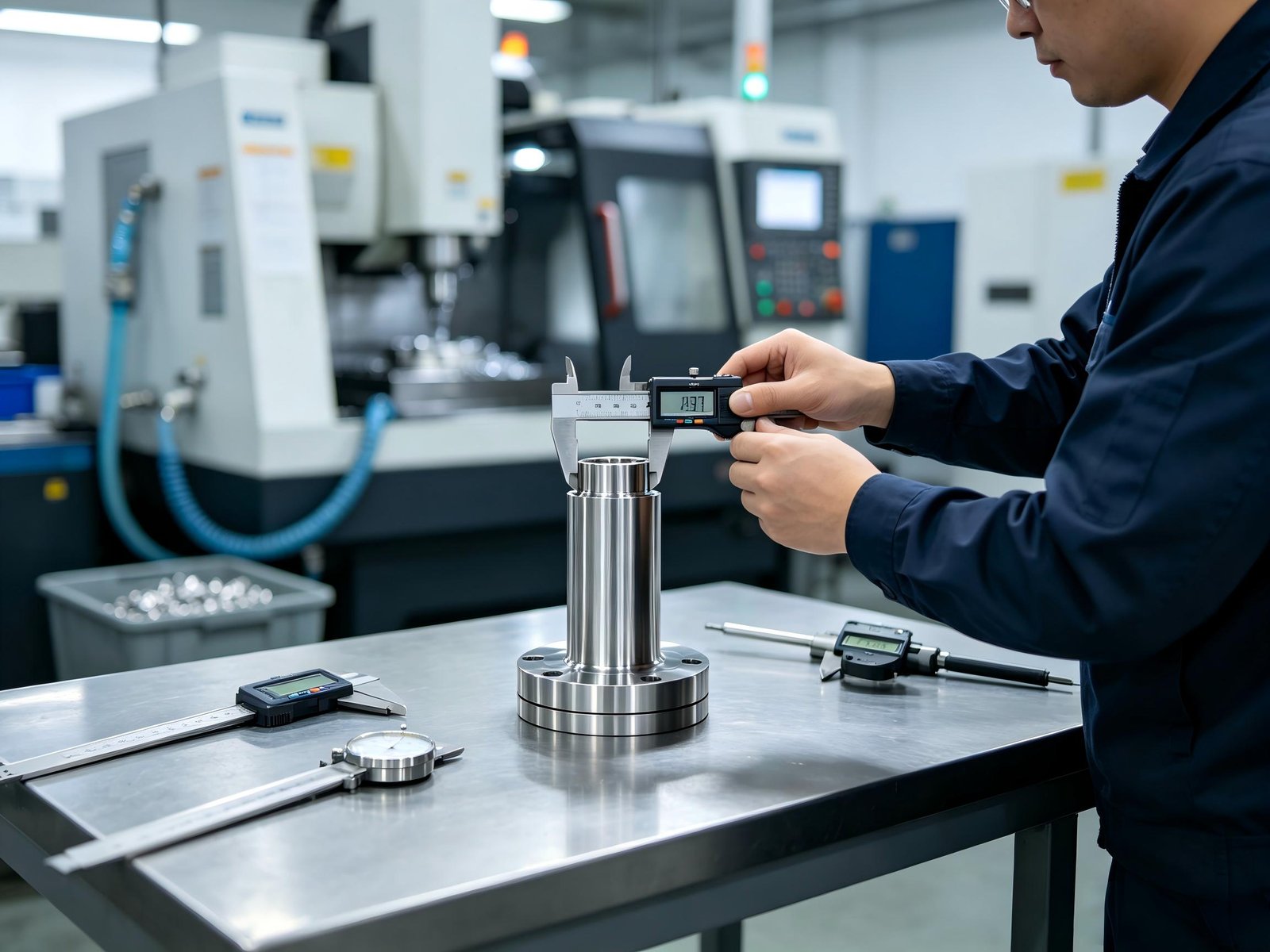
Cuéntanos la calificación, condición, ambiente, requisito mecánico, y cantidad. Nuestros ingenieros confirmarán la especificación., revisar mecanizado y acabado, y cotizar la pieza con certificación de material.
Contáctenos para una cotización


12 pensamientos sobre "Acero inoxidable: Propiedades, Grados, Y aplicaciones”