



No existe un único “mejor” material de impresión 3D para cada proyecto. El PLA puede ser una excelente opción para un prototipo visual de bajo costo, mientras que PA12 puede ser mejor para un componente mecánico funcional. El TPU es adecuado para piezas flexibles, PEEK para entornos exigentes de alta temperatura, y titanio o Inconel para aplicaciones metálicas especializadas.
Por lo tanto, la elección correcta depende de la solicitud, propiedades materiales requeridas, 3proceso de impresión D, volumen de producción, requisitos dimensionales, Postprocesamiento, y costo total.
Esta guía explica los principales tipos de materiales de impresión 3D., sus propiedades y aplicaciones, como se comparan, y cómo los ingenieros y los equipos de compras pueden seleccionar el material más adecuado para un proyecto específico.
Respuesta rápida: ¿Cuál es el mejor material para la impresión 3D??
No existe un mejor material universal. El material apropiado depende de la aplicación..
- Estampado:Lo mejor para prototipos de bajo costo, modelos, y conceptos visuales.
- abdominales:Adecuado para carcasas y prototipos funcionales resistentes a impactos.
- PETG:Un buen material de uso general cuando la tenacidad y la resistencia química son importantes.
- Nailon PA11/PA12:Excelente para componentes mecánicos funcionales., recintos, soportes, engranajes, y producción en pequeños lotes.
- TPU:Lo mejor para componentes flexibles y que absorben impactos.
- ordenador personal:Adecuado para fuertes, piezas técnicas resistentes a impactos.
- asa:Recomendado para aplicaciones en exteriores que requieren resistencia a los rayos UV y a la intemperie..
- OJEADA:Diseñado para aplicaciones exigentes que involucran altas temperaturas., quimicos, y cargas mecánicas.
- Resinas de ingeniería:Adecuado para prototipos de alto detalle, estampación, y piezas funcionales especializadas.
- Aluminio:un fuerte, opción ligera para componentes metálicos.
- Titanio:Adecuado para aplicaciones de alto rendimiento donde la relación resistencia-peso y la resistencia a la corrosión son críticas.
- Inconel:Apropiado para temperaturas extremas y ambientes altamente corrosivos..
El punto importante es que La selección de materiales debe comenzar con los requisitos de la aplicación en lugar de la popularidad del material o el precio únicamente..
1. Por qué es importante elegir el material de impresión 3D adecuado
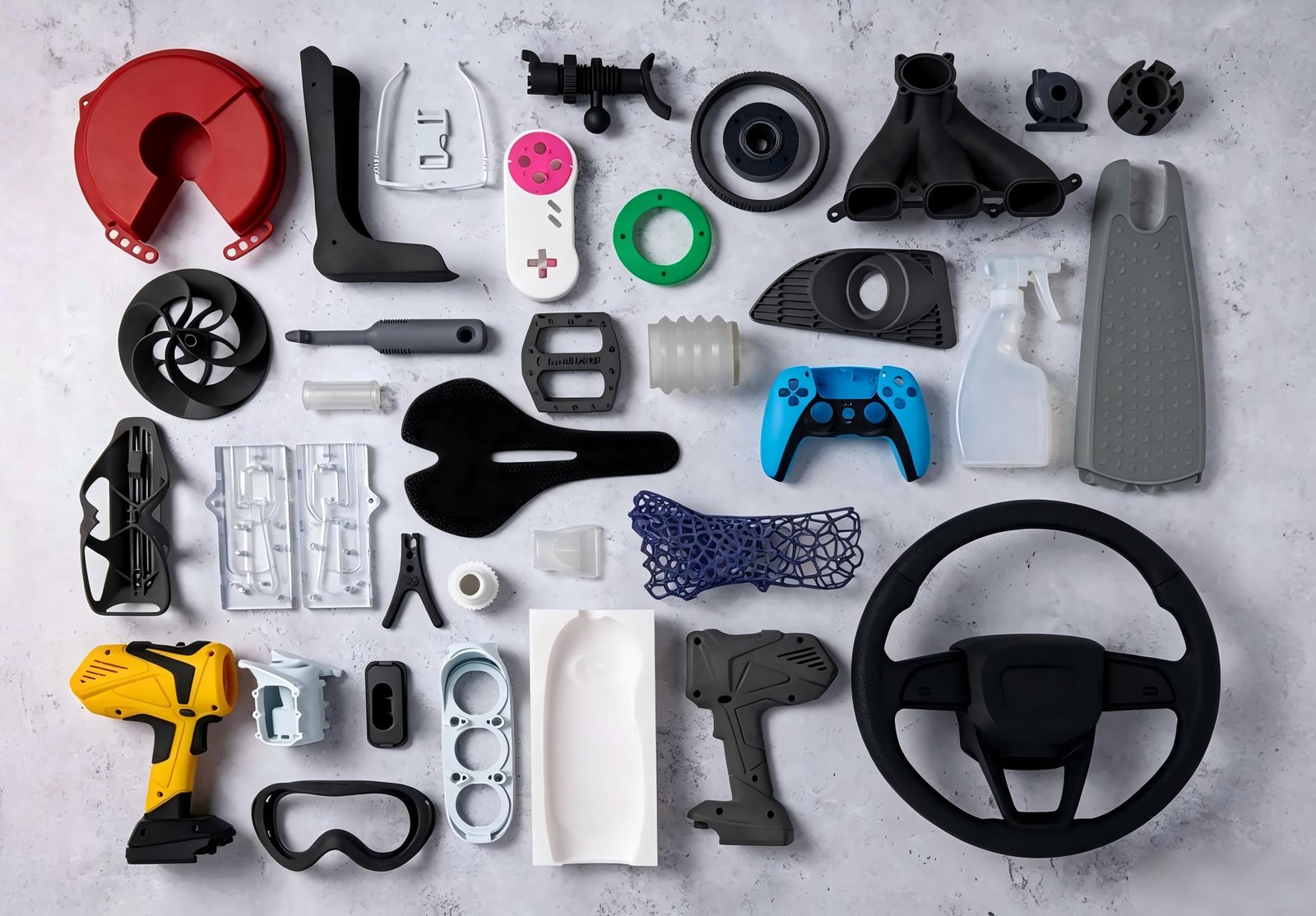
3La impresión D permite fabricar componentes con una amplia gama de materiales. Sin embargo, Diferentes materiales se comportan de manera muy diferente durante la impresión y el servicio real..
Un material que funciona perfectamente para un prototipo puede fallar al exponerse a calor continuo, cargas mecánicas, quimicos, radiación ultravioleta, o impacto repetido.
Propiedades del material como resistencia a la tracción., módulo, alargamiento, resistencia química, rendimiento térmico, Por lo tanto, las características ópticas y ópticas deben evaluarse en comparación con el entorno operativo real..
1.1 El material determina el rendimiento de la pieza
Las propiedades importantes incluyen:
- Resistencia a la tracción
- Módulo de tracción
- Resistencia al impacto
- Alargamiento
- Dureza
- Flexibilidad
- Resistencia a la fatiga
- Resistencia al desgaste
- Resistencia a la temperatura
- Resistencia química
- Resistencia a los rayos UV
- Resistencia a la humedad
- Propiedades electricas
Por ejemplo, un material rígido puede ser adecuado para un soporte estructural pero inadecuado para un componente que debe flexionarse repetidamente.
Similarmente, un material con alta resistencia a la tracción no es automáticamente la mejor opción si el componente requiere una alta resistencia al impacto o rendimiento ante la fatiga..
1.2 El material afecta el costo de fabricación
La selección de materiales también influye en la economía de producción..
El costo total de un componente impreso en 3D puede incluir:
- Materia prima
- tiempo de la máquina
- Consumo de energía
- Estructuras de soporte
- Utilización de polvo o resina.
- Mano de obra
- Postprocesamiento
- Mecanizado CNC
- Acabado superficial
- Inspección
- embalaje
Por lo tanto, elegir el filamento o la resina de menor costo no necesariamente produce el componente terminado de menor costo.
1.3 El material afecta la vida útil del producto
Un componente utilizado durante cinco minutos durante una revisión de diseño tiene requisitos muy diferentes a los de un componente que se espera que funcione continuamente durante varios años..
Antes de seleccionar un material, determinar:
- ¿Qué hará la parte??
- ¿Qué cargas experimentará??
- ¿Qué temperatura verá??
- ¿Qué sustancias químicas o condiciones ambientales encontrará??
- ¿Cuánto tiempo debe permanecer funcional??
- ¿Qué precisión dimensional se requiere??
Estas preguntas establecen los criterios de selección de materiales..
2. Principales categorías de materiales de impresión 3D
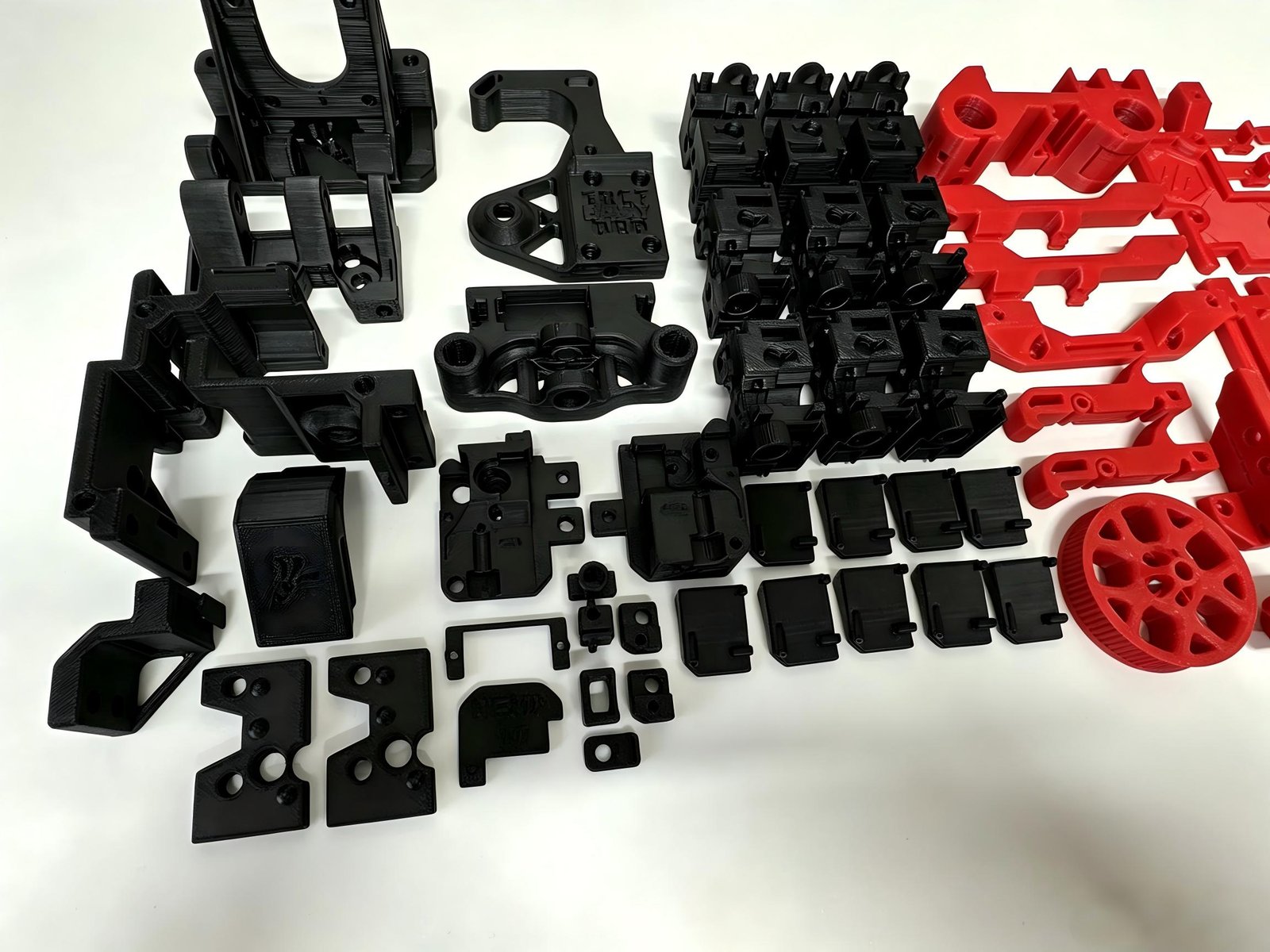
3Los materiales de impresión D se pueden dividir en términos generales en varios grupos.:
- Termoplástico
- Resinas de fotopolímero
- Materiales metálicos
- Materiales cerámicos
- Materiales compuestos
Las diferentes tecnologías de fabricación aditiva utilizan diferentes formas de estos materiales..
Por ejemplo, FDM/FFF procesa principalmente filamentos termoplásticos, SLA y DLP utilizan resinas fotopolímeras líquidas, mientras que SLS y MJF comúnmente procesan polvos de polímeros.
3. Materiales termoplásticos de impresión 3D
Los termoplásticos se encuentran entre los materiales más utilizados en la impresión 3D.
Se pueden calentar, formado, y solidificado de nuevo, haciéndolos adecuados para procesos como FDM/FFF y, en forma de polvo, SLS y MJF.
3.1 Estampado
Estampado (ácido poliláctico) es uno de los materiales más fáciles de imprimir.
Propiedades clave
- Fácil de procesar
- Buena precisión dimensional
- Alta rigidez
- Baja dificultad de impresión
- Buena calidad visual
- Costo de material relativamente bajo
Aplicaciones típicas
- Modelos conceptuales
- Prototipos de diseño
- Modelos de pantalla
- Modelos educativos
- Carcasas de carga baja
- Prototipos visuales
Limitaciones
El PLA normalmente no es la primera opción para componentes funcionales exigentes expuestos a temperaturas elevadas., cargas sostenidas, o entornos hostiles.
La mejor opción cuando: bajo costo, facilidad de impresión, apariencia, y la creación rápida de prototipos son más importantes que el rendimiento mecánico a largo plazo.
3.2 abdominales
abdominales (acrilonitrilo butadieno estireno) es un termoplástico de ingeniería establecido.
Proporciona una útil combinación de dureza., resistencia al impacto, y rendimiento de temperatura.
Aplicaciones típicas
- Prototipos funcionales
- Alojamiento
- Componentes automotrices
- Productos de consumo
- Prototipos mecánicos
Comparado con PLA, El ABS generalmente se adapta mejor a aplicaciones funcionales donde la resistencia al impacto y el rendimiento de temperatura son importantes..
Sin embargo, El ABS puede ser más difícil de imprimir porque es necesario controlar la contracción térmica y la deformación..
3.3 PETG
PETG (tereftalato de polietileno modificado con glicol) combina un procesamiento relativamente fácil con buena tenacidad y resistencia química.
Ventajas
- Buena resistencia al impacto
- Buena dureza
- Resistencia química
- Estabilidad dimensional razonable
- Procesamiento relativamente fácil
Aplicaciones
- Contenedores
- Componentes protectores
- Prototipos funcionales
- Partes mecánicas
- Pantallas
- Componentes industriales de uso general.
El PETG suele ser un término medio práctico entre materiales fáciles de imprimir y polímeros de ingeniería más exigentes..
3.4 Nylon / Pensilvania
Poliamida (Pensilvania), comúnmente llamado nailon, Es uno de los materiales de ingeniería más importantes para componentes funcionales impresos en 3D..
El nailon ofrece una útil combinación de resistencia., tenacidad, resistencia al desgaste, y durabilidad ambiental.
PA11 y PA12 son especialmente comunes en procesos a base de polvo como SLS. Nylon 11 y nailon 12 También se puede reforzar con fibra de vidrio o carbono cuando se requiere mayor rigidez o resistencia..
Aplicaciones típicas
- Engranajes
- Corchetes
- Bisagras
- Carcasa mecánica
- Conjuntos funcionales
- Clips
- Accesorios
- Componentes de uso final
Consideración importante: humedad
El nailon absorbe la humedad., que pueden afectar el procesamiento y las propiedades finales.. Por lo tanto, es importante el almacenamiento y la preparación adecuados del material..
La mejor opción cuando: necesita un polímero de ingeniería duradero para componentes cargados mecánicamente.
3.5 TPU
TPU (poliuretano termoplástico) es un material elastomérico flexible.
A diferencia de los termoplásticos rígidos, El TPU puede deformarse significativamente y volver a su forma original.
Propiedades
- Alta flexibilidad
- Elasticidad
- Resistencia a la abrasión
- Absorción de impactos
- Buena resistencia al impacto
Aplicaciones
- Focas
- Juntas
- Fundas flexibles
- Estuches protectores
- Amortiguadores de vibraciones
- Conectores flexibles
- Componentes portátiles
El TPU es particularmente útil cuando un componente debe comportarse más como caucho que como plástico rígido convencional..
3.6 policarbonato (ordenador personal)
policarbonato es un fuerte, termoplástico de ingeniería resistente conocido por su alta resistencia al impacto.
Se puede utilizar para:
- Componentes de la máquina
- Cubiertas protectoras
- Prototipos estructurales
- Carcasas técnicas
- Accesorios
El PC suele ser más exigente a la hora de imprimir que el PLA o el PETG., por lo que son importantes la capacidad adecuada de la máquina y el control del proceso.
3.7 asa
asa (acrilato de acrilonitrilo estireno) A menudo se selecciona para aplicaciones en exteriores debido a su resistencia a los rayos UV y a la intemperie..
Aplicaciones
- Viviendas exteriores
- Componentes exteriores de automóviles
- Cubiertas industriales
- Equipo al aire libre
- Prototipos expuestos a la intemperie
Si un componente pasará mucho tiempo al aire libre, El ASA puede ser una mejor opción que los materiales que son más susceptibles a la degradación por rayos UV..
3.8 OJEADA
OJEADA (poliéter éter cetona) Es un termoplástico de ingeniería de alto rendimiento..
Se utiliza cuando los polímeros convencionales no pueden cumplir con los requisitos de temperatura., resistencia química, rendimiento mecánico, o estabilidad dimensional.
Aplicaciones
- Aeroespacial
- Equipo médico
- Equipos semiconductores
- Petróleo y gas
- Procesamiento químico
- Maquinaria de alta temperatura
PEEK es significativamente más caro y más difícil de procesar que los materiales de impresión 3D comunes..
Por lo tanto, debe seleccionarse porque su rendimiento es necesario, no simplemente porque sea un material de primera calidad..
4. Materiales de impresión 3D de resina
SLA, DLP, y tecnologías relacionadas basadas en resinas utilizan materiales fotopolímeros líquidos que se curan selectivamente mediante luz..
La impresión 3D de resina es particularmente atractiva cuando Detalle bueno, precisión dimensional, y calidad de la superficie son prioridades. SLA puede producir superficies más suaves y características finas que muchos procesos FDM.
4.1 Resina estándar
Apto para:
- Modelos conceptuales
- Prototipos visuales
- Modelos detallados
- Validación del diseño del producto.
4.2 Resina resistente
Diseñado para proporcionar una mejor resistencia al impacto y durabilidad que la resina estándar..
Las aplicaciones incluyen:
- Prototipos funcionales
- Componentes de ajuste rápido
- Gabinetes
- Prototipos mecánicos
4.3 Resina Flexible
Utilizado para:
- Componentes flexibles
- Prototipos de tacto suave
- Focas
- Juntas
- Piezas tipo elastómero
4.4 Resina de alta temperatura
Útil para aplicaciones que requieren estabilidad dimensional bajo temperaturas elevadas..
4.5 Resina de ingeniería
Las resinas de ingeniería están formuladas para proporcionar mecánicas más específicas., térmico, o características químicas.
Algunos sistemas de resina especializados pueden apuntar a propiedades como el retardo de llama., disipación eléctrica, biocompatibilidad, o alta rigidez.
5. Materiales metálicos de impresión 3D
La fabricación aditiva de metales se utiliza cada vez más para componentes de ingeniería complejos., producción de bajo volumen, estructuras ligeras, y aplicaciones donde la fabricación convencional puede ser difícil o costosa.
Los materiales comunes de impresión 3D de metal incluyen:
- Acero inoxidable
- Aluminio
- Titanio
- Inconel
- Acero para herramientas
- Aleaciones de cobre y cobre
5.1 Acero inoxidable
El acero inoxidable ofrece una combinación de:
- Fortaleza
- Resistencia a la corrosión
- Durabilidad
- Rendimiento de temperatura
Las aplicaciones incluyen:
- Componentes industriales
- Accesorios
- Prototipos funcionales
- Partes mecánicas
- Componentes médicos
5.2 Aluminio
El aluminio resulta atractivo cuando se requiere poco peso y buen rendimiento mecánico.
Aplicaciones
- Automotor
- Aeroespacial
- Robótica
- Componentes de gestión del calor
- Piezas estructurales ligeras
5.3 Titanio
El titanio proporciona una excelente relación resistencia-peso y una fuerte resistencia a la corrosión..
Comúnmente se considera para:
- Aeroespacial
- Componentes médicos
- Ingeniería de alto rendimiento
- Componentes estructurales livianos
5.4 Inconel
Las aleaciones a base de níquel de Inconel están diseñadas para entornos exigentes que involucran altas temperaturas., corrosión, y estrés mecánico.
Las aplicaciones típicas incluyen:
- Aeroespacial
- turbomaquinaria
- Energía
- Procesamiento químico
- Componentes de alta temperatura
5.5 Herramienta de acero
Los aceros para herramientas se pueden utilizar para:
- Muere
- Moldes
- Estampación
- Componentes resistentes al desgaste
6. Materiales compuestos de impresión 3D
Los materiales compuestos combinan una matriz polimérica con fibras de refuerzo..
Los materiales de refuerzo más comunes incluyen:
- Fibra de carbono
- fibra de vidrio
- Kevlar y otras fibras especiales
6.1 Materiales reforzados con fibra de carbono
La fibra de carbono puede aumentar significativamente la rigidez y reducir la deformación en comparación con un polímero no reforzado equivalente..
Las aplicaciones incluyen:
- Accesorios ligeros
- Robótica
- Prototipos automotrices
- Corchetes
- herramientas industriales
6.2 Materiales reforzados con fibra de vidrio
La fibra de vidrio es otra opción de refuerzo común..
Puede proporcionar mayor rigidez y estabilidad dimensional y, a menudo, es más económico que la fibra de carbono..
¿Cuándo deberías elegir un compuesto??
Considere materiales reforzados con fibra cuando:
- Se requiere alta rigidez
- Se debe minimizar el peso
- La estabilidad dimensional es importante
- El componente debe soportar cargas mecánicas.
Sin embargo, La orientación de la fibra y los parámetros de impresión pueden afectar las propiedades mecánicas finales., por lo que la selección del material debe evaluarse junto con el proceso de impresión..
7. 3D Materiales de impresión mediante tecnología de impresión
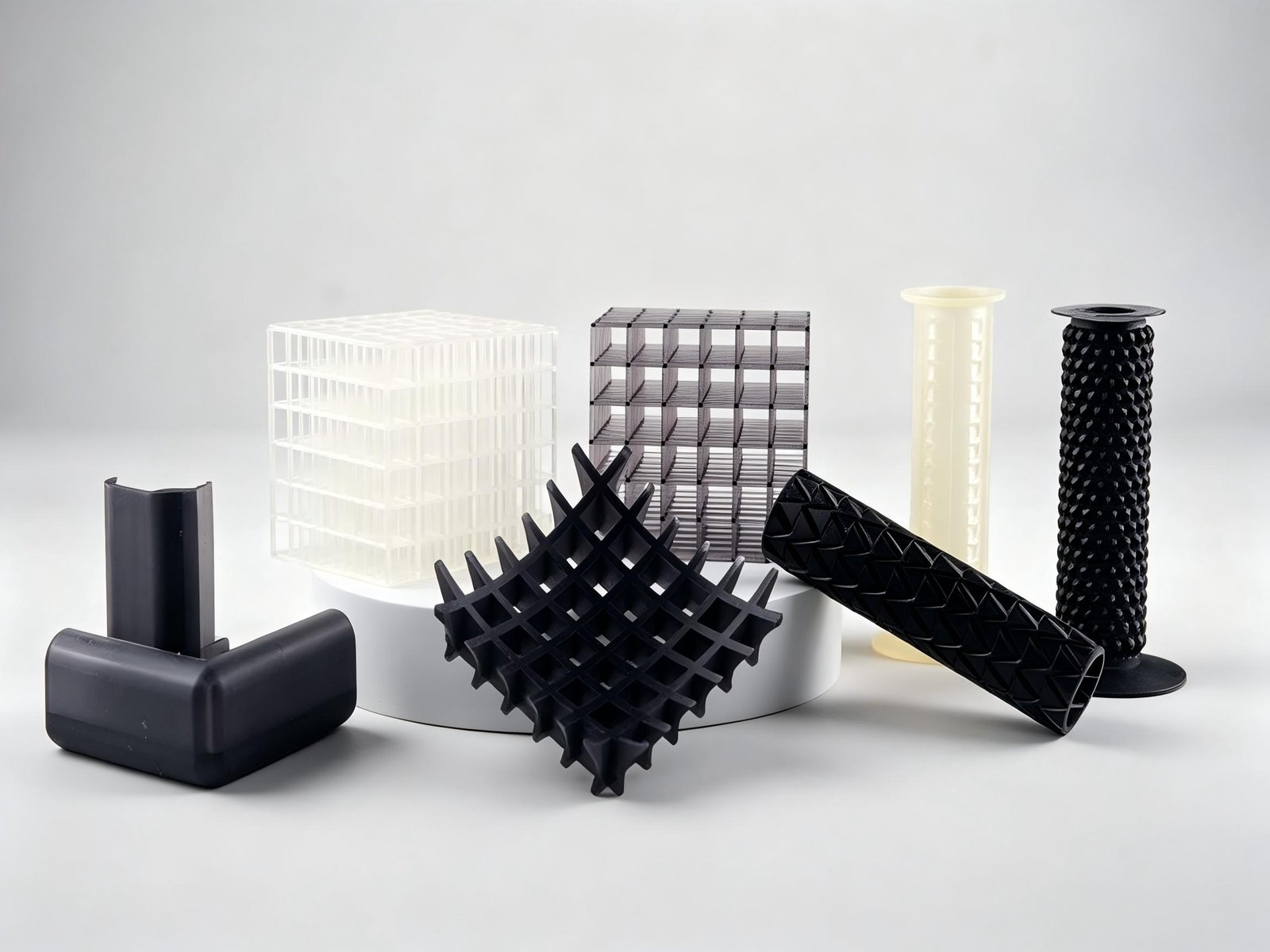
La selección de materiales no se puede separar de la selección de procesos..
La misma familia de polímeros básicos puede comportarse de manera diferente dependiendo de si se procesa como filamento., resina, o polvo. Por lo tanto, Los ingenieros deben seleccionar el combinación material-proceso, no simplemente el nombre del material.
| 3Proceso de impresión | Materiales típicos | Aplicaciones Típicas |
| MDF / FFF | Estampado, abdominales, PETG, TPU, Pensilvania, ordenador personal, OJEADA | Prototipos, accesorios, partes funcionales |
| SLA / DLP | Estándar, difícil, resinas flexibles y de ingeniería | Prototipos de alto detalle y componentes especializados. |
| SLSS | PA11, PA12, TPU, nailon reforzado | Piezas funcionales y geometrías complejas. |
| MJF | PA11, PA12, TPU y polvos relacionados | Prototipos funcionales y producción en pequeños lotes. |
| LPBF de metal / SLM / DMLS | Aluminio, acero inoxidable, titanio, Inconel | Componentes metálicos de alto rendimiento. |
| Puñetazo | Rieles, cerámica, arena | Producción y aplicaciones especializadas. |
| polijet / MJM | Fotopolímeros | Prototipos detallados y multimateriales. |
| DED | Titanio, acero inoxidable, Inconel, aluminio | Grandes componentes y aplicaciones de reparación. |
MDF / FFF
FDM es atractivo por su flujo de trabajo relativamente simple, amplia disponibilidad de material, y capacidad de creación de prototipos de bajo costo.
SLA / DLP
Los procesos basados en resinas son opciones sólidas cuando se trata de mejorar la calidad de la superficie., finos detalles, y la precisión dimensional son importantes.
SLSS
SLS utiliza polvo para crear piezas autoportantes, permitiendo geometrías complejas, características internas, subvenciones, y paredes delgadas sin estructuras de soporte convencionales. El nailon es uno de los materiales SLS más establecidos..
MJF
MJF se usa ampliamente para componentes poliméricos funcionales y puede resultar atractivo para la producción de lotes pequeños..
8. Cómo elegir el material de impresión 3D adecuado
La forma más confiable de seleccionar un material es trabajar sistemáticamente con los requisitos de la aplicación..
Paso 1: Definir la aplicación
Primero determine qué se supone que debe hacer el componente..
¿Es:
- Un prototipo visual?
- Un prototipo funcional?
- Un componente de producción?
- Un elemento fijo?
- una vivienda?
- un sello?
- Un componente de herramientas?
- una parte estructural?
Un prototipo visual puede que sólo requiera una buena apariencia, mientras que un componente de uso final puede requerir un desempeño mecánico y ambiental validado.
Paso 2: Identificar los requisitos mecánicos
Considerar:
- Resistencia a la tracción
- Rigidez
- Resistencia al impacto
- Alargamiento
- Dureza
- Resistencia al desgaste
- Resistencia a la fatiga
Por ejemplo, un engranaje puede necesitar resistencia al desgaste y estabilidad dimensional, mientras que una cubierta protectora puede priorizar la resistencia al impacto.
Paso 3: Evaluar temperatura
Determine las temperaturas de funcionamiento mínima y máxima..
Considere también:
- Temperatura continua
- Picos de temperatura a corto plazo
- Carga mecánica a temperatura.
- Ciclismo térmico
No seleccione un material basándose únicamente en su punto de fusión publicado.. El rendimiento en el mundo real también depende de factores como la temperatura de transición vítrea, cristalinidad, carga aplicada, y duración de la exposición.
Paso 4: Considere el entorno operativo
Pregunte si el componente encontrará:
- Agua
- Humedad
- Aceites
- Solventes
- Ácidos
- álcalis
- radiación ultravioleta
- Polvo
- spray de sal
- Vacío
Un material con excelentes propiedades mecánicas puede seguir siendo inadecuado si es químicamente incompatible con el entorno operativo..
Paso 5: Definir requisitos dimensionales
Determinar:
- Tolerancia requerida
- Rugosidad de la superficie
- Tamaño de la característica
- Espesor de la pared
- Estabilidad dimensional
- Requisitos visuales
SLA puede resultar ventajoso cuando son importantes detalles muy finos y superficies lisas, mientras que SLS es atractivo para geometrías funcionales complejas.
Paso 6: Considere el volumen de producción
El proceso y el material ideales pueden cambiar significativamente con el volumen..
1–10 partes
MDF, SLA, u otros procesos rápidos de creación de prototipos pueden ser apropiados.
10–1.000 piezas
SLSS, MJF, impresión de resina, o FDM industrial puede resultar atractivo dependiendo del componente.
Volúmenes más altos
Compare la fabricación aditiva con el moldeo por inyección, Mecanizado CNC, fundición a presión, u otros procesos convencionales.
3La impresión D es particularmente valiosa cuando la producción es de bajo volumen., flexibilidad de diseño, o la geometría compleja hace que la fabricación tradicional con uso intensivo de herramientas sea menos atractiva. SLSS, Por ejemplo, Puede admitir la fabricación de puentes y de bajo volumen sin moldes de inyección dedicados..
9. 3D Comparación de materiales de impresión
La siguiente tabla proporciona un punto de partida práctico para la selección de materiales..
| Material | Fortaleza | Resistencia al calor | Flexibilidad | Resistencia química | Aplicaciones Típicas | Costo relativo |
| Estampado | Medio | Bajo | Bajo | Medio | Prototipos visuales | Bajo |
| abdominales | Medio-alto | Medio | Bajo en medio | Medio | Prototipos funcionales | Bajo en medio |
| PETG | Medio | Medio | Medio | Bien | Partes funcionales generales | Bajo en medio |
| PA12 | Alto | Medio | Medio | Bien | Componentes mecánicos | Medio |
| PA11 | Alto | Medio | Mayor dureza | Bien | Piezas resistentes a impactos | Medio |
| TPU | Medio | Medio | muy alto | Bien | Piezas flexibles | Medio |
| ordenador personal | Alto | Alto | Medio | Medio | Componentes técnicos | Medio-alto |
| asa | Medio-alto | Medio-alto | Bajo en medio | Bien | Componentes exteriores | Medio |
| OJEADA | muy alto | muy alto | Medio | Excelente | Aplicaciones de alto rendimiento | muy alto |
| Resina de ingeniería | Dependiente de la aplicación | Dependiente de la aplicación | Dependiente de la aplicación | Dependiente de la aplicación | Prototipos especializados | Medio-alto |
| Aluminio | Alto | Alto | Bajo | Bien | Piezas metálicas ligeras | Alto |
| Acero inoxidable | muy alto | muy alto | Bajo | Excelente | Piezas industriales | Alto |
| Titanio | muy alto | muy alto | Bajo | Excelente | Aeroespacial y médico | muy alto |
| Inconel | muy alto | Excelente | Bajo | Excelente | Ambientes extremos | muy alto |
Importante: Estas son comparaciones generales., no certificaciones de materiales ni permisos de diseño. Las propiedades reales dependen del grado específico., impresora, Parámetros de proceso, orientación de construcción, tratamiento térmico, y postprocesamiento.
10. Elegir materiales de impresión 3D por aplicación
A veces, la forma más rápida de seleccionar un material es comenzar con la aplicación en lugar de con la familia de materiales..
Los mejores materiales para prototipos
Considerar:
- Estampado
- abdominales
- PETG
- Resina estándar
Elija según la apariencia, fortaleza, costo, o la precisión dimensional es el requisito principal.
Los mejores materiales para piezas mecánicas funcionales
Considerar:
- PA11
- PA12
- ordenador personal
- Nailon reforzado
- Otros polímeros de ingeniería
El nailon está particularmente establecido para aplicaciones funcionales de SLS debido a su combinación de resistencia, tenacidad, durabilidad, y resistencia ambiental.
Los mejores materiales para componentes flexibles
Considerar:
- TPU
- resina flexible
- Materiales elastoméricos
Los mejores materiales para aplicaciones en exteriores
Considerar:
- asa
- Polímeros de ingeniería resistentes a los rayos UV
- Resinas resistentes a la intemperie adecuadas
Los mejores materiales para aplicaciones de alta temperatura
Considerar:
- OJEADA
- PEI
- Polímeros de ingeniería de alta temperatura
- Resinas especializadas de alta temperatura.
- Inconel para aplicaciones metálicas exigentes
Los mejores materiales para componentes livianos
Considerar:
- Aluminio
- Titanio
- Polímeros reforzados con fibra de carbono.
La elección correcta depende de si la prioridad es baja masa, rigidez, fortaleza, rendimiento térmico, o una combinación de estos factores.
11. Postprocesamiento para diferentes materiales de impresión 3D
La impresión no es necesariamente el paso final de fabricación..
El posprocesamiento puede mejorar:
- Acabado superficial
- Precisión dimensional
- Rendimiento mecánico
- Apariencia
- Resistencia a la corrosión
- Resistencia al desgaste
- Rendimiento funcional
Piezas de plástico
Los posibles procesos incluyen:
- Lijado
- Mecanizado
- Alisado químico
- Cuadro
- Revestimiento
- Pulido
Piezas de resina
Los procesos típicos incluyen:
- Lavado
- postcurado UV
- Lijado
- Pulido
- Cuadro
- Revestimiento
Piezas Metálicas
Los procesos comunes incluyen:
- Tratamiento térmico
- fresado CNC
- torneado CNC
- Molienda
- Pulido
- Arenado
- Explosión de cuentas
- Anodizado
- Enchapado
Para componentes de precisión, El mecanizado CNC después de la impresión 3D se puede utilizar para lograr requisitos dimensionales más estrictos en superficies seleccionadas..
Piezas de cerámica
La fabricación aditiva de cerámica puede requerir:
- Desvinculación
- Sinterización
- Molienda
- Pulido
La ruta de posprocesamiento debe considerarse antes de la selección del material porque puede afectar tanto el rendimiento final como el coste total de fabricación..
12. Errores comunes al seleccionar materiales de impresión 3D
Error 1: Elegir sólo por precio
Un material de bajo coste puede encarecerse si produce fallos, posprocesamiento excesivo, o reemplazo prematuro de componentes.
Error 2: Usando PLA para cada prototipo
El PLA es excelente para muchos prototipos visuales., pero no es automáticamente adecuado para pruebas funcionales.
Error 3: Ignorar la temperatura de funcionamiento
Un componente que funciona a temperatura ambiente puede deformarse o perder rendimiento a temperaturas elevadas..
Error 4: Ignorando la humedad
Algunos polímeros, especialmente nailon, son sensibles a la humedad durante el procesamiento y almacenamiento.
Error 5: Seleccionar material sin considerar el proceso de impresión
El material y el proceso deben evaluarse juntos..
Un material disponible para FDM puede tener diferentes características de rendimiento cuando se procesa utilizando otra tecnología..
Error 6: Ignorar el posprocesamiento
Una pieza impresa puede requerir mecanizado, tratamiento térmico, revestimiento, u otras operaciones de acabado para lograr su especificación final.
Error 7: Sobreespecificar el material
No todas las aplicaciones requieren PEEK, titanio, o Inconel.
Si PETG o PA12 satisface los requisitos reales, El uso de un material mucho más caro puede aumentar innecesariamente el coste del proyecto..
13. 3D Impresión vs.. CNC Machinine VS. Moldeo por inyección
3La impresión D no es automáticamente mejor que la fabricación tradicional.
La tecnología adecuada depende de la geometría, cantidad, tolerancia, material, acabado superficial, y economía.
| Requisito | 3Impresión D | Mecanizado CNC | Moldeo por inyección |
| Prototipos | Excelente | Excelente | Pobre |
| Volumen bajo | Excelente | Bien | A menudo caro |
| Geometría compleja | Excelente | Bien | Dependiente del diseño |
| Tolerancias muy estrictas | Dependiente del proceso | Excelente | Bien |
| Acabado superficial | Dependiente del proceso | Excelente | Excelente |
| Producción de plástico en gran volumen | Limitado | Limitado/caro | Excelente |
| No se requieren herramientas | Sí | Sí | No |
| Cambios de diseño | Fácil | Moderado | Caro después del mecanizado |
| Canales internos | Excelente para procesos adecuados | Difícil | Dependiente del diseño |
Elija la impresión 3D cuando:
- Necesitas prototipos rápidamente.
- El volumen de producción es bajo..
- La geometría es compleja..
- Los costos de herramientas son difíciles de justificar.
- Los cambios de diseño son frecuentes.
- Se requieren estructuras o canales internos..
- Necesita piezas personalizadas o altamente individualizadas.
Considere el mecanizado CNC cuando:
- Las tolerancias estrictas son fundamentales.
- Se requiere un excelente acabado superficial.
- El componente está hecho de un metal mecanizable..
- Las propiedades del material deben coincidir estrechamente con un tocho o una barra sólida..
Considere el moldeo por inyección cuando:
- El volumen de producción es alto..
- El costo unitario es una consideración importante.
- La geometría es adecuada para moldear..
- La inversión en herramientas se puede amortizar en una gran cantidad de producción..
En muchos proyectos reales, Estas tecnologías son complementarias en lugar de competir..
14. Preguntas frecuentes sobre materiales de impresión 3D
¿Cuál es el mejor material para la impresión 3D??
No existe un mejor material universal. El PLA es adecuado para muchos prototipos visuales., PA12 para componentes funcionales, TPU para piezas flexibles, PEEK para aplicaciones de alto rendimiento, y metales como el aluminio o el titanio para componentes estructurales exigentes.
¿Cuál es el material de impresión 3D más resistente??
La respuesta depende de si te refieres a la resistencia a la tracción., rigidez, resistencia al impacto, rendimiento de temperatura, o relación fuerza-peso. Polímeros de alto rendimiento, materiales reforzados con fibra, y las aleaciones metálicas pueden proporcionar un rendimiento muy alto de diferentes maneras.
¿Es el PLA más fuerte que el ABS??
No necesariamente. La fuerza depende del grado específico., proceso de impresion, orientación, y propiedad que se está midiendo. A menudo se prefiere el ABS cuando la dureza y la resistencia al impacto son más importantes..
¿Es el PETG mejor que el PLA??
Ninguno de los dos es universalmente mejor. El PLA suele ser más fácil de imprimir y proporciona una apariencia y rigidez excelentes., mientras que el PETG suele preferirse para aplicaciones que requieren mayor dureza y resistencia química.
¿Cuál es el mejor material para piezas funcionales impresas en 3D??
PA11 y PA12 se utilizan ampliamente para piezas de polímero funcionales., especialmente con tecnologías basadas en polvo como SLS. Polímeros de ingeniería, materiales reforzados, y las aleaciones metálicas pueden ser más apropiadas cuando la aplicación requiere mayor temperatura o rendimiento mecánico..
¿Cuál es el mejor material para la impresión 3D en exteriores??
ASA es una opción común para componentes exteriores debido a su resistencia a los rayos UV y a la intemperie.. La exposición ambiental específica aún debe evaluarse antes de la selección final del material..
¿Cuál es el mejor material para piezas flexibles impresas en 3D??
Las resinas de fotopolímero flexible y TPU son opciones comunes. La dureza requerida, alargamiento, resistencia a la abrasión, y el entorno químico deben determinar el material final..
¿Cuál es el mejor material para la impresión 3D a alta temperatura??
Para aplicaciones de polímeros, Materiales como PEEK y PEI pueden ser apropiados cuando el proceso y los requisitos de diseño los respaldan.. Para aplicaciones metálicas extremas, Se pueden considerar aleaciones a base de níquel como Inconel..
¿Cuál es la diferencia entre PA11 y PA12??
Ambas son poliamidas de ingeniería utilizadas para componentes funcionales impresos en 3D.. Su comportamiento mecanico, tenacidad, rigidez, características de procesamiento, y la idoneidad de la aplicación difieren, por lo que la elección debe basarse en los requisitos de rendimiento específicos.
¿Es la impresión 3D más barata que el mecanizado CNC??
Depende de la parte. 3La impresión D suele resultar atractiva para los prototipos., producción de bajo volumen, geometrías complejas, y piezas que requerirían mecanizado o herramientas sustanciales. El mecanizado CNC puede ser más económico cuando las tolerancias son estrictas, Excelente acabado superficial, o se requiere una geometría relativamente simple.
¿Cómo elijo entre FDM?, SLA, SLSS, y la impresión 3D en metal?
Comience con los requisitos de la solicitud.:
- Elegir MDFpara prototipos económicos y piezas funcionales seleccionadas.
- Elegir SLA/DLPpara detalles finos y superficies lisas.
- Elegir SLS/MJFpara piezas de polímero funcionales duraderas y geometrías complejas.
- Elegir fabricación aditiva de metalescuando la aplicación requiere rendimiento del metal o geometrías que justifiquen la AM del metal.
En última instancia, el material y el proceso deben seleccionarse juntos..
Conclusión final
El material de impresión 3D adecuado lo determina la aplicación, no solo la popularidad o el precio del material..
El enfoque más efectivo es evaluar material + tecnología de impresión + geometría + volumen de producción + Postprocesamiento + Costo total como una decisión de fabricación..
Para proyectos de ingeniería y producción., El objetivo no es encontrar el material más avanzado.. es encontrar el Material menos costoso que cumple de manera confiable con las especificaciones de rendimiento y fabricación requeridas..


