



Hoy, Los fabricantes tienen acceso a una amplia gama de machos de roscar., cada uno diseñado para materiales específicos, tipos de agujeros, entornos de producción, y estándares de hilo. Desde machos de roscar manuales utilizados en trabajos de reparación hasta machos de roscar de máquina de carburo de alto rendimiento para mecanizado CNC, Cada grifo ofrece ventajas únicas para diferentes aplicaciones..
En esta guía completa, aprenderás:
Qué son los machos de roscar y cómo funcionan
Los diferentes tipos de machos de roscar y sus aplicaciones.
Cómo leer las marcas de roscado
Cómo elegir el grifo adecuado según el material y el tipo de agujero
Problemas comunes de roscado y soluciones profesionales.
Mejores prácticas para lograr roscas internas de alta calidad
Si eres ingeniero de fabricación, Maquinista de CNC, gerente de compras, o diseñador de producto, Esta guía le ayudará a seleccionar la solución de roscado más adecuada para su próximo proyecto..
¿Qué es un grifo de hilo??
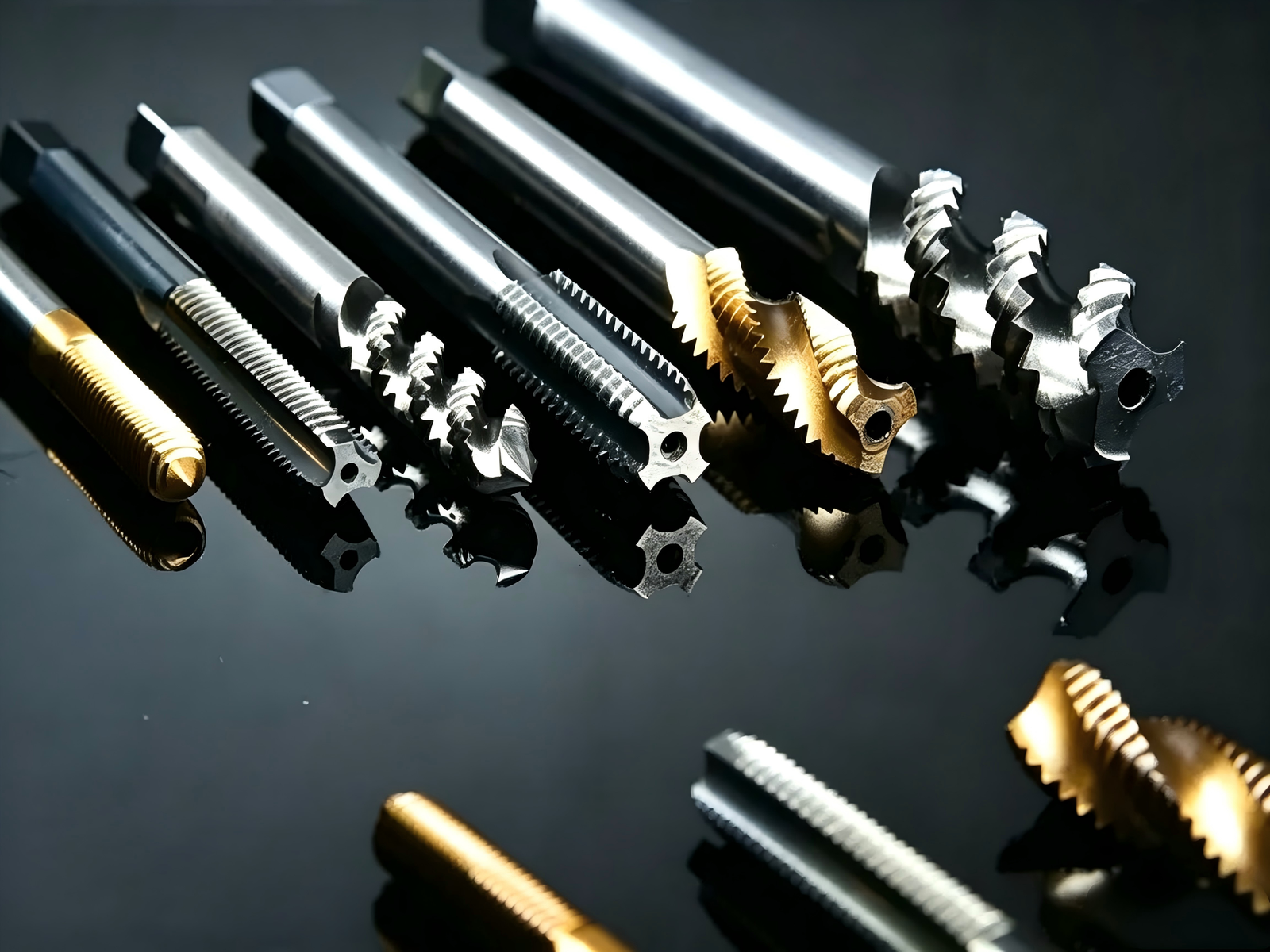
A grifo de hilo es una herramienta de corte o conformado de precisión que se utiliza para crear roscas de tornillo internas dentro de un orificio perforado. Las roscas terminadas permiten instalar de forma segura sujetadores acoplados, como pernos y tornillos., asegurando un montaje mecánico adecuado.
A diferencia del roscado externo, que se produce mediante matrices u operaciones de torneado, El roscado interno requiere machos de roscar especialmente diseñados que crean progresivamente el perfil de la rosca a lo largo de la pared interior del orificio..
Los machos de roscar se utilizan ampliamente en:
Operaciones de fresado
Centros de perforación
Mecanizado manual
Fabricación de automóviles
Producción aeroespacial
Fabricación de equipos médicos.
Montaje de electrónica
fabricacion de equipo pesado
Porque los agujeros roscados son a menudo elementos críticos para soportar cargas., El golpeteo adecuado influye directamente en el rendimiento del producto., precisión de montaje, y confiabilidad a largo plazo.
Cómo los machos de roscar crean roscas internas
Los machos de roscar funcionan ingresando en un orificio preperforado mientras giran bajo condiciones de velocidad y avance controladas..
Según el diseño del grifo, Crean hilos de una de dos maneras.:
Eliminación de materiales (Grifos de corte)
Los machos de corte tradicionales eliminan el material utilizando bordes cortantes afilados ubicados a lo largo de las flautas..
Durante la rotación:
Material de corte de bordes cortantes
Las flautas evacuan las virutas
El perfil del hilo se forma gradualmente.
Las roscas internas están terminadas al paso requerido.
Los machos de corte son el tipo más común utilizado para aceros., acero inoxidable, hierro fundido, y muchos plásticos de ingeniería.
Deformación material (Formando grifos)
Grifos formadores de roscas, también conocido como grifos enrollables, no cortar el material.
En cambio, Deforman plásticamente el material bajo alta presión., producir hilos sin generar chips.
Las ventajas incluyen:
Hilos más fuertes
Mejor acabado superficial
Mayor vida útil de la herramienta
Sin problemas de evacuación de virutas
Sin embargo, Los grifos conformadores sólo funcionan con materiales dúctiles como:
Aluminio
Cobre
Latón
Acero suave
Ciertos aceros inoxidables
Componentes principales de un macho de roscar
Aunque los machos de roscar vienen en muchos estilos, la mayoría comparte los mismos componentes fundamentales.
Chaflán
El chaflán es la sección de corte cónica en la parte delantera del grifo..
Introduce gradualmente la acción de corte en la pieza de trabajo mientras reduce la fuerza de corte..
Los diferentes tipos de machos tienen diferentes longitudes de chaflán:
Chaflán largo: machos de roscar cónicos
Chaflán medio: grifos de tapón
Chaflán corto: grifos de fondo
Cortar los dientes
Los dientes de corte eliminan material o lo deforman para generar el perfil de rosca..
Su geometría afecta directamente:
Precisión del hilo
Vida útil de la herramienta
Acabado superficial
par de corte
Flautas
Las flautas son ranuras que recorren el cuerpo del grifo..
Cumplen múltiples funciones:
Líquido de corte de guía
Quitar virutas
Reducir las fuerzas de corte
Mejorar la refrigeración
El diseño de la flauta es una de las mayores diferencias entre los tipos de grifos..
Caña
El vástago conecta la parte de corte al soporte de la máquina o a la llave giramachos..
Los grifos industriales pueden incluir:
mango recto
piso weldon
Vástago reforzado
mango extendido
Unidad cuadrada
Los grifos manuales incluyen un cuadrado al final..
Esto permite que una llave giramachos agarre y gire la herramienta manualmente..
Los machos de máquina generalmente omiten esta característica porque están sostenidos por portaherramientas CNC..
Cómo funciona el proceso de roscado de hilos
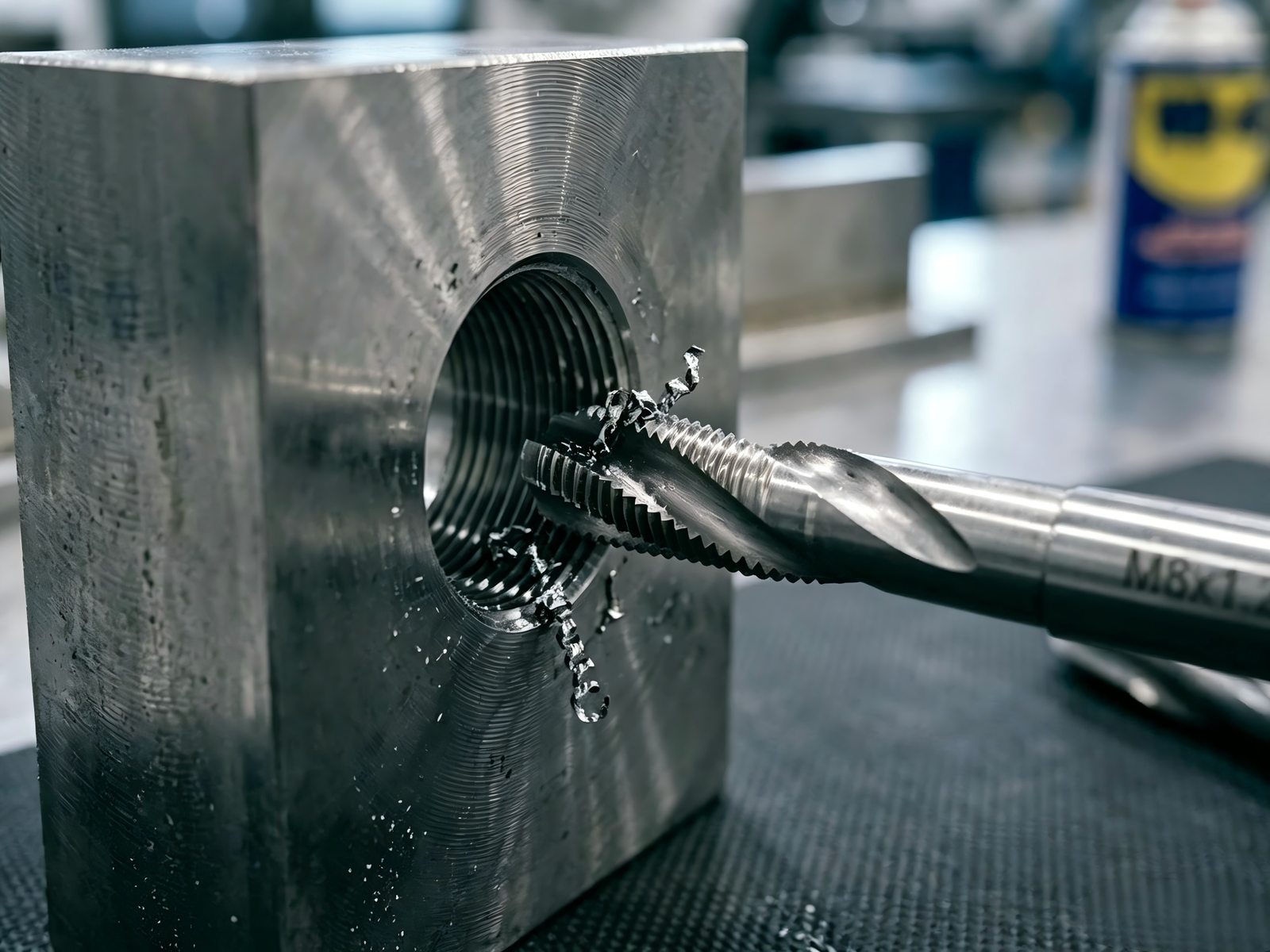
Aunque el roscado a menudo se considera un proceso de mecanizado secundario, lograr hilos de alta calidad requiere una planificación cuidadosa.
El flujo de trabajo general incluye:
Paso 1: taladrar el agujero
Un taladro del tamaño correcto crea el agujero piloto..
El diámetro de la broca debe corresponder al tamaño y paso de rosca deseados..
Un agujero de gran tamaño produce hilos sueltos.
Un orificio de tamaño insuficiente aumenta drásticamente el par de roscado.
Paso 2: Alinear el grifo
La alineación adecuada es fundamental.
Causas de desalineación:
grifos rotos
Hilos torcidos
Mal montaje
Desgaste excesivo de herramientas
Las máquinas CNC mantienen la alineación automáticamente, mientras que el roscado manual a menudo requiere guías o accesorios.
Paso 3: Cortar o formar el hilo
El grifo gira dentro del agujero..
Dependiendo de su diseño, tampoco:
Elimina material
Materiales de formularios
La evacuación de virutas adquiere especial importancia en los agujeros ciegos.
Paso 4: Quitar el grifo
Después de alcanzar la profundidad requerida, el grifo sale del agujero.
Las modernas máquinas CNC realizan roscados rígidos sincronizados para una máxima precisión.
Paso 5: Inspeccionar los hilos
La inspección de calidad generalmente incluye:
Medidores Pasa/No Pasa
Calibres de tapones de rosca
Coordinar máquinas de medición (MMC)
Sistemas de inspección óptica
La inspección garantiza la precisión dimensional antes del montaje..
Comprensión de las marcas de roscado estándar
Cada macho de roscar de calidad contiene marcas láser o información grabada que ayuda a los maquinistas a identificar sus especificaciones..
Comprender estas marcas garantiza que se seleccione el grifo correcto para el trabajo..
Tamaño nominal
El tamaño nominal indica el diámetro mayor de la rosca..
Los ejemplos incluyen:
M3
M6
M10
M16
Por ejemplo:
M8 × 1.25
medio:
Diámetro mayor: 8 milímetros
Paso de rosca: 1.25 milímetros
Estándar de rosca
Diferentes industrias siguen diferentes sistemas de hilos..
Los estándares comunes incluyen:
| Estándar | Solicitud |
| Métrico (YO ASI) | Fabricación mundial |
| UNC | Sujetadores de uso general |
| FNU | Hilos finos |
| FENU | Aplicaciones de precisión |
| TNP | Sellado de tuberías |
| BSP | Sistemas hidráulicos |
| CUMBRE | Transmisión de potencia |
Elegir el estándar de rosca incorrecto imposibilita el montaje.
Material del grifo
Diferentes materiales proporcionan diferentes niveles de resistencia al desgaste..
Acero de alta velocidad (HSS)
Ventajas:
Asequible
Difícil
Fácil de afilar
Bueno para aluminio y acero dulce.
Mejor para:
Mecanizado general
Producción de bajo volumen
Cobalto HSS (HSS-Co)
Contiene cobalto adicional para:
Mayor resistencia al calor
Mejor dureza
Resistencia al desgaste mejorada
Apto para:
Acero inoxidable
Acero aleado
Aleaciones de titanio
Carburo sólido
Los grifos de carburo proporcionan:
Rigidez excepcional
Excelente resistencia al desgaste
Larga vida útil
Excelente estabilidad dimensional
Mejor para:
Acero endurecido
Hierro fundido
Producción CNC de gran volumen
Metal en polvo
Combinación de grifos de pulvimetalurgia:
Tenacidad
Resistencia al desgaste
Resistencia a la fractura mejorada
Comúnmente utilizado en líneas de producción automatizadas..
Grifos recubiertos de TiN
El recubrimiento de nitruro de titanio proporciona:
Fricción reducida
Lubricidad mejorada
Mejor resistencia al calor
Mayor vida útil de la herramienta
Ideal para:
Acero carbono
Acero aleado
Mecanizado de volumen medio
Diámetro de paso
El diámetro de paso determina qué tan apretadamente se ajusta la rosca interna al sujetador correspondiente..
El diámetro de paso adecuado afecta:
Calidad de montaje
Fuerza del hilo
Enganche del sujetador
Resistencia a las vibraciones
Las industrias de precisión, como la fabricación aeroespacial y médica, a menudo requieren tolerancias de diámetro de paso muy ajustadas..
Clases de tolerancia de subprocesos
Los estándares internacionales definen variaciones dimensionales aceptables..
Las clases de tolerancia de grifo comunes incluyen:
| Toque Clase | Rosca interna típica |
| H1 | 4H-5H |
| H2 | 5G-6H |
| H3 | 6G-7H |
| H4 | 6H-7H |
La selección de la tolerancia adecuada garantiza el ajuste deseado entre las roscas internas y externas manteniendo al mismo tiempo la intercambiabilidad..
Tipos de machos de roscar
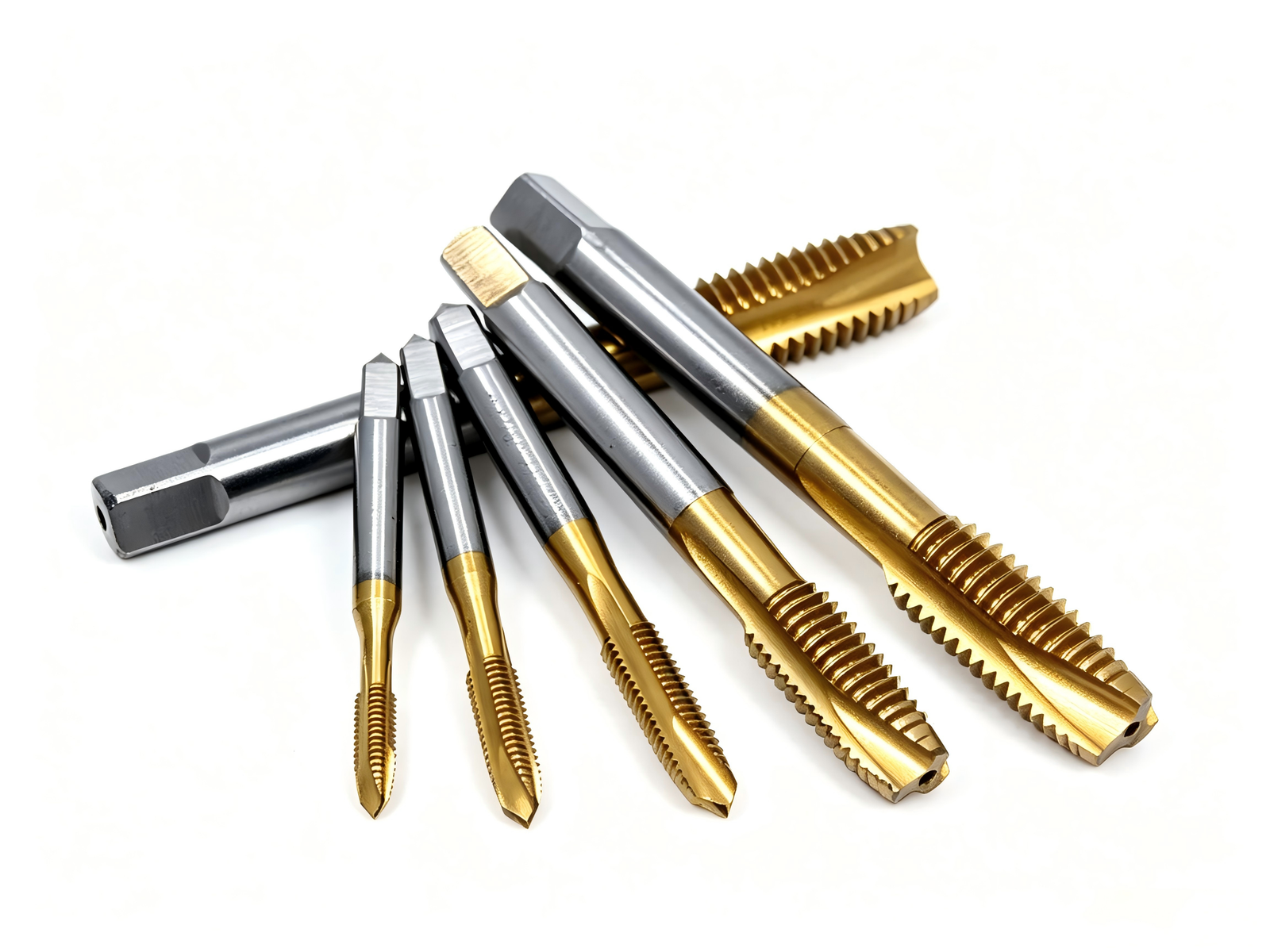
Seleccionar el macho de roscar correcto es esencial para producir roscas precisas., durable, y roscas internas de alta calidad. Cada grifo está diseñado con una geometría de corte específica., diseño de flauta, longitud del chaflán, y características de evacuación de viruta para funcionar eficientemente bajo ciertas condiciones de mecanizado.
Factores como el material de la pieza de trabajo., tipo de agujero, volumen de producción, capacidad de la máquina, y el estándar de rosca influyen en qué macho se debe utilizar. Comprender estas diferencias permite a los fabricantes mejorar la eficiencia del mecanizado, reducir el desgaste de la herramienta, minimizar el tiempo de inactividad, y lograr una calidad de hilo constante.
A continuación se muestran los tipos más comunes de machos de roscar y sus aplicaciones ideales..
Grifos de mano
Los machos de roscar manuales son las herramientas tradicionales utilizadas para cortar manualmente roscas internas.. Son muy utilizados en mantenimiento., trabajo de reparación, creación de prototipos, y fabricación de bajo volumen donde el mecanizado CNC no es necesario.
A diferencia de los grifos de máquina, Los grifos manuales generalmente se suministran como un conjunto de tres grifos que trabajan juntos para producir gradualmente la rosca terminada..
Grifo cónico
El macho de roscar está diseñado para iniciar el proceso de roscado..
Presenta un chaflán largo con aproximadamente 8–10 hilos gradualmente ahusados, permitiendo que la carga de corte se distribuya uniformemente entre múltiples filos de corte.
Ventajas
Fácil alineación del hilo
Fuerza de corte reducida
Menos posibilidades de rotura del grifo
Ideal para principiantes
Entrada de hilo suave
Limitaciones
No se pueden cortar hilos hasta el fondo de los agujeros ciegos
Requiere grifos adicionales para completar el roscado.
Mejores aplicaciones
Iniciar hilos manuales
A través de agujeros
mantenimiento general
Trabajos de reparación
Tapón del grifo
El grifo de tapón se considera el grifo manual más versátil..
Contiene aproximadamente 3–5 hilos biselados, permitiéndole continuar enhebrando después de un grifo cónico o, en muchos casos, empezar a enhebrar directamente.
Por su geometría equilibrada, El grifo se utiliza comúnmente en talleres y talleres mecánicos..
Ventajas
Versátil
Adecuado para la mayoría de los materiales
Más rápido que los grifos cónicos
Excelente para agujeros pasantes
Mejores aplicaciones
Roscado de uso general
Reparación de producción
Operaciones de mantenimiento
Agujeros de media profundidad
Grifo de fondo
Los grifos de fondo están diseñados específicamente para agujeros ciegos..
A diferencia de los grifos cónicos, solo contienen 1–2 hilos biselados, permitiendo que los bordes cortantes continúen casi hasta la punta de la herramienta.
Esto permite que el grifo cree roscas casi hasta el fondo del agujero..
Ventajas
Profundidad máxima del hilo
Ideal para agujeros ciegos
Produce hilos de longitud completa.
Limitaciones
No se pueden iniciar hilos por sí solo
Requiere primero un grifo cónico o de tapón.
Mejores aplicaciones
agujeros ciegos
Conjuntos de precisión
Componentes aeroespaciales
Colectores hidráulicos
Grifos para maquinas
Los machos de máquina están diseñados para operaciones de roscado automático utilizando centros de mecanizado CNC., prensas de perforación, y máquinas de roscar.
A diferencia de los grifos manuales, Están diseñados para completar la operación de roscado en un solo ciclo manteniendo una alta precisión y productividad..
Los machos de roscar para máquinas modernas se fabrican utilizando materiales de herramientas de primera calidad, como:
Acero de alta velocidad (HSS)
Metal en polvo
HSS-Co (Cobalto)
Carburo sólido
Muchos se mejoran aún más con recubrimientos avanzados como:
Estaño
TiCN
Tialn
AlCrN
Estos recubrimientos mejoran significativamente la resistencia al desgaste y la disipación del calor..
Ventajas
Alta eficiencia de producción
Excelente repetibilidad
Compatible con roscado rígido
Adecuado para automatización
Mayor vida útil de la herramienta
Mejores aplicaciones
Mecanizado CNC
producción en masa
Fabricación de automóviles
Mecanizado aeroespacial
Producción de componentes médicos.
Grifos de flauta en espiral
Los machos de flauta en espiral son uno de los grifos más utilizados para agujeros ciegos.
Su diseño de flauta helicoidal levanta las virutas hacia arriba y fuera del orificio durante el mecanizado..
Esto reduce en gran medida el embalaje de chips., que es una de las principales causas de grifos rotos.
Cómo funcionan
Mientras el grifo gira:
Los bordes cortantes eliminan el material.
Las flautas helicoidales empujan las virutas hacia arriba..
El refrigerante llega a la zona de corte de manera eficiente.
La calidad del hilo mejora.
Selección del ángulo espiral
El ángulo de la hélice afecta el rendimiento de corte..
| Ángulo de hélice | Mejor para |
| 15° | Materiales duros |
| 25° | Mecanizado general |
| 35° | Acero inoxidable |
| 45° | Aluminio y materiales blandos. |
Ventajas
Excelente evacuación de virutas
Reducción de rotura del grifo
Acabado superficial mejorado
Ideal para agujeros ciegos profundos
Mejores aplicaciones
Acero inoxidable
Aluminio
Titanio
agujeros ciegos
Agujeros roscados profundos
Grifos de punta en espiral (Grifos de pistola)
Aunque a menudo se confunde con grifos de flauta en espiral., Los grifos de punta en espiral funcionan de manera diferente.
En lugar de tirar las virutas hacia arriba, ellos empujar las fichas hacia adelante a través del agujero.
Por esta razón, Los machos de roscar con punta en espiral son los más adecuados para a través de agujeros.
Cómo funcionan
Durante el corte:
Las fichas se adelantan al grifo.
La zona de corte sigue despejada.
Se genera un par de corte más bajo.
Es posible un mecanizado más rápido.
Ventajas
Alta velocidad de producción
Excelente evacuación de virutas
Mayor vida útil de la herramienta
Resistencia al corte reducida
Mejores aplicaciones
A través de agujeros
Mecanizado CNC
Mecanizado de producción
Acero carbono
Acero aleado
Grifos de tubería
Los grifos para tuberías producen roscas internas para tuberías que se utilizan para sellar fluidos y gases..
A diferencia de los hilos de fijación estándar, Las roscas de las tuberías están diseñadas para crear juntas herméticas a la presión..
Las normas más comunes incluyen:
TNP
NPTF
BSPT
BSP
Los grifos para tuberías se utilizan ampliamente en:
Sistemas hidráulicos
Sistemas neumáticos
Equipos de petróleo y gas.
Tuberías de agua
válvulas industriales
Ventajas
Conexiones resistentes a fugas
Formas de hilo estandarizadas
Rendimiento de sellado confiable
Machos formadores de roscas (Grifos enrollables)
Los machos de roscar crean roscas sin quitar material.
en lugar de cortar, deforman plásticamente el material de la pieza de trabajo.
Porque no se generan chips, Los machos de roscar eliminan por completo los problemas de evacuación de virutas..
Ventajas
Sin patatas fritas
Hilos más fuertes
Mejor resistencia a la fatiga
Acabado superficial mejorado
Mayor vida útil de la herramienta
Limitaciones
Requieren materiales dúctiles.
Los materiales adecuados incluyen:
Aluminio
Cobre
Latón
Acero suave
Acero bajo en carbono
Algunos aceros inoxidables
No deben usarse en materiales frágiles como el hierro fundido..
Aplicaciones Típicas
Piezas de automóviles
Electrónica
Carcasas de aluminio
Producción de alto volumen
Taladro y macho combinados
Un taladro y macho combinado integra dos operaciones de mecanizado en una sola herramienta.
La punta de perforación crea primero el agujero..
Inmediatamente después, la sección de roscado corta las roscas internas.
Esto elimina los cambios de herramientas y reduce el tiempo del ciclo..
Ventajas
Producción más rápida
Tiempo de configuración reducido
Menores costos de mecanizado
Precisión posicional mejorada
Limitaciones
Más adecuado para:
Materiales finos
Aluminio
Latón
Plásticos
Producción de servicio medio
Machos de carburo sólido
Los machos de roscar de carburo sólido son herramientas de primera calidad diseñadas para entornos de mecanizado exigentes..
En comparación con los grifos HSS, oferta de grifos de carburo:
Mayor dureza
Resistencia de desgaste superior
Mayor estabilidad dimensional
Excelente rendimiento de alta velocidad
Porque el carburo es menos flexible., Estos grifos requieren máquinas rígidas y una alineación precisa..
Mejores aplicaciones
Acero endurecido
Hierro fundido
Aleaciones de alta temperatura
Aleaciones de titanio
Mecanizado CNC de gran volumen
Grifos de extensión
Los machos de extensión cuentan con un vástago extendido que permite mecanizar en lugares donde los machos estándar no pueden llegar..
Estos grifos se utilizan comúnmente para:
Cavidades profundas
Agujeros ciegos largos
Fabricación de moldes
Estructuras aeroespaciales
Grandes componentes fabricados
Ventajas
Largo alcance
Accesibilidad mejorada
Roscado estable en espacios reducidos
Grifos de hilo interrumpido
Los machos de rosca interrumpidos tienen dientes cortantes alternos retirados del perfil de la rosca..
Esta geometría única crea espacios más grandes para la evacuación de virutas..
Como resultado:
El par de corte disminuye.
Se reduce la generación de calor..
La obstrucción de las virutas se vuelve menos probable.
Estos machos funcionan particularmente bien en materiales gomosos y aleaciones de viruta larga..
Mejores aplicaciones
Acero inoxidable
Aleaciones de níquel
Mecanizado de agujeros profundos
Producción pesada
Grifos de perno fijo
Los machos de roscar para pernos son herramientas especializadas diseñadas para mecanizar pernos de gran diámetro utilizados en calderas., recipientes a presión, y equipos de generación de energía.
Estos grifos suelen tener:
Grandes diámetros
flautas profundas
Construcción resistente
Aplicaciones
Fabricación de calderas
Sistemas de vapor
Plantas de energía
Equipo industrial pesado
Grifos de gas
Los grifos de gas están especialmente diseñados para conexiones de gasoductos..
Producen roscas internas precisas que garantizan un sellado sin fugas bajo presión..
Las aplicaciones comunes incluyen:
Sistemas de gas natural
Equipos de GLP
Líneas de gas industriales
Fabricación de válvulas
Grifos maestros
A diferencia de los grifos de producción estándar, Los machos de roscar maestros se utilizan principalmente para la verificación y calibración de roscas..
Ayudan a los fabricantes:
Inspeccionar la calidad del hilo
Verificar las dimensiones del hilo
Restaurar hilos ligeramente dañados.
Mantenga la precisión del mecanizado
Los machos de roscar maestros se encuentran comúnmente en laboratorios de control de calidad e instalaciones de mecanizado de precisión..
Comparación de diferentes tipos de machos de roscar
Elegir el grifo adecuado se vuelve mucho más fácil comparando sus características una al lado de la otra..
| Tipo de toque | Mejor tipo de agujero | Evacuación de chips | Mejores materiales | Volumen de producción | Ventaja principal |
| Grifo cónico | A través de | Moderado | metales generales | Bajo | Inicio de hilo fácil |
| Tapón del grifo | A través de | Moderado | Mecanizado general | Bajo en medio | Más versátil |
| Grifo de fondo | Ciego | Limitado | metales generales | Bajo | Profundidad máxima del hilo |
| Grifo de máquina | Ambos | Depende del diseño | La mayoría de los metales | Alto | Producción automatizada |
| Grifo de flauta en espiral | Ciego | Hacia arriba | Acero inoxidable, aluminio | Alto | Excelente eliminación de virutas |
| Punta de espiral | A través de | Adelante | Acero, acero aleado | Alto | Roscado de alta velocidad |
| Grifo de tubería | Agujeros de tubería | Moderado | Acero, latón | Medio | Roscas de tubería estancas |
| Grifo formador de hilo | Ambos | Sin patatas fritas | Aluminio, cobre | Alto | Hilos más fuertes |
| Taladro combinado & Grifo | A través de | Moderado | Metales suaves | Alto | Mecanizado en un solo paso |
| Grifo de carburo sólido | Ambos | Excelente | Materiales endurecidos | Alto | Mayor vida útil de la herramienta |
| Grifo de extensión | agujeros profundos | depende | Varios | Medio | Largo alcance |
| Grifo de hilo interrumpido | agujeros profundos | Excelente | Acero inoxidable | Alto | Par reducido |
| Grifo de perno fijo | Grandes agujeros | Excelente | Acero pesado | Bajo | Grandes hilos industriales |
| Grifo maestro | Inspección | N / A | Varios | Chabolla | Verificación del hilo |
Por qué es importante comprender los tipos de grifos
Usar el macho de roscar correcto es más que simplemente crear hilos. Impacta directamente en la eficiencia del mecanizado., vida de herramientas, precisión dimensional, calidad de montaje, y costos de producción. Adaptación del diseño del grifo al material, tipo de agujero, y el proceso de mecanizado ayuda a reducir el tiempo de inactividad, mejorar la consistencia, y lograr resultados confiables tanto en prototipos como en fabricación de alto volumen.
Siguiente parte: Tabla de tamaños de machos de roscar, Guía de tolerancia de hilos, Cómo elegir el macho de roscar adecuado, y consejos de selección de expertos para diferentes materiales y aplicaciones.
Tabla de tamaños de machos de roscar
Seleccionar el tamaño correcto del taladro de roscar es uno de los pasos más críticos en cualquier operación de roscado.. Incluso el macho de roscar de la más alta calidad no puede producir roscas precisas si el orificio piloto es demasiado grande o demasiado pequeño..
Un orificio de tamaño insuficiente aumenta el par de corte, genera calor excesivo, y aumenta significativamente el riesgo de rotura del grifo. En cambio, un orificio de gran tamaño produce roscas poco profundas con fuerza de sujeción reducida, potencialmente provocando fallos de montaje.
El tamaño adecuado del taladro macho depende de varios factores:
Tamaño del hilo
Paso de rosca
Estándar de hilo (Métrico, UNC, FNU, TNP, etc.)
Material de la pieza de trabajo
Porcentaje de hilo requerido
tipo de grifo (cortando o formando)
Para la mayoría de aplicaciones de mecanizado generales, un compromiso de hilo de 65%–75% Proporciona un excelente equilibrio entre la fuerza de la rosca y el par de roscado..
Tabla de brocas para machos de roscar con rosca métrica estándar
La siguiente tabla enumera los tamaños de rosca métricas más utilizados junto con sus diámetros de perforación recomendados..
| Tamaño del hilo | Paso (milímetros) | Tamaño de taladro recomendado |
| M2× 0.4 | 0.40 | 1.60 milímetros |
| M2.5× 0.45 | 0.45 | 2.05 milímetros |
| M3× 0.5 | 0.50 | 2.50 milímetros |
| M4× 0.7 | 0.70 | 3.30 milímetros |
| M5× 0.8 | 0.80 | 4.20 milímetros |
| M6× 1.0 | 1.00 | 5.00 milímetros |
| M8 × 1.25 | 1.25 | 6.80 milímetros |
| M10 × 1.5 | 1.50 | 8.50 milímetros |
| M12 × 1.75 | 1.75 | 10.20 milímetros |
| M16× 2.0 | 2.00 | 14.00 milímetros |
| M20 × 2.5 | 2.50 | 17.50 milímetros |
| M24 × 3.0 | 3.00 | 21.00 milímetros |
Consejo: Consulte siempre las recomendaciones del fabricante para el taladro macho., especialmente cuando se utilizan machos de roscar, ya que normalmente requieren un orificio piloto ligeramente más grande que los grifos de corte.
Comprensión del compromiso del hilo
El compromiso de la rosca se refiere al porcentaje del perfil de la rosca que está completamente formado dentro del orificio..
Muchos ingenieros suponen erróneamente que un mayor compromiso de los hilos siempre da como resultado hilos más fuertes.. En realidad, aumentando el compromiso del hilo más allá de aproximadamente 75% Aumenta drásticamente el par de corte y ofrece sólo mejoras marginales en la resistencia de la rosca..
Las recomendaciones generales incluyen:
| Compromiso del hilo | Aplicación típica |
| 55–60% | Materiales blandos, producción de alta velocidad |
| 65–70% | Mecanizado general |
| 70–75% | La mayoría de las aplicaciones industriales |
| 75–85% | Conexiones de alta resistencia (cuando hace falta) |
La mayoría de las operaciones de mecanizado CNC tienen como objetivo 70% compromiso del hilo porque proporciona un excelente equilibrio entre fuerza, vida de herramientas, y productividad.
Guía de tolerancia de roscado
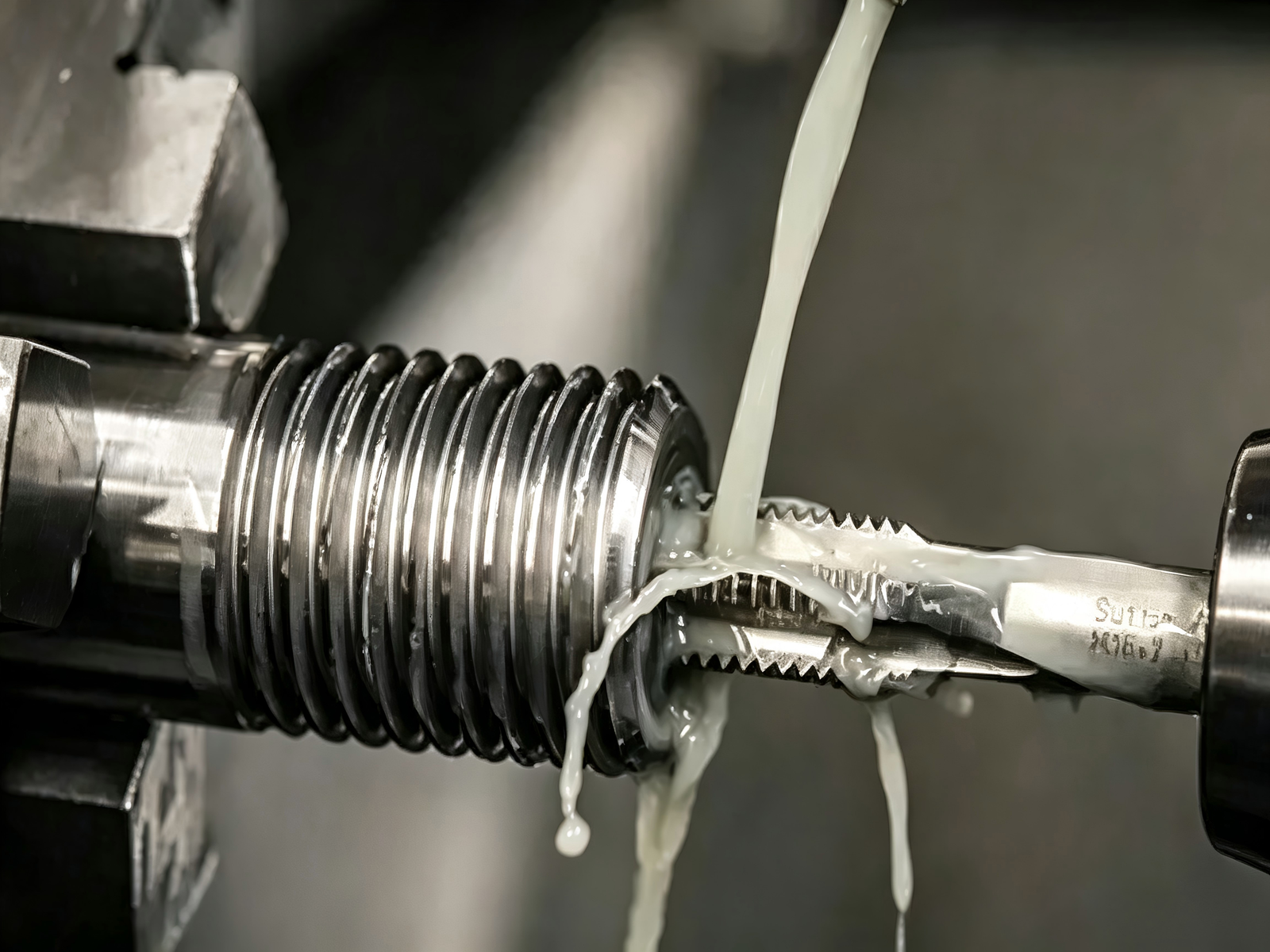
Las tolerancias de rosca determinan qué tan apretadamente encaja una rosca interna con su rosca externa correspondiente.. La selección de tolerancia adecuada garantiza un montaje suave y al mismo tiempo mantiene suficiente fuerza de sujeción e intercambiabilidad..
Las tolerancias de rosca están estandarizadas bajo especificaciones internacionales como YO ASI, ANSI, y DE.
Por qué son importantes las tolerancias de los hilos
Las tolerancias incorrectas pueden provocar:
Conjuntos sueltos
Vibración excesiva
Mala distribución de carga
Dificultad durante el montaje.
Desgaste prematuro de sujetadores
Fallo de componente
Elegir la clase de tolerancia correcta es especialmente importante en industrias como la aeroespacial., dispositivos médicos, automotor, e instrumentación de precisión.
Clases comunes de tolerancia al grifo
| Tolerancia del grifo | Rosca interna típica |
| H1 | 4h, 5h |
| H2 | 5GRAMO, 6h |
| H3 | 6GRAMO, 7h |
| H4 | 6h, 7h |
Generalmente:
H1 produce hilos más apretados.
H2 es la clase de propósito general más común.
H3 permite ajustes ligeramente más holgados.
H4 Se utiliza cuando se requiere espacio adicional..
Tipos de ajuste de rosca
Los ingenieros suelen seleccionar una de las tres categorías adecuadas según los requisitos funcionales de la aplicación..
Ajuste ceñido
Diseñado para ensamblajes de precisión que requieren un espacio mínimo.
Las aplicaciones típicas incluyen:
Componentes aeroespaciales
Equipo médico
Instrumentos de precisión
Ajuste normal
El ajuste más utilizado en la fabricación industrial..
Apto para:
Maquinaria general
Piezas de automóviles
Productos de consumo
Equipos industriales
Ajuste holgado.
Proporciona autorización adicional para aplicaciones que involucran:
Suciedad o escombros
Montaje/desmontaje frecuente
Expansión térmica
Sujetadores revestidos
Consejos de expertos para elegir el mejor macho de roscar
Los maquinistas experimentados a menudo consideran factores adicionales más allá de las especificaciones básicas para optimizar el rendimiento del roscado.:
Usar grifos de flauta espiral para agujeros ciegos para mejorar la evacuación de virutas.
Elegir grifos de punto en espiral para agujeros pasantes para maximizar la productividad.
Seleccionar grifos formadores de hilo para materiales dúctiles cuando son más fuertes, Se desean roscas sin astillas..
Haga coincidir el material del macho y el recubrimiento con el material de la pieza de trabajo para una vida útil óptima de la herramienta.
Asegúrese de que la máquina tenga suficiente rigidez., especialmente cuando se utilizan grifos de carburo.
Verifique el suministro de refrigerante para reducir la acumulación de calor y mejorar la eliminación de virutas.
Utilice la velocidad de roscado y el avance correctos según el material y las recomendaciones del fabricante del grifo..
Inspeccione periódicamente los machos en busca de desgaste y reemplácelos antes de que se deteriore la calidad de la rosca..
Hacer selecciones de machos informadas no solo mejora la calidad de la rosca sino que también reduce los costos de mecanizado, minimiza el tiempo de inactividad, y aumenta la eficiencia general de fabricación. Contáctenos para más información.


