



A diferencia de los ejes con llave tradicionales, Los ejes estriados distribuyen las cargas entre múltiples dientes., lo que resulta en una mayor capacidad de torsión, durabilidad mejorada, desgaste reducido, y mayor eficiencia operativa. Estas ventajas los convierten en la opción preferida para aplicaciones exigentes donde la precisión, fortaleza, y una larga vida útil son esenciales.
En esta guía completa, Exploraremos qué son los ejes estriados., cómo trabajan ellos, los diferentes tipos disponibles, métodos de fabricación, selección de material, aplicaciones industriales, y consideraciones clave de diseño.
¿Qué es un eje estriado??
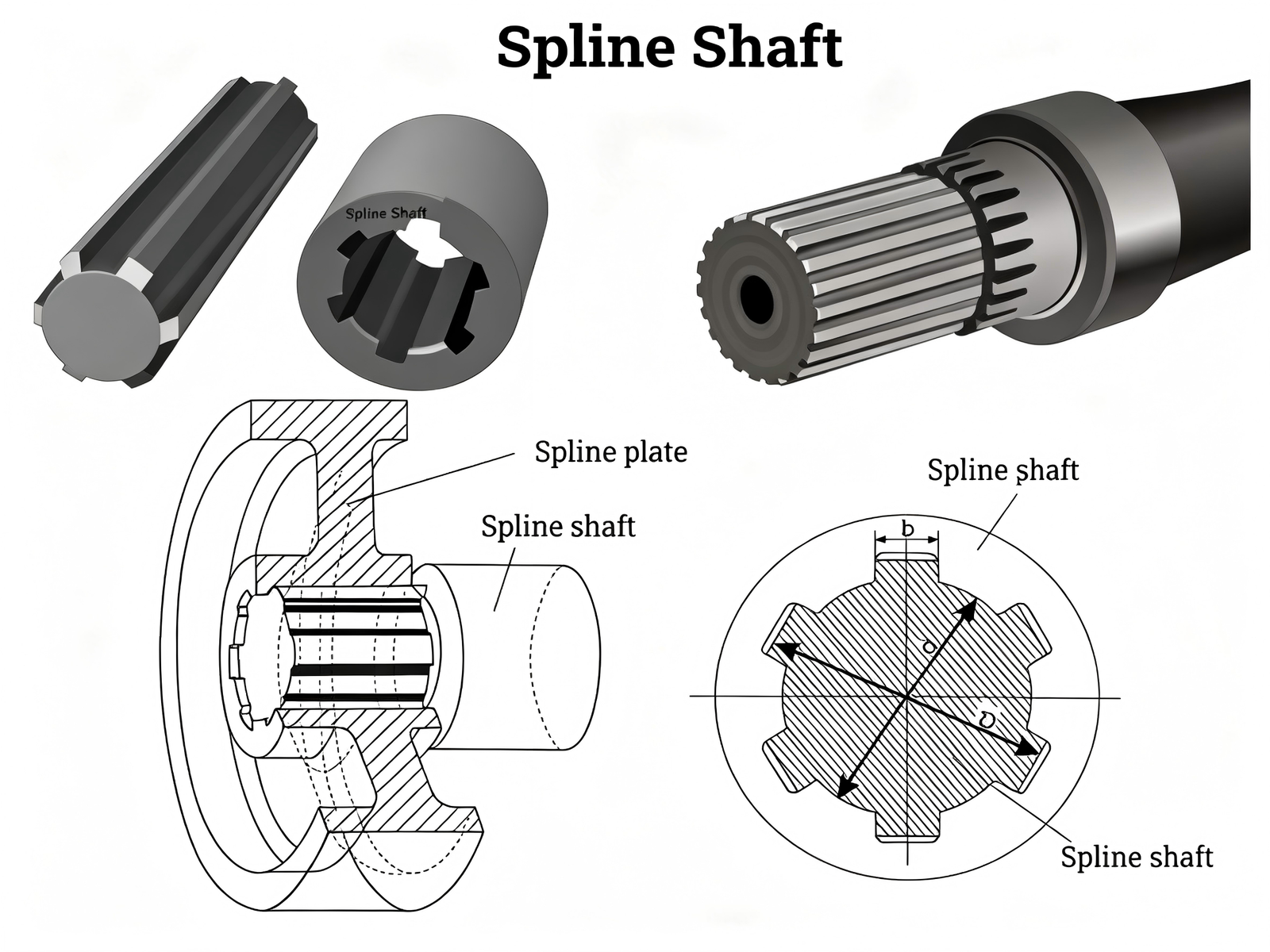
Un eje estriado es un componente mecánico cilíndrico que presenta una serie de crestas o dientes externos conocidos como estrías.. Estas estrías se acoplan con las ranuras correspondientes dentro de un cubo., engranaje, enganche, polea, u otro componente mecánico.
Los dientes entrelazados crean una conexión mecánica positiva que permite una transmisión de torque eficiente mientras mantiene una alineación rotacional precisa..
Los ejes estriados se utilizan ampliamente porque ofrecen:
- Alta capacidad de transmisión de par
- Alineación precisa del eje al cubo
- Juego reducido
- Distribución de carga mejorada
- Durabilidad mejorada
- Capacidad de movimiento axial en ciertos diseños.
Componentes principales de un eje estriado
Un eje estriado típico consta de:
Cuerpo del eje
La sección cilíndrica central que soporta las estrías y transfiere la fuerza de rotación..
Dientes estriados
Las crestas elevadas mecanizadas a lo largo de la superficie del eje que se acoplan con los componentes acoplados..
Diámetro mayor
El diámetro exterior medido a través de la parte superior de los dientes estriados..
Diámetro menor
El diámetro medido a través de la raíz de los dientes estriados..
Radio de raíz
El área de transición curva entre los dientes estriados que ayuda a reducir la concentración de tensión..
Ángulo de presión
El ángulo entre las superficies estriadas coincidentes que afecta la distribución de carga y las características de compromiso..
¿Cómo funciona un eje estriado??
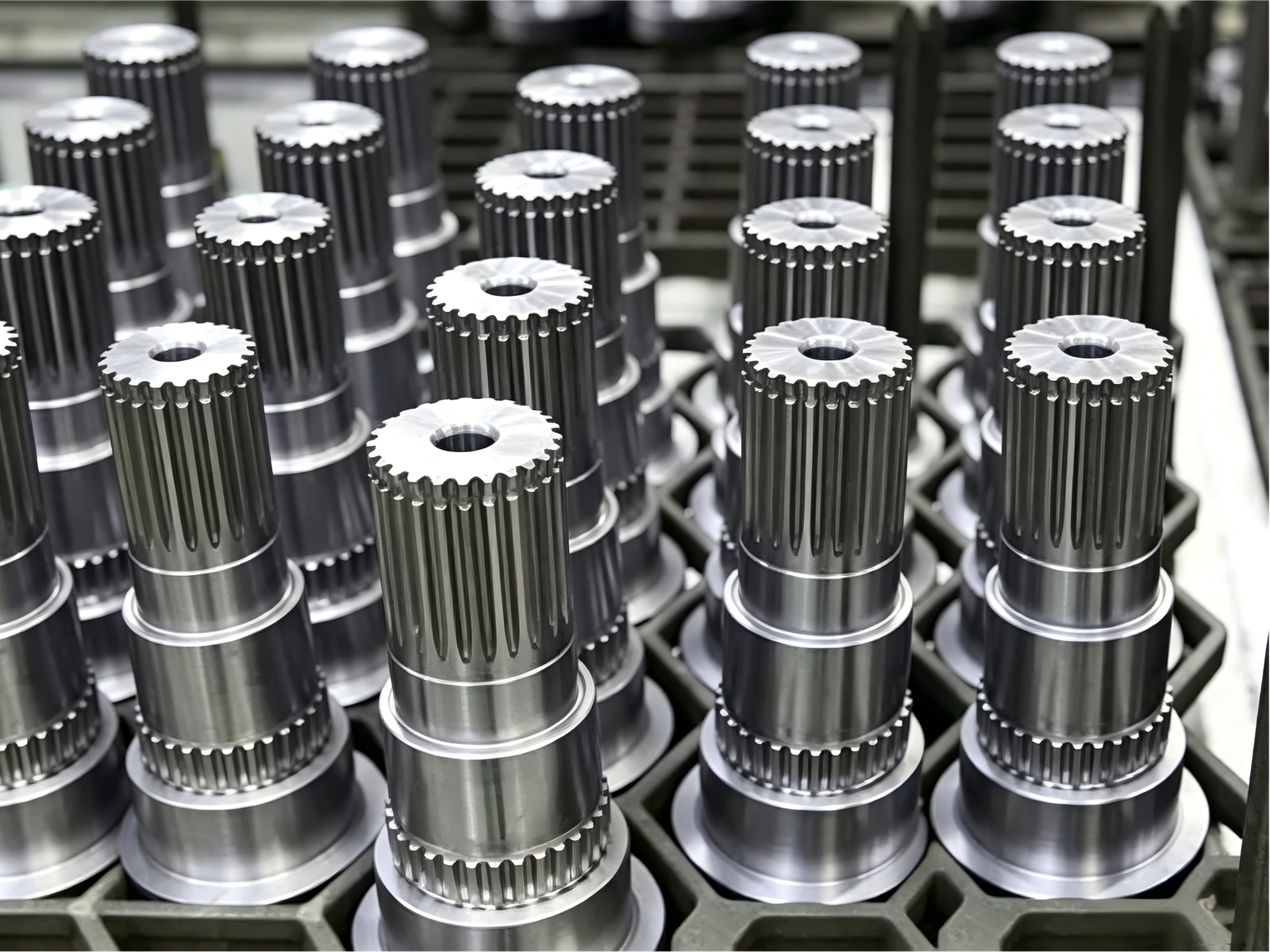
Un eje estriado transmite la fuerza de rotación mediante el acoplamiento mecánico directo entre las estrías externas e internas..
Cuando se aplica torque:
- El eje gira.
- Los dientes estriados enganchan el componente coincidente..
- La carga se distribuye en múltiples superficies spline..
- El par se transfiere de manera eficiente con un deslizamiento mínimo.
A diferencia de las conexiones basadas en fricción, Los ejes estriados proporcionan un mecanismo de accionamiento positivo., haciéndolos altamente confiables en aplicaciones de alta carga.
Splines fijos
Las estrías fijas bloquean el eje y el componente acoplado juntos, evitando el movimiento axial.
Las aplicaciones comunes incluyen:
- Cajas de cambios
- Acoplamientos
- Sistemas de transmisión de energía
Estrías deslizantes
Las estrías deslizantes permiten que los componentes se muevan a lo largo del eje sin dejar de transmitir torsión..
Estos se encuentran comúnmente en:
- Ejes de transmisión para automóviles
- Ejes telescópicos
- Sistemas de toma de fuerza
Ejes estriados versus ejes con llave
| Característica | Eje | Eje con llave |
| Capacidad de torsión | Alto | Moderado |
| Distribución de carga | Uniforme | Concentrado |
| Resistencia al desgaste | Excelente | Bien |
| Precisión de alineación | Alto | Moderado |
| Vida fatigada | Más extenso | Más corto |
| Reacción | Más bajo | Más alto |
| Costo de fabricación | Más alto | Más bajo |
Para aplicaciones de alto rendimiento, Los ejes estriados generalmente superan a los ejes con chaveta tradicionales..
¿Por qué son importantes los ejes estriados??
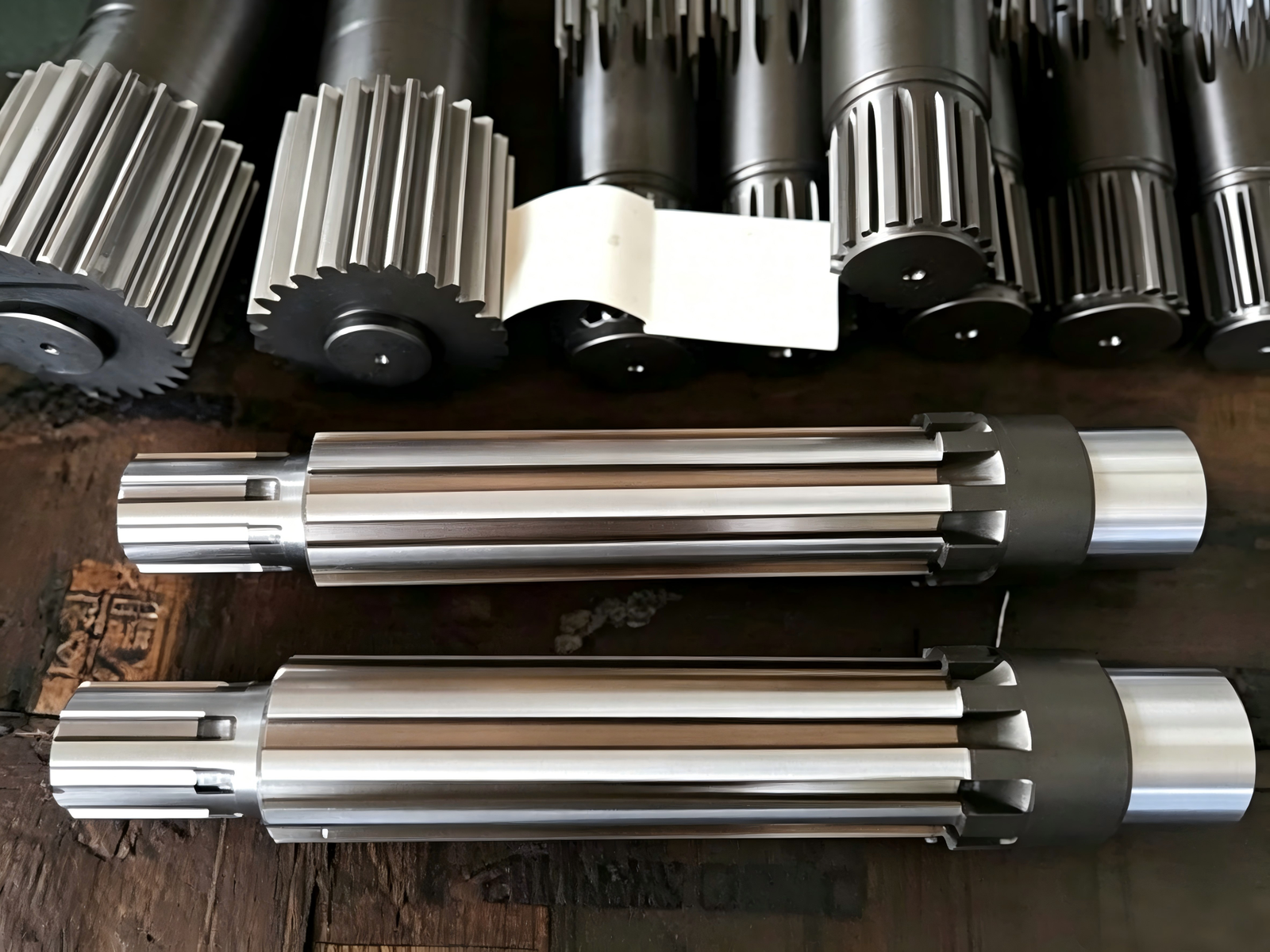
Transmisión de par eficiente
Porque el torque se distribuye entre varios dientes., Los ejes estriados pueden soportar cargas significativamente más altas que las conexiones con chaveta..
Alineación de precisión
La geometría entrelazada mantiene un posicionamiento rotacional preciso entre los componentes conectados.
Distribución de carga mejorada
Múltiples puntos de contacto distribuyen las fuerzas de manera uniforme, reducir el estrés localizado.
Desgaste reducido
La carga compartida minimiza el daño a la superficie y extiende la vida útil de los componentes..
Mayor confiabilidad
Los ejes estriados funcionan consistentemente incluso en condiciones de operación de servicio pesado.
Tipos de ejes estriados
Hay varios perfiles estriados disponibles según los requisitos de la aplicación..
Splines involutas
Los splines envolventes son el diseño spline más utilizado en todo el mundo..
Características
- Perfil de diente curvo
- Distribución de carga uniforme
- Fácil fabricación e inspección.
- Excelente capacidad de autocentrado
Aplicaciones
- Transmisiones automotrices
- Cajas de cambios industriales
- Sistemas aeroespaciales
- Maquinaria pesada
Ventajas
- Alta capacidad de par
- Larga vida a la fatiga
- Dimensiones estandarizadas
Lados rectos (Paralelo) Splines
Las estrías de lados rectos presentan flancos de dientes paralelos.
Características
- geometría simple
- Fácil mecanizado
- Producción rentable
Aplicaciones
- Maquinaria agrícola
- Equipos industriales
- Sistemas generales de transmisión de energía.
Ventajas
- Menores costos de fabricación
- Fácil montaje y desmontaje
Estrías dentadas
Las estrías dentadas utilizan dientes triangulares o en forma de V.
Características
- Alta precisión de posicionamiento
- Fuerte capacidad de bloqueo
- Mayor resistencia a la fricción
Aplicaciones
- Sistemas de dirección
- Maquinaria de precisión
- Componentes aeroespaciales
Ventajas
- Excelente rendimiento antideslizante
- Posicionamiento angular preciso
Estrías helicoidales
Las estrías helicoidales cuentan con dientes cortados en ángulo alrededor del eje..
Características
- Compromiso fluido
- Vibración reducida
- Menor ruido operativo
Aplicaciones
- Transmisiones de alta velocidad
- Maquinaria de precisión
- Sistemas de propulsión aeroespaciales
Ventajas
- Funcionamiento silencioso
- Compartir carga mejorada
Splines coronados
Los splines coronados tienen superficies dentales ligeramente curvadas..
Características
- Compensar la desalineación
- Reducir la carga de los bordes
Aplicaciones
- Sistemas de aeronaves
- Acoplamientos flexibles
- Equipo pesado
Ventajas
- Vida útil mejorada
- Mejor tolerancia de alineación
Estrías de bolas
Las estrías de bolas incorporan rodamientos de bolas de recirculación.
Características
- Movimiento rotacional y lineal simultáneo.
- Fricción extremadamente baja
Aplicaciones
- Robótica
- Sistemas de automatización
- Maquinaria CNC
Ventajas
- Movimiento suave
- Alta precisión
Materiales utilizados para ejes estriados
La selección de materiales afecta significativamente el rendimiento y la vida útil.
Acero carbono
Los grados comunes incluyen:
- AISI 1045
- AISI 1050
Beneficios:
- Buena maquinabilidad
- Rentable
- Fuerza moderada
Aleación de acero
Grados populares:
- 4140
- 4340
- 8620
Beneficios:
- Alta resistencia
- Excelente resistencia al desgaste
- Propiedades superiores de fatiga
Acero inoxidable
Grados comunes:
- 304
- 316
- 17-4PH
Beneficios:
- Resistencia a la corrosión
- Adecuado para entornos hostiles
- Excelente durabilidad
Aleaciones de aluminio
Grados comunes:
- 6061-T6
- 7075-T6
Beneficios:
- Ligero
- Resistente a la corrosión
- Buena relación resistencia-peso
Aleaciones de titanio
Beneficios:
- Fuerza excepcional
- Bajo peso
- Excelente resistencia a la corrosión
Aplicaciones:
- Aeroespacial
- Defensa
- Equipo médico
Procesos de fabricación de ejes estriados
La fabricación de precisión es fundamental para el rendimiento del spline..
Torneado CNC
El cuerpo del eje se mecaniza inicialmente según las dimensiones requeridas..
Fresado estriado
fresado CNC los cortadores crean perfiles estriados.
Ventajas:
- Producción flexible
- Adecuado para prototipos
Tallado de estrías
Uno de los métodos más eficientes para la producción de gran volumen..
Beneficios:
- Alta precisión
- Excelente productividad
Brochado
Utilizado principalmente para splines internos..
Beneficios:
- Alta precisión
- Tiempos de ciclo rápido
Conformación de engranajes
Ideal para splines internos y externos.
Beneficios:
- Versátil
- Adecuado para perfiles complejos
Electroerosión por hilo
Se utiliza para geometrías estriadas intrincadas y tolerancias estrictas..
Beneficios:
- Precisión excepcional
- Capacidad de perfil complejo
Tratamientos superficiales para ejes estriados
El tratamiento superficial mejora la durabilidad y la resistencia al desgaste..
Endurecimiento por inducción
Proporciona dureza localizada en dientes estriados..
Carburación
Crea una superficie dura y resistente al desgaste mientras mantiene un núcleo resistente..
nitruración
Mejora la resistencia al desgaste sin distorsión significativa..
Óxido negro
Proporciona una protección suave contra la corrosión..
Galvanizado
Mejora la resistencia a la corrosión.
Cromado duro
Mejora la resistencia al desgaste y la dureza de la superficie..
Consideraciones de diseño clave
El diseño adecuado garantiza un rendimiento fiable a largo plazo.
Requisitos de par
El perfil estriado debe adaptarse al par de funcionamiento máximo..
Número de dientes
Más dientes generalmente mejoran la distribución de la carga.
Diámetro del eje
Determina la resistencia general y la rigidez torsional..
Ángulo de presión
Afecta las características de compromiso y la transferencia de carga..
Tolerancia a la desalineación
Importante para sistemas sujetos a vibraciones o movimientos..
Vida fatigada
Crítico para aplicaciones de carga cíclica.
Estándares de la industria para ejes estriados
Varias normas rigen las dimensiones y tolerancias de las estrías..
ANSI B92.1
Ampliamente utilizado en América del Norte..
DE 5480
Popular en Europa.
DE 5482
Común para sistemas spline métricos.
YO ASI 4156
Estándar internacional para splines involutas.
Estándares SAE
Utilizado frecuentemente en aplicaciones automotrices..
Seguir estos estándares garantiza la compatibilidad y la intercambiabilidad..
Aplicaciones comunes de ejes estriados
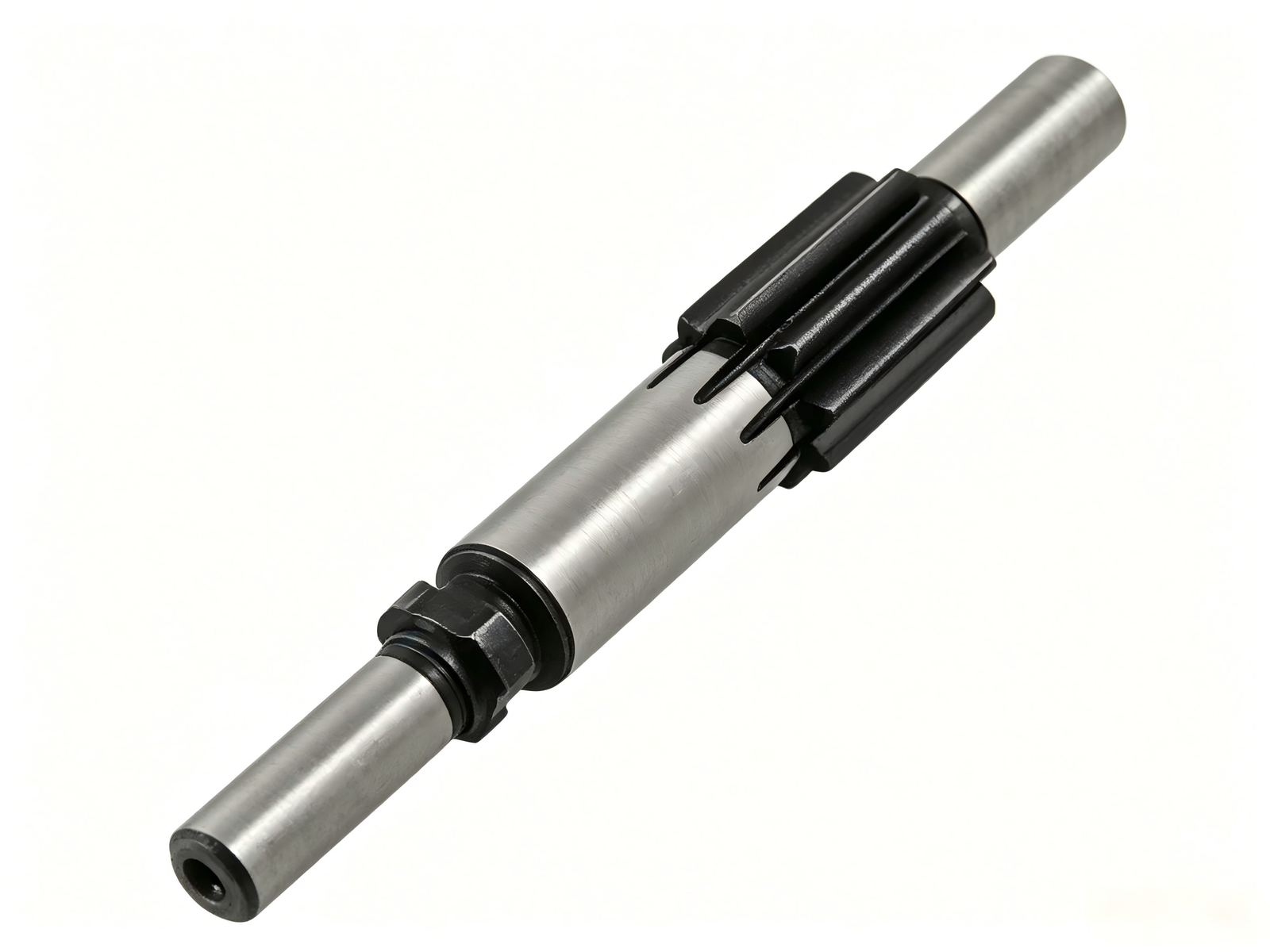
Industria automotriz
Las aplicaciones incluyen:
- Ejes de transmisión
- Ejes de transmisión
- Columnas de dirección
- Sistemas diferenciales
Industria aeroespacial
Las aplicaciones incluyen:
- Sistemas de control de vuelo
- Mecanismos del tren de aterrizaje
- Sistemas de transmisión de potencia del motor.
Maquinaria Industrial
Las aplicaciones incluyen:
- Cajas de cambios
- Zapatillas
- Compresores
- Transportadores
Robótica y automatización
Las aplicaciones incluyen:
- Servoaccionamientos
- Actuadores de precisión
- Sistemas de movimiento lineal
Equipo agrícola
Las aplicaciones incluyen:
- ejes de toma de fuerza
- Cosechadoras
- Tractores
Equipo de construcción
Las aplicaciones incluyen:
- Excavadoras
- Cargadores de ruedas
- Sistemas de accionamiento hidráulico
Prevención y fallas comunes del eje estriado
Desgaste de los dientes
Causa:
- Lubricación insuficiente
Prevención:
- Programas de lubricación adecuados
Corrosión por fricción
Causa:
- Micromovimiento entre superficies de contacto
Prevención:
- Ajuste y lubricación correctos.
Grietas por fatiga
Causa:
- Carga cíclica repetida
Prevención:
- Selección adecuada de materiales
- Endurecimiento superficial
Daño por desalineación
Causa:
- Instalación incorrecta
Prevención:
- Procedimientos de montaje de precisión.
Cómo elegir el eje estriado adecuado
Considere los siguientes factores:
Requisitos de par
Determinar las cargas operativas y máximas..
Selección de materiales
Haga coincidir las propiedades del material con los requisitos de la aplicación.
Condiciones ambientales
Considere la temperatura, humedad, quimicos, y corrosión.
Tolerancias de fabricación
Garantice la precisión para un compromiso adecuado.
Requisitos de tratamiento de superficies
Mejorar la resistencia al desgaste y la vida útil..
Estándares de la industria
Verificar el cumplimiento de las especificaciones del cliente..
¿Por qué elegir un proveedor profesional de mecanizado CNC para ejes estriados personalizados??
Elegir un socio de mecanizado con experiencia puede mejorar significativamente la calidad y confiabilidad del producto..
Un fabricante profesional debe ofrecer:
- Mecanizado CNC de precisión
- Capacidades de fresado estriado y tallado con fresado
- Control de tolerancia estricto
- Trazabilidad de materiales
- Opciones de tratamiento de superficies
- Informes de inspección completos
- Prototipo y soporte de producción.
Si necesita splines involutas personalizados, splines de lados rectos, o ejes estriados complejos de grado aeroespacial, Trabajar con un proveedor calificado de mecanizado CNC garantiza una calidad y un rendimiento constantes..
Preguntas frecuentes
1.¿Cuál es el propósito de un eje estriado??
Un eje estriado transmite torsión mientras mantiene una alineación precisa entre los componentes conectados.
2.¿Cuál es la diferencia entre una ranura y un chavetero??
Una ranura utiliza múltiples dientes para distribuir la carga., mientras que un chavetero se basa en una sola llave.
3.¿Qué tipo de spline es el más común??
Los splines involutos son los más utilizados debido a su resistencia y estandarización..
4.¿Pueden los ejes estriados adaptarse al movimiento axial??
Sí. Las ranuras deslizantes están diseñadas específicamente para el movimiento axial mientras transmiten torsión..
5.¿Qué materiales se utilizan habitualmente para los ejes estriados??
Acero carbono, acero aleado, acero inoxidable, aluminio, y el titanio son los materiales más comunes.
6.¿Cómo se fabrican los ejes estriados??
Por lo general, se producen mediante torneado CNC., molienda, tallando, brochado, organización, o mecanizado por electroerosión.
Conclusión
Comprender los tipos de splines, materiales, métodos de fabricación, y las consideraciones de diseño permiten a los ingenieros y compradores seleccionar la solución más adecuada para su aplicación.. Ya sea que necesite ejes estriados estándar o componentes de precisión altamente personalizados, asociarse con Tapas de precisión puede ayudar a garantizar un rendimiento óptimo, durabilidad, y rentabilidad.


